
How to make a tall and soft asparagus frittata in a pan without mistakes
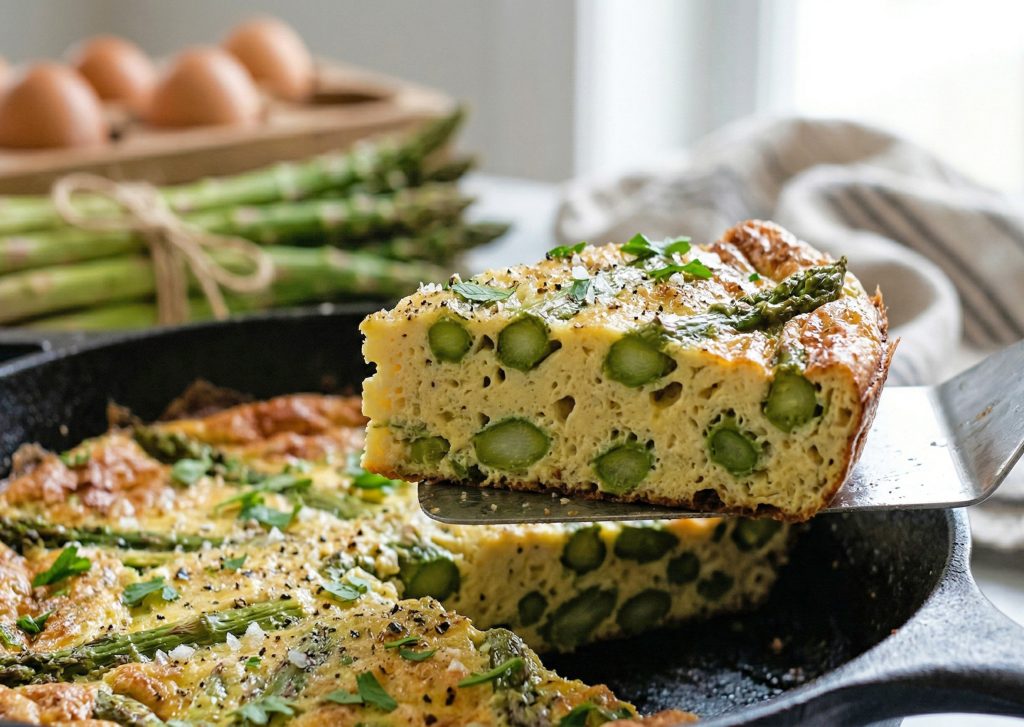
Asparagus Frittata: The secret to getting it tall and fluffy
Let’s be honest: the frittata looks like the simplest dish in the world, but how many times have you found a rubbery sole on your plate or, even worse, a frittata that falls apart just as you try to flip it?
And don’t get me started on the asparagus: if they stay hard and stringy, they ruin the pleasure of that bite that should be like a cloud. It happens to everyone, and it’s frustrating because the asparagus frittata should be a celebration of spring, not a chewing exercise!
But don’t worry, today we’ll solve these little kitchen “dramas” together.
The real secret to that spongy, tall texture is all in the steam. Instead of sautéing, we’ll use a ladle of water and a lid to steam the asparagus, making them very tender before they even meet the egg.
And for height? You don’t need leavening—just a whisk and a little energy to incorporate air that will make the mixture light and fluffy. With slow cooking and the steady heat of the lid, you’ll bring to the table a frittata so tall and velvety your guests will hardly believe you made it in a pan.
It’s the perfect dish for a Sunday lunch or the classic Easter Monday picnic. Ready to flip the pan like a pro chef? You’ll see, it’ll be a hit!
- Puff Pastry Baskets with Asparagus and Bacon: the trick for a crunchy, not soggy base
- Torta Pasqualina: the secret for a creamy filling and a crispy base
- Easter Monday No-Stress: 10 Clever Recipes for an Amazing Picnic
- Easter Starters 2026: 5 tasty recipes between tradition and creativity
- 5 Recipes with Hard-Boiled Eggs for Easter: Easy and Creative Appetizers
- Difficulty: Very easy
- Cost: Budget-friendly
- Preparation time: 5 Minutes
- Cooking time: 15 Minutes
- Portions: 4
- Cooking methods: Stovetop
- Cuisine: Italian
Asparagus Frittata Ingredients
- 6 eggs
- 2 tablespoons Parmigiano Reggiano PDO (can be replaced with Pecorino for a stronger flavor)
- pinch black pepper
- to taste salt
- 1.1 lbs asparagus (choose ones with straight stalks and closed tips)
- 2 cloves garlic (left in their skins for a delicate aroma)
- to taste extra virgin olive oil
- as needed water ((for steaming))
Tools
- Pan
- Whisk
- Knife
- Cutting board
How to make a tall and soft asparagus frittata in a pan without mistakes
Start by thoroughly washing the asparagus. Remove the woody, paler ends of the stalks.
Separate the tips and set them aside; cut the remaining tender stalk into thin slices: this will ensure an even distribution in every bite.
In a pan, heat a splash of oil with the crushed garlic. Add the sliced stalks and let them flavor for 2 minutes.
Pour in a ladle of water and cover immediately. Cook over low heat for 10 minutes: the steam will make the stalks tender. In the last 5 minutes, add the tips to keep them plump and intact.While the vegetables cool slightly (a key step to avoid cooking the eggs on contact!), crack the eggs into a bowl.
Add salt, pepper and Parmesan. Whisk vigorously: you should see bubbles appear, a sign that air has been incorporated to make the mixture spongy.
Fold the asparagus (discarding the garlic) into the eggs and mix gently.In the same pan, pour in the mixture. Immediately cover with the lid and cook over the lowest heat for 10 minutes. The reflected heat will make the frittata puff up, making it tall.
When the surface is set, flip the frittata using a flat plate. Cook the final 5 minutes without the lid to get a golden, crispy exterior.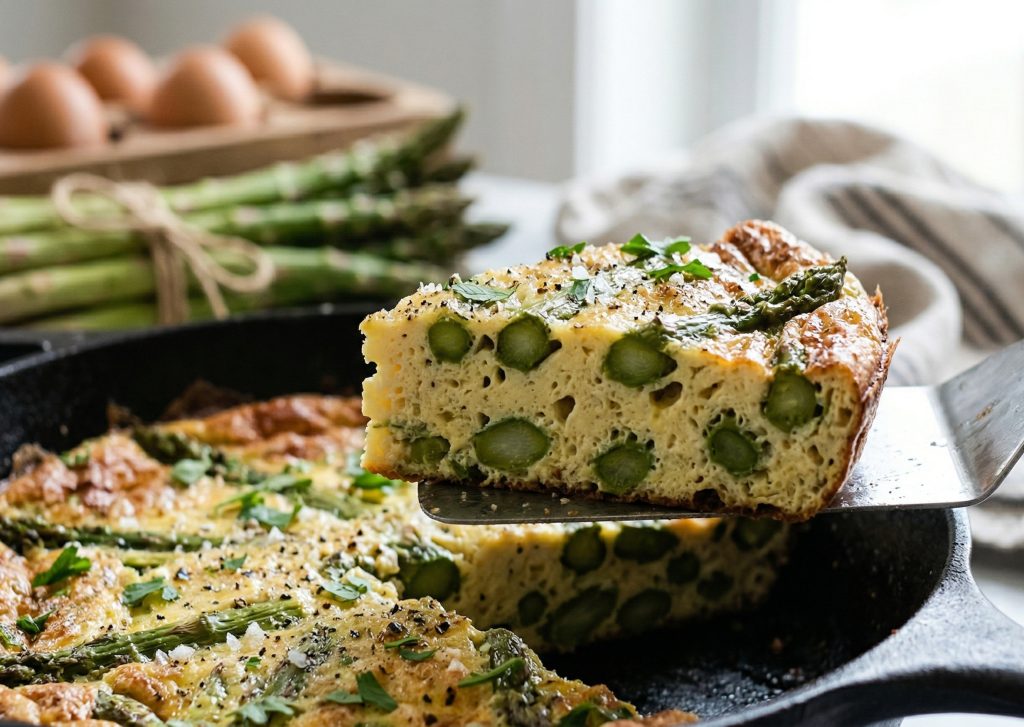
Notes and Storage
Storage: In the fridge for 2-3 days in an airtight container.
Tips for Easter Monday picnic: Wrap it in parchment paper (not plastic wrap!) so it can “breathe” and keep the surface dry and not slimy.
Variations: Add some fresh mint to the mixture for an aromatic note that enhances the sweetness of the asparagus.
FAQ (Questions and Answers)
Why did the frittata deflate as soon as I took it off the heat?
A slight drop is normal, but if it deflates too much it means it was cooked over too high a heat. Cooking must be slow to allow the egg proteins to stabilize without “tearing”.
Can I bake it in the oven?
Certainly! Pour the mixture into a lined baking dish and bake at 356°F for 20 minutes. It will be even lighter, although it will lose some of the typical pan browning.
How do I choose the right asparagus?
Check the tips: they should be well closed and firm. If they are open or soft, the asparagus is old and will be fibrous rather than plump and crunchy.
