
How to cook the original Venetian Liver soft and without any bitter aftertaste
Venetian Liver: the classic tender and creamy recipe
The secret of the Venetian liver that won me over too!
I must confess: I don’t like liver. In fact, if I had to choose, it would never be my first pick on a menu.
Yet there is an exception that proves the rule and that smells of home and childhood. Since I was a child, my dad used to make me Venetian liver and, unbelievably, I loved it.
The reason? The magical combination of ingredients: the endless sweetness of white onions that envelops the meat, the aroma of bay leaf and that hint of white wine that turns a typically strong flavor into something delicate and almost buttery.
It’s the only way I can eat liver and it’s a recipe that, cooked like this, really pleases everyone, even the most skeptical.
A common problem with this dish is often the texture of the meat, which can become tough and bitter if not treated correctly.
Today I’ll reveal the secrets I learned from my dad on how to obtain an incredible creaminess thanks to the final rest with butter and how to balance the proportions between onion and meat for an even result.
If you think liver is not for you, give this version a chance: it could become your new comfort food, just as it happened to me thanks to my dad’s special touch!
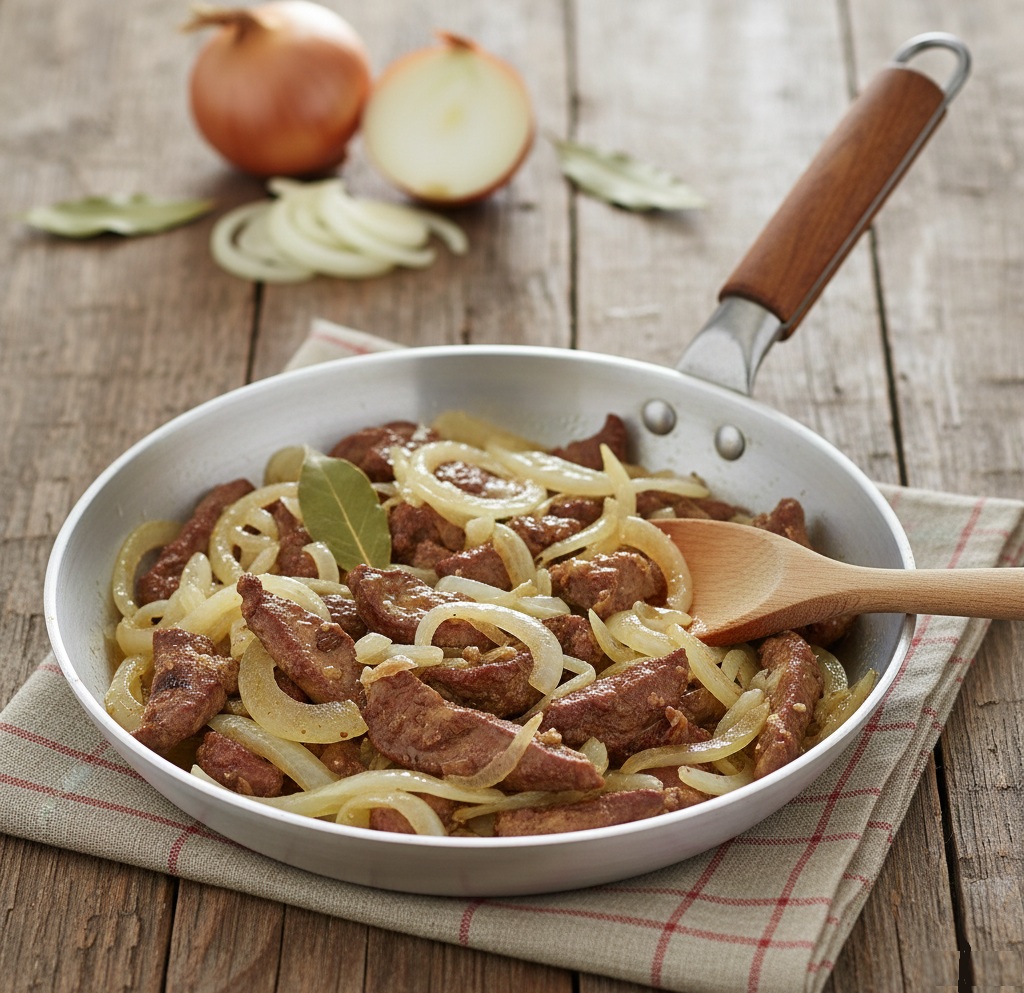
- Difficulty: Easy
- Cost: Very inexpensive
- Preparation time: 10 Minutes
- Cooking time: 25 Minutes
- Portions: 4
- Cooking methods: Stovetop
- Cuisine: Italian
Ingredients for Venetian Liver
- 1 1/3 lb veal liver
- medium onions (about 6 cups sliced) white onions (as my dad says: the proportion is fundamental!)
- 1 leaf bay leaf
- 1/4 cup dry white wine
- 2 tbsp butter
- to taste extra virgin olive oil
- 1 pinch black pepper
- to taste salt
Tools
- Mandoline
- Pan
How to cook the original Venetian Liver
To make Venetian liver, start by preparing the onions. Slice them into thin rings about half a centimeter thick (about 3/16 in). In a large pan, heat a splash of oil with the bay leaf, add the onions and cook them over very low heat for about 15 minutes. They should wilt slowly and become translucent, never taking on color or burning.
While the onions are cooking, prepare the liver: remove the outer membrane and any cartilage, as these would toughen during cooking. Cut it into uniform strips about 2 cm wide (about 3/4 in). This cut allows for quick and even cooking.
When the onions are soft, add the liver to the pan and immediately raise the heat. Stir for a couple of minutes until the meat changes color, then deglaze with the white wine. Salt, pepper and continue cooking only for a few minutes: the secret is not to overcook it. Once ready, turn off the heat and add cold butter. Stir well to emulsify: this step will make the pan sauce irresistibly creamy.
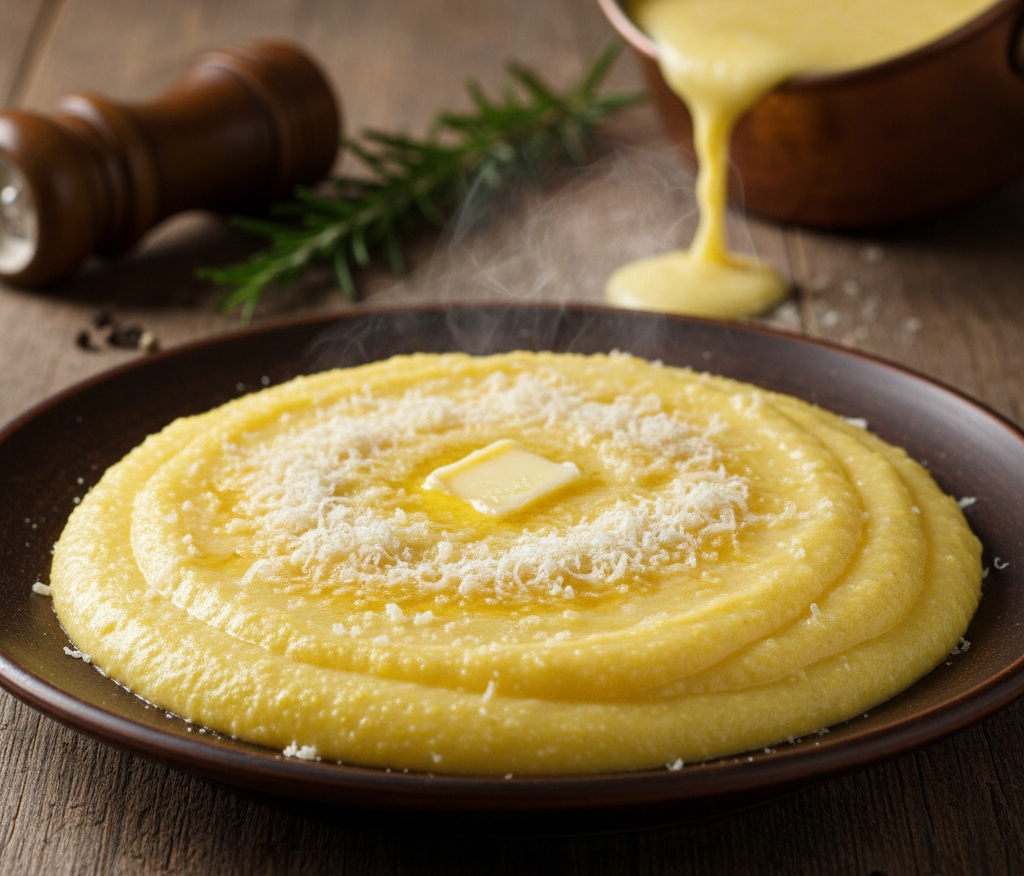
Serve immediately accompanied by hot polenta!
Ingredients and Substitutions
The Liver: Veal is milder than beef, perfect for those who don’t like very iron-forward flavors. Make sure it is very fresh.
The Onions: Traditionally Chioggia white onions are used, but any sweet white onions work. Don’t skimp on the quantity: they should almost outweigh the meat.
Storage
It’s best to eat the dish as soon as it’s ready to enjoy the meat’s tenderness. Freezing is not recommended. If you have leftovers, store them in the fridge for one day and reheat quickly with a tablespoon of water.
Tip
If you have leftover Venetian liver, don’t throw it away! Puree it finely and add an equal weight of softened butter: you’ll get a delicious pâté to spread on crostini for a gourmet appetizer.
FAQ (Questions and Answers)
Why does the liver become tough and bitter?
The liver toughens due to overcooking. It only takes a few minutes on high heat after adding it to the onions. If you cook it too long, the fibers contract and the taste becomes overly iron-like and bitter.
Can I use vinegar instead of white wine?
Yes, it is a very common alternative in Venetian tradition. Vinegar helps tone down the fattiness of the liver, but the flavor will be sharper compared to the milder version with white wine.
Should I wash the liver before cooking?
It’s not necessary to rinse it under water, but some prefer to soak it in milk for half an hour before cooking to make it even milder. Remember to pat it very dry before putting it in the pan.
