
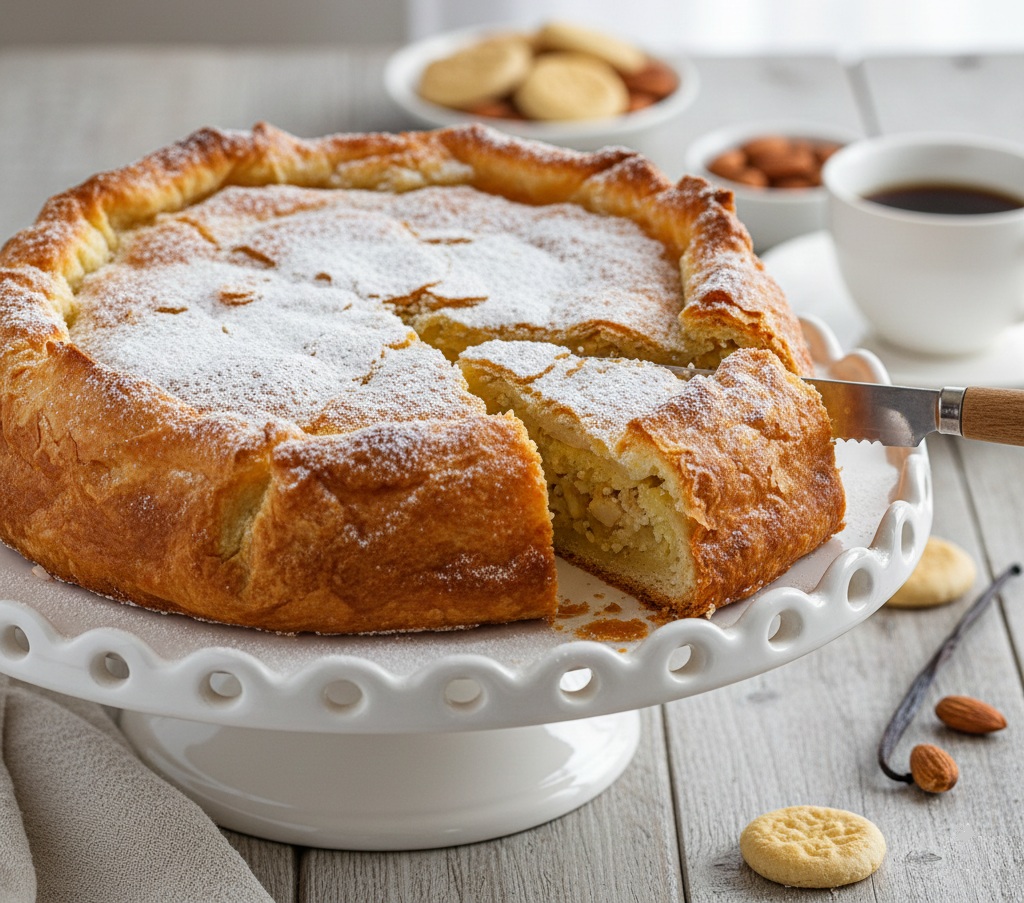
Homemade Verona Russian Cake: the puff pastry dessert with amaretti and almonds
The secret for a tall, fluffy Verona Russian Cake with crispy puff pastry
I absolutely love rediscovering recipes that have been forgotten: treasures of tradition that often remain closed in old family cookbooks and deserve to return to scent our kitchens.
The Verona Russian Cake is exactly one of those sweets that warms your heart, but I know well it can hide a few small traps that discourage those trying it for the first time.
One of the most common problems is handling the puff pastry: the risk is that the base stays damp or underbaked due to the filling’s moisture, while the outer edges tend to darken too quickly during the long baking time required.
The real secret is to beat the eggs with the sugar very patiently until they become almost white and triple in volume: it will be that incorporated air that supports the cake and makes it cloudlike.
For the pastry, using a high-sided pan and closely monitoring the oven will work wonders.
If you see the surface coloring too quickly, just cover it with a sheet of aluminum foil to protect the almond-and-amaretti heart.
The result will be an incredible contrast of textures: the exterior crispness meets an almost buttery filling. A true Veronese excellence that will bring to the table the scent of bygone times and all the joy of things well made, as in the old days!
- Difficulty: Easy
- Cost: Inexpensive
- Preparation time: 20 Minutes
- Cooking time: 1 Hour
- Portions: 8-inch pan
- Cooking methods: Oven
- Cuisine: Italian
Ingredients for Verona Russian Cake
- 1 sheet puff pastry (store-bought)
- 1 1/3 cups all-purpose flour
- 7 tbsp butter
- 3/4 cup granulated sugar
- 3.5 oz amaretti cookies
- 3/4 cup almonds
- 3 eggs (medium, about 6 oz total)
- 2 tsp baking powder
- 1 tsp almond extract
- 1 pinch salt
- powdered sugar (for decoration)
Tools
- Digital kitchen scale
- Food processor
- Hand mixer
How to prepare the puff pastry dessert with amaretti and almonds known as Verona Russian Cake
To prepare the Verona Russian Cake, start by melting the butter over very low heat (or in the microwave) and let it cool to lukewarm. Meanwhile, pulse the almonds in a food processor together with one tablespoon of sugar taken from the total amount: this will prevent the almonds from releasing oil, keeping the chop dry. Coarsely crumble the amaretti with your hands and set them aside.
Using the electric beaters, work the eggs with the remaining sugar for at least 10 minutes, until you obtain a light, foamy and very voluminous mixture.
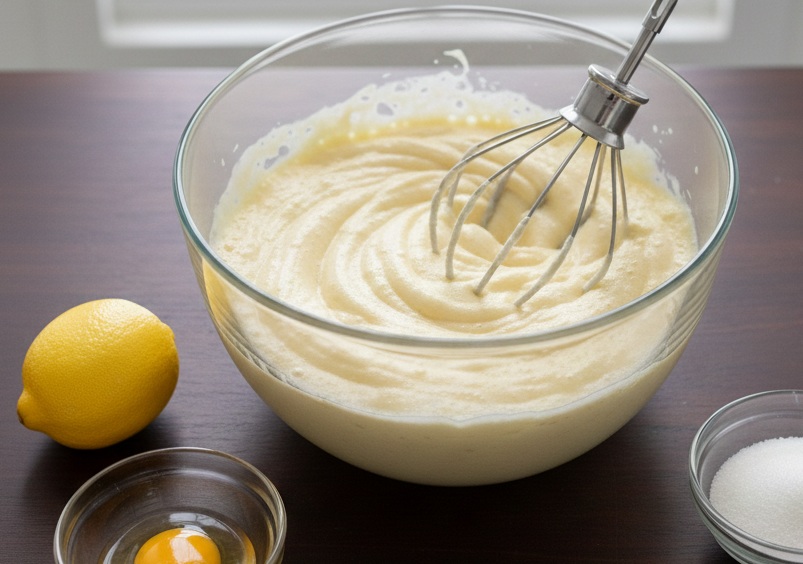
Pour the lukewarm melted butter in a thin stream, then add the chopped almonds, the sifted flour and baking powder, the crumbled amaretti, the almond extract and the pinch of salt. Work briefly with the beaters on the lowest speed to obtain a homogeneous batter.
Line a high-sided 8-inch (20 cm) pan with parchment paper and place the sheet of puff pastry inside, letting the edges hang over slightly. Pour the batter into the center, level it and fold the pastry edges inward, creating an irregular rim.
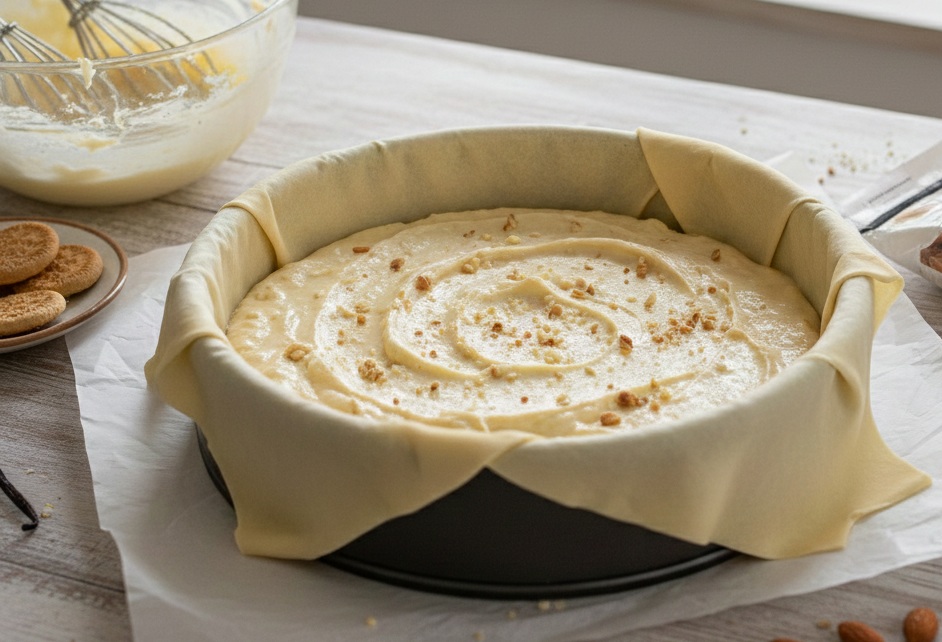
Bake in a preheated conventional oven at 356°F (180°C) for about 60 minutes. If the surface darkens too much toward the end of baking, cover it with a sheet of aluminum foil. Once cooked, remove the cake from the oven and let it cool completely in the pan before unmolding. Dust generously with powdered sugar before serving.
Notes on ingredients and substitutions
Amaretti: Do not reduce them to a very fine powder; leaving them in pieces gives a more interesting texture to each bite.
Almonds: You can use blanched almonds for a more delicate flavor or unblanched for a more rustic taste.
Storage
The cake keeps perfectly under a glass dome for 3-4 days. The puff pastry will lose some crispness after the first day, but the filling will become even more fragrant.
Tips
For an even more Veronese touch, you can add a teaspoon of amaretto liqueur or a local grappa to the batter. Make sure the eggs are at room temperature to help achieve a perfect whip.
FAQ (Questions and Answers)
Why did my Russian cake deflate after taking it out of the oven?
It could be due to thermal shock or incomplete baking in the center. Always perform the toothpick test and leave the cake in the turned-off oven with the door ajar for the first 5 minutes after baking.
Can I use shortcrust pastry instead of puff pastry?
The original recipe strictly calls for puff pastry to achieve that typical crunchy contrast, but if you prefer a firmer base you can use shortcrust pastry, knowing that the final result will be more like a filled tart.
Can I prepare the batter without an electric mixer?
It is not recommended. The lightness of the filling depends entirely on the air incorporated into the eggs. Without electric beaters (or a stand mixer), the cake would be too compact and heavy.
