
Chocolate Yule Log: Easy, soft recipe that doesn’t crack during baking
The Chocolate Roll or Yule Log (also called Bûche de Noël) is indisputably the King of the holiday table.
It’s spectacular, delicious, and brings an air of magic… but let’s be honest, for many, it is also a nightmare.
The fear that the biscuit dough will break while rolling is real, isn’t it? Or the anxiety that the cream will lump? Enough anxiety! I’m here to give you the recipe and the tricks that will make you say goodbye to these worries.
This chocolate version is a timeless classic, but I’ve optimized it to guarantee you two things: maximum softness of the base and a chocolate custard that is smooth and lump-free.
My secret? A pinch of honey in the dough to make the biscuit elastic and the combined use of milk and cream in the custard for a super velvety texture.
Follow my tips on working the eggs and using the plastic wrap, and I assure you that not only will your Yule Log be perfect, but it will be so delicious that it will disappear in no time. Prepare your whisks and bowls: we are about to create a Christmas masterpiece!
How to Make the Yule Log (4 Essential Steps)
- Difficulty: Easy
- Cost: Medium
- Rest time: 4 Hours
- Preparation time: 30 Minutes
- Portions: 6/8 PEOPLE
- Cooking methods: Oven
- Cuisine: Italian
YULE LOG INGREDIENTS
- 7/8 cup all-purpose flour
- 3/4 cup granulated sugar
- 5 eggs
- 1 teaspoon baking powder
- 1 teaspoon honey
- vanilla extract (1 teaspoon)
- 1 pinch salt
- 1/2 cup milk
- 1/2 cup heavy cream
- 3 egg yolks
- 1/3 cup granulated sugar
- 4.4 oz dark chocolate
- 2 tablespoons unsweetened cocoa powder
- 2 tablespoons cornstarch
- 1 packet vanillin
- 5.3 oz dark chocolate
- 2/3 cup heavy cream
Tools
- Kitchen Scale
- 2 Bowls
- Electric Whisk
- Sieve
- Parchment Paper
- Baking Tray
- Saucepan
YULE LOG PROCEDURE
Separate the egg whites from the yolks.
1. Beat the yolks with the sugar, honey, and vanilla using an electric whisk until you obtain a fluffy, frothy, and very light mixture (almost whitish). This is the base for the softness!
2. Separately, beat the egg whites to stiff peaks with a pinch of salt. Fold them into the yolk mixture with a spatula, using gentle movements from bottom to top. Do not deflate them!
3. Add the flour and baking powder, both sifted, little by little, mixing always gently.4. Pour the batter into a baking tray (about 12×16 inches) lined with parchment paper. Level it well.
5. Bake in a preheated oven at 392°F for just 8-10 minutes. It should be golden but not dry.
My Anti-Break Trick: Remove from the oven, sprinkle immediately with a little granulated sugar, cover with plastic wrap (to retain moisture), and roll the biscuit immediately with the parchment paper inside. Let it cool completely rolled up.1. Beat the egg yolks with the sugar until fluffy.
2. Add the cocoa and cornstarch, mix.
3. Slightly heat the milk and cream.
4. Gradually add them to the egg mixture, stirring.
5. Transfer to a saucepan and cook over low heat, stirring until it thickens.6. Remove from the heat, add the chopped chocolate and vanillin, and stir until completely melted.
Safe Cooling: Transfer the cream to a bowl (glass or ceramic) and immediately cover with plastic wrap in contact. This prevents the formation of the annoying skin. Let it cool.
1. Finely chop the chocolate.
2. Heat the cream until almost boiling and pour it over the chocolate, stirring until smooth and homogeneous.
3. Let it cool. When the ganache is cool, whip it with the whisk. It will become lighter and frothy, perfect for the coating!
4. Filling: Carefully unroll the biscuit dough, spread the chocolate cream over the entire surface.5. Roll it up again (this time without the parchment paper), wrap in plastic wrap, and place in the fridge for at least 2 hours (better 4) to stabilize.
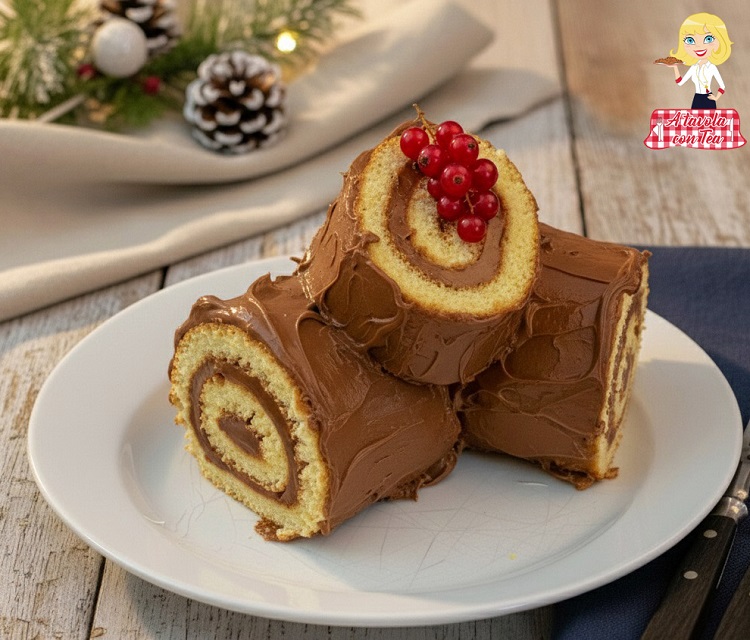
6. Cut the ends of the roll diagonally to create the “stumps” of the log and place them on the plate.
7. Cover the roll with the whipped ganache. Use a fork to draw lines along the entire log, creating the typical bark effect. Decorate with the cluster of currants and serve.
Notes on Ingredients and Substitutions
Eggs: Use room temperature eggs, they whip much better and give more volume to the biscuit
Flour: All-purpose flour can be replaced with type 1 flour, sifting it very well.
Cream: For the cream, it is essential to use fresh heavy cream (at least 35% fat): its high-fat content gives that silkiness that only a perfect cream can have.
Ingredient Suggested Substitution
All-purpose flour Rice flour Great for a more delicate gluten-free base. Do not replace 100% if you’re not experienced.
Dark Chocolate Milk Chocolate (sweeter) Use 5.3 oz instead of 4.4 oz in the cream, and reduce sugar to 1/4 cup.
Cornstarch Potato starch Use the same amount (2 tablespoons). Helps thicken the cream without altering the flavor.
Usage and Pairings
The Yule Log is not just a dessert for December 25! Holiday Dessert: Perfect for Christmas lunch or Christmas Eve dinner.
Winter Snack: A slice with a cup of hot chocolate (perhaps cinnamon-flavored) is a fantastic luxury.
Warm Pairing: The ideal companion is a dessert wine. A Passito di Pantelleria or a Tuscan Vin Santo pairs magnificently with dark chocolate.
Alternatives and Variations
1 – Tiramisu-Inspired Yule Log: Replace: The cocoa in the cream with 2 tablespoons of strong coffee (in the hot liquid phase). Add: In the filling, mix mascarpone and chocolate with 2 tablespoons of Marsala or rum. Sprinkle with unsweetened cocoa before serving.
2 – Lemon and Red Berries Yule Log: Replace: All the chocolate in the cream and ganache with Mascarpone and zest/juice of 2 lemons. Add: 100g of raspberry jam spread on the biscuit before the lemon cream.
Origins of the Yule Log
The Yule Log (or Bûche de Noël in France and Québec) is a tradition that has its roots in a very ancient European pagan rite, long before Christianity. The custom was to burn a large log in the fireplace during the winter solstice (hence the cake’s shape), kept burning for hours or even days, as a wish for prosperity, light, and good luck for the coming year. The modern cake, which imitates its shape, was born in the 19th century when fireplaces (and large logs) gave way to stoves. The confectioner of the time had the brilliant idea of transforming the rite into a delicious table dessert!
FAQ (Questions and Answers)
1. My biscuit dough broke. What did I do wrong?
You probably overbaked it or didn’t use the honey trick! If it is too cooked, the biscuit dries out and becomes stiff. The secret is not to exceed 10 minutes of baking and to immediately roll it up with plastic wrap and parchment paper as soon as it comes out of the oven: the steam that forms keeps it elastic as it cools.
2. My chocolate cream has lumps. How can I fix it?
Don’t throw anything away! Lumps form because the starch hasn’t dissolved well in the cold liquid or because you stopped stirring during cooking. To fix it, use an immersion blender for a minute or two: the cream will be smooth and silky in no time, without altering its consistency!
3. Can I prepare the Yule Log in advance for Christmas Day?
Absolutely yes! You can prepare the filled roll wrapped in plastic wrap up to 3 days in advance and store it in the refrigerator. The day before serving, prepare the ganache, cover it, and decorate. This will take a lot of stress off on the day of the celebration!
