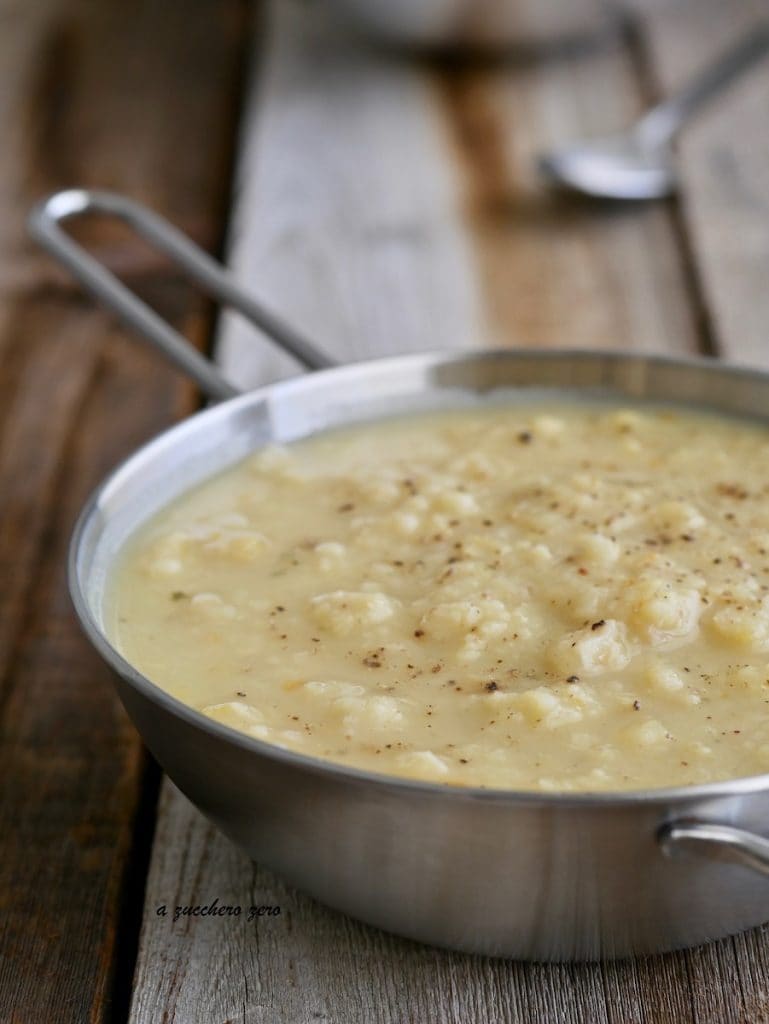
My basic recipe for cooking perfect peeled or shelled dry fava beans as a soup or as a base for appetizers, first or second courses.
I prefer fava beans with skin which are richer in fiber: cooking dry fava beans in a pressure cooker | with skin or peeled, but if I use a regular pot, I cook peeled or shelled dry fava beans obtaining a fava puree.
If you need to reduce fibers, peeled fava beans are the alternative to whole fava beans with skin.
Cooking peeled or shelled dry fava beans with soaking
Remember that dry legumes need to be soaked for 12-24 hours, during which it’s good to change the water a couple of times and rinse them well before cooking.
Choice of fava beans
I prefer to buy fava beans from local sources: Modica or Leonforte.
Cooking with an IMCO pot or a traditional pot, no need for a pressure cooker.
FAVA BEANS AND DIABETES
glycemic index fava beans GI 40.
The glycemic index of fava beans is higher compared to other legumes and also increases with cooking.
Can I eat fava beans? This is a question you should ask your diabetologist.
Can people with diabetes eat fava beans? Follow your dietary plan, ours includes them.
That said, I leave you my personal notes on the subject.
Usually, in cases of hyperglycemia, prediabetes, and type 2 diabetes, cooked fava beans can be consumed without exceeding in portions.
Furthermore, as Professor Enzo Bonora generally suggests, it’s useful to learn to understand the impact of each food on your own blood sugar levels.
- Difficulty: Easy
- Cost: Economical
- Rest time: 12 Hours
- Preparation time: 20 Minutes
- Portions: 2 People
- Cooking methods: Stove
- Cuisine: Italian
Ingredients
- dry fava beans (peeled, 2 servings, amount according to dietary plan)
- 1 broth cube (homemade vegetable, optional)
- water
- to taste salt
- 1 drizzle extra virgin olive oil (raw)
Suggested Tools
- 1 Colander fine mesh
- 1 Bowl or salad bowl
- 1 Pot IMCO or regular
- Immersion Blender
Preparation
Pour the peeled fava beans onto a work surface and carefully check them, removing any impurities or stones.
Soaking serves to soften the fava beans and to release anti-nutrient substances into the water.
The soaking water should not be used for cooking.– wash and rinse the peeled fava beans well until the water is clear;
– soak for about 12 hours, changing the water a couple of times;
– rinse the hydrated peeled fava beans well before cooking.Anti-waste tips
Use a colander to drain the legumes and collect the soaking water to water plants; not for consumption.The hydrated and cleaned peeled fava beans are ready to be poured into the pot.
In a pot, pour:
– the fava beans;
– a vegetable broth cube [optional];
and cover with water.I use an IMCO pot, a precious gift from my mother-in-law, which allows cooking to continue with the flame off.
With IMCO pot
Cover with the lid and bring to a boil.
When a little steam escapes, turn off the flame.With traditional pot
Continue cooking over low heat.Whatever the pot
Be careful of foam formation and remove it with a skimmer.
Check the fava beans’ cooking and add more water if necessary.
Let the fava beans continue cooking for 20 to 40 minutes or longer, until you reach the desired consistency: soft fava beans that fall apart, a coarse puree, or blend with an immersion mixer.Add the salt: now and not at the beginning of cooking to prevent the outer shell of the legumes from hardening, making cooking longer.
Your peeled or shelled dry fava beans are ready.
In the basic recipe perfect as soup or as a base for appetizers, first or second courses.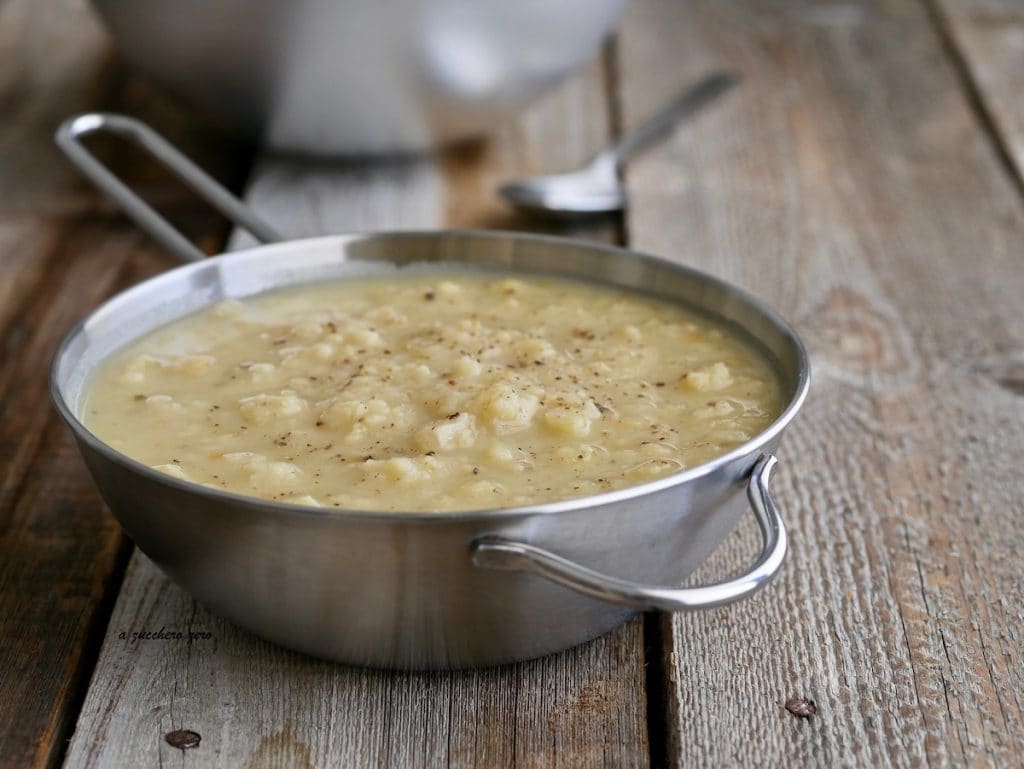
Plate and finish with a drizzle of raw extra virgin olive oil to enjoy them at best.
Enjoy your meal!
Cooked peeled fava beans and fava puree tend to thicken as they cool.
To bring them back to the right consistency, add about 100 ml of water and bring back to a boil.If you need to reduce fibers, peeled fava beans are the alternative to whole fava beans with skin.
This procedure is also valid for whole lentils with skin, peeled lentils, and peeled peas or mixed legumes.
For chickpeas, beans, and fava beans with skin, I prefer to use the pressure cooker: it reduces cooking times and makes them softer and more digestible.– Cooking dry fava beans in a pressure cooker | with skin or peeled.
Preservation, Tips, and Variations
As this is a basic recipe, I cook simple fava beans.
If you prefer, you can add wild fennel.
Store cooked fava beans in airtight containers:
– in the fridge for up to 2-3 days;
– in the freezer for up to 3 months.
Let the fava beans cool completely and portion them.
FAQ (Questions and Answers)
Fava Beans and Diabetes
glycemic index fava beans GI 40.
The glycemic index of fava beans is higher compared to other legumes and also increases with cooking.
Can I eat fava beans? This is a question you should ask your diabetologist.
Can people with diabetes eat fava beans? Follow your dietary plan, ours includes them.
That said, I leave you my personal notes on the subject.
Usually, in cases of hyperglycemia, prediabetes, and type 2 diabetes, cooked fava beans can be consumed without exceeding in portions.
Furthermore, as Professor Enzo Bonora generally suggests, it’s useful to learn to understand the impact of each food on your own blood sugar levels.Tips on How to Combine Legumes
– legumes + cereals [example: bread, pasta, or rice], preferably choose whole grains;
– legumes + proteins.
Respect the proportions and combinations indicated in your dietary plan.
To learn more about this topic, read the article by clicking on the following link: combining legumes in the diet.How Do I Ensure That Legumes Are of Italian Origin?
Often legumes are grown abroad and packed in Italy.
Check carefully that the packages indicate:
Origin: Italy; Grown in Italy; 100% Italian product.
The wording “EU” or “non-EU” means they come from different countries, for example, Canada.