The traditional dough for Ragusa scacce is made with re-milled durum wheat semolina.
I prepare my whole wheat dough for Ragusa scacce with stone-milled whole durum wheat semolina.
Dough for Ragusa scacce | semolina
Whether you use semolina or whole semolina, the recipe’s doses and procedure are identical.
Dough for Ragusa scacce | yeast
Ragusa scacce with yeast or Ragusa scacce without yeast?
Some add it, some don’t.
If I have time, I add 1 g and let the dough rise for up to 24 hours.
I recommend using a stand mixer, although it can be worked by hand.
In any case, the secret is to achieve an elastic and firm dough.
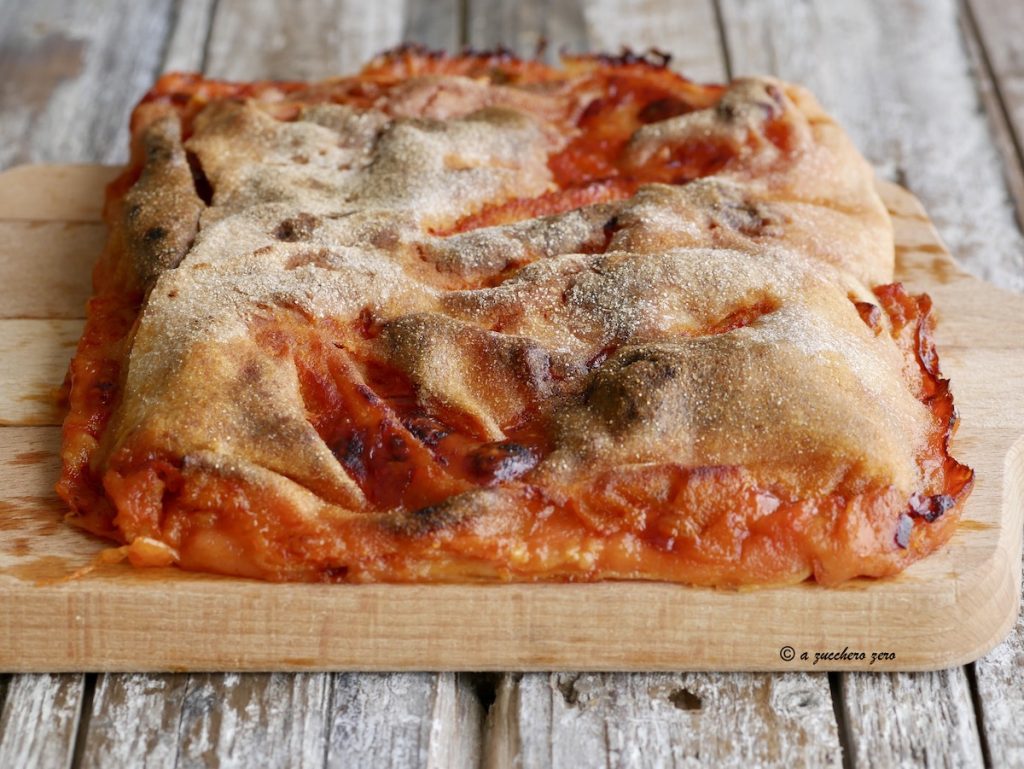
The Ragusa scaccia is a traditional dish from the gastronomy of the province of Ragusa, in Sicily.
There are numerous types in shape and seasoning.
In the Ragusa scaccia fuogghi fuogghi, the dough is rolled out very thin with a rolling pin, stuffed, and rolled or folded over itself.
In the Ragusa scaccia ‘mpanata, the dough is rolled out thicker, stuffed, and closed like a round savory pie or a half-moon-shaped calzone with an intricate decoration called riefico.
The Ragusa scaccia requires some manual skill, but don’t be discouraged: the scacce don’t need to be perfect to taste good!
I’ll guide you through how to make the dough for Ragusa scacce step by step.
- Difficulty: Easy
- Cost: Economical
- Preparation time: 20 Minutes
- Portions: 4People
- Cuisine: Regional Italian
- Region: Sicily
Ingredients
The whole wheat dough is slightly more delicate to handle and roll.
– if you are a beginner;
– if working by hand;
it is recommended to use re-milled durum wheat semolina.
- 18 oz re-milled durum wheat semolina (or whole)
- 1 ¾ cups water (slightly sparkling)
- 1 g dry brewer's yeast (Mastro Fornaio PANEANGELI)
- 1 tsp extra virgin olive oil
- 1 tsp salt
As an alternative to a gram of dry brewer’s yeast, you can use:
– 3 g of fresh brewer’s yeast;
– 4 g of dried sourdough yeast.
You can prepare your dough for Ragusa scacce without yeast and shorten the preparation time:
– do not add yeast;
– add a pinch of baking soda.
Suggested Tools
I recommend using a stand mixer, although it can be worked by hand.
- Food Scale digital
- Stand Mixer and dough hook
- Bowl for proofing with lid
- Cutting Board work surface
Preparation
Tips for hyperglycemia | prediabetes and diabetes
– the dough is made with durum wheat semolina and durum wheat has a lower glycemic index than soft wheat;
– use whole semolina to increase fiber content.
For the Ragusa scacce dough without yeast, follow the instructions from the next paragraph: Ragusa scacce dough with yeast but
– do not add yeast;
– add a pinch of baking soda.Knead and let the dough rest at room temperature for about an hour.
After this time, your yeast-free dough will be ready to use.
Warm the water; it should be lukewarm, not hot.
Pour the lukewarm water into a jug, add and dissolve the yeast.In the bowl of the stand mixer, pour:
– the semolina or whole semolina;
– the oil;
and start the mixer at speed 1.Continue working at speed 2 for about 10 minutes:
– adding the water in which you have dissolved the yeast a little at a time;
– adding the salt halfway through to avoid direct contact with the yeast.At the end of the process, the bowl will be perfectly clean, and you will have an elastic and firm dough that is easy to work with.
Transfer the dough to a work surface and briefly knead it by hand to form a dough ball.
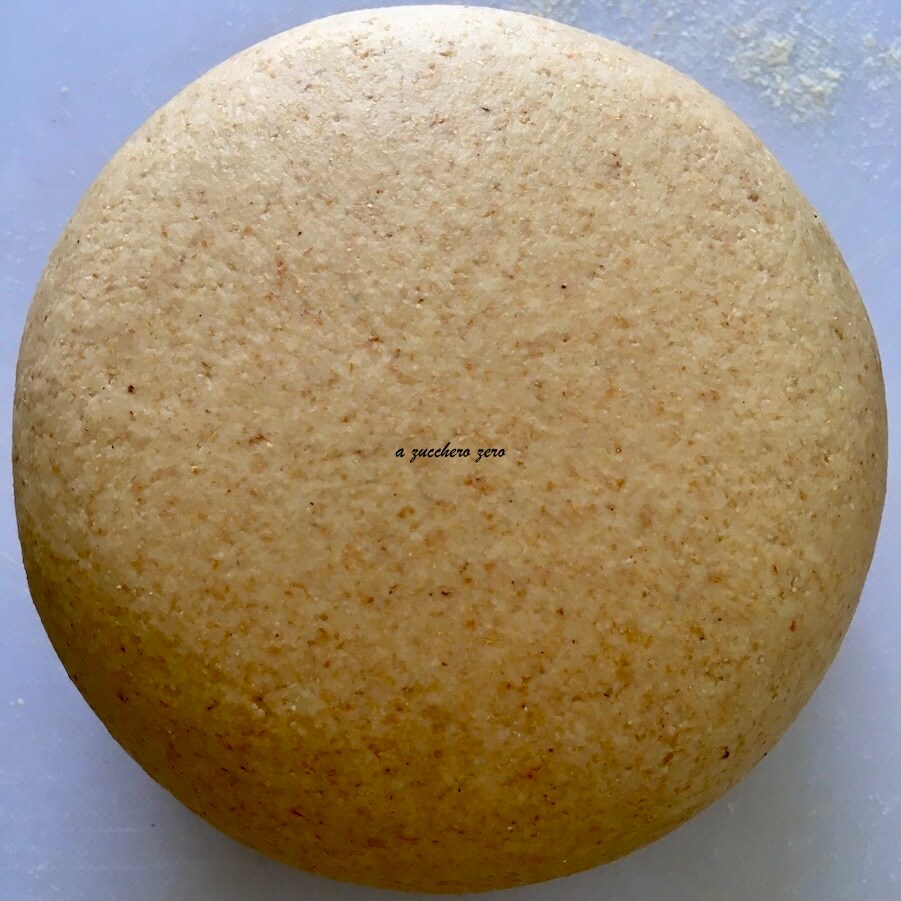
Dust the bottom of a bowl with a little semolina and place the dough ball inside.
Seal the bowl with a lid or by wrapping it with plastic wrap.
Store it in a cool, dark place.Turn the dough onto a work surface lightly dusted with a bit of semolina.
Knead it a few minutes by hand and reform it into a dough ball.
Place it back in the bowl, seal it, and store it in the same location.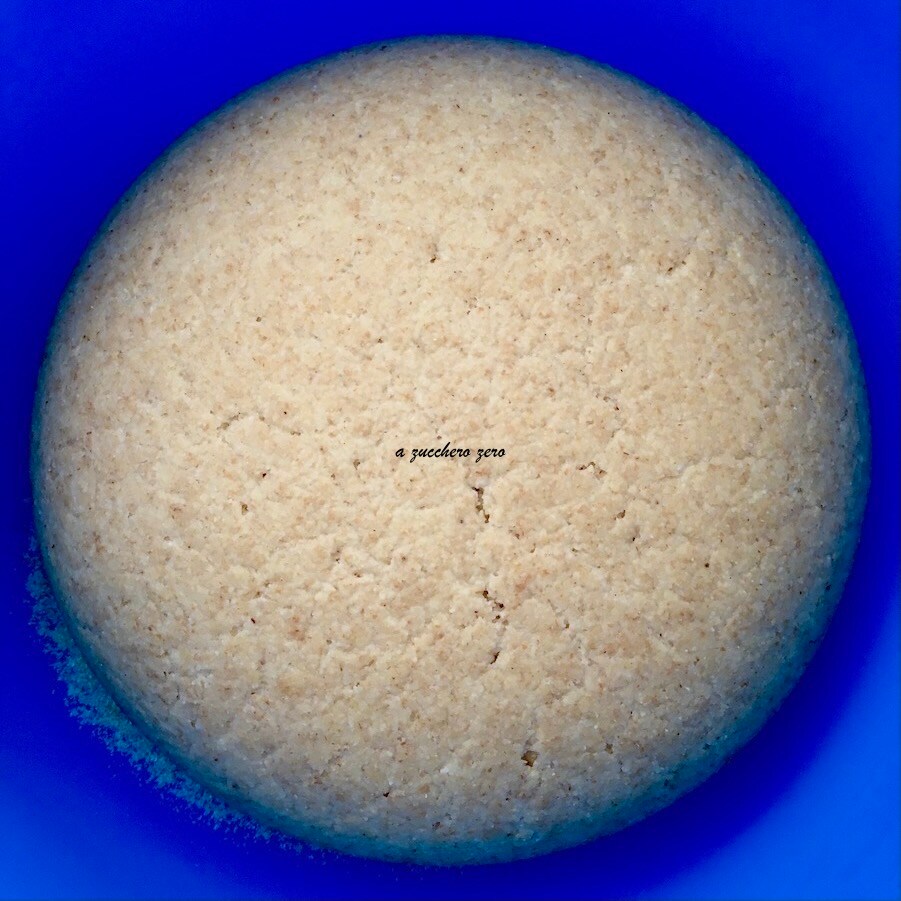
* After 24 hours, the dough should have doubled in size or nearly so;
Many factors affect rising, such as flour, yeast, and environmental conditions.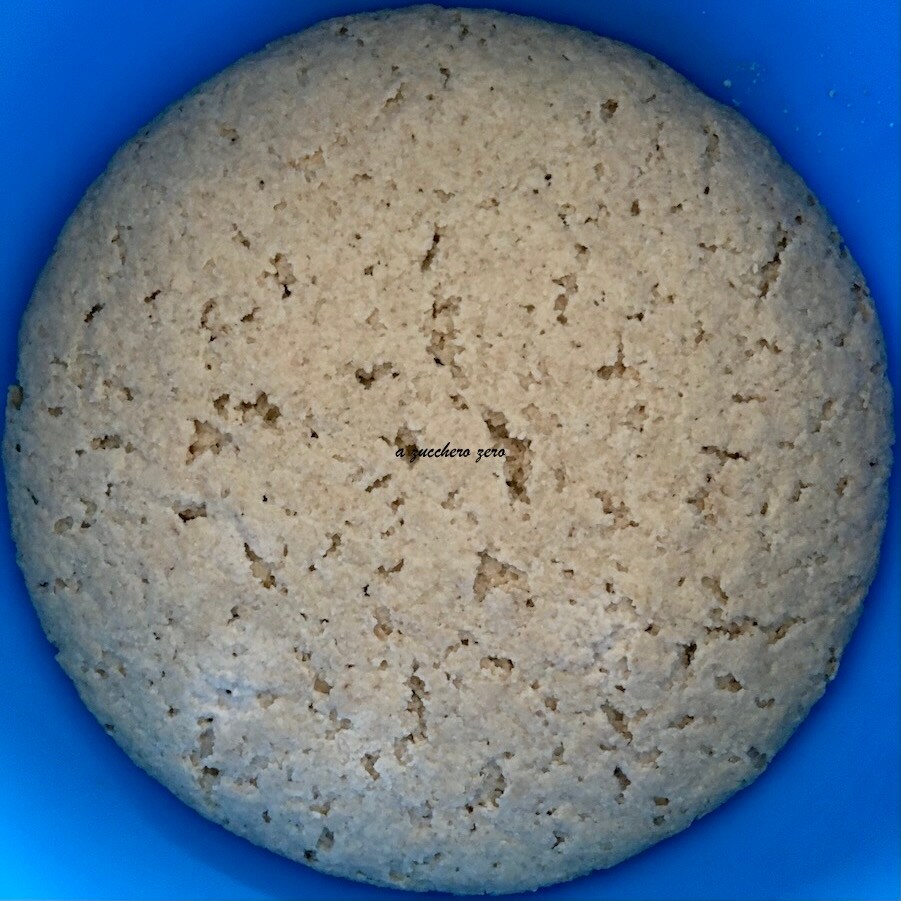
Turn the risen dough onto a work surface lightly dusted with a bit of semolina.
Knead it a few minutes by hand to regain elasticity and reform it into a dough ball.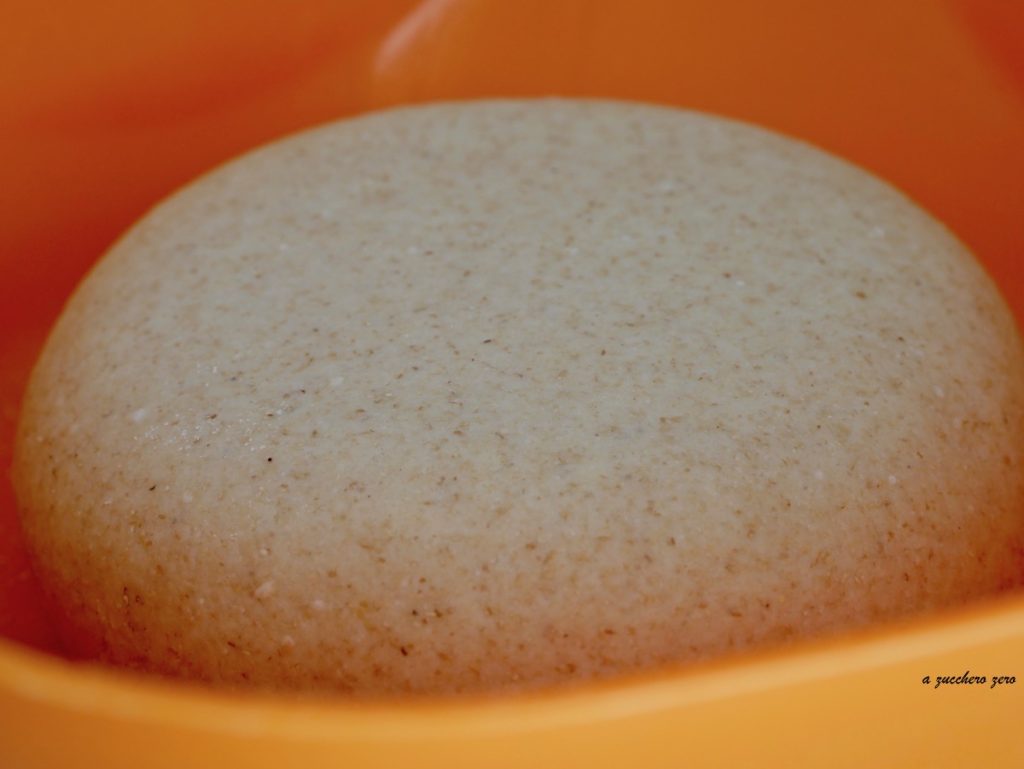
Your dough for Ragusa scacce traditional or whole is ready to be used in the preparation of the Ragusa scaccia.
There are numerous types in shape and seasoning.
You can see the complete collection by clicking on the following link: Ragusa scaccia: dough, types, flavors.The dough for Ragusa scacce is a versatile dough for making savory stuffed pastries of various shapes and fillings: calzones and turnovers, pinwheels and rolls, pies and savory tarts.
You can also use it for sweet pastries such as: cassatelle, turnovers and ravioli, pinwheels and rolls, pies and strudels.
Storage, Tips, and Variations
The whole wheat dough is slightly more delicate to handle and roll.
– if you are a beginner;
– if working by hand;
it is recommended to use re-milled durum wheat semolina.
The whole wheat dough is less elastic and tends to break or tear when worked or rolled with a rolling pin or machine.
This effect is particularly evident in manual work, where the dough receives less energy and heat compared to a mixer.
Gluten-Free Alternative
For a gluten-free Ragusa scacce dough, you can use gluten-free bread flour.
The dough will obviously be less elastic.
If you have leftover dough:
– you can use it to make delicious flatbreads or whole wheat flatbreads;
– you can freeze it by wrapping the dough ball in food wrap; the night before use, transfer it to the fridge to defrost, then let it sit at room temperature for a couple of hours before rolling it out.
FAQ (Questions and Answers)
Dough for Ragusa scacce | semolina
The traditional dough for Ragusa scacce is prepared with re-milled durum wheat semolina.
Semolina has a generally good glycemic response.
Whole semolina – richer in fiber – remains the recommended choice for those seeking a low glycemic index dough.
Excellent are semolinas from ancient grains: Maiorca, Perciasacchi, Russello, Senatore Cappelli, Tumminia.
For more information, click the following link: semolina and flours glycemic index.Can I use other flours?
Remember that the dough must always and in any case be elastic and firm.
You might not achieve the characteristic result of Ragusa scaccia.Why sparkling water in the dough?
Sparkling water serves to make the dough lighter and softer.
You can, however, also use still water.Dialects and Local Curiosities
The scaccia with vegetables is variously known from Ragusa to Modica and surrounding areas as:
– scaccia;
– pastizzu if round-shaped;
– buccatieddu if half-moon shaped.