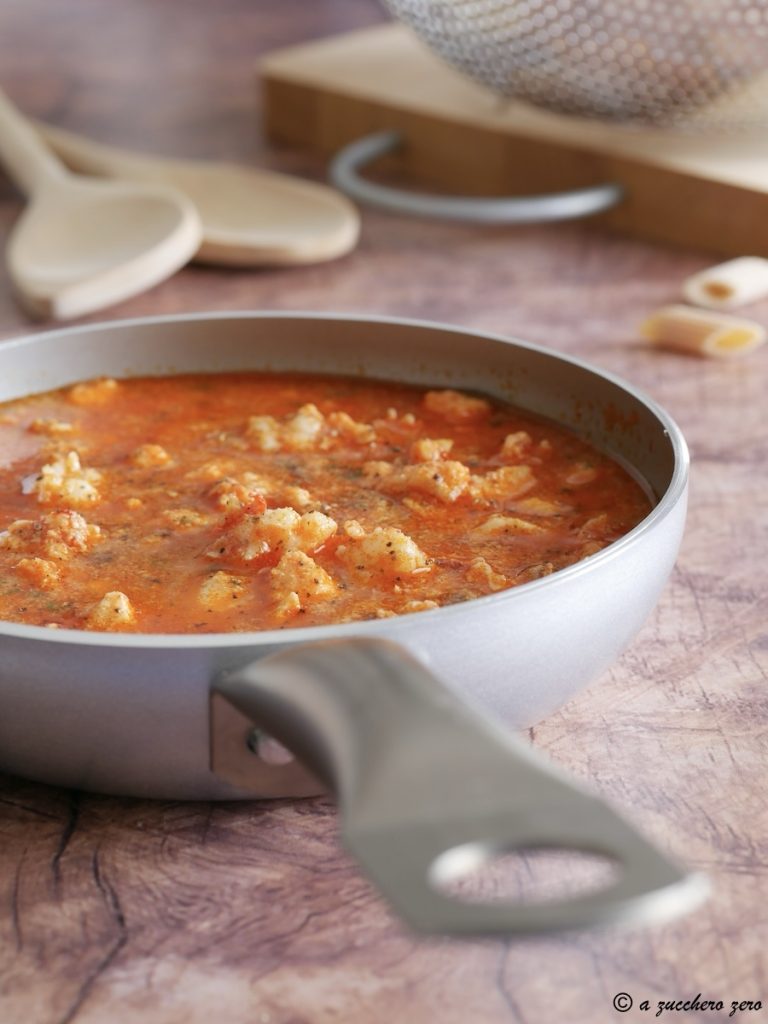
A fish sauce for seasoning perfect as a holiday sauce and for all occasions.
The fish sauce recipe is simple.
With boneless fish it’s a suitable fish sauce for the whole family.
It’s tasty and versatile, a mixed fish ragout that’s delicate yet delicious.
You can prepare the fish sauce in advance: a practical solution when cooking for more people or having multiple courses to prepare.
- Difficulty: Easy
- Cost: Medium
- Preparation time: 20 Minutes
- Portions: 2People
- Cooking methods: Stovetop
- Cuisine: Italian
Ingredients
You can use other types of boneless fish in steaks or fillets and add crustaceans and mollusks, depending on availability and taste.
- 1 piece swordfish
- 1 piece salmon
- jumbo shrimp (no less than 4 per person)
- 1 pinch garlic powder
- dried red chilies (a couple whole)
- 4 stalks parsley
- 1 small glass white wine
- 1 cup tomato sauce (homemade)
- as needed water (to rinse the sauce container)
- 1 bouillon cube (homemade vegetable, optional)
- 1 pinch salt
- 1 pinch mixed peppercorns (with grinder)
- as needed chopped parsley
Suggested Tools
- Knife
- Cutting Board
- 1 Pan with lid preferably glass
Preparation
Precautions for Hyperglycemia | Prediabetes and Diabetes
easily digestible and light sauce based on naturally low-fat lean fish.
It is advisable to use fish pieces that do not release water during cooking, so:
– fresh fish pieces;
– thawed or well-defrosted fish pieces.Rinse the fish pieces under running water and pat the excess water with kitchen paper: they must be very dry.
Whether fresh, thawed, or defrosted, remove the fish pieces from the fridge at least half an hour before cooking them.
Pat them extra dry with kitchen paper.Swordfish
Remove the skin and any bone and cartilage residue.
Cut into chunks.Salmon
Remove the skin and any bone residue.
Cut into chunks.Gently detach the heads from the bodies of the jumbo shrimp.
Rinse the heads under running water as if you were washing small containers until internal organs and residues are removed.
Let them drain in a colander.
Set them aside: they are perfect to flavor a fish broth, prepare a broth with jumbo shrimp heads or a jumbo shrimp sauce.Shell the jumbo shrimp.
Then:
– using a sharp knife, make an incision along the back of the shrimp;
– with a toothpick or the tip of the knife, remove the black vein.
This applies to all shrimp, from jumbo shrimp to prawns, only that in prawns it can be difficult and sometimes skipped if it is not very visible.Thoroughly rinse the shelled jumbo shrimp under running water.
Let them drain.
Pat the excess water with kitchen paper.
Cut them into chunks.In a pan, heat a sprinkle of garlic powder, a couple of whole dried red chilies, and some parsley stalks.
Add the cleaned jumbo shrimp heads and toast them on both sides.
Deglaze with a small glass of white wine.Add:
– the tomato sauce plus water as needed to rinse the sauce container;
– a vegetable bouillon cube [optional, for further flavoring];
and mix.Cook covered with a preferably glass lid on low heat for 5 minutes.
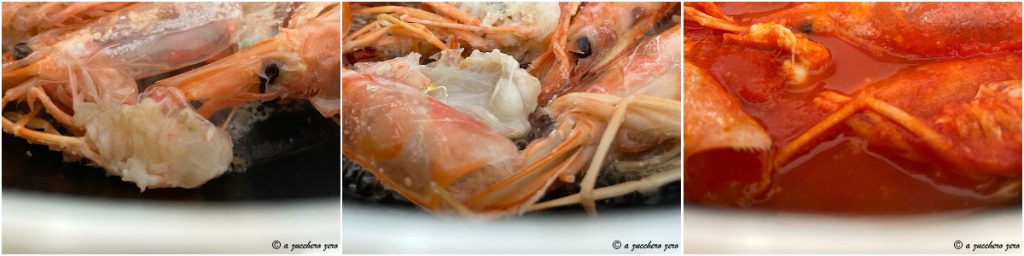
Continue to cook covered with a preferably glass lid on low heat for 5 minutes.
With the heat off, using kitchen tongs, extract the shrimp heads by letting out the retained sauce and eliminate any shell pieces and antennae, parsley stalks, and whole chilies.
Bring the sauce to a boil.
Add the fish in chunks: swordfish, salmon, and jumbo shrimp.
Add a pinch of salt and grind the pepper, chopped parsley, and mix.Cook covered with a preferably glass lid on low heat for 5 minutes and until the fish chunks are cooked but not overcooked.
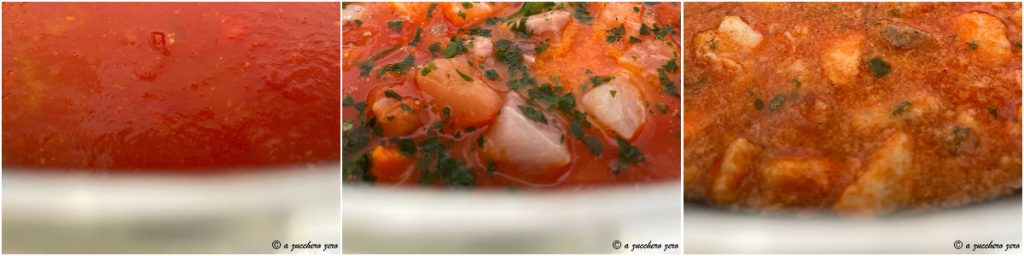
Your fish sauce for seasoning is ready.
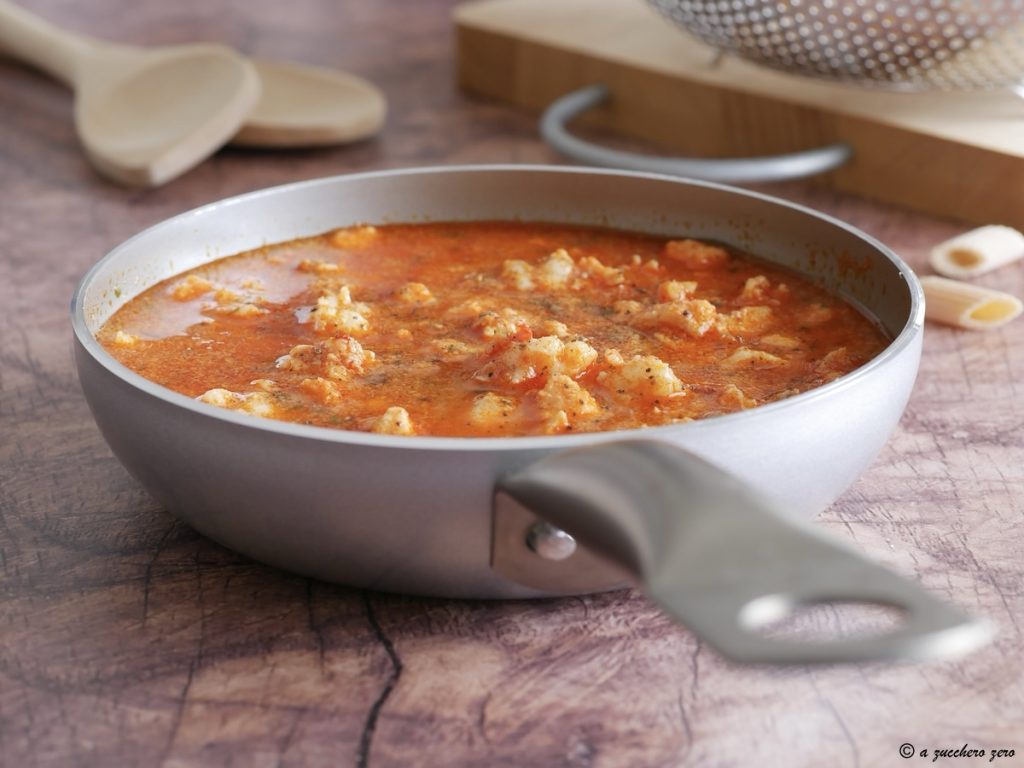
The pasta with fish sauce is a complete dish; add your portion of vegetables to create a balanced meal or single dish that helps keep blood sugar stable.
The fish sauce or fish ragout is a versatile base ingredient for cooking and flavoring.
It is perfect for seasoning or as a base to prepare:
– pasta or risottos;
– couscous, fregola or paella;
– lasagna;
– fish ravioli or ricotta ravioli;
– soups.
Storage, Tips, and Variations
You can use other types of boneless fish in pieces [tuna] or fillets [cod, hake] and add crustaceans [shrimp from jumbo shrimp to prawns and prawns, scampi] and mollusks [squid, calamari, octopus, cuttlefish] [mussels and clams cleaned and opened, at the end of preparation] depending on availability and taste.
If cooking for children or for a milder taste, do not add chili.
Use whole wheat pasta to increase fiber content.
Store the fish sauce:
– in the fridge for up to 2 days;
– in the freezer for up to 3 months;
in an airtight container.
When needed, thaw it in the refrigerator or directly in the pan over low heat.
FAQ (Frequently Asked Questions)
Can I use frozen fish?
Yes.
Mussels and Clams and Cholesterol
Mussels and clams are low in calories but it is better not to consume them too often due to their cholesterol and sodium content.
Crustaceans in the Diet
Shrimp in the Diet
Shrimp, from jumbo shrimp to prawns, are crustaceans with low triglycerides but high cholesterol content and also contain a small amount of available carbohydrates.
For these reasons, they are not suitable for all diets.
In our dietary plan, shrimp are among the foods indicated as “to be consumed occasionally”.Mollusks and Cholesterol
In our dietary plan, squid and calamari, octopus and cuttlefish, are among the foods indicated as “to be consumed occasionally”.
In fact, despite being mollusks with lean meat, they are a cholesterol source whose intake should be limited.
Dietary guidelines recommend a cholesterol intake of less than 300 mg per day, which can drop to 200 mg per day in the presence of hypercholesterolemia and hyperglycemia.
Therefore, mollusks do not directly affect blood sugar but in case of hyperglycemia, prediabetes, and type 2 diabetes, they should be consumed in moderation.