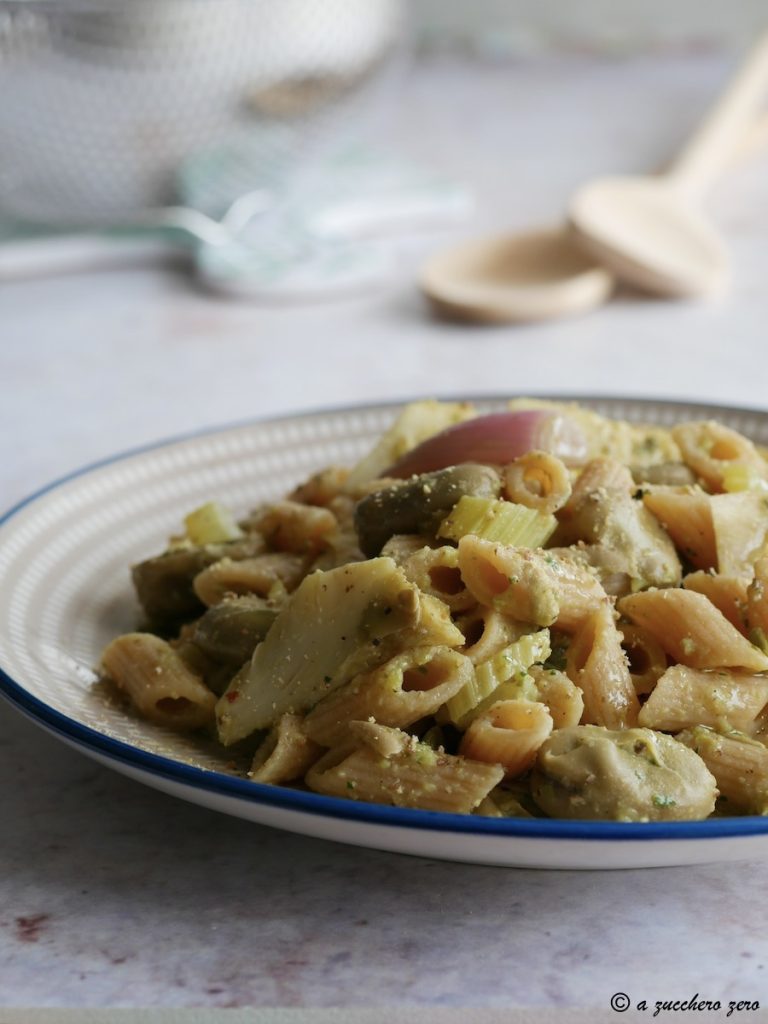
The pasta with artichokes and fresh fava beans or pasta alla vignarola is a humble, genuine and simple dish typical of peasant tradition.
The term “vignarola” derives from “vignarolo”: greengrocer.
It was prepared after returning from the vineyards, using legumes and vegetables grown and harvested among the vine rows.
It marked the passage from winter [last artichokes of the season] to spring [first fava beans and peas].
Mine is a vegan version, without guanciale.
You may also be interested in:
- Difficulty: Easy
- Cost: Inexpensive
- Preparation time: 20 Minutes
- Cooking time: 40 Minutes
- Portions: 2 People
- Cooking methods: Stovetop
- Cuisine: Italian
Ingredients
Fresh fava beans: weight from raw to cooked.
From one kilogram of fresh fava beans (weight with pod) I obtained about 350 g of shelled fava beans (weight without pod).
One kilogram ≈ 2.2 lbs; 350 g ≈ 12 oz.
- 4 oz whole wheat mezze penne rigate
- fresh fava beans (2 servings, weight according to your dietary plan)
- 1/2 onion (blended or finely grated, or whole)
- 1 pinch garlic powder
- 3 1/3 tbsp water (+ enough to cover the fava beans)
- 1 pinch salt
- 1 pinch mixed peppercorns (for a grinder)
- 1 vegetable bouillon cube (homemade vegetable)
- 1 sprig parsley
- 9 oz frozen artichoke pieces
- 1 shallot (sliced or whole)
- as needed celery (1-2 stalks)
- as needed lemon juice
- 3.5 fl oz water
- 1 vegetable bouillon cube (homemade vegetable)
- 1 pinch salt
- 1 pinch mixed peppercorns (for a grinder)
- as needed chopped parsley
- 1 drizzle extra virgin olive oil (to finish)
The cooking time for fresh fava beans varies depending on:
– their size and freshness;
– the desired texture [brothy or dry].
Suggested tools
- Knife
- Cutting Board
- 1 Pan with lid preferably glass
Preparation
For my vignarola I stewed the fresh fava beans and used frozen artichokes.
Remove the fava beans from their pods and rinse them under running water.
“Pizzica” the fava beans by pinching off the stem and leaving the top slightly exposed.
If you’re not used to doing this with your fingers like grandmothers do, help yourself with a knife and cut off a tiny piece of the bean.Peel and wash the onion.
Blend or finely grate the onion, or leave it whole if you prefer to remove it after cooking.
In a pan briefly heat a dusting of garlic powder and the onion.
Add 3 1/3 tbsp of water and let it sweat for a few seconds.
Add the fava beans and stir to season.
Pour in more water until it reaches about 1/3 inch above their level.
Add a pinch of salt and a pinch of pepper, a vegetable bouillon cube and the parsley.
Bring to a boil.
Continue cooking over low heat.
The cooking time for fresh fava beans varies depending on:
– their size and freshness;
– the desired texture [brothy or dry].
Let them cook for 20 to 40 minutes, taking care to:
– check the texture;
– add more water if necessary;
– stir to prevent the broth from evaporating and the fava beans from sticking to the bottom of the pan.
Adjust salt to taste.I used frozen artichoke wedges.
Frozen artichokes are already cleaned and cut.
Follow the instructions on the package you purchased.If you use fresh artichokes, clean and blanch them.
For a detailed step-by-step procedure you can read the tutorial by clicking the following link: how to clean and blanch artichokes without them turning black.Peel and wash the shallot, slice it or leave it whole.
Clean and wash the celery, separate the leaves and cut the stalks into pieces.In a pan pour:
– the frozen artichokes;
– a pinch of salt;
– lemon juice;
– about 3.5 fl oz of water;
and cook covered (preferably with a glass lid) for 5 minutes.
Add the shallot and celery and continue cooking for another 5 minutes.
With the heat off add a vegetable bouillon cube and the stewed fava beans and mix; the more you stir, the more the fava beans will break down.
Adjust salt and grind pepper.Cook the pasta al dente, rinse it briefly under running water to reduce surface starch and drain it.
Meanwhile heat the vignarola and add the chopped parsley.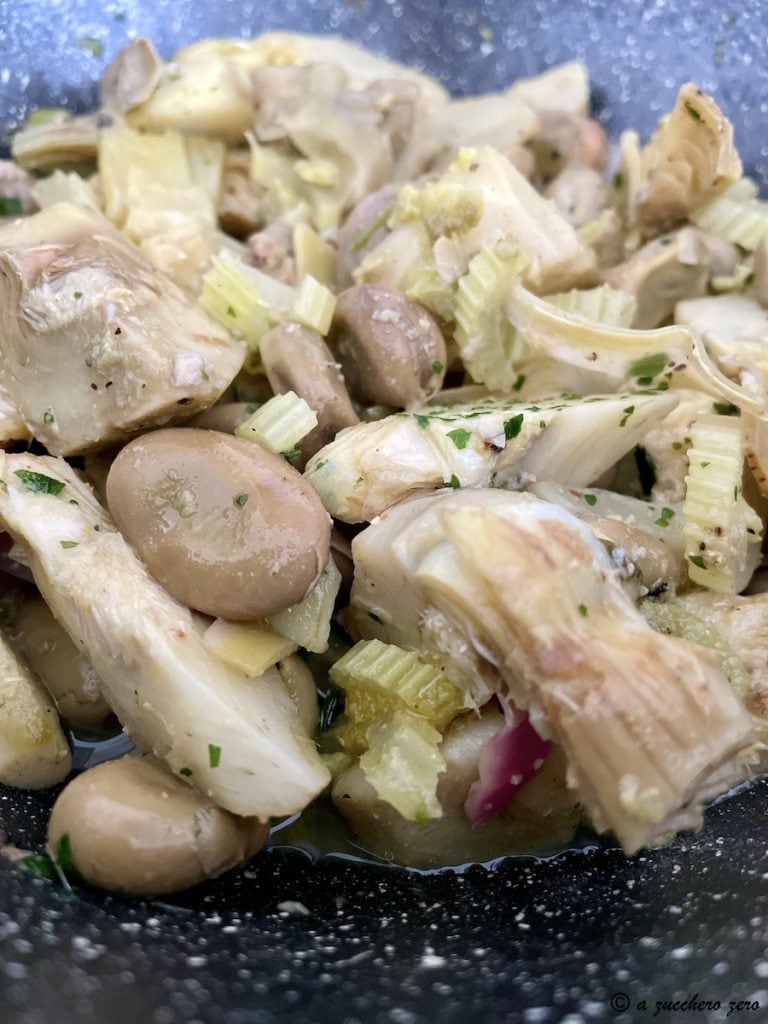
Pour the pasta into the pan with the vignarola and mix well to flavor.
Plate.
Grind a little more pepper and drizzle with a splash of extra virgin olive oil to finish.Your pasta with artichokes and fresh fava beans or alla vignarola is ready.
Enjoy your meal!
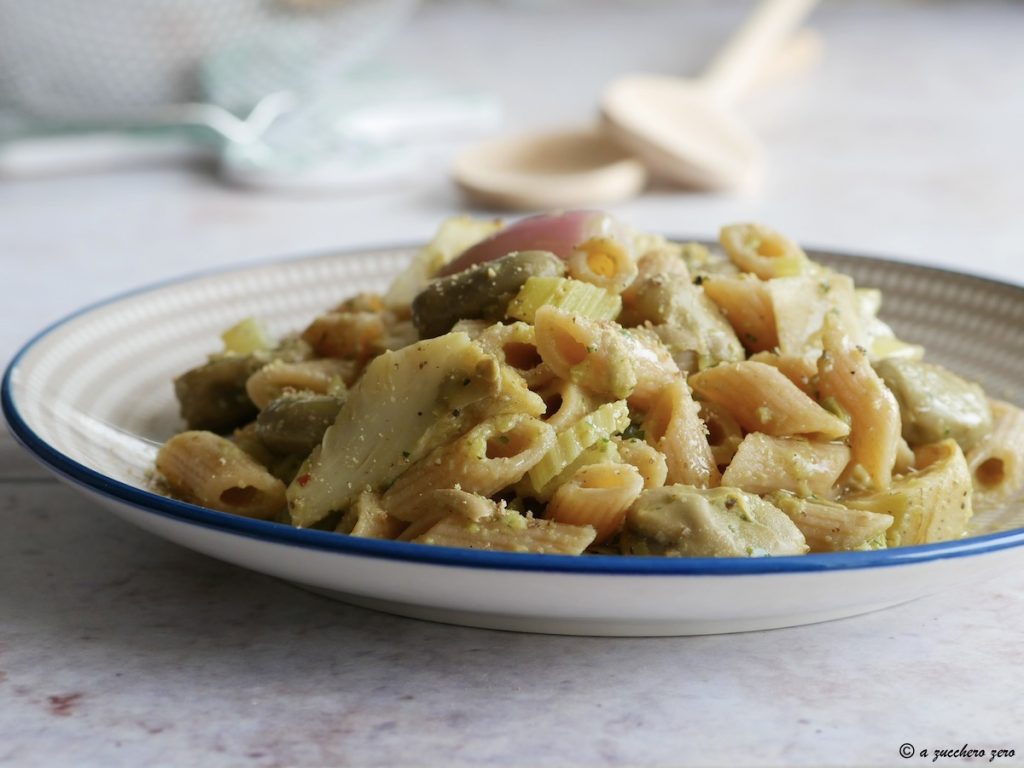
It is a complete dish; add your portion of vegetables so as to compose a balanced meal or single plate that helps keep blood sugar stable.
Storage, tips and variations
Storage
The vignarola with artichokes and fava beans keeps in the refrigerator for 1-2 days in an airtight container.
Reheat in a pan adding a splash of water.
Tips and variations
Use whole wheat pasta to increase fiber content.
Add a sprinkle of grated lemon zest over the pasta.
Prepare the vignarola with artichokes, fava beans and peas for a more traditional version.
FAQ – Questions and Answers
FAVA BEANS AND DIABETES
Glycemic index of fava beans: GI 40.
The glycemic index of fava beans is higher than that of other legumes, and it also increases with cooking.
– Can I eat fava beans? This is a question you should ask your diabetologist.
– Can people with diabetes eat fava beans? Follow your dietary plan; ours includes them.
Generally, in cases of hyperglycemia, prediabetes and diabetes, cooked fava beans can be eaten without exceeding portions.Can I use frozen fava beans?
Yes.
Add them directly to the pot during cooking without thawing.