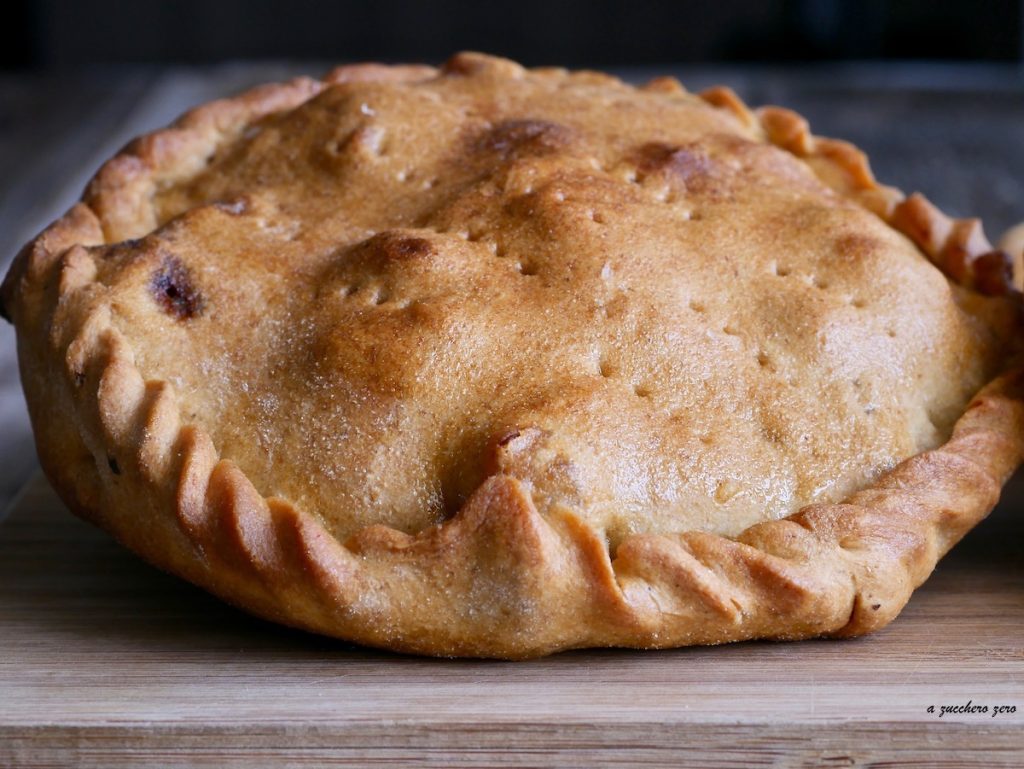
Today we prepare the Ragusana meat impanate.
The meat impanata is a typical dish of the Ragusana Christmas and Easter tradition.
For the impanata the dough is rolled thicker than for the scaccia, filled and closed like a round savory pie with a meticulous trim called riefico.
The dough for traditional Ragusana scacce is made with re-milled durum wheat semolina.
You can also prepare it with whole durum wheat semolina.
With or without yeast.
The filling is made with seasoned deboned raw meat.
Variations:
– turkey impanata;
– pork impanata;
– chicken impanata;
– lamb impanata.
You might be interested in:
- Difficulty: Medium
- Cost: Moderate
- Preparation time: 40 Minutes
- Cooking time: 1 Hour
- Portions: 4 People
- Cooking methods: Electric oven
- Cuisine: Italian Regional
- Region: Sicily
Ingredients
Wholewheat dough is slightly more delicate to handle and roll out.
– if you are a beginner;
– if you knead by hand;
I recommend using re-milled durum wheat semolina.
You can prepare the dough with or without yeast.
- 3 cups re-milled durum wheat semolina (or wholewheat)
- 1 1/4 cups water (lightly sparkling)
- 1 tsp extra virgin olive oil
- 1 tsp salt
- pinch baking soda
- 3 cups re-milled durum wheat semolina (or wholewheat)
- 1 1/4 cups water (lightly sparkling)
- 1/3 tsp active dry yeast (Mastro Fornaio PANEANGELI)
- 1 tsp extra virgin olive oil
- 1 tsp salt
- 1.1 lb turkey (meat)
- pinch salt
- pinch mixed peppercorns (with grinder)
- to taste chopped parsley
- 1 drizzle extra virgin olive oil (for finishing)
Instead of 1 g of dry yeast you can use:
– 3 g fresh yeast;
– 4 g dried sourdough starter.
Sparkling water helps make the dough lighter and softer.
You can also safely use still water.
Likewise, you can use pork, chicken or lamb [lamb deboned or not, according to taste].
Suggested Tools
I recommend using a stand mixer, although it is possible to work the dough by hand.
- Coltello
- Cutting board
- Kitchen scale digital
- Mixer with hook
- Bowl for proofing with lid
- Work board dough board
- Rolling pin
- Baking sheet 9 3/4 x 11 1/2 in
- Parchment paper
Preparation
In the bowl of the stand mixer pour:
– the semolina or whole semolina;
– a pinch of baking soda;
– the salt;
– the oil;
and start the mixer at speed 1.
Continue mixing at speed 2 for about 10 minutes, gradually adding all the water little by little.
The dough must come away from the sides of the bowl and be elastic and firm.
Transfer the dough to a work surface and knead briefly by hand to form a ball.
Dust the bottom of a bowl with a little semolina and place the ball inside.
Seal the bowl with a lid or wrap it with cling film.
Let the dough rest at room temperature for about an hour.
After this time, your dough without yeast will be ready to use.Heat the water: it should be lukewarm, not hot.
Pour the lukewarm water into a measuring cup, add and dissolve the yeast.
In the bowl of the stand mixer pour:
– the semolina or whole semolina;
– the oil;
and start the mixer at speed 1.
Continue mixing at speed 2 for about 10 minutes, gradually adding all the water in which you dissolved the yeast and the salt halfway through mixing [so that it does not come into direct contact with the yeast].
The dough must come away from the sides of the bowl and be elastic and firm.
Transfer the dough to a work surface and knead briefly by hand to form a ball.
Dust the bottom of a bowl with a little semolina and place the ball inside.
Seal the bowl with a lid or wrap it with cling film.
Store it in a cool, dark place.
[see photo 01]About 4 hours after kneading
Turn the dough out onto a work surface lightly dusted with a little semolina.
Knead it a few minutes by hand and reshape it into a ball.
Place it back in the bowl, seal it and put it back in the same place.
[see photo 02]About 24 hours after kneading
* after 24 hours the dough should be doubled or almost doubled.
Various factors affect proofing such as flour, yeast and environmental conditions.
You can use it earlier but long fermentation makes the dough easier to digest.
[see photo 03]Turkey meat refers to the deboned meat taken from the thigh [upper thigh and drumstick] of the animal.
Buy the turkey meat from your trusted butcher, asking for it already deboned, skinned and trimmed.Cut the turkey into regular cubes for even cooking.
Place the meat in a bowl and season it with:
– salt;
– pepper;
– chopped parsley;
– a drizzle of extra virgin olive oil;
and mix.
Seal the bowl with a lid or wrap it with cling film.
Place it in the fridge and let the meat marinate for a few hours.Similarly, you can use pork, chicken or lamb [lamb deboned or not, according to taste].
Your dough for traditional or wholewheat Ragusana scacce is ready to be used for preparing the impanate.
Once the filling is ready:
– turn the dough out onto a work surface lightly dusted with a little semolina;
– work it a few minutes by hand to restore elasticity and reshape it into a ball.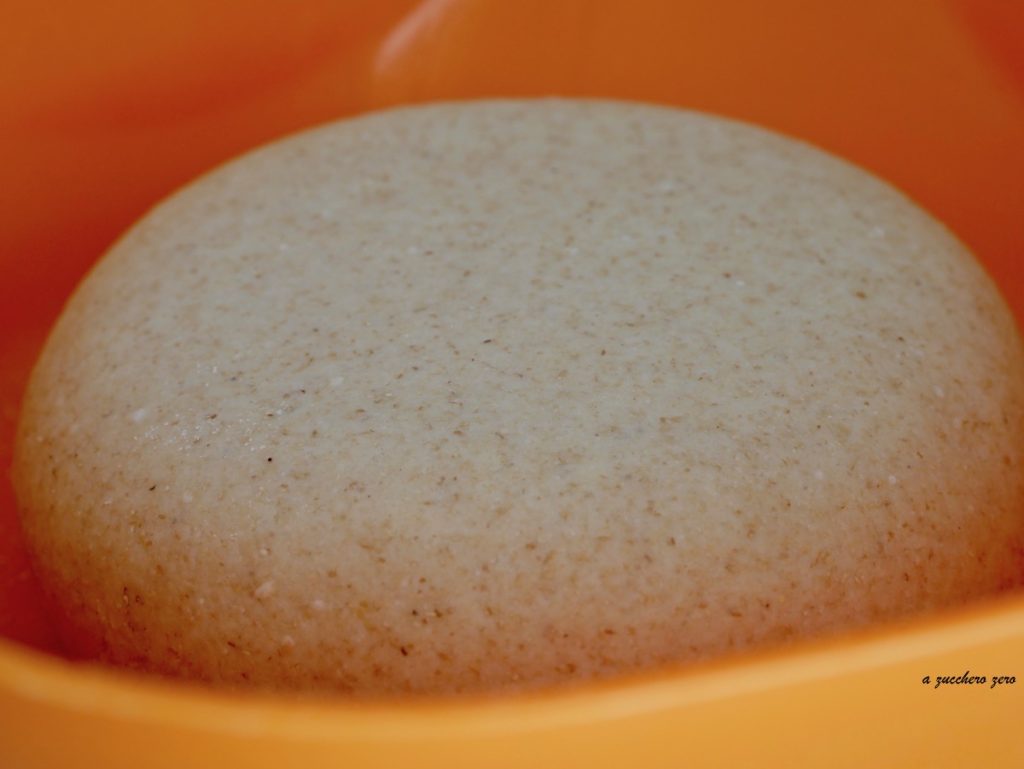
You can proceed with rolling out and filling the impanate.
For each impanata you need 2 dough balls:
– a ball weighing about 4 oz for the base – slightly larger in diameter;
– a ball weighing about 2.5 oz for the top – slightly smaller in diameter;
[thanks to Giovannella, my friend Sara’s mother, for the tip on ball weights].Line a baking sheet with a sheet of parchment paper.
Roll each ball with a rolling pin, helping yourself with a little semolina, until you obtain a disk about 3–4 mm thick [not too thin, it must support the filling].
If the dough tends to contract, let it rest for 5 minutes and then continue rolling.
It is a sequence of: flour, roll, flour, roll, rotate and so on.
* for a regular shape cut the disks using cookie cutters, plates, bowls or lids.Spread the meat over the larger disk [base], leaving the edges free.
Cover with the smaller disk [top].
Seal the edges well by pressing with your fingers to prevent liquids from leaking during cooking.
Turn the edge over itself obtaining the characteristic rope or rieficu or simply close it as if it were a calzone.
Prick the impanata with a fork in several places.
* grandma’s trick: if you made impanate with different fillings, prick them with a fork to embroider the initials of the filling, e.g.: T for turkey or P for pork or C for chicken or L for lamb.[step-by-step images valid for every type of filling].
Place the impanata on the baking sheet.
Set the oven as follows:
– temperature 356°F;
– convection mode.
Preheat well.
Bake for about 1 hour until golden, and check the cooking.
* times and temperatures may vary depending on the oven and the size of the impanate.If the impanate start to brown quickly risking that the crust burns before the meat is cooked:
– cover them with a sheet of aluminum foil or parchment paper [wet and wrung];
– lower the oven temperature by 10–20°C (about 50–68°F);
and finish cooking.How can I tell if the impanate are cooked inside?
The impanate should be well browned on the outside and, when cut, the meat must be completely cooked with no pink juices.For a less rustic appearance brush the surface of the impanate with a drizzle of extra virgin olive oil.
Your Ragusana meat impanate are ready.
I recommend waiting until they are warm or cold before slicing so that the cooking juices set and the flavors and structure stabilize.
Enjoy! 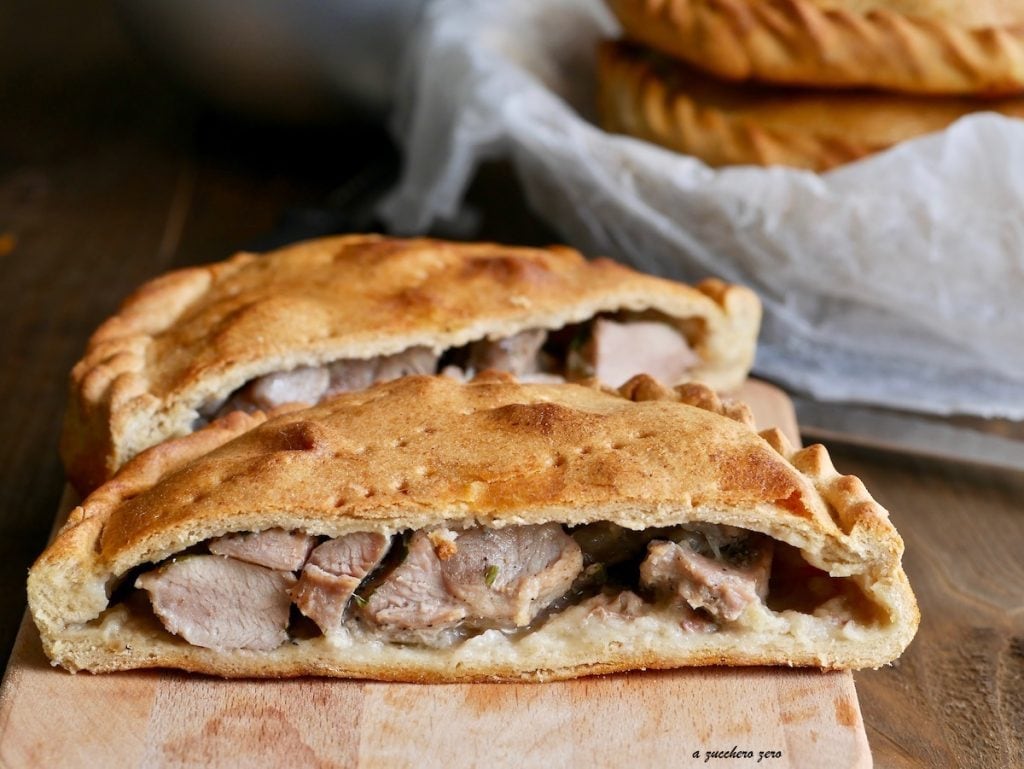
Meat impanate are a complete dish; add your portion of vegetables to compose a balanced meal or one-dish plate that helps keep blood sugar stable.
Storage, tips and variations
Storage
When preparing Ragusana scacce, multiple fillings are usually planned so that several types and flavors can be served; therefore dough rarely remains.
If you have leftover dough:
– you can use it to make delicious flatbreads or wholewheat piadine;
– you can freeze it by wrapping the ball in cling film; the evening before use transfer it to the refrigerator to thaw then let it sit a couple of hours at room temperature before rolling it out.
Impanate are also great the next day!
Impanate keep:
– at room temperature for 1 day;
– in the refrigerator for 2–3 days;
– in the freezer for 2–3 months.
Warm briefly in the oven to restore crispness.
Tips and variations
Add chopped garlic to the meat for a stronger flavor.
You can make smaller or single-serving impanate, reducing cooking times.
Gluten-free alternative
For a gluten-free dough for Ragusana scacce you can use gluten-free bread flour.
The pastry will obviously be less elastic.
FAQ – Questions and Answers
Dough for Ragusana scacce | semolina
The traditional dough for Ragusana scacce is made with re-milled durum wheat semolina.
Semolina generally has a favorable glycemic response.
Whole semolina – richer in fiber – remains the recommended choice for those who want a lower glycemic index dough.
Excellent semolinas from ancient grains: Maiorca, Perciasacchi, Russello, Senatore Cappelli, Tumminia.
To learn more click the following link: semolina and flours glycemic index.Can I use other flours?
Remember that the dough should always be elastic and firm.
Using other flours you might not achieve the characteristic result of the Ragusana scaccia.Dialectal and local curiosities
The term scaccia comes from schiacciare (to crush), referring to the flattened shape.
The impanata derives from the Spanish empanadas.
The scaccia with vegetables is variously known from Ragusa to Modica and surroundings as:
– scaccia;
– pastizzu if round;
– buccatieddu if half-moon shaped.Traditions
It is traditional to prepare the lamb impanata for the Easter table.