Traditionally, in Sicily the pancakes or sfinci or zeppole are prepared in November: St. Martin’s pancakes and during Carnival.
I thought long and hard about whether to publish this recipe on my blog – a zucchero zero – whose theme is preventing diabetes at the table but given that it’s a traditional and family recipe to which my mom and I are very attached, I decided to share it anyway.
Clearly, this is an exception that I hope you’ll forgive.
These are typical sweet leavened pastries filled with raisins and walnuts.
Pancakes or sfinci or zeppole
My mom’s dough is based on durum wheat semolina, water, and brewer’s yeast.
A simple dough with no butter, no milk, no eggs, and no potatoes like the original!
Once leavened you can prepare:
– simple pancakes;
– sweet pancakes;
– savoury pancakes.
These Sicilian pancakes are crispy on the outside and soft on the inside.
I’ll conclude with a personal anecdote: St. Martin’s pancakes were the culprit!
The “official taster” and I got engaged on November 12, 2015, right after a binge of pancakes devoured in the square with our group of walking friends – when sugar wasn’t yet a problem.
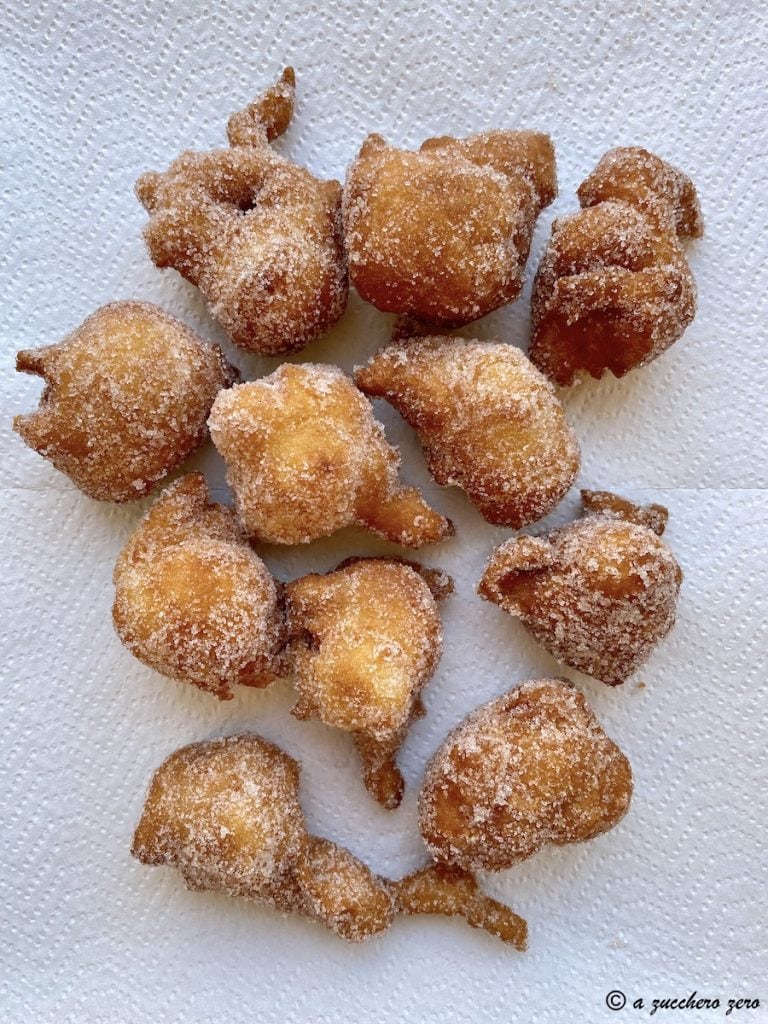
- Difficulty: Easy
- Cost: Cheap
- Rest time: 8 Hours
- Preparation time: 20 Minutes
- Cooking methods: Frying
- Cuisine: Italian
Ingredients
- 12.3 oz semolina flour
- 0.07 oz salt
- 2 tbsp sunflower oil (or extra virgin olive oil)
- 1 cup water (preferably slightly sparkling)
- 0.04 oz sugar
- 1 tsp dry yeast
- fennel seeds
- raisins (soaked and well drained)
- dried figs (chopped)
- apples (chopped)
- walnuts (chopped)
- chocolate chips
- anchovies in oil (drained and chopped)
- cheese (cubed or diced or shaved)
- sunflower oil
- 1 glass water
- granulated sugar
- ground cinnamon
Suggested Tools
- Bowl for dough with lid
- 1 Pastry board
- Paper towel for kitchen
- 1 Wok non-stick
- 1 Spoon
- 1 Glass
- 1 Skimmer
Preparation
THE NIGHT BEFORE
In a bowl, combine:
– 12.3 oz of semolina flour;
– 0.07 oz of salt;
– 2 tbsp of sunflower oil or extra virgin olive oil to taste;
and mix.Heat 1 cup of water – preferably slightly sparkling – , it should be warm, not hot.
Add 0.04 oz of sugar to the warm water – to activate the yeast – and 1 tsp of dry yeast, then mix until dissolved.
Add enough water with sugar and yeast – all, if needed – to the dry ingredients and mix until you get a sticky and elastic dough, not liquid.
Seal the bowl with a lid or plastic wrap.
Let the dough rise overnight.
Rising times may vary, shortening if the temperature is higher.THE NEXT MORNING
The pancake dough is well risen.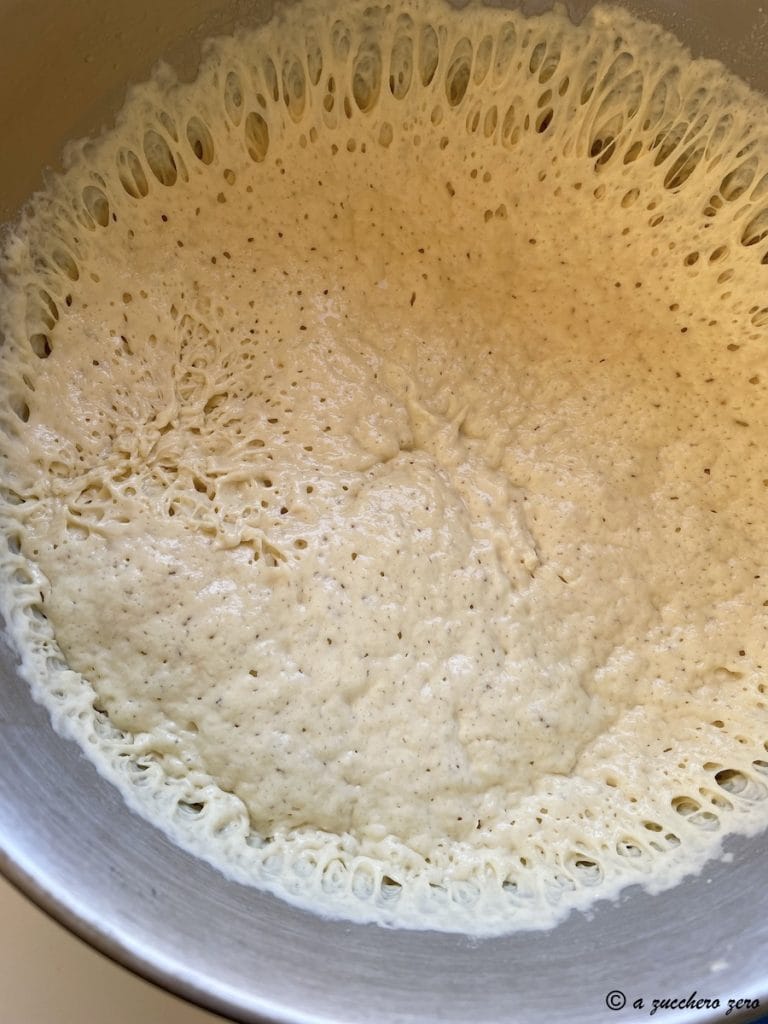
Once risen, you can prepare:
– simple pancakes;
– sweet pancakes;
– savoury pancakes.Do not add anything to the dough.
Add one or more ingredients to the dough to taste:
– fennel seeds;
– soaked and well-drained raisins;
– chopped dried figs;
– chopped apples;
– chopped walnuts;
– chocolate chips.Add drained and chopped anchovies to the dough and/or cheese cubed or diced or shaved – caciocavallo, primo sale, provola, scamorza, grana padano, parmigiano reggiano.
On a work surface or a tray, lay a couple of layers of kitchen paper towels.
In a wok or non-stick pan, pour and heat plenty of oil for frying.
To determine when the oil is at the right temperature, drop a little bit of dough into it and see if it sizzles.Prepare a spoon or a melon baller.
Prepare a glass with water to dip the spoon or baller.
Wet the spoon or baller every time, scoop up some dough, and let it slide into the oil.Fry the pancakes, turning them occasionally, until they are evenly golden.
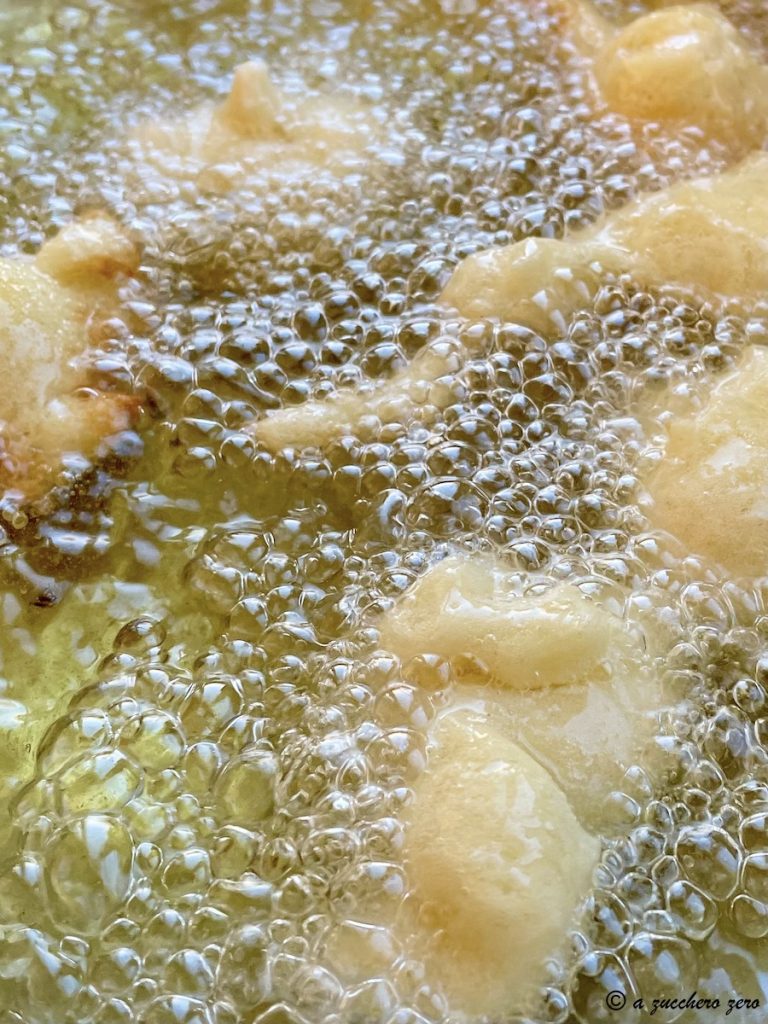
Remove the pancakes from the oil with a skimmer, draining them well, and transfer them to the kitchen paper towels.
Continue until all the dough is used.
Replace the kitchen paper towels when they become too greasy.
Traditionally, sweet pancakes are coated in plenty of granulated sugar.
In a bowl, mix granulated sugar and cinnamon.
Roll the pancakes in the sugar and cinnamon, letting the excess fall off.My secret to make less sugar adhere is to hold the pancake by a tip and let the sugar fall from above so that just enough sticks, and the rest slides off.
Your Sicilian pancakes – for St. Martin or Carnival – simple, sweet, or savoury are ready.
Enjoy your meal!
Storage, tips, and variations
We consider the pancakes a treat, mainly due to the cooking method, to be enjoyed at the end of a complete meal – rich in fiber and vegetables that slow down sugar absorption – and in limited quantities.
In case of hyperglycemia, it is advisable to avoid adding raisins rather than dried figs and forgo coating them in granulated sugar.
Alternative for those suffering from hyperglycemia:
– Low glycemic index pancake dough to be baked.
If left over, place the pancakes in an airtight container at room temperature for up to 24 hours – they will lose their crispness and fragrance after that.
FAQ (Questions and Answers)
What flour can I substitute for semolina?
The original recipe uses semolina, I recommend not changing the main ingredients to avoid compromising the texture and final result.
Why use sparkling water in the dough?
Sparkling water makes the dough lighter and fluffier.
You can still use plain water if you prefer.St. Martin
November 11 is St. Martin’s Summer
The expression refers to a period of good autumn weather and is linked to the legend of Martin: it is said that on an autumn day, probably November 11, the saint gave part of his cloak to a poor man and then the sun came out.
Source: tg24.sky.it .
The occasional sweet for St. Martin is a large round biscuit: viscotta di San Martinu or sammartini or sanmartinelli, and to keep the sacred traditions of the ancestors intact, it must be dipped in wine.
Source: Enrico Onufrio.
St. Martin and the beginning of the agricultural year
U bonu siminatu a menzu novemmaru è cuminsatu: sinu a san Martin favi, puseddi e linu; doppu san Martinu, megghiu ‘n terra ch’o mulinu.
The good sown before mid-November has begun: until – the feast of – St. Martin – sow – beans, peas, and flax; after St. Martin – the wheat – is better in the ground than at the mill.
On St. Martin’s Day, open the barrel and taste the wine.