All the tips to prepare beautiful and delicious ricotta ravioli that won’t open during cooking!
Ricotta ravioli are a typical specialty of Ragusa: the signature dish of rural farmhouses, but can you imagine making them at home?
Whole Wheat Semolina Ravioli
The homemade eggless whole wheat dough is simple to prepare: a fresh pasta made with stone-ground whole wheat durum semolina and water, handcrafted.
Whole Wheat Filled Pasta
Once the dough is ready, you can fill your pasta with ricotta or any filling you prefer.
The ricotta is cow’s ricotta; in Ragusa, they add sugar [sweet ravioli], in Modica, they do not; for obvious hyperglycemia reasons, we’ll follow the Modican example.
Rework the scraps and make cavatieddi, a Sicilian tradition, to serve cavati and Ragusa-style ravioli: a typical Sunday and festive dish, especially during Carnival.
The Ragusa-style ricotta ravioli are traditionally served with pork sauce.
The lean sausage sauce is an excellent compromise between respecting tradition and maintaining the balance of the meal.
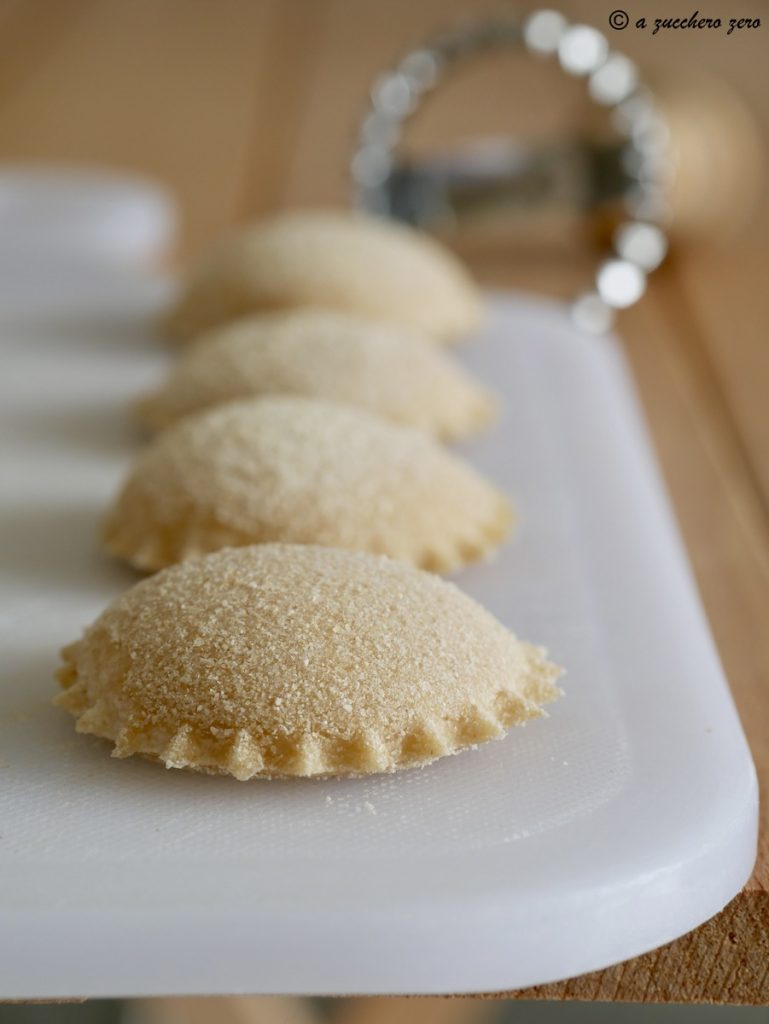
- Difficulty: Medium
- Cost: Affordable
- Rest time: 30 Minutes
- Preparation time: 40 Minutes
- Portions: 2 People
- Cooking methods: Boiling
- Cuisine: Regional Italian
- Region: Sicily
Ingredients
The whole wheat dough is slightly more delicate to work with and roll out.
If you’re a beginner, I recommend using re-milled durum wheat semolina.
Yields 16 ravioli with a 2-inch diameter.
- 7 oz semolina (whole wheat durum)
- 1 pinch salt
- 3.4 oz water
- as needed semolina (for rolling the dough)
- 7 oz cow's ricotta (preferably 1-2 days old, well-drained)
- 1 pinch salt
- 1 pinch mixed peppercorns (with grinder)
- as needed marjoram (preferably fresh leaves)
In Ragusa, sugar is added [sweet ravioli], I add a pinch of cinnamon.
Suggested Tools
- Knife
- Cutting Board
- Mat non-stick silicone
- Mold for ravioli
Preparation
Fresh pasta has a different glycemic index than dry pasta and a low fiber content.
The pasta-making process of durum wheat, which produces dry pasta, creates a protective film that helps slow down starch gelatinization during cooking.
This does not happen with fresh pasta like ravioli, lasagna, and shapes made with small machines or by hand.
Therefore, fresh pasta made with the same semolina/flour has a higher glycemic index.
Source: montignac.it.
Hyperglycemia Measures | Prediabetes and Diabetes
– dough made with whole wheat semolina rich in fiber;
– natural ricotta without added sugar.
Pour into a bowl:
– the semolina or whole wheat semolina;
– a pinch of salt;
– the water;
and start mixing directly in the bowl.If necessary, add very little water.
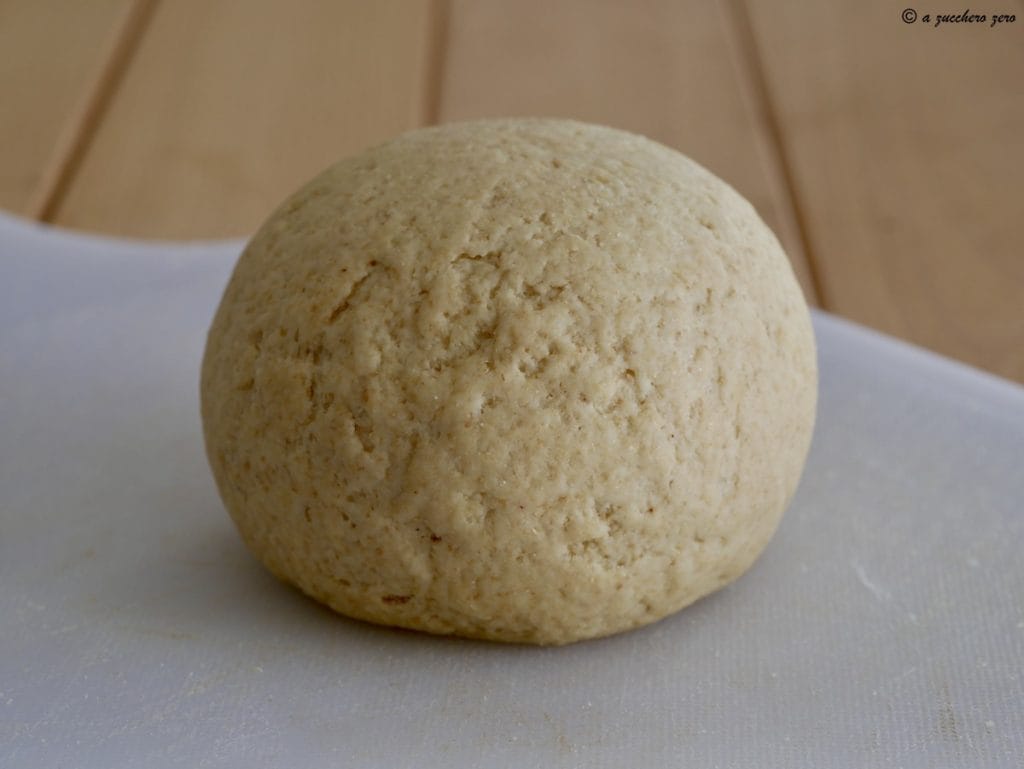
Transfer the dough to a lightly floured work surface and knead until you get a firm and elastic dough.
I recommend using a non-stick silicone mat.
Form a ball, put it in a freezer bag, or wrap it in plastic wrap and let it rest in the refrigerator for at least 30 minutes.
It will be easier to work with and roll out.
Preferably 1-2 days old, well-drained.
Put the well-drained ricotta in a bowl and season with:
– a pinch of salt;
– a pinch of pepper;
– as needed marjoram;
– a pinch of cinnamon [optional];
and mash coarsely with a fork.Transfer the ricotta to a piping bag and keep it in the fridge until ready to use.
After 30 minutes, take the dough out of the refrigerator.
Transfer the dough to a lightly floured work surface.
I recommend using a non-stick silicone mat.
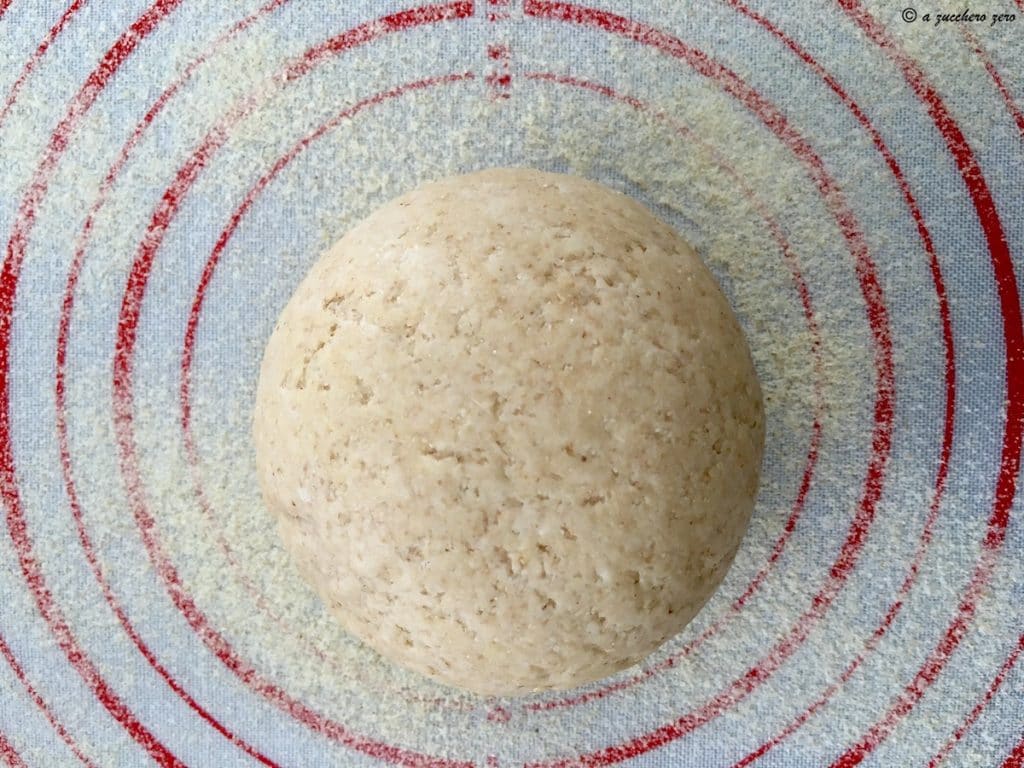
Divide the dough into two equal pieces and roll each piece with a rolling pin.
You should obtain two sheets:
– thin but not cracked, so the filling won’t leak;
– roughly the same shape and size so you can layer them;
– wide enough to cut the ravioli without reworking and rolling again [if not, don’t worry, just repeat the process].Flour the sheet only on the side that touches the work surface.
The upper surface will remain clean and adhere well to the second sheet.Distribute the ricotta on the first sheet – using the piping bag – in evenly spaced dollops so you can cut the ravioli with the mold.
Using a piping bag instead of a spoon prevents the sheet from getting dirty, ensuring the ravioli seal well.Carefully place the second sheet over the first, with the unfloured side facing inwards.
Use the mold to cut the ravioli, pressing firmly to ensure the edges separate cleanly and seal the filling.The number and size of the ravioli depend on the mold used.
I used a round ravioli mold with a wooden handle and a 2-inch diameter, yielding 16 well-filled ravioli.
The edges help seal the ravioli perfectly, preventing the filling from leaking during cooking.
Choosing the right mold is crucial for the successful outcome of the ravioli.For added security, you can reseal the ravioli edges by gently pressing with your fingers.
Some use a needle to prick the ravioli and release air.Lightly flour to prevent sticking, place them on a tray lined with parchment paper, and store them in the refrigerator until cooking time.
Your whole wheat ricotta ravioli are ready.
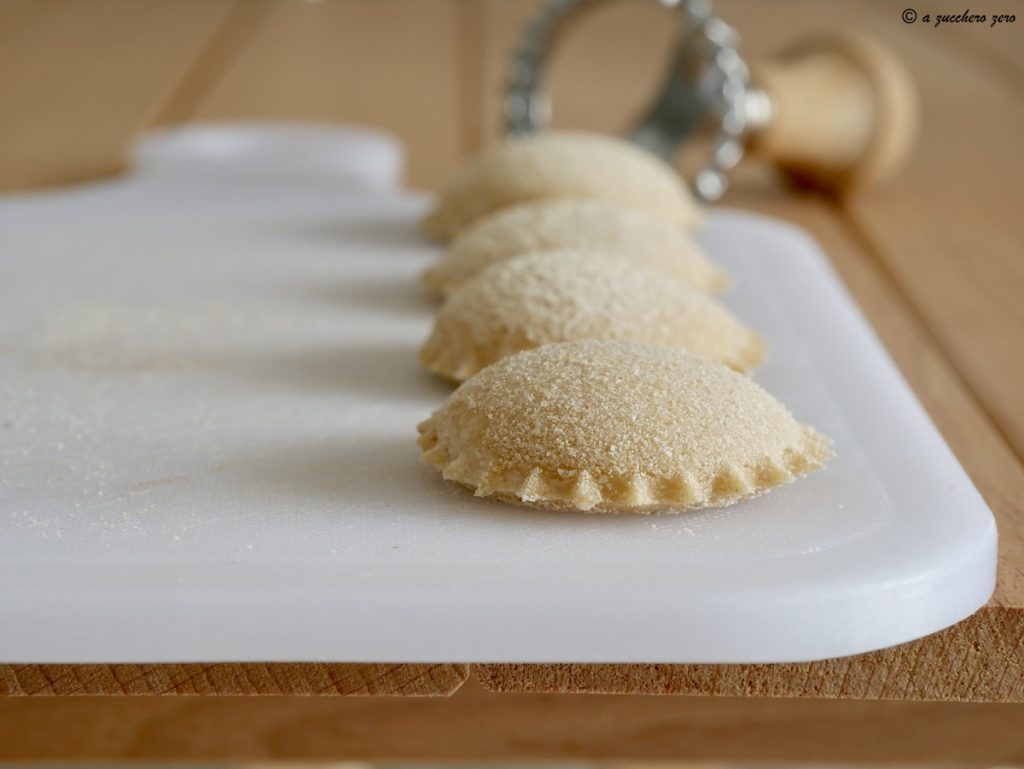
The protein and fat components of the meal are included with the carbohydrates in the ricotta ravioli, dress with a simple sauce and add your portion of vegetables to create a balanced meal or one-dish meal that helps keep blood sugar stable.
Rework the scraps and make cavatieddi of Sicilian tradition to serve cavati and Ragusa-style ravioli.
First cut into strips 0.4-0.8 inches wide, then into chunks.
Use a specific gnocchi board or a fork to make cavati, cavatelli, or dumplings.
Rework the scraps and make more dumplings until all the dough is used.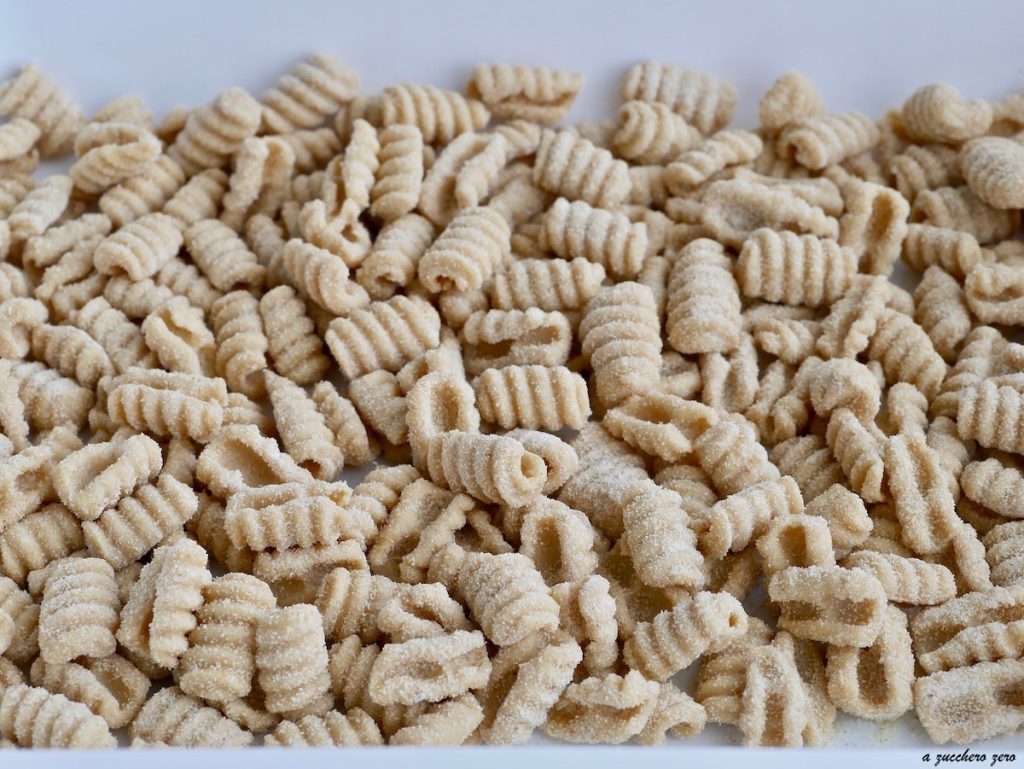
– do not plunge the ravioli but gently slide them into boiling water;
– similarly, do not drain the ravioli by pouring them into a colander but lift them with a slotted spoon and carefully transfer them to the colander.
By following these precautions, your ravioli are unlikely to open.Ravioli
Cooking time: 5-7 minutes.Cavati
Cooking time: 5 minutes.Cook ravioli and cavati in salted boiling water for the indicated times.
As soon as they rise to the surface, drain and rinse quickly under cold water.
The protein and fat components of the meal are included with the carbohydrates in the ricotta ravioli, dress with a simple sauce.
The ricotta ravioli can be dressed with numerous sauces: from tomato sauce to oil and sage.
The Ragusa-style ricotta ravioli are traditionally served with pork sauce.
The lean sausage sauce is an excellent compromise between respecting tradition and maintaining the balance of the meal.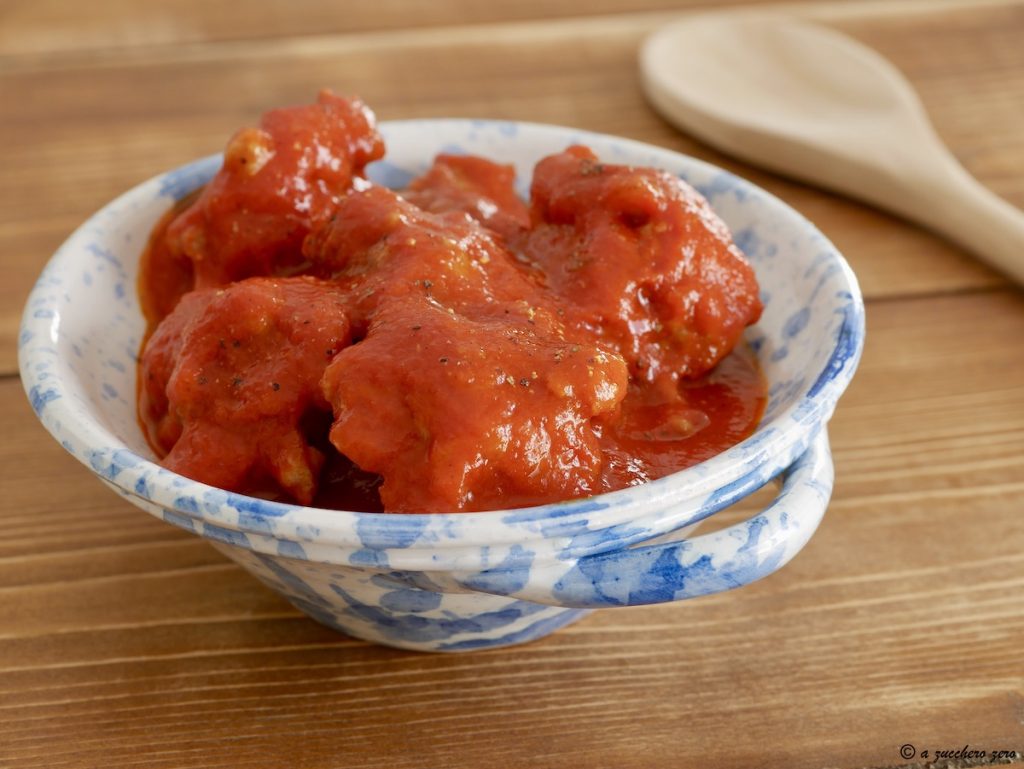
Once the dough is ready, you can fill your pasta with ricotta or any filling you prefer, including meat, fish, sausages and cheese, legumes, vegetables.
Follow your meal plan.
Storage, Tips, and Variations
The ricotta ravioli can be stored in the refrigerator for 24 hours, well-spaced on a floured tray and covered.
With a few simple substitutions, this recipe can easily adapt to:
– a lactose-free version;
– a gluten-free version.
Gluten-Free Alternative
For a gluten-free fresh pasta dough, you can use a gluten-free pasta mix.
Once cooked, it’s advisable to consume them immediately.
If there are leftovers, store them in the refrigerator for no more than 24 hours.
FAQ (Questions and Answers)
Fresh Pasta Dough | Semolina
Semolina generally has a good glycemic response.
Whole wheat semolina – richer in fiber – remains the recommended choice for those looking for a low glycemic index dough.
For more information, you can click the following link: semolina and flours glycemic index.Can I use other flours?
You can replace semolina or whole wheat semolina with whole flour [wheat, spelt, or rye], keeping in mind that the amount of water absorbed varies from flour to flour.
Remember that the dough should always be both elastic and firm.Why do ravioli open during cooking?
Due to too thin a sheet, poorly sealed edges, or too much air inside.
How much eggless whole wheat fresh pasta can I eat?
The amount depends on your meal plan and the guidelines provided by your nutritionist.
Fresh pasta to dry pasta ratio
130 g of fresh pasta corresponds to 100 g of dry pasta [Kcal 353].
How many ravioli per person?
The standard recommended portion for fresh ricotta ravioli is generally between 150 and 250 grams per person.
The weight varies depending on the size of the ravioli.
If they are large ravioli or ravioloni, consider 8-10 pieces per person.
If they are small, weight is the most reliable indicator.
The amount depends on your meal plan and the guidelines provided by your nutritionist.Can ricotta ravioli be frozen?
Ricotta ravioli can be frozen and stored in the freezer for up to 2-3 months.
Place them in the freezer on a tray with enough space between them.
Once frozen, transfer them to suitable bags for complete preservation.
My advice is to consume them fresh or store them in the fridge for no more than 24 hours, as the moisture in the ricotta could compromise their quality.Prediabetes and Cheese
Follow your meal plan.
In general, cheese should be consumed in moderation – no more than twice a week – preferring fresh over aged varieties, such as: cottage cheese, cow’s ricotta, light cream cheese, mozzarella, feta.