
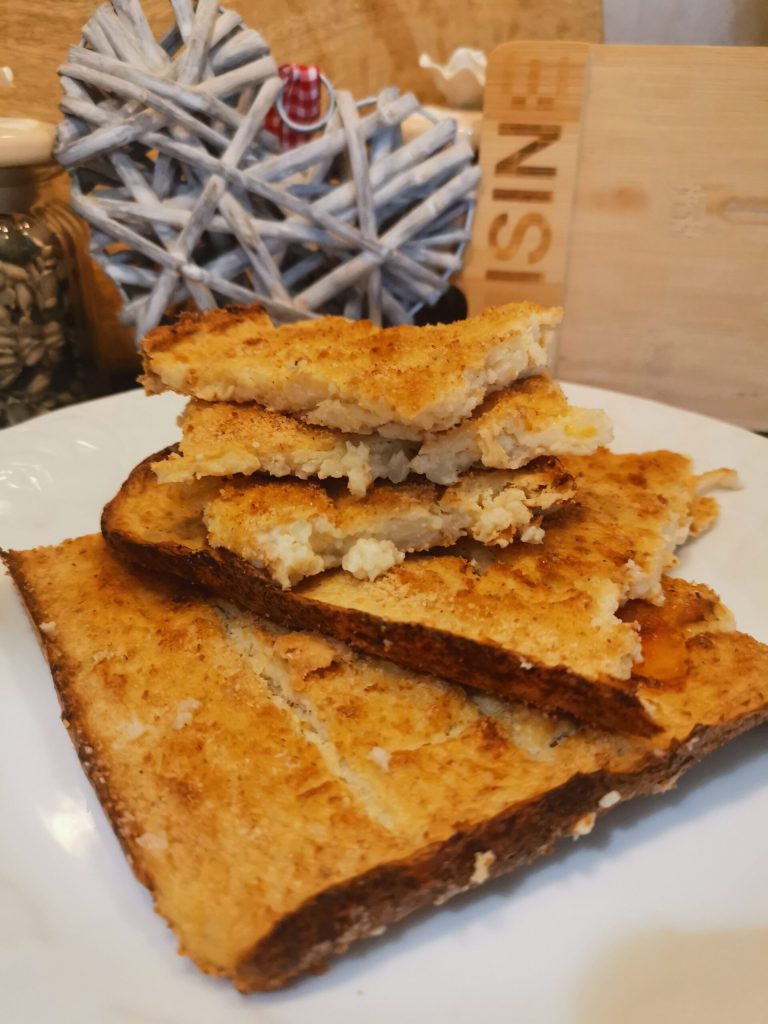
The cauliflower casserole is a simple preparation that will give you a delicious and nutritious main dish.
It’s made with cauliflower and a few other ingredients, and you’ll see, it will win over even the most skeptical of cruciferous vegetables. Shall we make it?
If you want to take a look, I’ll leave you right below some other recipes with this vegetable:
- Difficulty: Very Easy
- Cost: Very Cheap
- Preparation time: 30 Minutes
- Portions: 6
- Cooking methods: Stove, Oven
- Cuisine: Italian
- Seasonality: Autumn, Winter, and Spring
Ingredients
Let’s see the ingredients we need to prepare the recipe
- 1 cauliflower (28-32 oz medium size)
- to taste grated Parmesan
- to taste breadcrumbs
- to taste salt
- to taste nutmeg
- provolone (2 oz)
- potatoes (4 medium size)
- 1 egg
- to taste extra virgin olive oil
Steps
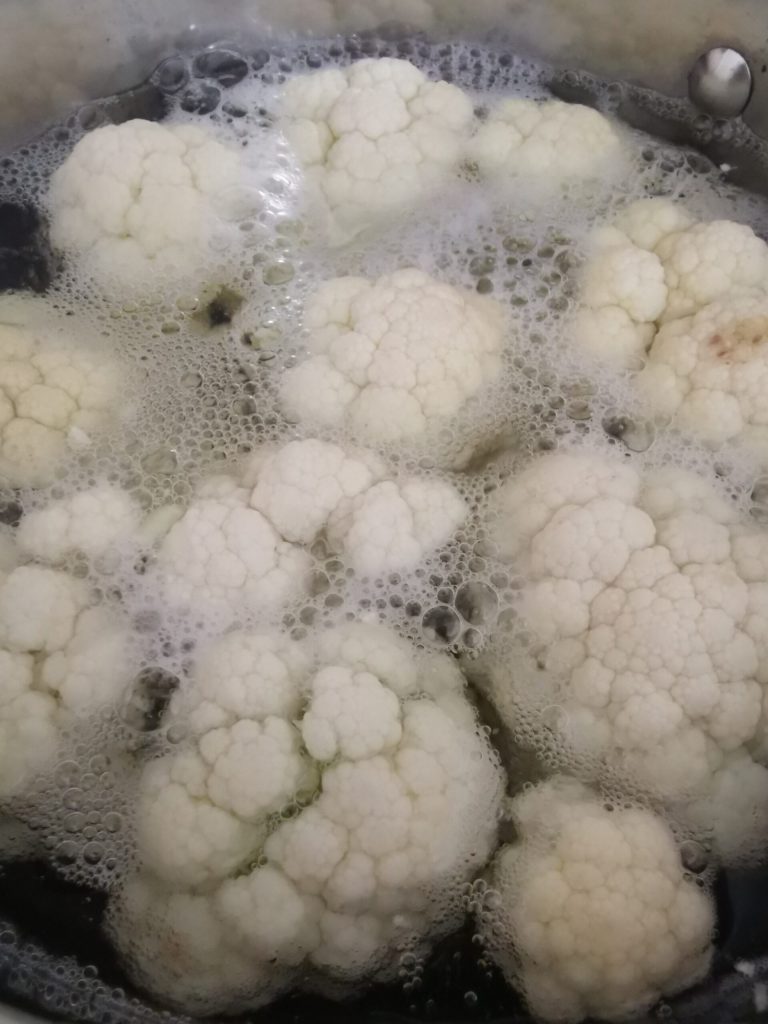
In a pot, bring salted water to a boil and add the cauliflower, previously washed and cut into florets. Once cooked, in the same water, boil the potatoes cut into cubes.
Drain both and mash into a puree.
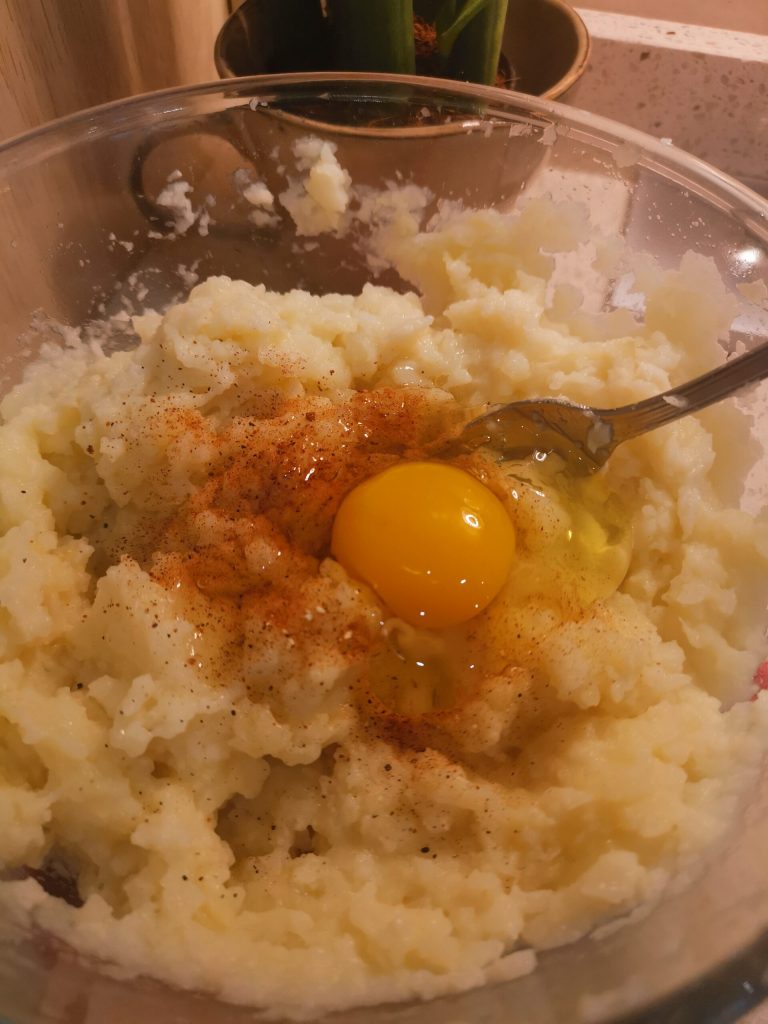
Once well combined, add an egg, diced provolone, adjust for salt, add nutmeg, and grated Parmesan.
Take a baking dish lightly oiled, and spread a layer of breadcrumbs on top.
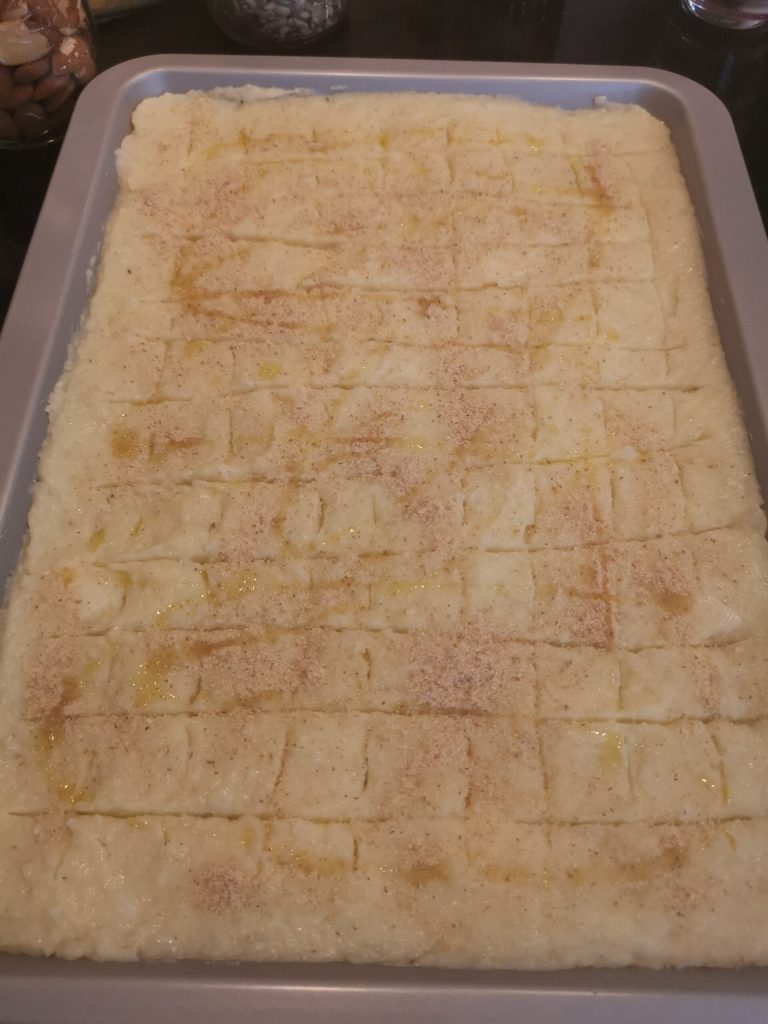
Now take the mixture, pour it into the baking dish, level it, and sprinkle the surface with some breadcrumbs, a dusting of Parmesan, and a drizzle of extra virgin olive oil.
Preheat the oven to 355°F fan-assisted, for about 30-35 minutes. Always adjust based on your oven’s cooking.
Take it out of the oven and enjoy this delight, which will also win over the little ones.
Storage and Tips
The cauliflower casserole can be stored in the refrigerator for two or three days.
If you don’t like provolone, you can substitute it with another cheese of the same consistency, like Asiago or Gruyere.
When cut into squares, you can also enjoy it during an appetizer.
FAQ (Frequently Asked Questions)
Have I convinced you to eat cauliflower?
You should know that this vegetable, besides being versatile for different preparations, is a great ally for our health.
It is a good source of vitamins, minerals, antioxidants, and dietary fiber. It also contains anthocyanins, powerful antioxidants that help protect cells from oxidative stress.
The information on beneficial properties that I like to leave you with is general guidance and in no way a medical opinion. Therefore, for any accurate info, it’s always best to rely on and consult a nutrition professional/doctor.
