How to make sourdough starter: the practical guide and secrets for a perfect dough.
There are different schools of thought on how to create and refresh sourdough.
Today I want to talk about my experience and the great satisfaction that this “living organism” can give me.
Sourdough is nothing more than a simple dough of flour and water well measured, left to ferment spontaneously with an “activator” (such as honey, apple pulp, or yogurt) to give the initial boost to the bacterial load. Unlike commercial yeast, sourdough is a complex ecosystem of yeasts and lactic bacteria. This balance provides baked goods with superior digestibility, an unmistakable aroma, and a much longer shelf life.
When starting to make sourdough, you need to have a lot of patience, especially in the initial phase and follow all the refreshments regularly. This will allow our dough to become strong and be used after 30 days; however, if you can’t wait that long, you can use it after 15 days, but only if you have been regular with the refreshments. Now let’s see together how to make sourdough, the various tips, and refreshments until it is ready for baking.
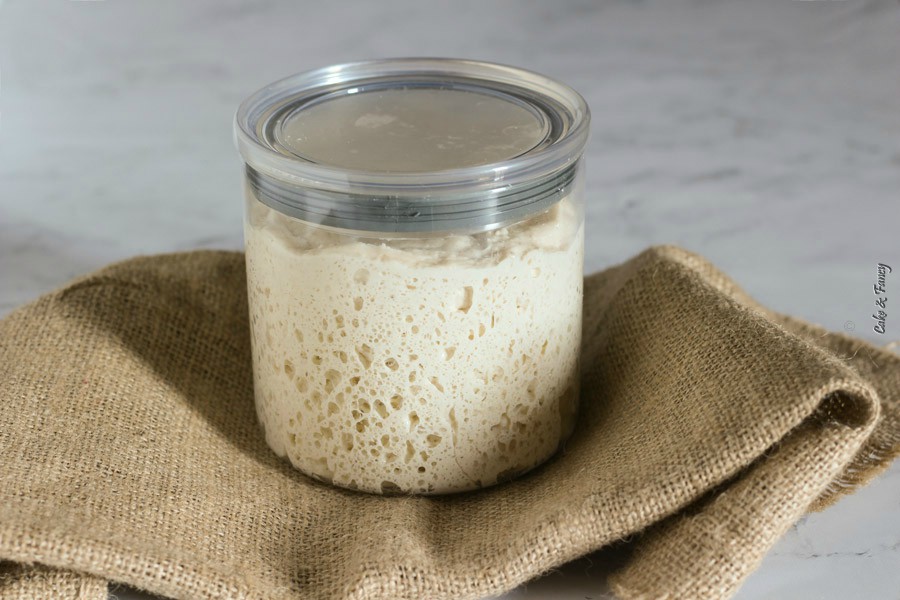
- Difficulty: Easy
- Cost: Very economical
- Rest time: 30 Days
- Preparation time: 5 Minutes
- Portions: 1 Piece
- Cooking methods: No cooking
- Cuisine: Italian
- Seasonality: All seasons
- Energy 331.64 (Kcal)
- Carbohydrates 72.31 (g) of which sugars 4.61 (g)
- Proteins 11.52 (g)
- Fat 1.00 (g) of which saturated 0.18 (g)of which unsaturated 0.78 (g)
- Fibers 2.90 (g)
- Sodium 4.39 (mg)
Indicative values for a portion of 100 g processed in an automated way starting from the nutritional information available on the CREA* and FoodData Central** databases. It is not food and / or nutritional advice.
* CREATES Food and Nutrition Research Center: https://www.crea.gov.it/alimenti-e-nutrizione https://www.alimentinutrizione.it ** U.S. Department of Agriculture, Agricultural Research Service. FoodData Central, 2019. https://fdc.nal.usda.gov
Ingredients for making sourdough starter
- 1 3/4 cups all-purpose flour
- 1/2 cup Water
- 1 teaspoon honey
Tools
- 1 Jar tall and spacious glass
- 1 Bowl
- 1 Scale
- 1 Spatula
How to Make Sourdough Starter
Preparation
Place the flour, water, and teaspoon of honey in the bowl. Initially knead with a spatula or fork, then with your hands, until you get a smooth dough. Place the dough inside the jar and cover with a gauze or cotton cloth, as it needs to breathe, now let it rest at room temperature away from drafts for 48 hours.
After 48 hours, refresh with:
1 3/4 cups All-purpose Flour
1/2 cup water
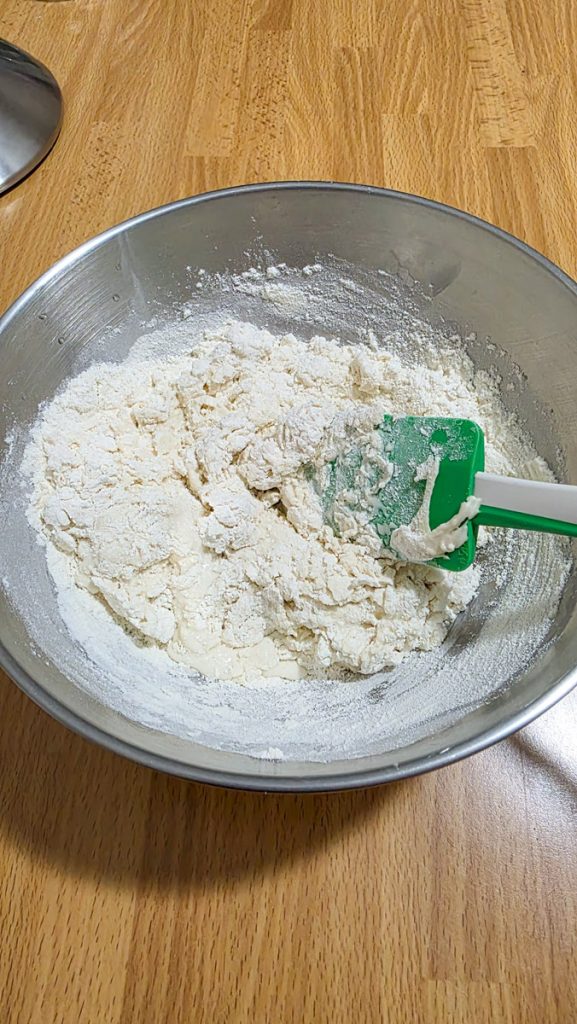
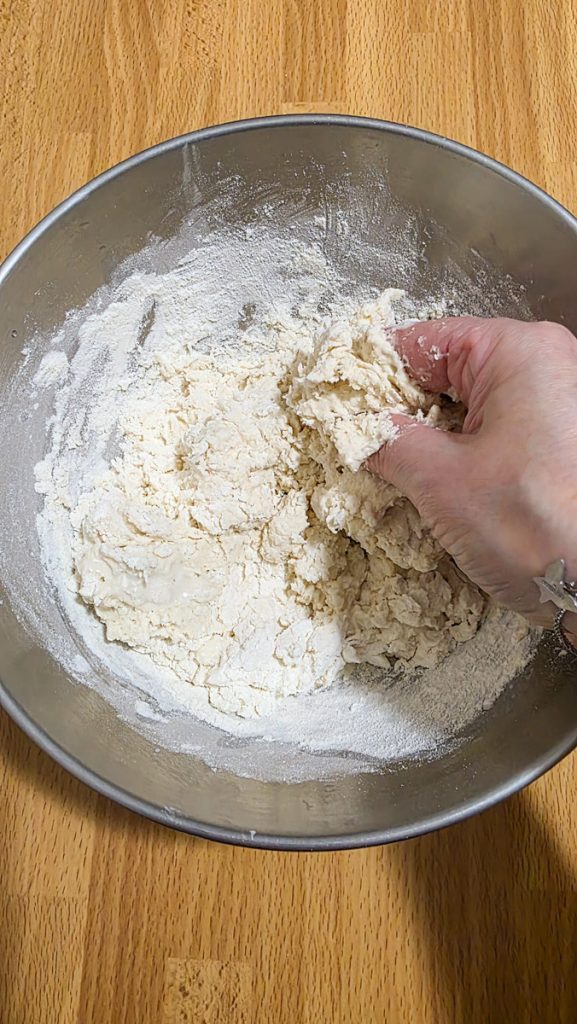
At this point, take our starter and remove 1 3/4 cups of dough, discard the top part, which is less active, try to take the core of the dough, unfortunately, the remainder will have to be discarded. Put it in a bowl and add 1/2 cup of water, dissolve the paste and add 1 3/4 cups of flour. Knead and put the dough back in the jar, cover and let it rest for another 48 hours. You will gradually see the mixture forming the first bubbles, creating small cavities, and releasing a slightly acidic smell: it is a sign that it is growing.
Take the core of the dough 1 3/4 cups.
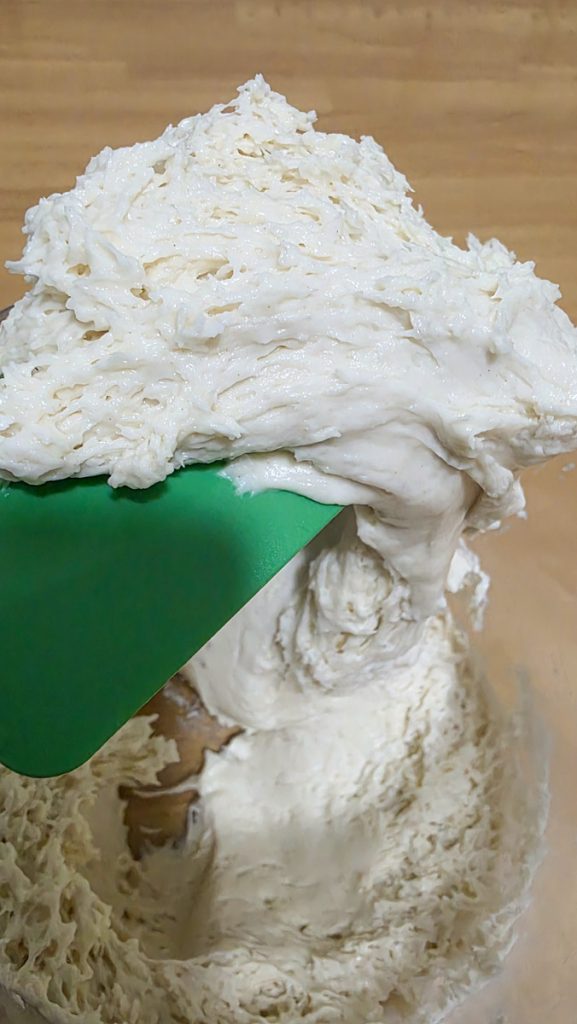
Place in the bowl with 1/2 cup of water.
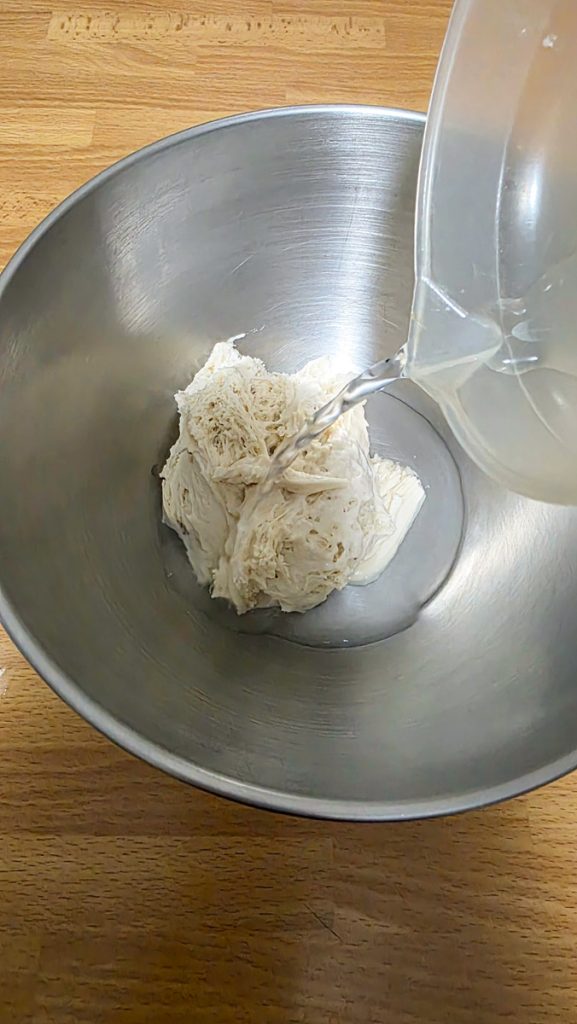
Dissolve the dough
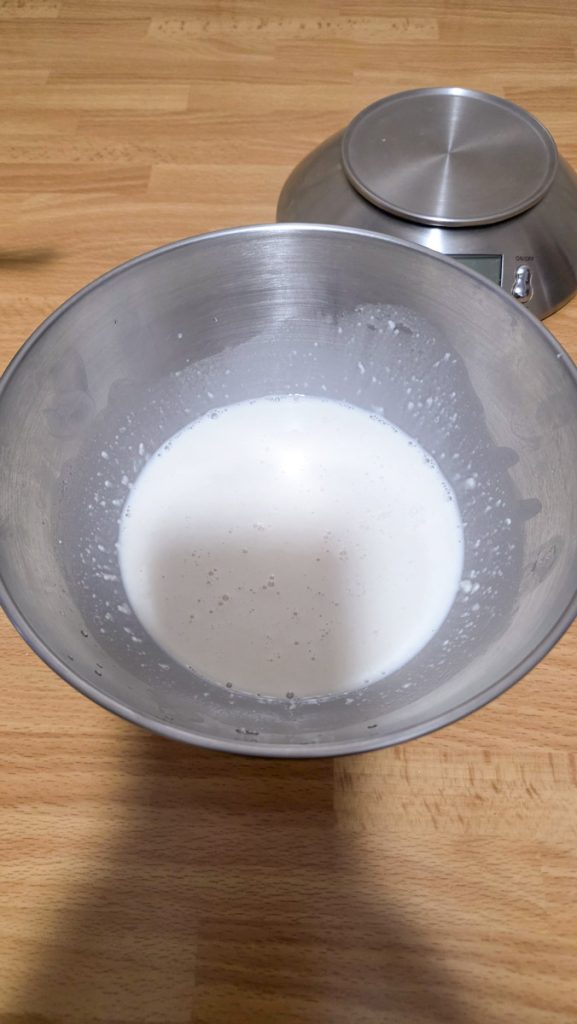
Add 1 3/4 cups of flour.
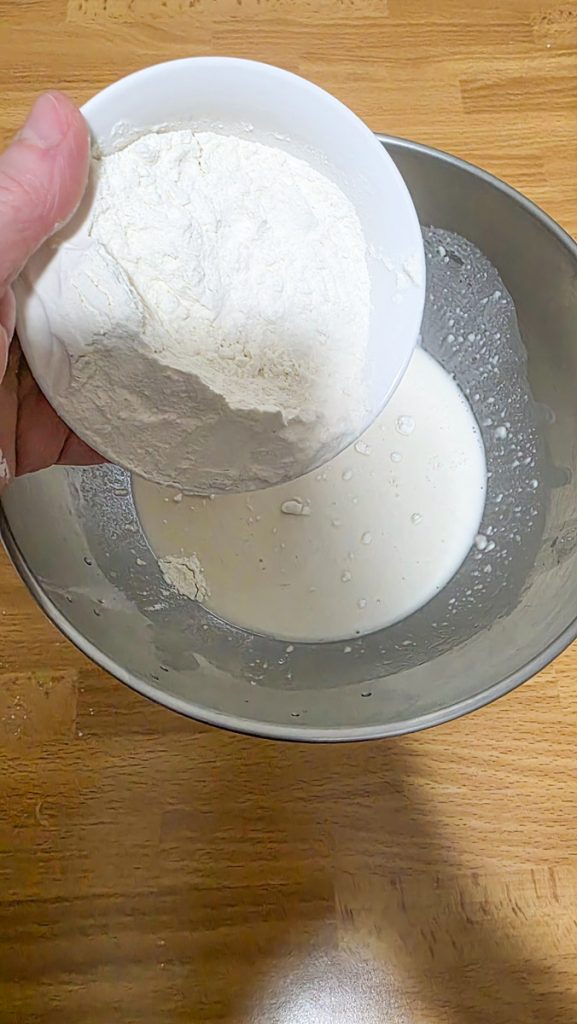
Knead
Knead with hands
Place the dough in the jar
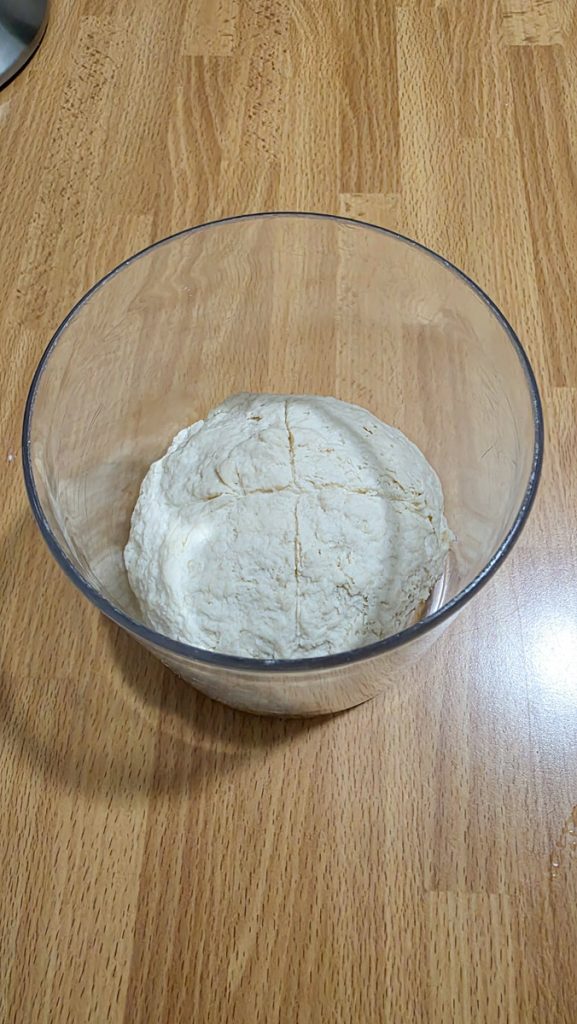
The cavities are a sign that it’s growing
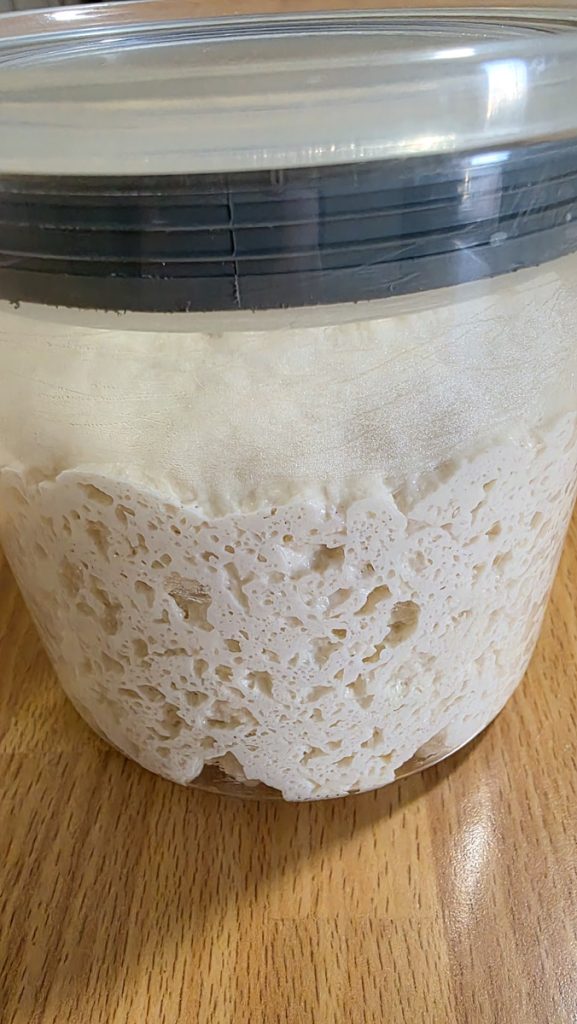
The refreshment phase requires real consistency and patience
Continue to make these refreshments for at least 15 consecutive days, but my advice remains to do them for 30 days. After 30 days, our dough will have gained strength and become sourdough.
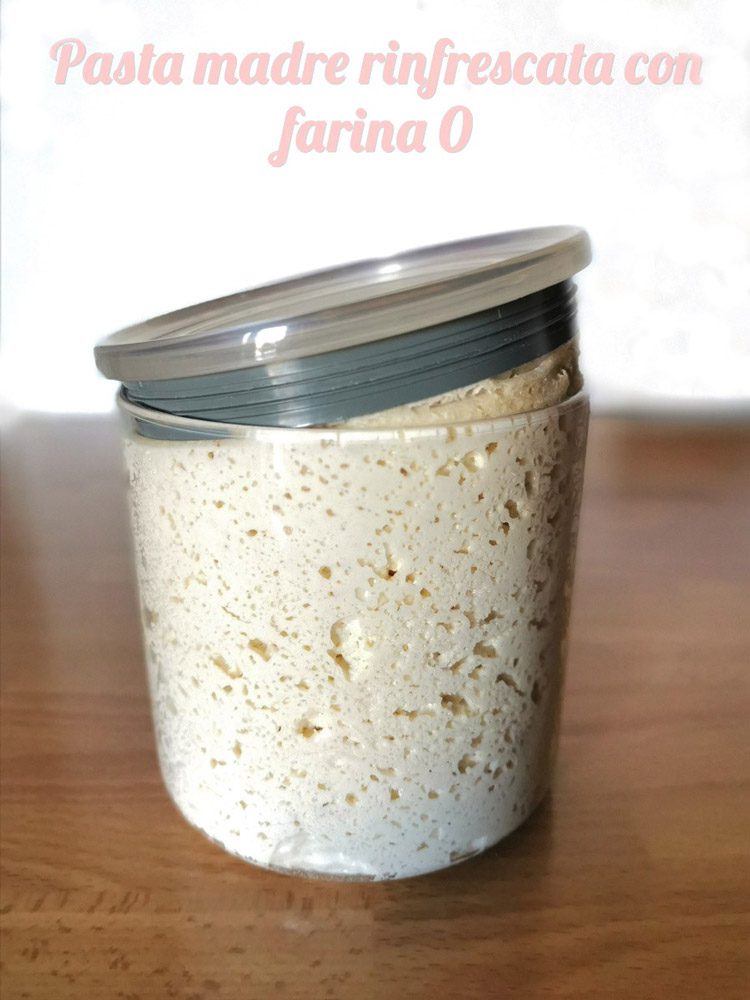
Refreshed sourdough with All-purpose Flour
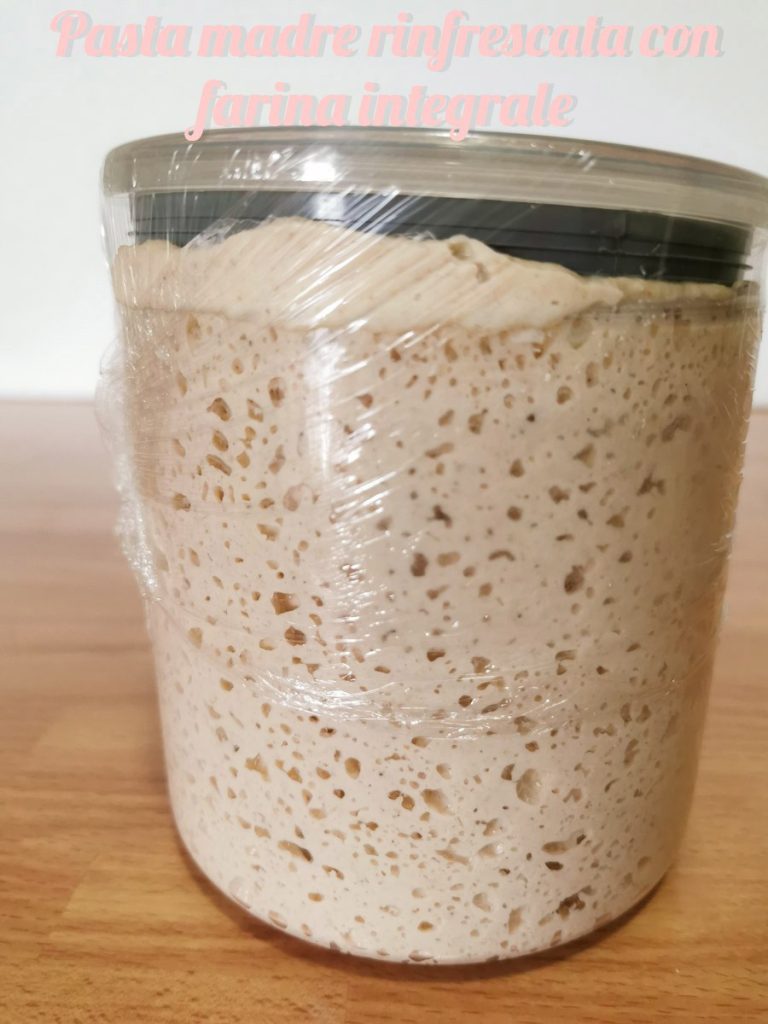
Refreshed sourdough with whole wheat flour
Long-term management:
Once the sourdough is mature, ready for baking, you can decide how to store it. If you don’t bake daily, there’s no need to refresh it every day, and it can be stored in the refrigerator, inside a tall glass or plastic jar, closed. It will need to be refreshed once a week, but if you keep it out of the fridge, refreshments must be done every day.
When I need to bake, I prefer to organize like this: I refresh the sourdough in the morning, let it ferment, prepare the dough for the bread in the evening, and let it rise slowly overnight to bake it in the morning.
Sourdough for bread
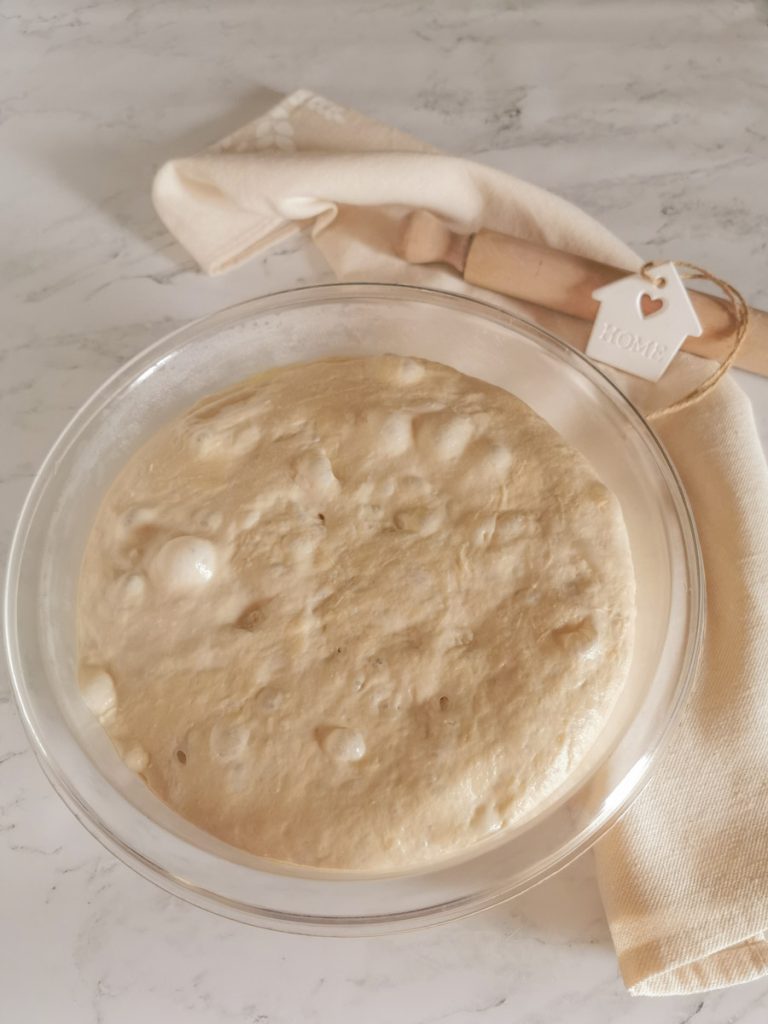
Bread baked in the oven
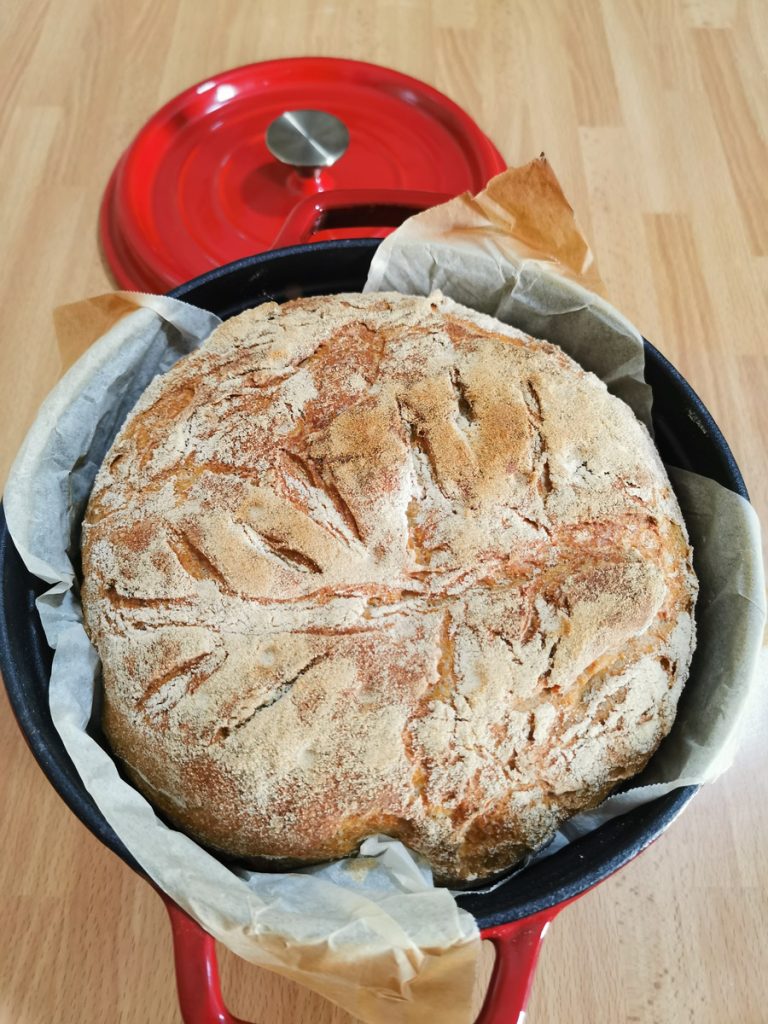
After thirty days, as mentioned above, the sourdough is mature, stabilized, and the fragrances become sweeter and fruitier, losing the excessive acidity of the first days. Being a living organism, it always grows. My advice is to refresh only 100 g of dough.
So, every time it should be done this way:
Sourdough + Flour in the same proportion and half of water:
100 g of sourdough
100 g of Flour
50 ml of water
Golden rules to not make mistakes:
Cleanliness: Always use well-cleaned glass or plastic jars (without soap residues).
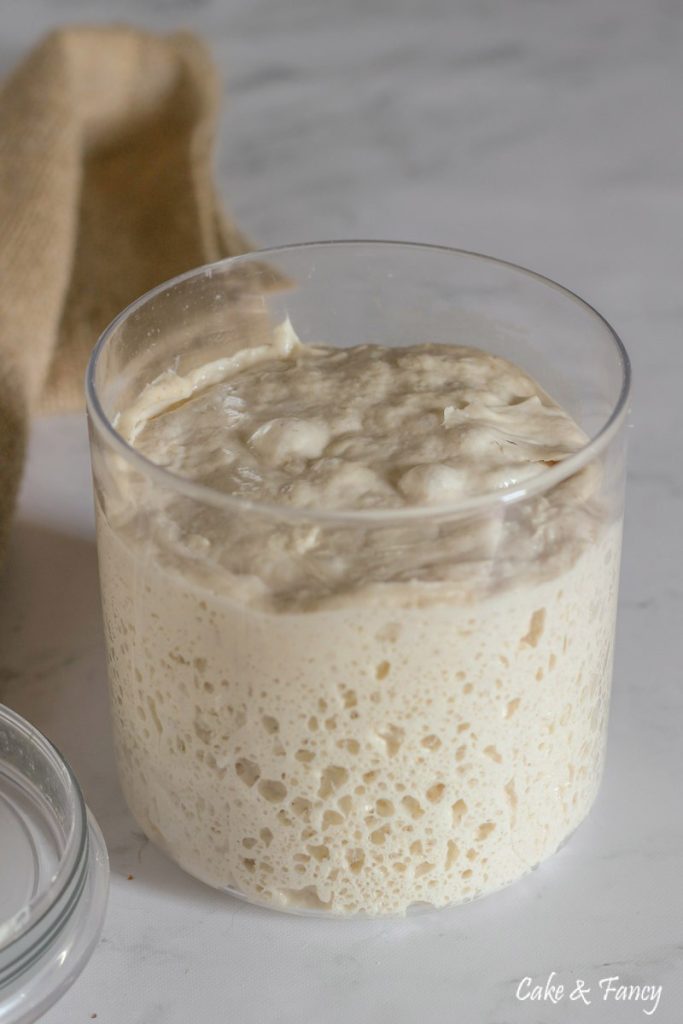
Observation: Learn to “read” your sourdough; if it smells of vinegar or alcohol, it is usually hungry. By this, I mean that perhaps you have waited too long to refresh it, or it has gotten too hot. If it smells good and of apples, sweetness, or yogurt, has a light color and nice consistency, then it is in perfect health.
Love: It may sound trivial, but sourdough reacts to the environment. Treat it with care and it will reward you with unforgettable bread, focaccias, and pizzas.A sourdough is healthy and ready for baking when, after a refreshment, it can triple its volume in about 4 hours at a temperature of 78-82°F (26-28°C). But the time can also vary. Often if it doesn’t grow within this interval, it is still weak and needs further close refreshments.
How to know if the sourdough has gone bad?
If you notice a strong smell, like vinegar, or even a too dark color, or mold spots, unfortunately, the sourdough is no longer good and will have to be discarded. This can happen because it has fermented too much or has become contaminated.The excess dough that will be present at each refreshment will have to be discarded, or it can be used for many other recipes. I always try to use it, for example, this is one of my recipes made with excess.
Tips
Cleaning the jar
The jar used to maintain your sourdough should be tall, made of glass or plastic with a lid. With each new refreshment, the jar should be cleaned from previous residues, only with hot water and never with detergent.
It can also be frozen
As mentioned above, if the sourdough is stored in the fridge, it should be refreshed every week; otherwise, if kept outside, it needs to be refreshed every day, or else it will die. If you don’t use it for a period of time, “maybe in summer,” it can be frozen, even for a month. But before freezing, it should be refreshed, then placed in a ziplock bag for the freezer and frozen. When defrosting, leave it at room temperature for about 12/15 hours, and once it has thawed and grown, always do a new refreshment and store it as before freezing.
If storing sourdough in the fridge, before refreshing, keep it at room temperature for at least 2 hours and once refreshed, return it to the fridge after 2/3 hours.
What to do if the sourdough does not grow?
If your sourdough does not grow, don’t give up and do more frequent refreshments. Don’t wait for the exact day of refreshment, but refresh it every 12 or 24 hours if needed until you see bubbles. You can also change the flour for a few refreshments and use a strong flour type 1 or 2, which are much richer in nutrients. Often the problem is also the too cold temperature.
Lastly, you can try placing the jar with the sourdough next to apples, but the jar must always be covered with gauze or a lid.
What flours to use to refresh the sourdough?
I never use the same flour for various refreshments, but alternate between all-purpose, whole wheat, and sometimes even durum wheat. I try never to refresh with 00 flour, but if at the time of refreshment you happen to have nothing else at home, it’s fine. Sometimes the dough can be stickier, which also depends on the flour used. After refreshing, before putting it in the fridge, you can grease the jar with a little extra-virgin olive oil or some flour, it helps when we need to take it out.
Sourdough can also be prepared with gluten-free flour. My sourdough is always the same, beautiful and healthy for over 10 years.
I’ll leave you some recipes made with sourdough
Whole wheat rolls, white focaccia, Homemade bread,
If you like leavened products, I’ll also leave the category with sweets 😉