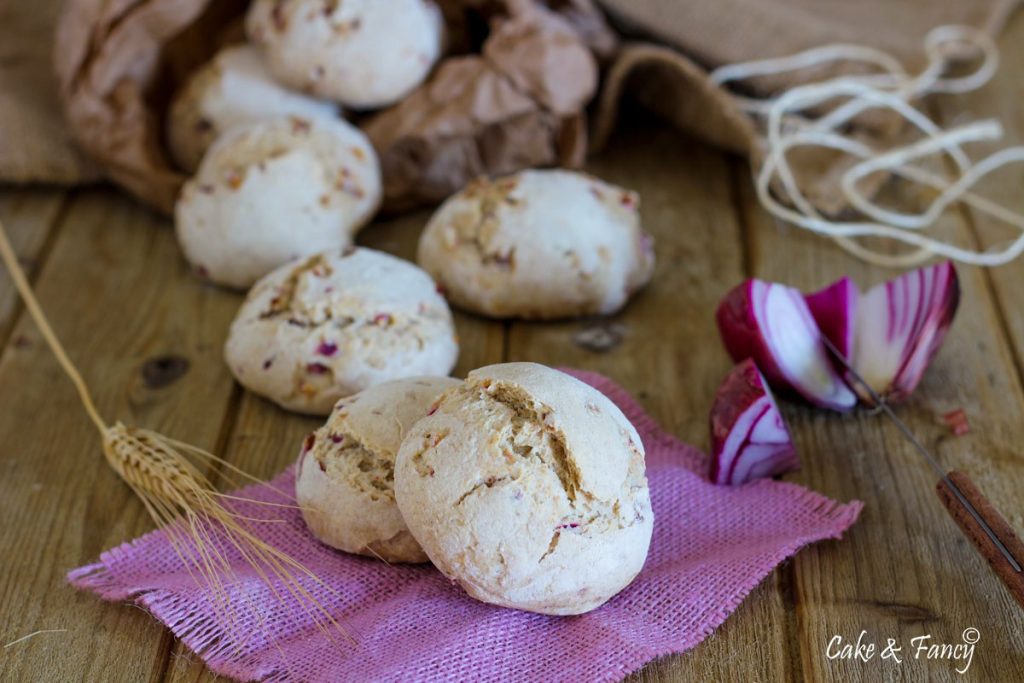
The red Tropea onion buns are a true sensory experience: tasty, fragrant, and surprisingly delicate. The secret lies in the main ingredient, the Tropea IGP onion, typical of Calabria. The Tropea onion is characterized by its typical reddish-purple color and unmistakable sweetness due to the coastal microclimate.
Besides the taste, these buns are a boon for health: onions are extremely rich in quercetin, a powerful natural antioxidant. This flavonoid not only fights free radicals but actively stimulates the immune system, making each bite a gesture of wellness.
The dough for these buns is prepared with sourdough, which gives the bread a soft crumb and a really crisp crust, but alternatively, you can use 3 g of yeast and follow the same procedure for leavening. The onion buns are perfect to serve at the table and pair wonderfully with any dish, I usually pair them with cheeses, try them because they are a real delight!
Other recipes:
- Difficulty: Medium
- Cost: Economical
- Rest time: 12 Hours
- Preparation time: 35 Minutes
- Portions: 9/10 Buns
- Cooking methods: Oven
- Cuisine: Italian
- Energy 41.37 (Kcal)
- Carbohydrates 8.32 (g) of which sugars 0.30 (g)
- Proteins 1.42 (g)
- Fat 0.35 (g) of which saturated 0.04 (g)of which unsaturated 0.04 (g)
- Fibers 0.55 (g)
- Sodium 58.95 (mg)
Indicative values for a portion of 20 g processed in an automated way starting from the nutritional information available on the CREA* and FoodData Central** databases. It is not food and / or nutritional advice.
* CREATES Food and Nutrition Research Center: https://www.crea.gov.it/alimenti-e-nutrizione https://www.alimentinutrizione.it ** U.S. Department of Agriculture, Agricultural Research Service. FoodData Central, 2019. https://fdc.nal.usda.gov
Red Onion Buns
- 7 oz whole wheat flour
- 7 oz all-purpose flour
- Half teaspoon salt
- 1 tablespoon extra virgin olive oil
- 5 oz sourdough starter
- 3.5 oz Tropea red onions
- to taste all-purpose flour (for the dough)
Tools
- Bowl large
- Small Bowl for baking
- Plastic Wrap
- 1 Mixer "Optional"
- 1 Bowl banneton or bread basket
- Baking Sheet non-stick
Preparation of Red Tropea Onion Buns
We always start with refreshing the sourdough starter: it is preferable to do it in the morning, then let the dough rest inside a container and cover with plastic wrap. Leave it at room temperature for about 3 hours.
Once it has doubled in volume, you can start the dough for the bread: dissolve the sourdough starter with a bit of water, then add the 200 g of whole wheat flour and start kneading.
Add the remaining water and also the all-purpose flour, complete with the salt and extra virgin olive oil. Knead the dough with your hands for at least 15 minutes. Alternatively, you can use a mixer and halve the time.
When it is nice and elastic, sprinkle it with flour and place it in the proofing basket. Alternatively, use a large bowl lined with parchment paper, always cover with plastic wrap.
I usually use a banneton for proofing the dough.
Now let the dough rise inside the turned-off oven for 11/12 hours. The next morning, start preparing the red Tropea onion: peel it, wash it under running water, and cut it into small squares.
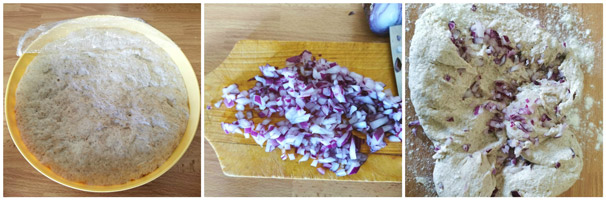
Take the dough and roll it out, add the chopped onion and knead for a few minutes to incorporate well. Then divide the dough into pieces, each weighing 100g.
Shape each piece into a round shape, making sure the buns are all the same, then place them well spaced on a non-stick baking sheet.
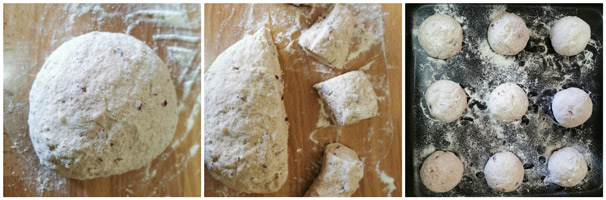
Dust the surface with flour and let them rise until doubled, this will take about an hour. Meanwhile, preheat the oven to 428°F.
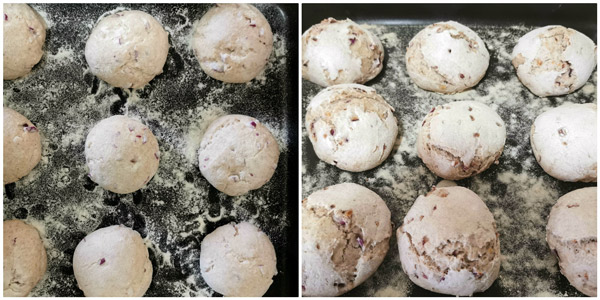
Place a bowl filled with water on the lowest shelf in the oven, this will help maintain good humidity during baking. Now, bake for 30/35 minutes.
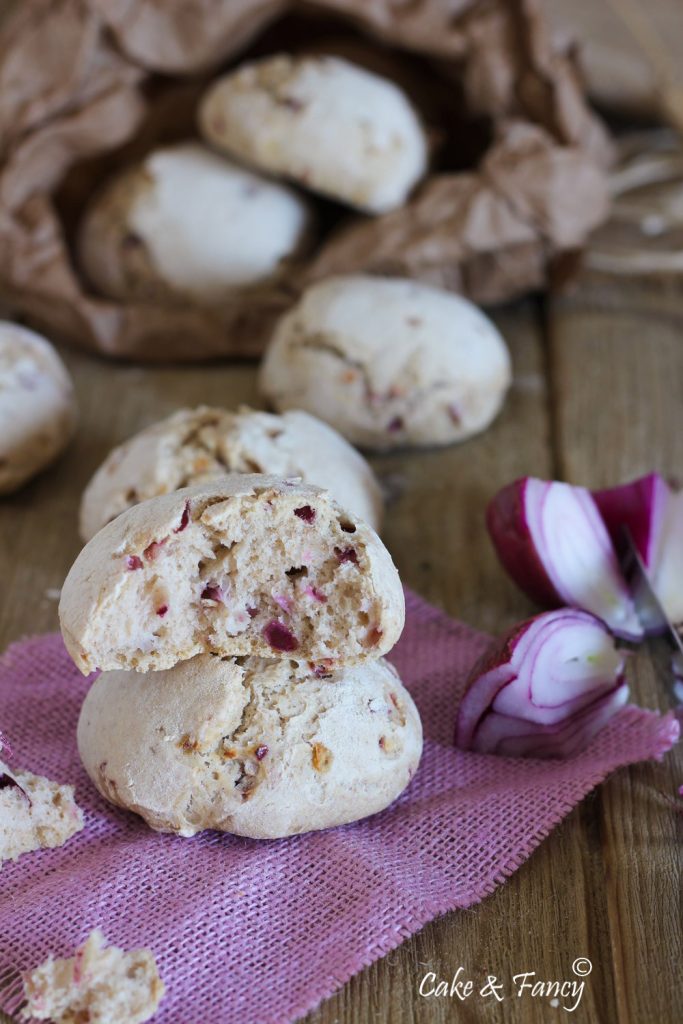
The fragrant and crunchy buns are ready to be enjoyed, happy indulgence!
If you like making homemade bread, also check out how to prepare whole wheat bread
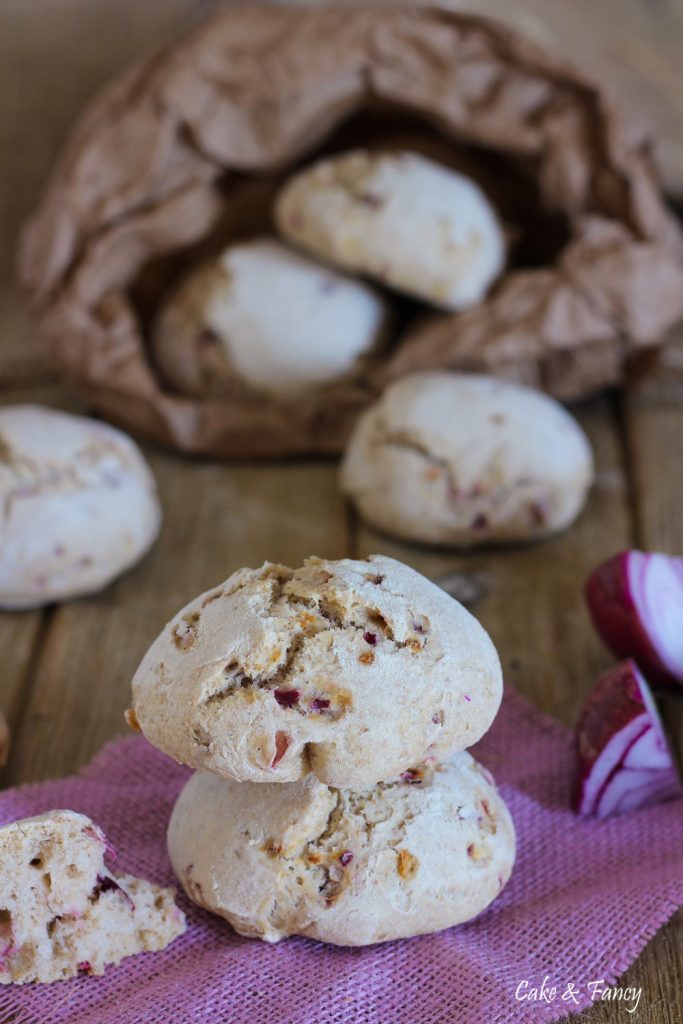
Advice for Red Tropea Onion Buns
The red Tropea onion buns should be stored in a paper bag, even better if it’s cloth. If desired, they can be frozen in appropriate freezing bags to always have them fresh at the table.
If you wish to freeze them raw, do so before the last rise. When defrosting, which should be done in the fridge, after defrosting let them rise in the turned-off oven until doubled, then bake.