
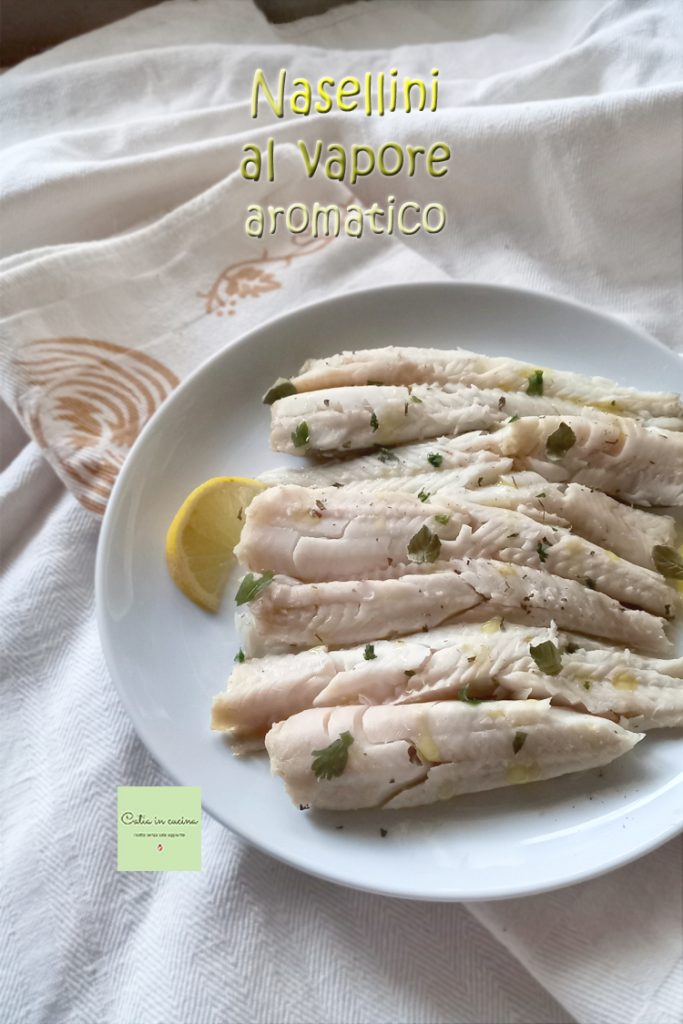
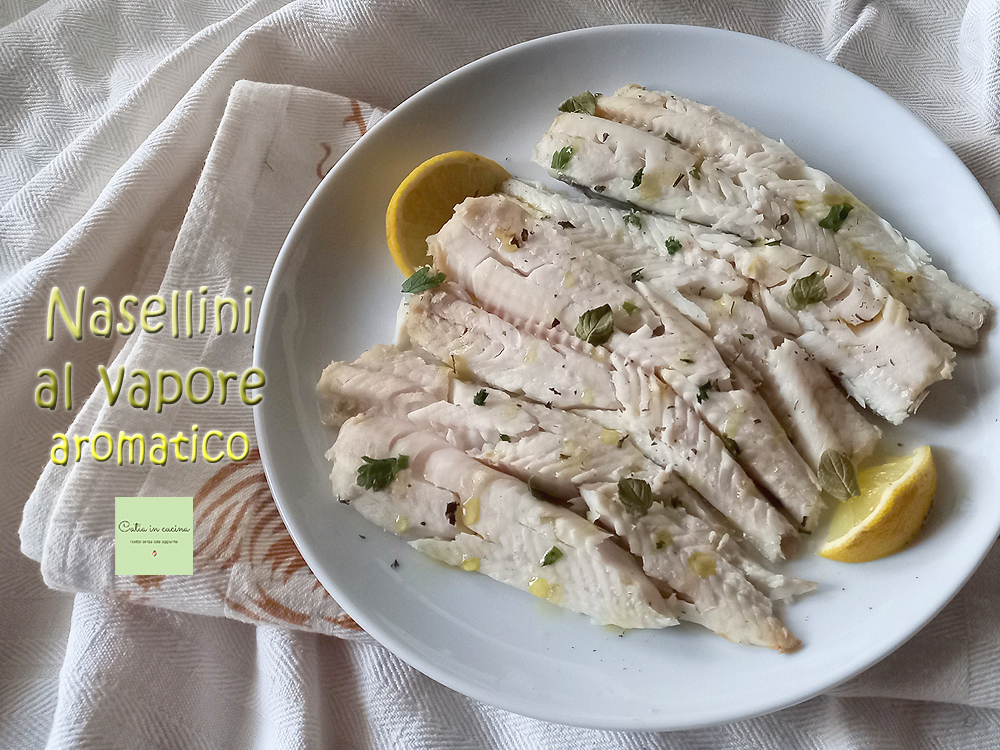
Dear friends, welcome back! Here is the new Monday recipe for you! Aromatic Steamed Hake.
I really have to thank the Light and Tasty Team, because thanks to today’s release (today’s topic “steaming”), I finally decided to cook some hake fillets that I had bought a while ago, and that unfortunately had been sitting in the freezer for a while.
I never got the right idea to cook them! Every time I saw them there in the freezer, I hesitated for a while until I ended up closing the drawer. Also because… I have to say, when I opened the package, I saw that these hakes, officially defined as ‘whole’, were actually without heads, which I knew, but also without tails, and I didn’t like that very much. 🤔
I’m not used to buying fish, you know. The last time I bought similar hake, but from another frozen food supplier, was about, um, fifteen or sixteen years ago! But back then… they had tails!
And nothing. Maybe it’s because I was born in a seaside town, raised on very fresh fish, bought at the fish market an hour before eating it, so my expectations when buying fish, even if frozen, remain those of someone with the imprint of whole fish, with tails. Even if my current life sometimes steers me towards frozen foods. But seeing these hakes, all a bit incomplete, at the time made me… well, I know you understand my state of mind.
But as happened several times lately, even this time the Light and Tasty Team came to save me from my indecisions 😃 and when I saw today’s topic, which is steaming, the first thing that came to my mind was the picture of a tasty steamed cod fillet that my dear friend Rossana posted in my group a few months ago. And since hake is practically cod… yessss, that’s how I’ll cook the hake! 😃
It went great. My kids loved these steamed hakes that smelled of mint so much. So much that the three servings I had planned… I had to revise them and turn them into two. 😄 Yeah, apart from a small taste, just to know what they tasted like, uh… they didn’t leave much for me! 😂
I was happy to have rediscovered this beautiful, and healthy, thing of steaming. And scenting the water with many aromatic herbs, which transferred their scent to the fish, made me curious to cook other things, like potatoes, or… Hey! Who gives me some other suggestions? 😊
🐟🐟🐟
- Difficulty: Very Easy
- Cost: Economical
- Preparation time: 5 Minutes
- Portions: 3
- Cooking methods: Steaming
- Cuisine: Healthy
- Seasonality: All Seasons
- Energy 202.45 (Kcal)
- Carbohydrates 2.09 (g) of which sugars 0.98 (g)
- Proteins 36.38 (g)
- Fat 4.27 (g) of which saturated 0.65 (g)of which unsaturated 0.50 (g)
- Fibers 0.64 (g)
- Sodium 160.76 (mg)
Indicative values for a portion of 190 g processed in an automated way starting from the nutritional information available on the CREA* and FoodData Central** databases. It is not food and / or nutritional advice.
* CREATES Food and Nutrition Research Center: https://www.crea.gov.it/alimenti-e-nutrizione https://www.alimentinutrizione.it ** U.S. Department of Agriculture, Agricultural Research Service. FoodData Central, 2019. https://fdc.nal.usda.gov
Ingredients
- 4 hake fillets (I used frozen, about 1.4 lbs)
- aromatic herbs (mixed to taste)
- chili pepper (to taste)
- 1 clove garlic
- lemon (to taste)
- 2 teaspoons extra virgin olive oil (raw for dressing)
- 3.17 cups water
Tools
- Saucepan stainless steel 9.5 inches
- Steamer Basket stainless steel
Steps
If frozen, allow the fish to defrost in the refrigerator (this will take 6 to 8 hours, follow the instructions on the package).
Choose the aromatic herbs to use. I used practically all the aromatic herbs I had available at home, some fresh, some dried, others frozen: rosemary, parsley, basil, sage, marjoram, oregano, dill, mint. In addition, I added: fennel seeds, caraway seeds, a small chili pepper, and a clove of garlic.
For the quantity of aromatic herbs, I went a bit by eye. Here’s how they looked after putting them in the water:
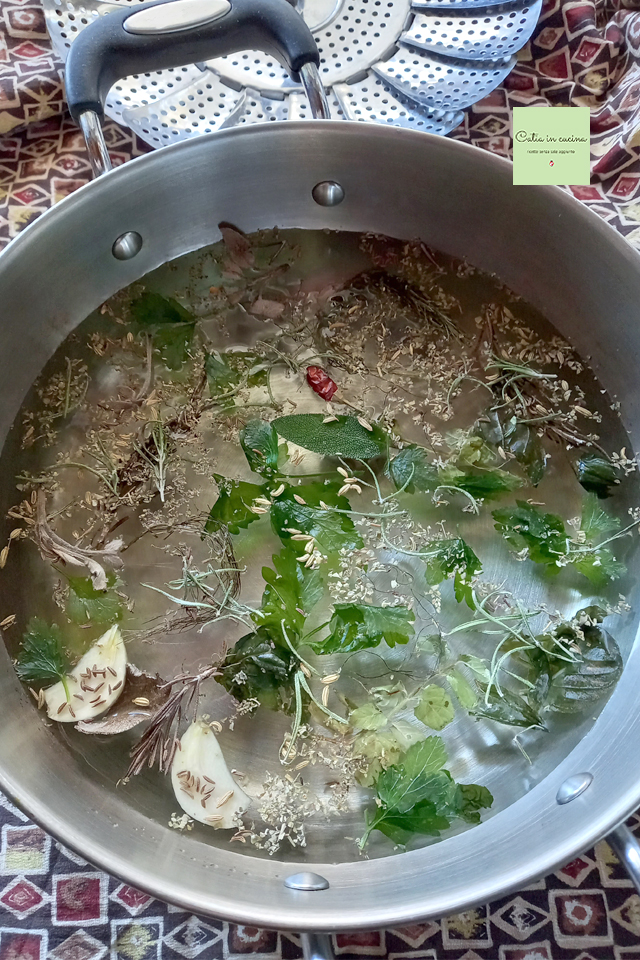
The pot, in which to pour the water, should be at least as wide as the open steamer basket, or even a little more if you wish. My steamer (but I believe they are more or less all the same) when fully opened is 9.5 inches.
If you don’t own one and want to take a look at what it’s like, I’ll leave you the link to a basket similar to mine. It’s a very common type of basket, made of stainless steel, inexpensive, and very easy to use. This –> Steamer Basket
Place the clean hake fillets on the steamer basket, then place the basket in the pot containing the already flavored water.
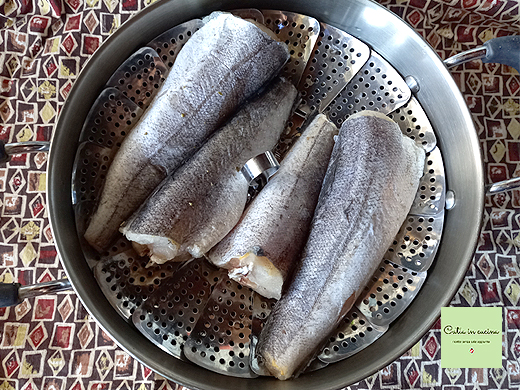
Bring the water to a boil.
Be careful not to let the water boil too vigorously, otherwise it can overflow the basket and wet the fish. The boiling should be gentle, just enough to produce steam.
Steam the hake fillets for about 20 minutes with the lid closed.
Halfway through cooking, I turned them to ensure they cooked evenly.
For the cooking time, I went a bit by eye, also because my hake fillets were not all the same size, so for the two larger ones, I had to continue cooking for a few more minutes. I recommend adjusting according to the size of the fish you will be using.
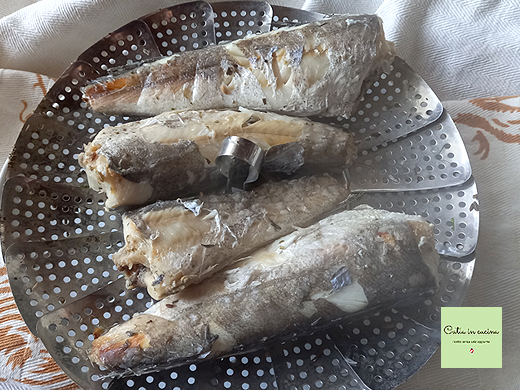
Check the water from time to time, lifting the basket slightly (taking it from the central handle with a mitt). It is important to ensure the water does not completely evaporate; if necessary, top up with hot water, which in my case was not necessary.
Here’s how the water looked when I lifted the basket:
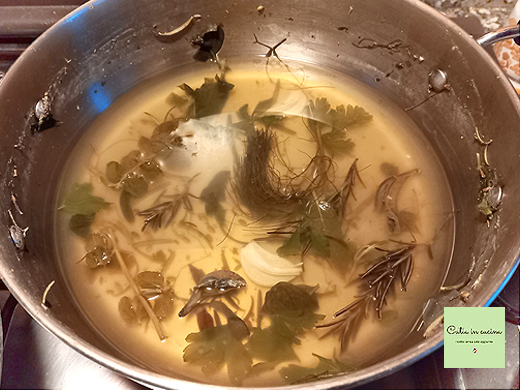
It’s a very fragrant water that can surely be used, filtered, in soups and stews. I, to be honest, didn’t reuse it, because it also smelled of fish as well as aromatic herbs, and since not everyone here likes fish… I avoided it to prevent complaints 😃
At the end of cooking, bone the hake fillets, remove the skin, and serve the fillets simply dressed with extra virgin olive oil and lemon, if desired.
The intense mint aroma of these steamed hake fillets was very much appreciated by my kids, who asked me to repeat this recipe as soon as possible. 😊 The best satisfaction they could give me!
PS: I confess they also enriched the dressing with… mayonnaise (but shhhh, it’s a secret! 🙈). 🤭
Salt-Free Tips
 Steaming is one of the recommended cooking methods in low-sodium cooking because it preserves foods from losing minerals and vitamins, thus maintaining all the intrinsic flavor and taste of the ingredients while enhancing their natural savory. But… you don’t need to follow a low-sodium diet to cook healthily and eat good things, right? So steaming is great and advisable for everyone! 😉
If you want to reduce or eliminate salt, always remember to:
– Gradually decrease the salt, your palate needs to get used to it slowly and shouldn’t notice the progressive reduction.
– Use spices. Chili, pepper, curry, nutmeg, cinnamon, cloves, cumin…
– Use aromatic herbs. Basil, parsley, oregano, thyme, sage, marjoram, rosemary, mint…
– Use seeds. Sesame, pine nuts, almonds, walnuts…
– Use spicy vegetables or fruit. Garlic, onion, lemon, orange…
– Use my vegetable granular without salt and gomasio.
– Prefer fresh foods.
– Avoid boiling methods that lose flavor (griddle, foil, steam, microwave)
– Avoid bringing the salt shaker to the table!
– Allow yourself an occasional exception. It’s good for your mood and helps you persist.
If you don’t want, or can’t, give up salt:
You can still try my recipes, salting according to your habits.
Follow Me!
In the WhatsApp channel and on Instagram, on the Facebook page, on Pinterest boards, in my two groups: Catia’s group, in the kitchen and beyond and Just what I was looking for! And if you like… subscribe to my Newsletter
In the WhatsApp channel and on Instagram, on the Facebook page, on Pinterest boards, in my two groups: Catia’s group, in the kitchen and beyond and Just what I was looking for! And if you like… subscribe to my Newsletter
And here are the steamed recipes from my Light and Tasty colleagues:
Carla: Sea Tartines with Herb Pesto
Daniela: Steamed Muffins with Raisins
Elena: Brussels Sprouts with Orange
Flavia: Meatballs with Carrot Sauce
Franca: Steamed Sardines
Mary: Mixed Steamed Vegetables
Milena: Steamed Rice Pastry Bundles with Shrimp, Leeks, and Green Onions
