
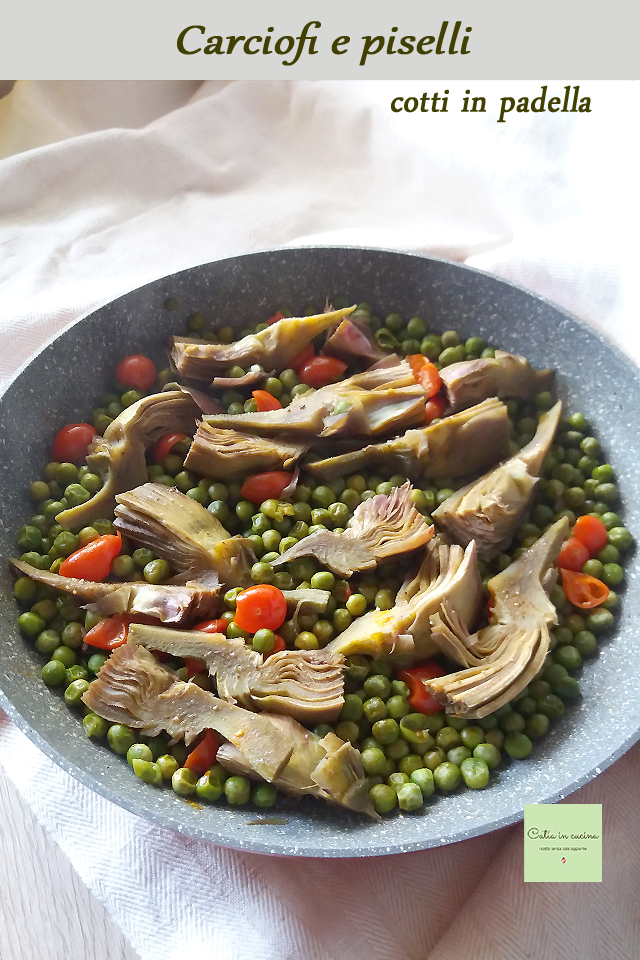
This is one of those recipes you don’t deliberate over, you just make it. I was unsure whether to cook artichokes and peas and… eh eh, I made the wise decision to combine them and cook them together (in a pan), creating a great side dish that we really enjoyed, easy to cook, and delicious to eat. Plus, it’s nice to look at. 😀
A garlic clove, a few cherry tomatoes, a drizzle of oil, and the lid closed. Done. Who said cooking is difficult? It couldn’t be easier!
🙂
- Difficulty: Very Easy
- Cost: Economical
- Preparation time: 10 Minutes
- Portions: 4
- Cooking methods: Stovetop
- Cuisine: Italian
- Seasonality: All Seasons
Ingredients
- 2 Artichoke Mammole
- 7 oz Peas
- 10 Cherry Tomatoes
- 1 tbsp Extra Virgin Olive Oil
- 1 clove Garlic
- 1 glass Vegetable Broth
- 1 pinch Oregano
- 1 pinch Pepper
- 1 pinch Lemon Zest
Tools
- Pan
Preparation
Note: I’ll be honest, the weight of the peas indicated in the ingredients is approximate because I actually poured them into the pan by eye, the artichokes were quite large, and I added the cherry tomatoes randomly. In reality, the weights are not crucial for this recipe. 🙂
Alright, with that said, we can start!
Clean the artichokes by removing the outer leaves and cutting off the top.
Cut them into wedges and remove the inner fuzz, if present.
👉 For more guidance on how to clean artichokes, refer to the introduction of my artichoke recipe collection.
Peel and chop the garlic.
In a pan (I used a nonstick pan, but a steel one can also be used), add the artichoke wedges, garlic, oil, and let them flavor for a few minutes.
Add the peas (I used frozen peas) and halved cherry tomatoes.
Season with a pinch of oregano and a pinch of pepper.
Moisten with half a glass of vegetable broth (or water) and close with the lid. I recommend adding a little broth at a time during cooking, only as needed.
Continue cooking until the artichokes and peas are cooked.
The cooking time of the artichokes may vary depending on how much they have been peeled – as we all know, the outer leaves are tougher, while the heart of the artichoke is tender and cooks quickly – and also according to the size of the wedges.
The cooking time of the peas may vary depending on several factors:
The frozen peas usually have the cooking time indicated on the package. Generally, small peas have a very short cooking time, sometimes only 5 minutes, while medium ones take about, give or take, 10 minutes (3-4 minutes more if used frozen).
The fresh peas take a bit longer, 20-25 minutes, which is variable and cannot be given precisely because it depends on the size (fresh peas do not have a standard size but are mixed, some small and some large) and/or the peel’s consistency, due to various cultivation or origin-related factors (for example, the peas from my grandmother or other farmers I had the chance to cook with always had a decidedly more consistent peel).
I have no information on the difference between fresh and frozen artichokes because, unlike what I do with peas, I don’t usually buy frozen artichokes. If I change this habit, I will keep you informed by updating this instruction! 😀
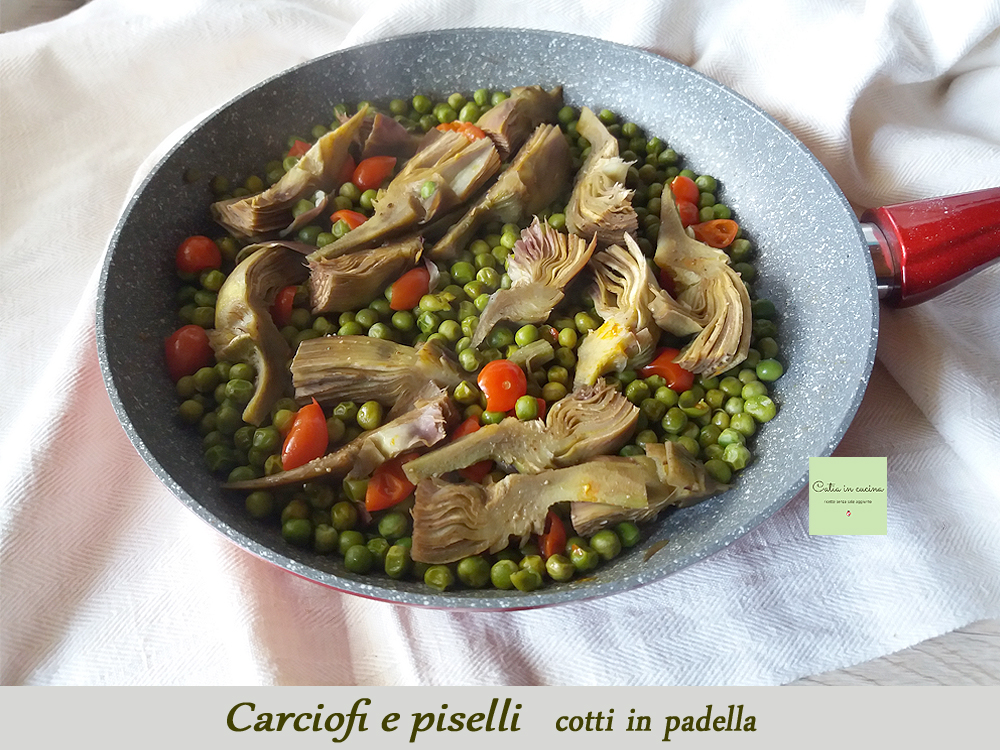
You can serve your artichokes and peas cooked in a pan hot or cold (room temperature), seasoning with a pinch of freshly ground pepper, and optionally with a drizzle of raw oil. I also suggest a little grated lemon zest, try it! 🙂
It’s a great hearty side dish that I’m sure you’ll like, and it can also be turned into a nice second course, for example, by pairing it with eggs. 😉
Tips Without Salt
 I invite you to try cooking artichokes and peas without salt, not boiled but cooked in a pan this way, with the lid closed and with very little water or broth.
You will discover that artichokes, thanks to their distinctive flavor, don’t need salt but only a simple aroma, like lemon zest. 🙂
And peas… well, if they’re good even raw, it really means they don’t need to be salted! Ahhh… have you never tried eating fresh peas while shelling them? Try it, they are irresistible!
If you’re interested in reducing or eliminating salt, always remember to:
▫ Gradually decrease salt, the palate needs to get used to it slowly and shouldn’t notice the progressive reduction.
▫ Use spices. Chili, pepper, curry, nutmeg, cinnamon, cloves, cumin…
▫ Use aromatic herbs. Basil, parsley, oregano, thyme, sage, marjoram, rosemary, mint…
▫ Use seeds. Sesame, pine nuts, almonds, nuts…
▫ Use spicy vegetables or fruits. Garlic, onion, lemon, orange…
▫ Use my salt-free vegetable granulate and gomasio.
▫ Prefer fresh foods.
▫ Avoid cooking in water, prefer cooking methods that don’t disperse flavors (grill, foil, steam, microwave)
▫ Avoid bringing the salt shaker to the table!
▫ Occasionally, allow yourself a break from the rules. It’s good for the mood and helps to persevere.
If you don’t want to or can’t give up salt:
▫ You can still try my recipes by salting according to your habits.
Follow Me!
In the WhatsApp channel and on Instagram, on the Facebook page and Pinterest, in my two groups: Catia’s Group, in the Kitchen and Beyond and Just What I was Looking For! and if you like… sign up for my Newsletter.
