
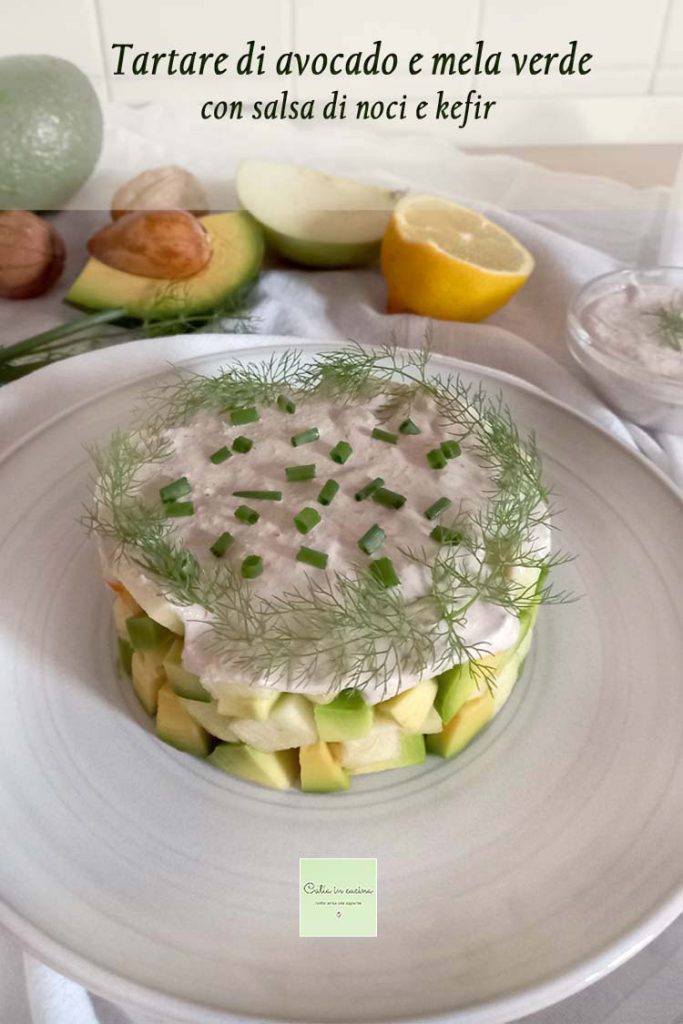
The Light and Tasty column is enriched today with a somewhat particular topic: raw food cuisine, for which I have prepared quite a nice little recipe 😋 that I really enjoyed: an avocado and green apple tartare dressed with a lightly acidic and slightly spicy walnut sauce, which turned out to be perfect in this combination of flavors.
To learn about raw foodism and decide on the recipe for today, I read several articles and attended a webinar dedicated to vegan raw food. I will talk more about it in detail in a future recipe; today, I will give a shorter introduction than usual (for once, I’ll spare you my long introductions!) due to time constraints (it might sound trivial, but it is so), as I am writing this recipe at the last minute before publication, pant pant, I’m running out of time!, and I can’t tell you the events that have kept me away from the blog and social media in recent days. I will tell you everything in the next Newsletter! (and if you’re not already subscribed, it’s a good occasion to subscribe, don’t you think? 😊).
In the meantime, let’s venture into the world of raw food cuisine with this avocado and green apple tartare that, I assure you, is delicious. 😉
〰 〰 〰
Other recipes of mine with avocado:
- Difficulty: Easy
- Cost: Economical
- Preparation time: 20 Minutes
- Portions: 2
- Cooking methods: No cooking
- Cuisine: Contemporary
- Seasonality: All seasons
Ingredients
- 1 avocado
- 1 green apple
- 4 walnuts
- 1/4 cup corn oil
- 1/4 cup kefir (or plant-based yogurt to make the recipe vegan)
- 2 teaspoons lemon juice
- wild fennel
- chives
- chili pepper (or pepper)
Tools
- Immersion Blender
- Food Ring Molds
Steps
1) First, prepare the walnut sauce.
Place the kernels of 4 walnuts in the tall glass of the immersion blender, pour in the oil and kefir, a pinch of chili pepper, a small tuft of wild fennel, and half a teaspoon of lemon juice (or a heaping teaspoon if using yogurt instead of kefir).
👉 When using homemade kefir, naturally tangy, you can also omit the lemon.
2) Proceed with the preparation of the avocado and apple tartare:
Peel the avocado and the apple.
Cut them both into small pieces and moisten them with lemon juice to prevent them from darkening in contact with air.
Place a food ring mold on a plate.
👉 Decide on the size of the ring mold depending on the type of dish you want to achieve: a large mold is suitable for serving the tartare as a vegetarian main course, or you can use two or more small molds if the tartare is to be served as an appetizer or entrée.
Arrange the avocado and apple pieces inside the mold in alternating layers (in my case: two layers of apple and two layers of avocado).
👉 If desired, the pieces can be mixed; the final result doesn’t change. I arranged them in layers to better highlight the two ingredients in the photos.
Distribute the pieces well, trying to compact them to make the assembly as stable as possible.
Distribute the walnut sauce between the layers.
☝ The walnut sauce, in the quantities indicated for this recipe, should be used entirely; if preferred, it can be served separately in a small bowl. Adding the sauce between layers serves (in addition to seasoning the dish) to act as a binder, making the tower more stable.
Complete with a final layer of walnut sauce.
Gently remove the ring mold, then decorate the avocado and green apple tartare with chopped chives and some tufts of wild fennel.
I really loved this tartare. And this walnut sauce is the perfect complement. 😋
😉 As you know, I’ve been making homemade kefir for many years and use it regularly in cooking. In accompanying sauces, it is unbeatable. Since it is a product from cow’s milk, this recipe is vegetarian but can become vegan by using plant-based yogurt instead of kefir. If you try it in a vegan version, let me know which plant-based yogurt you prefer! 😃
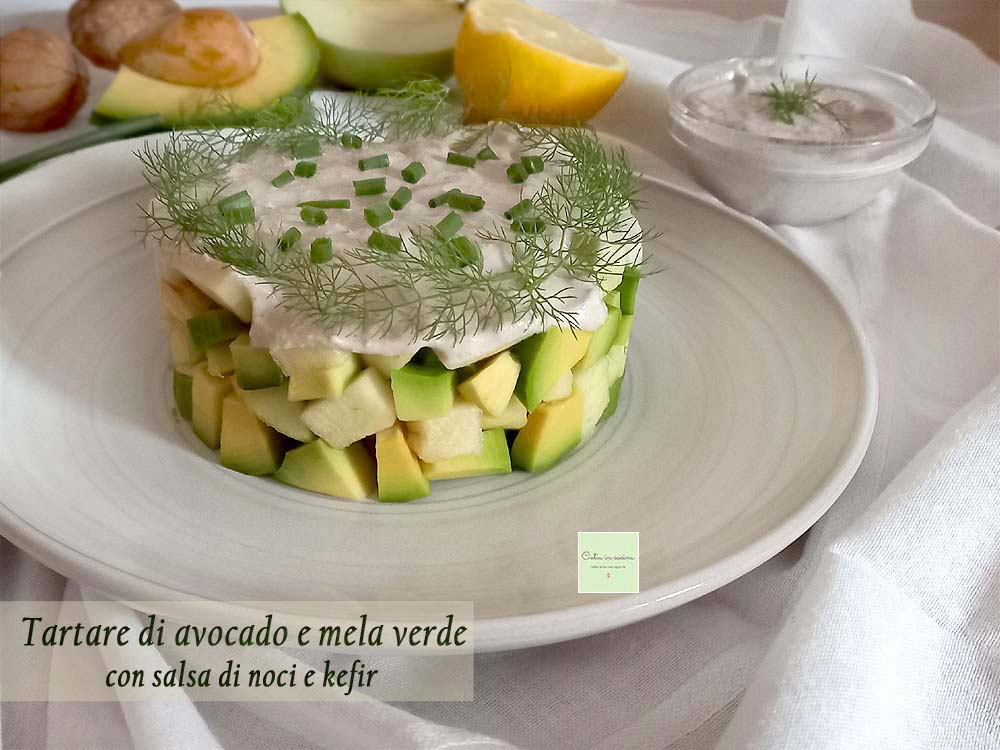
😊 I got the idea to use wild fennel from this recipe from La Cucina Italiana. There it is used for a completely different almond sauce than my walnut sauce, but it was just the scent I needed to match with chives, which pairs wonderfully with avocado.
Salt-Free Tips
 There is no need to add salt in this recipe.
Remember that I cook without salt. For more information, I invite you to read these two articles of mine: Cooking without salt, my journey and Recipes and strategies to reduce salt in cooking where I share my experience and provide useful tips and information for gradually reducing salt and getting used to low-sodium eating.
If you are interested in reducing or eliminating salt, always remember to:
■ Gradually reduce salt, as the palate needs to get used to it slowly and should not notice the progressive reduction.
■ Use spices. Chili pepper, pepper, curry, nutmeg, cinnamon, cloves, cumin…
■ Use aromatic herbs. Basil, parsley, oregano, thyme, sage, marjoram, rosemary, mint…
■ Use seeds. Sesame, pine nuts, almonds, walnuts…
■ Use spicy vegetables or fruit. Garlic, onion, lemon, orange…
■ Use my salt-free vegetable granules and gomasio.
■ Prefer fresh foods.
■ Avoid cooking in water, prefer methods that do not lose flavors (grill, foil, steam, microwave)
■ Avoid bringing the salt shaker to the table!
■ Occasionally allow yourself a break from the rule. It’s good for your mood and helps you persevere.
If you do not want, or cannot, give up salt:
■ You can still try my recipes by salting according to your habits.
Follow Me!
In my WhatsApp channel and on Instagram, on the Facebook page, on Pinterest and in my two groups: Catia’s Group, in the Kitchen and Beyond and Just What I Was Looking For! and if you want… subscribe to my Newsletter.
Other Light and Tasty Recipes:
Carla Emilia: Salad with Burratina
Claudia: Raw Zucchini Spaghetti with Tuna
Daniela: Tomato Tartare with Stracciatella
Elena: Fassona Beef Tartare with Capers and Lemon
Milena: Artichoke Hearts with Fennel, Oranges, and Capers
Carla Emilia: Salad with Burratina
Claudia: Raw Zucchini Spaghetti with Tuna
Daniela: Tomato Tartare with Stracciatella
Elena: Fassona Beef Tartare with Capers and Lemon
Milena: Artichoke Hearts with Fennel, Oranges, and Capers
