
Today for Light and Tasty, we’re preparing recipes with carrots. I often say this but it’s true, I’m really happy to participate every week in this culinary section because it pushes me to cook, and write, recipes I never thought I would cook, or recipes that have been swirling in my head for years but I never decide to try, except… when prompted! 😄 And the chickpea and carrot hummus is just one of these recipes. Yes, if from today this blog is enriched with a carrot hummus it’s all thanks to Light and Tasty, which ‘made’ me cook carrots on a day I had no intention of cooking carrots! 😃
But this hummus, my dear friends, is fabulous, I had to hold back because I was eating it all by myself! 🤩
As you surely know better than I do, hummus can be colored (and flavored) with a variety of vegetables, from beets to zucchini, from spinach to pumpkin to peppers, not to mention the variations with spices and herbs. And I want to try them all! So this first colored hummus of mine is surely the first of a very long series! (Yes, today I want to be optimistic about my organizational skills! 😄).
Before moving on to the recipe, I leave you with a little note about tahini, an essential ingredient of hummus, of any kind.
Tahini can be purchased ready-made or can be homemade (an option I recommend because the packaged one is – from a low-sodium perspective – too tasty). For this chickpea and carrot hummus I used neither, but did it my way (and someone here says that’s no surprise 🤭) using a simplified procedure: I used toasted sesame seeds directly and added a little oil during blending. And the result was excellent. This chickpea and carrot hummus turned out really, really, and again really good! I recommend it! Try it!
〰 〰 〰
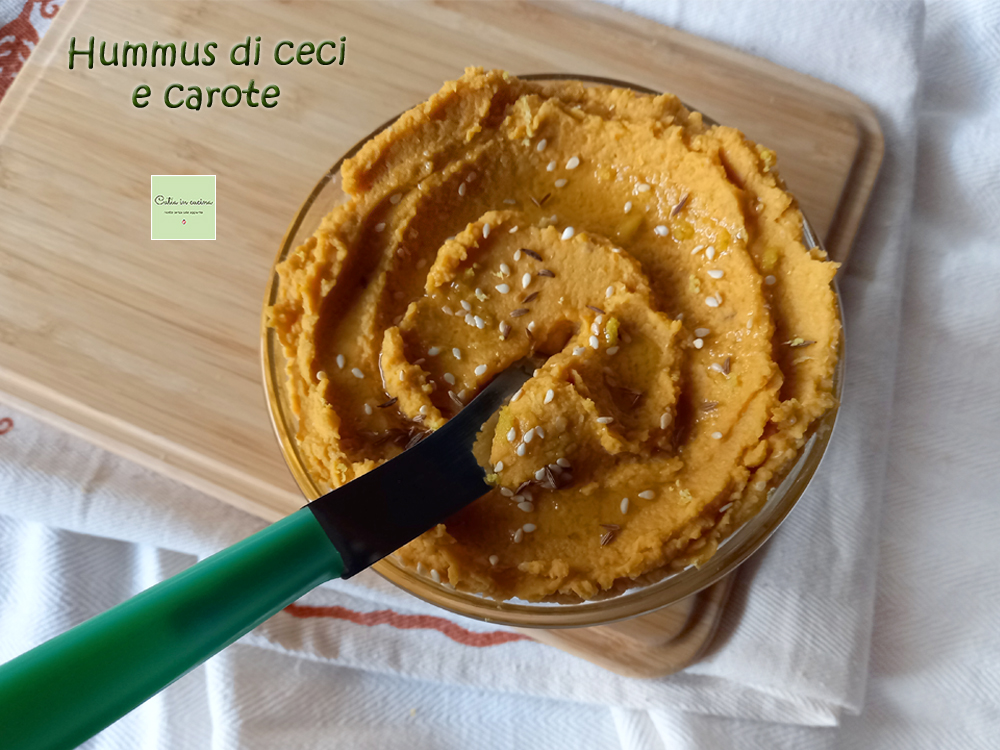
- Difficulty: Easy
- Cost: Economic
- Rest time: 30 Minutes
- Preparation time: 15 Minutes
- Portions: 4
- Cooking methods: Microwave, Stove
- Cuisine: Italian
- Seasonality: All seasons
Ingredients
- 8.5 oz cooked chickpeas, boiled (or canned)
- 8.5 oz carrots, cooked, in microwave (weighed after cooking)
- Half lemon (juice and grated zest)
- Half teaspoon cumin
- 1 tbsp sesame
- 4 teaspoons extra virgin olive oil
- Half clove garlic (optional)
- chili pepper (optional)
Tools
- Brush for cleaning fruits and vegetables
- Casserole for microwave cooking
- Microwave Oven
- Frying Pan
- Immersion Blender
Steps
Clean the carrots using a brush (or peel them).
Cut them into pieces, place them in a microwave-safe container, and precook them in the microwave for 5 minutes at maximum power.
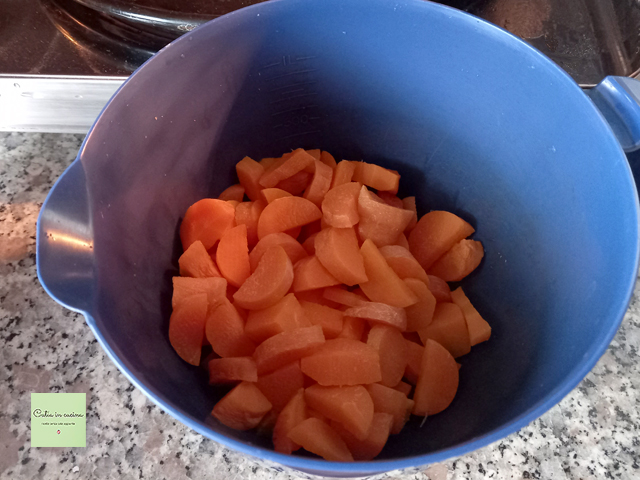
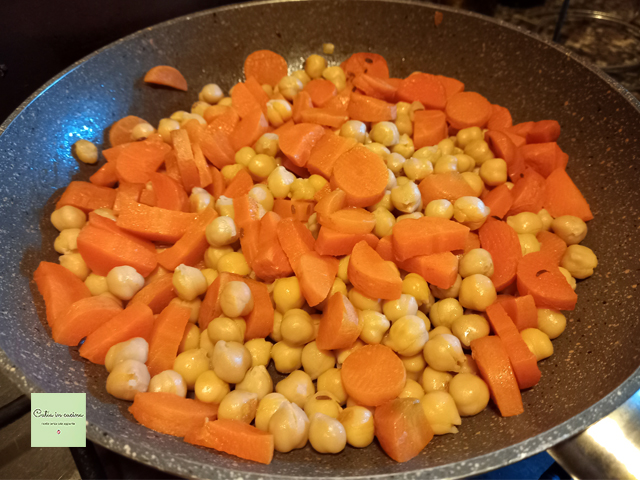
While the carrots cook in the microwave, sauté the chickpeas in a pan with a teaspoon of oil, a pinch of cumin seeds (or you can use caraway, also known as meadow cumin) and chili pepper, if desired.
Once the carrots are cooked, add them to the chickpeas and let everything season in the pan for a few minutes.
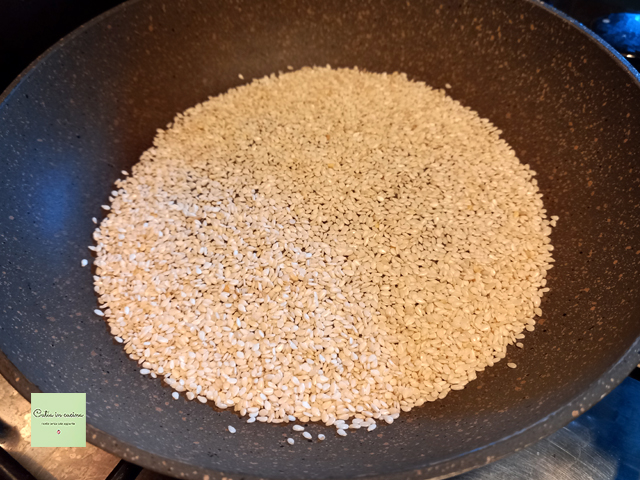
In a separate small pan, toast the sesame seeds. It’s a very simple operation, it just takes a few minutes.
☝ Only precaution: remove them from the heat as soon as they change color and immediately transfer them to a plate to cool, otherwise, they risk over-toasting due to the pan’s heat.
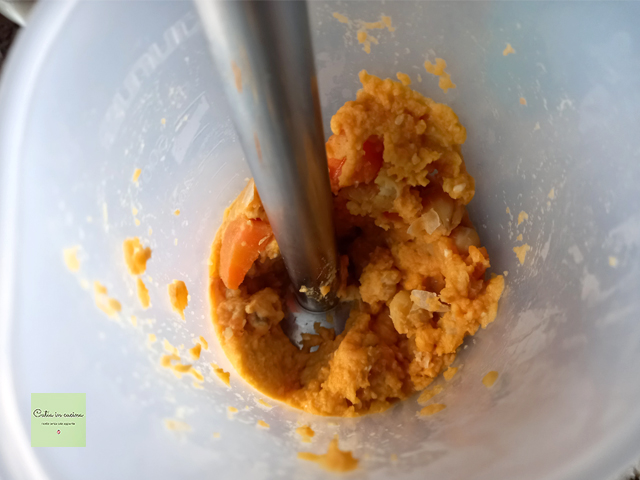
At this point, you just need to blend everything with the immersion blender. Proceed as follows:
Pour into a narrow and tall container (the one that comes with the immersion blender is fine) the toasted sesame, carrots, chickpeas, juice of half a lemon, grated zest, two teaspoons of oil, and half a clove of garlic (if desired).
Blend until smooth.
Chill the hummus in the fridge for at least half an hour.
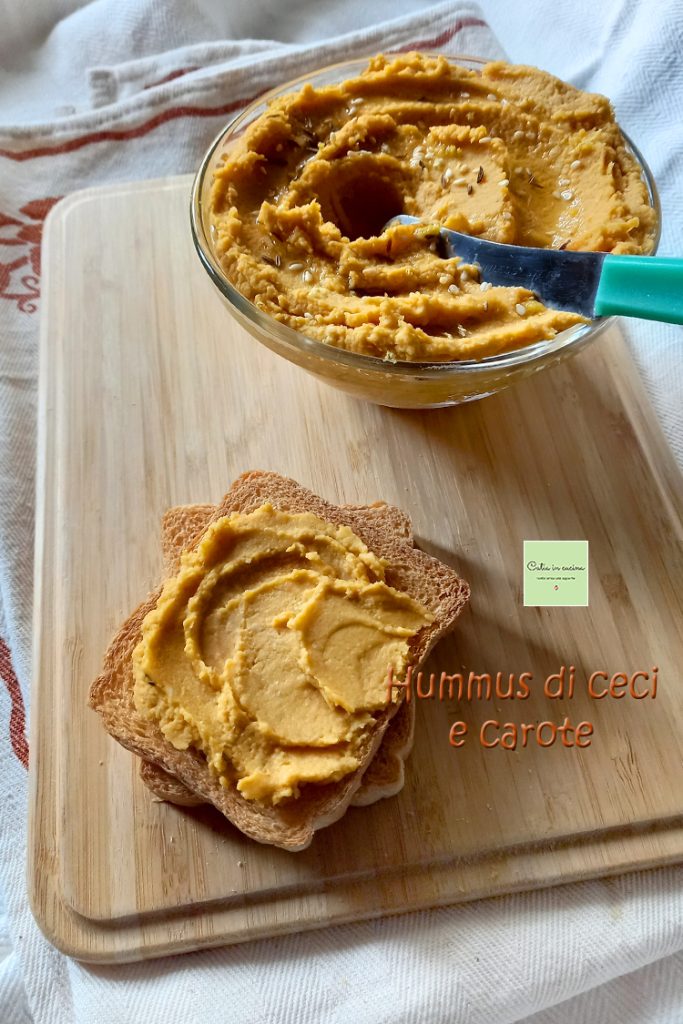
Serve the chickpea and carrot hummus with a drizzle of raw oil and decorated with toasted sesame, cumin seeds, and a sprinkle of lemon zest.
It’s great spread on bread, crostini, crackers, or toast, and also used as a dip for vegetable crudités. Delicious! 😋
TIPS:
🔹️ Garlic and chili pepper can be omitted. You’ll get a milder cream, suitable for children, those who don’t digest garlic well, or those who don’t like spicy food. I’ve tried all versions (without garlic with chili, with garlic without chili, without both) and find them all excellent. Hummus is always a delight in all versions. 😋
🔸️ If using canned chickpeas, always remember to rinse them thoroughly with cold water after draining them.
🔹️ If you plan to cook the chickpeas instead, you need to prepare the day before, due to the time required to soak the dried chickpeas and the long cooking time. So when you decide to make a soup or pasta and chickpeas I advise setting aside a handful of cooked chickpeas, to use later for hummus. 😉🔸️
 I remind you that there are also cans of legumes without added salt available on the market. Unfortunately, they are not always easy to find in supermarkets; I usually buy them online, even though they are available intermittently (generally if chickpeas aren’t available, there are chickpeas, beans or the mixed legumes, or vice versa). Ahhh it’s the hard life of low-sodium people like us! 🤷♀️😃
Salt-Free Tips
The flavorings in this recipe are many: toasted sesame seeds, fresh garlic, chili pepper. Furthermore, I renew the invitation to favor cooking dried chickpeas or alternatively to purchase, when available, canned chickpeas without salt.
☝ Canned chickpeas – like all packaged legumes, whether in glass or tin – contain an amount of salt that is around 0.7-0.8 g per 100 g of product. The packaging liquid is rich in sodium and provides most of the salt present in the product. To reduce the salt content, it is necessary to rinse the drained legumes thoroughly under running water, thus eliminating the surface salt and that contained in the remaining packaging liquid on the product.
If you are interested in reducing or eliminating salt, always remember to:
▫ Gradually decrease the salt, the palate needs to get used to it slowly and should not notice the gradual reduction.
▫ Use spices. Chili pepper, pepper, curry, nutmeg, cinnamon, cloves, cumin…
▫ Use herbs. Basil, parsley, oregano, thyme, sage, marjoram, rosemary, mint…
▫ Use seeds. Sesame, pine nuts, almonds, walnuts…
▫ Use spicy vegetables or fruit. Garlic, onion, lemon, orange…
▫ Use my salt-free vegetable granules and gomasio.
▫ Prefer fresh foods.
▫ Avoid cooking in water, prefer cooking methods that do not disperse flavors (grill, foil, steam, microwave)
▫ Avoid bringing the salt shaker to the table!
▫ Occasionally allow yourself to break the rule. It’s good for the mood and helps to persevere.
If you can’t, or don’t want to, give up salt:
▫ You can still try my recipes, salting according to your habits.
If you are interested in reducing or eliminating salt, always remember to:
▫ Gradually decrease the salt, the palate needs to get used to it slowly and should not notice the gradual reduction.
▫ Use spices. Chili pepper, pepper, curry, nutmeg, cinnamon, cloves, cumin…
▫ Use herbs. Basil, parsley, oregano, thyme, sage, marjoram, rosemary, mint…
▫ Use seeds. Sesame, pine nuts, almonds, walnuts…
▫ Use spicy vegetables or fruit. Garlic, onion, lemon, orange…
▫ Use my salt-free vegetable granules and gomasio.
▫ Prefer fresh foods.
▫ Avoid cooking in water, prefer cooking methods that do not disperse flavors (grill, foil, steam, microwave)
▫ Avoid bringing the salt shaker to the table!
▫ Occasionally allow yourself to break the rule. It’s good for the mood and helps to persevere.
If you can’t, or don’t want to, give up salt:
▫ You can still try my recipes, salting according to your habits.
Follow Me!
On the WhatsApp channel and on Instagram, on the Facebook page, on the Pinterest boards, in my two groups: Catia’s group, in the kitchen and beyond and Just what I was looking for! and if you like… subscribe to my Newsletter
On the WhatsApp channel and on Instagram, on the Facebook page, on the Pinterest boards, in my two groups: Catia’s group, in the kitchen and beyond and Just what I was looking for! and if you like… subscribe to my Newsletter
Other Light and Tasty recipes, all with carrots:
Carla Emilia: Carrot and Pumpkin Cream
Claudia: Carrot Cream with Shrimp
Daniela: Carrot and Sweet Potato Purée
Elena: Carrots alla Scapece
Milena: Carrot and Yogurt Pancakes
