
You surely all know what a farifrittata is (also called chickpea frittata or farinata): it’s a traditional recipe from some of our regions, and it’s also a great vegan alternative to the classic frittata. It’s made with chickpea flour, and you don’t need to be vegan to enjoy it because it’s delicious — I love it both in the basic version, made only with chickpea flour, and enriched with vegetables. After trying it with different vegetables (I’ll leave the links a few lines below) today I made a chickpea frittata with wild herbs. What a treat!
The idea of making a chickpea frittata with wild herbs came from Light and Tasty. 😊 Our weekly column this week deals with ‘bitter herbs’ and so in recent days, using the recipe as an excuse, I grabbed a knife and went to my mother’s house to stock up on wild herbs. Not that I need excuses, really — there are so many herbs to gather at this time of year that I go collect them every week 😄 and then I feast on savory pies, herb tarts and stuffed flatbreads! And from now on, chickpea frittatas with herbs too!
Ahhh, yes, I’m full again today! 😄
〰 〰 〰
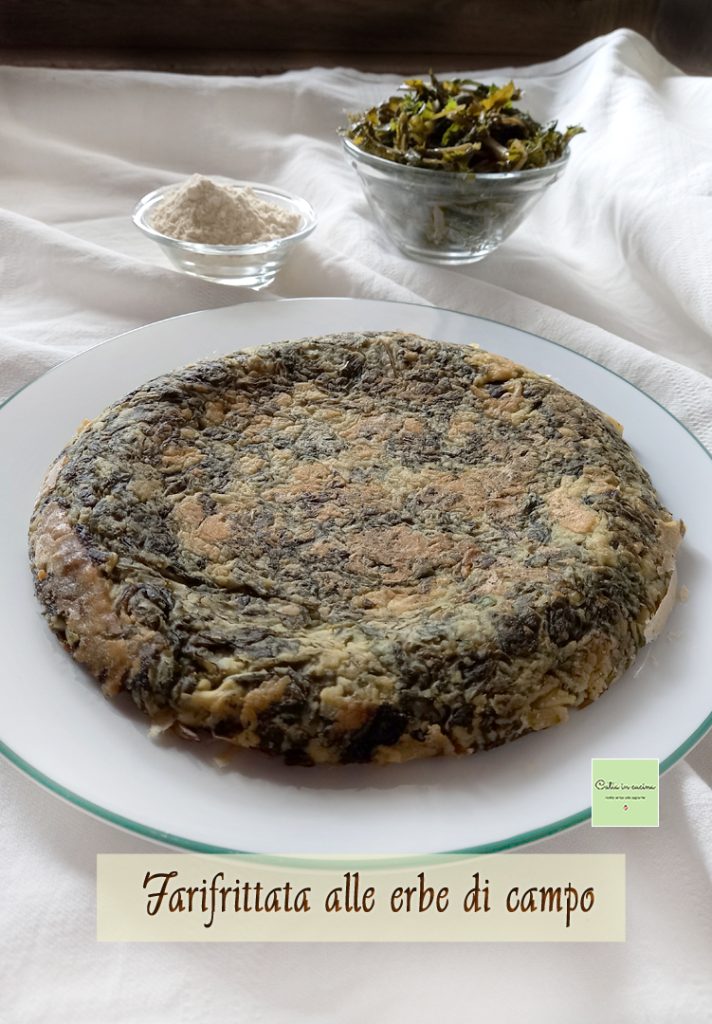
- Difficulty: Medium
- Cost: Economical
- Rest time: 2 Hours
- Preparation time: 10 Minutes
- Portions: 2
- Cooking methods: Stovetop
- Cuisine: Vegan
- Seasonality: All seasons
Ingredients
- 5.3 oz wild edible herbs (weighed cooked)
- 3.5 oz chickpea flour
- 7 fl oz water
- chives (to taste)
- 1 clove garlic
- 1 tbsp extra virgin olive oil
- 1 pinch pepper
Tools
- Pot
- Pan
- Lid
- Kitchen Spatula
Steps
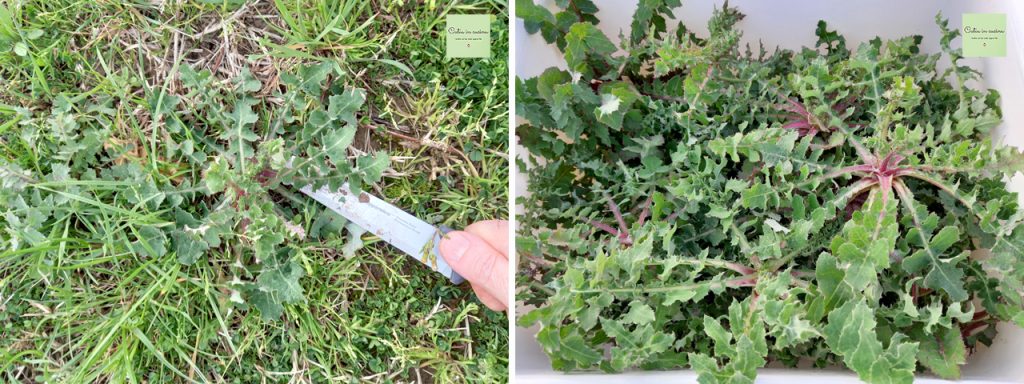
🌿 There are so many edible wild herbs; I don’t know them all and I’m sure many that I could collect unfortunately remain where they are. The ones I’m sure about are dandelion, nettle, purslane, chard and wild arugula (the two easiest!), but especially: rosolaccio and crespigno (the latter exists in two varieties, common and spiny) — both very common in my area and widely used as filling for flatbreads (they are commonly called with the dialect names ròsole and scarpègn). 🌿
To prepare the chickpea frittata with wild herbs, the first two fundamental steps are:
1) go out into the fields to gather the herbs 😄 and 2) prepare the chickpea batter (and let it rest for several hours).
I wasn’t sure which of the two operations to tell you to start with, since both take a little time, but to optimize the work I recommend preparing the batter first, so while it rests (for at least 2 hours, but ideally 8 hours) there is plenty of time to go collect the wild herbs. Or, if you don’t have a field, to go to the greengrocer to buy chard, chicory, radicchio, spinach, etc. 😉
Actually I did the opposite: the day before I picked the herbs, cleaned them, washed, cooked them and put them in the fridge, then the next day I did the rest.
So, having said that, proceed as follows:
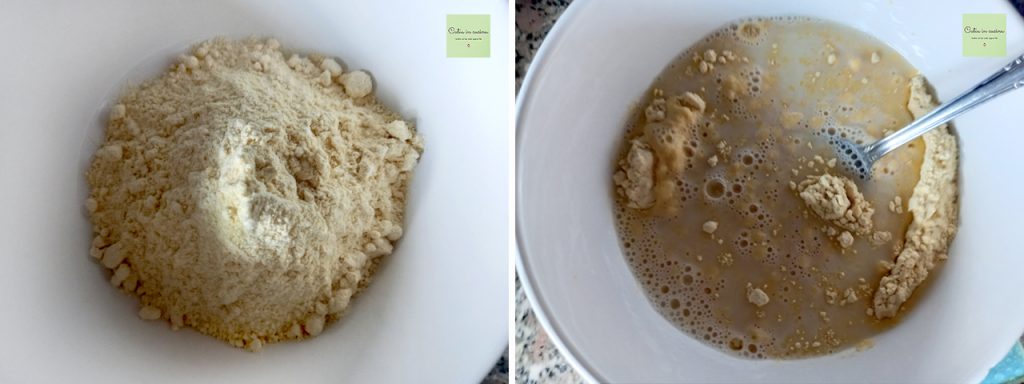
Pour the chickpea flour and the water into a bowl, mix well and dissolve any lumps.
Let the batter rest for a minimum of 2 hours, preferably 8–12 hours so it will be more digestible.
Wash the wild herbs well to remove every trace of soil.
Put the herbs, still dripping, into a large pot.
Cover the pot with a lid and cook the herbs for 10–15 minutes over the lowest heat. During cooking check and turn the herbs; if necessary moisten with a little water.
👉 The water from draining the herbs is usually sufficient for cooking. If the herbs are not young and have tough stems (it’s better to cut away the hardest stems) you can add a cup of water.
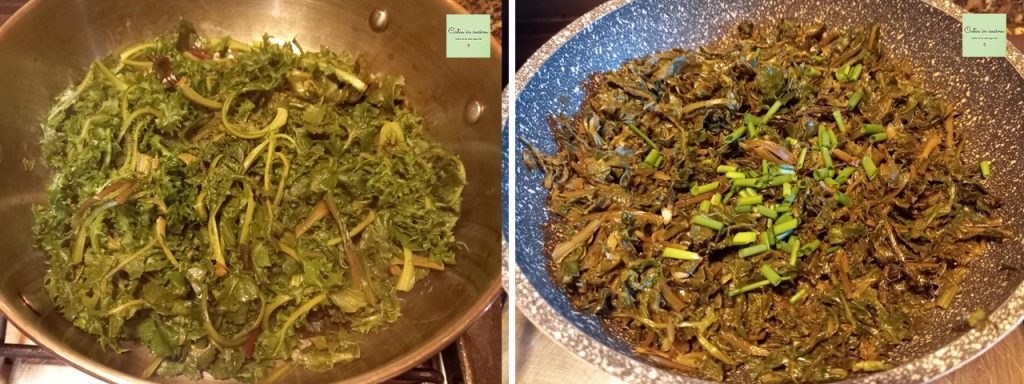
Sauté the herbs in a pan with one garlic clove and one tablespoon of oil. The sauté is meant to flavor the herbs and make them lose excess moisture. You can optionally add a small piece of chili pepper instead of the pepper.
👉 Chop the herbs coarsely: with a knife before sautéing in the pan, or in a less professional way with scissors (as I did 🤤😄).
Also add a few chopped chive stems.
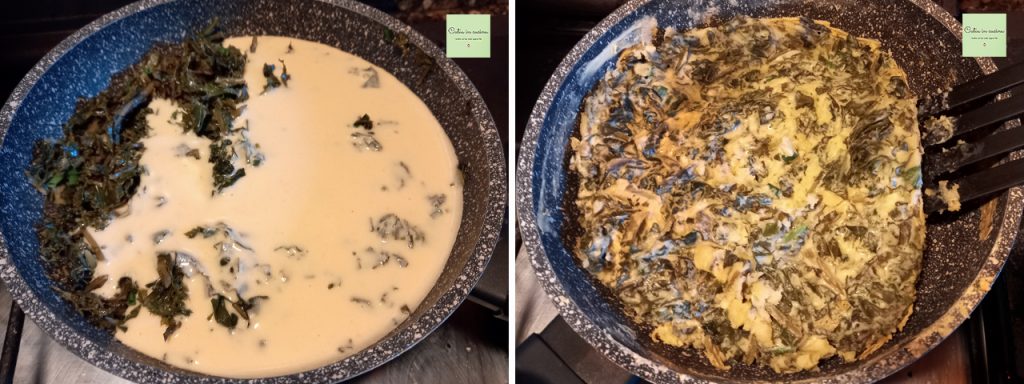
Pour the chickpea batter into the pan. Mix well and level it out.
Cook over low heat until the frittata detaches from the pan without breaking (this takes about 10 minutes).
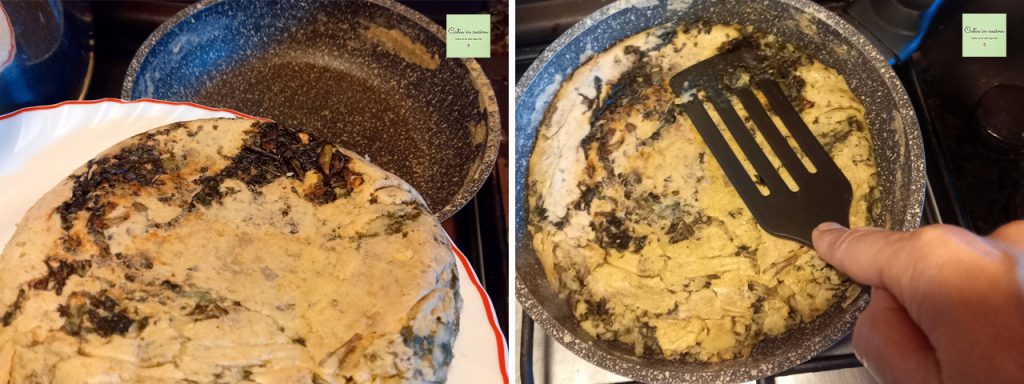
Gently loosen the frittata with a spatula.
Place a plate or a lid (a flat lid, not concave) over the pan and flip the frittata.
Before flipping the frittata, grease the pan with a little drizzle of oil.
👉 A simple brush of oil is enough, but I recommend doing this so the other side will also detach well.
Slide the frittata from the plate (or lid) back into the pan.
Press down with the spatula or the back of a spoon to level the thickness of the frittata and to make it adhere evenly to the pan. This way the other side will be smooth and will cook evenly. To cook this side, 3–4 minutes are sufficient.
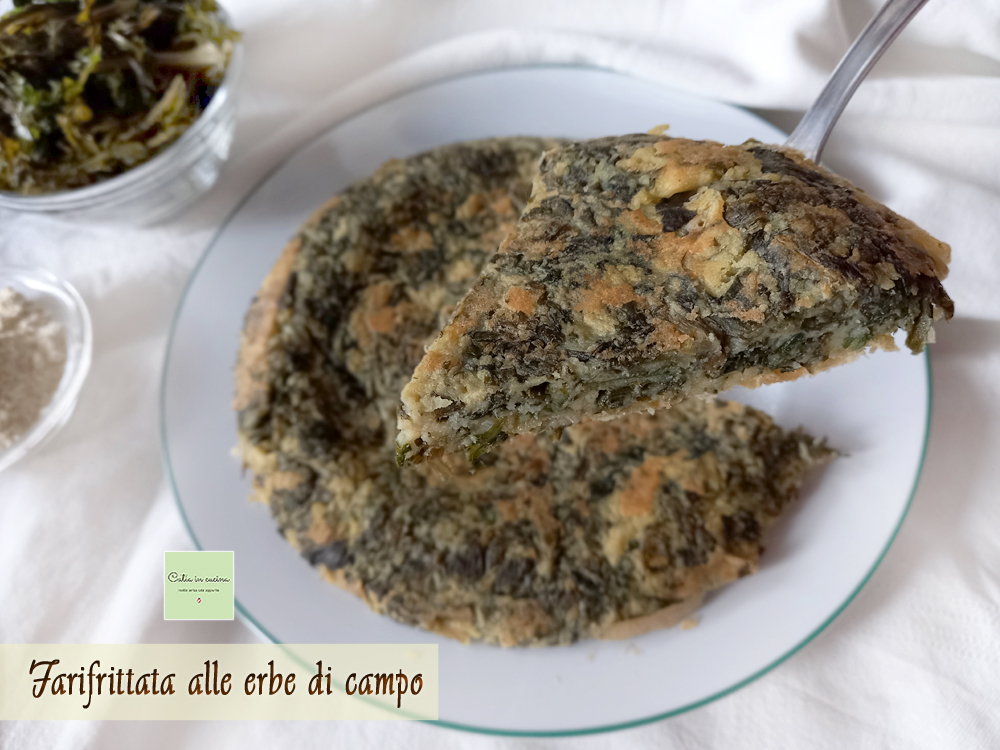
The chickpea frittata with wild herbs is great both hot and cold. 😋
You can serve it as a main course or, cut into small squares, among the appetizers as finger food. It can also be used as a filling for sandwiches (I even put it in a flatbread, but don’t tell anyone! 😄).
Tips for no-salt cooking
 As always in my home, I did not add salt to this recipe. To season, a small piece of chili in the wild herbs is enough. 😉
If you are interested in reducing or eliminating salt, always remember to:
▫ Reduce salt gradually so your palate can adapt slowly and not notice the progressive reduction.
▫ Use spices: chili, pepper, curry, nutmeg, cinnamon, cloves, cumin…
▫ Use aromatic herbs: basil, parsley, oregano, thyme, sage, marjoram, rosemary, mint…
▫ Use seeds: sesame, pine nuts, almonds, walnuts…
▫ Use pungent vegetables or fruit: garlic, onion, lemon, orange…
▫ Use my salt-free vegetable granulate and gomasio.
▫ Prefer fresh foods.
▫ Avoid boiling in water; prefer cooking methods that do not disperse flavors (griddle, foil, steam, microwave).
▫ Avoid bringing the salt shaker to the table!
▫ Allow yourself an occasional indulgence. It’s good for the mood and helps you persevere.
If you don’t want to, or can’t, give up salt:
▫ You can still try my recipes and season them according to your habits.
Follow me!
On my WhatsApp channel and on Instagram, on my Facebook page, on Pinterest, in my two groups: Il gruppo di Catia, in cucina e oltre and Proprio quello che stavo cercando! — and if you like… subscribe to my Newsletter.
Other Light and Tasty recipes this week:
Carla Emilia: Polpette di catalogna e scarola
Claudia: Pesto di rucola
Daniela: Cicoria con olive e capperi
Elena: Pizza di catalogna
Milena: Savory pie with bitter radicchio
