
A couple of weeks ago, while walking in a small park nearby, Flavia and I discovered that among the mix of plants bordering the park, there are also elderberry plants. We had never noticed them before! The elderflowers are so beautiful and fragrant! We couldn’t resist the temptation to pick some. Once home, I put the flowers in a jar, intending simply to decorate the kitchen table, but Flavia protested: why don’t we make elderflower syrup instead? 😃
So, today’s recipe is not mine at all but fully belongs to Flavia’s recipes. She was the one who did the necessary research to find the recipe and undertook the experiment, adapting it to our needs (i.e., producing a small amount of syrup, just one jar) and, above all, adapting to our home’s “troubles.” In fact, two hours after picking these flowers… I personally caused her a hindrance 😂 by ending up in the emergency room due to a discomfort and staying there until the next day. This caused not only some extra worries to my family but also a hiccup in making the syrup – ahhh these moms! – because the flowers were already at risk of wilting when Flavia finally remembered them, abandoned there in the kitchen.
But all’s well that ends well! I recovered, and the syrup turned out great. 😊
And so today I decided to write this revived (much like me 😂) recipe and propose it to the Light and Tasty Team on this day dedicated to the colors yellow, red, and orange. And our elderflower syrup is a beautiful yellow, even though the flowers are white ooohh yeah! 😃
〰 〰 〰
For you, a few more “flowery” ideas: 👇
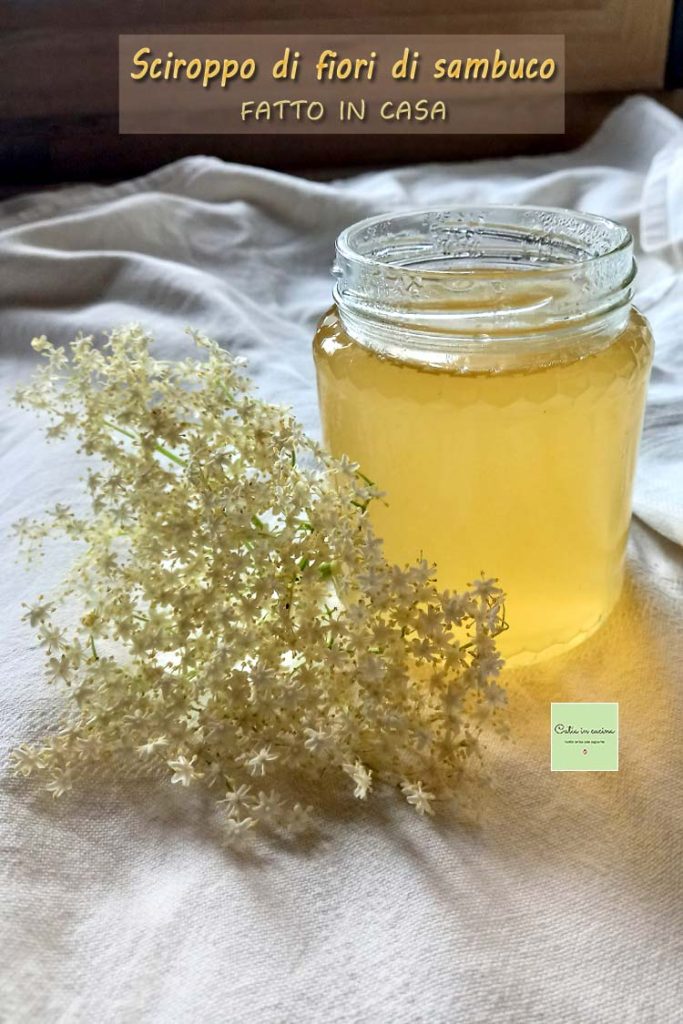
- Difficulty: Easy
- Cost: Economical
- Rest time: 2 Days
- Preparation time: 5 Minutes
- Portions: jar: 1
- Cooking methods: Boiling
- Cuisine: Italian
- Seasonality: Spring, Summer
Ingredients
- 8 elderflowers (or 10, depending on the size of the flowers)
- 1.5 cups water
- 1 lemon
- 1 cup sugar
Tools
- Container
- Small Pot
- Strainer
- Jar
Steps
Holding the flowers by the stem, gently tap them on a surface to remove any insects that may be present.
👉 The very few insects present in the elderflowers we picked were very, very small, similar to tiny gnats.
☝ Do not wash the flowers to prevent them from losing their fragrance or having the small flowers detach.
Trim the stems, leaving only the thinner stems, cut short anyway.
Wash the lemon and slice it.
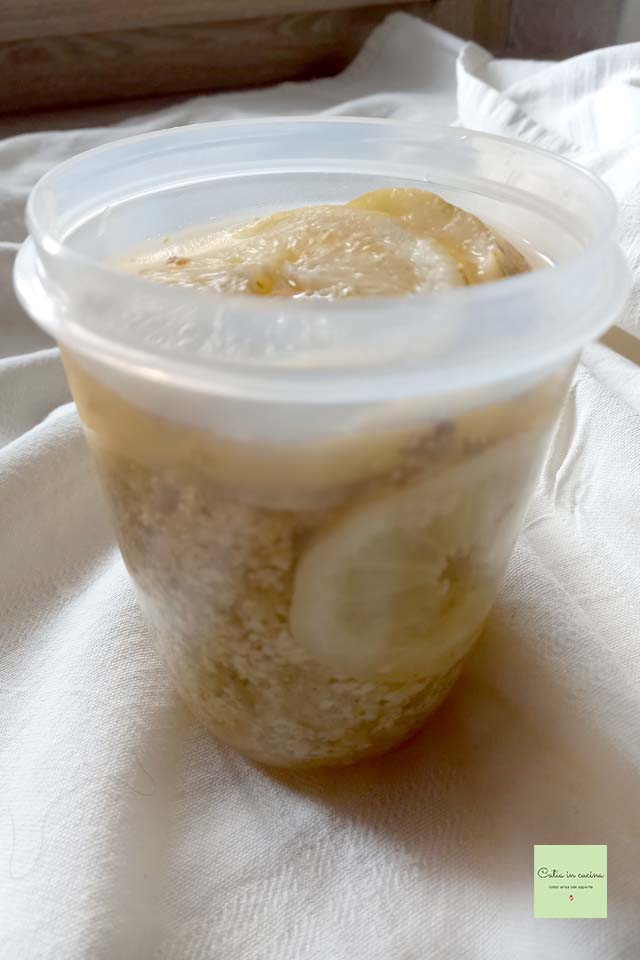
Place the flowers in a container (with a lid).
Cover the flowers with lemon slices.
Pour water to cover the flowers and lemon slices. Some lemon slices can slide to the sides if needed.
Close the container with its lid.
Let it steep for about 2 days at room temperature.
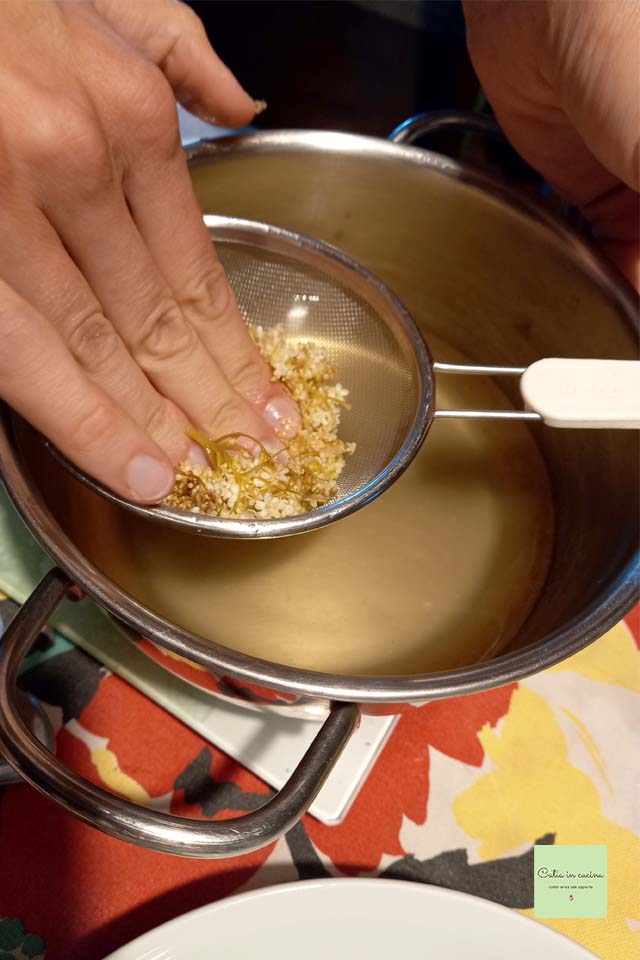
After 2 days, pour everything into a pot, filtering it through a strainer.
Squeeze the steeped flowers and lemon slices well using the back of a spoon or squish them with your hands (obviously well washed).
👉 If desired, a towel can be used to better squeeze the flowers and lemon, but in this case, the towel should have been previously washed without using fabric softener. Additionally, it would be wise to boil it in water for a few minutes to eliminate any detergent residue present in the fibers.
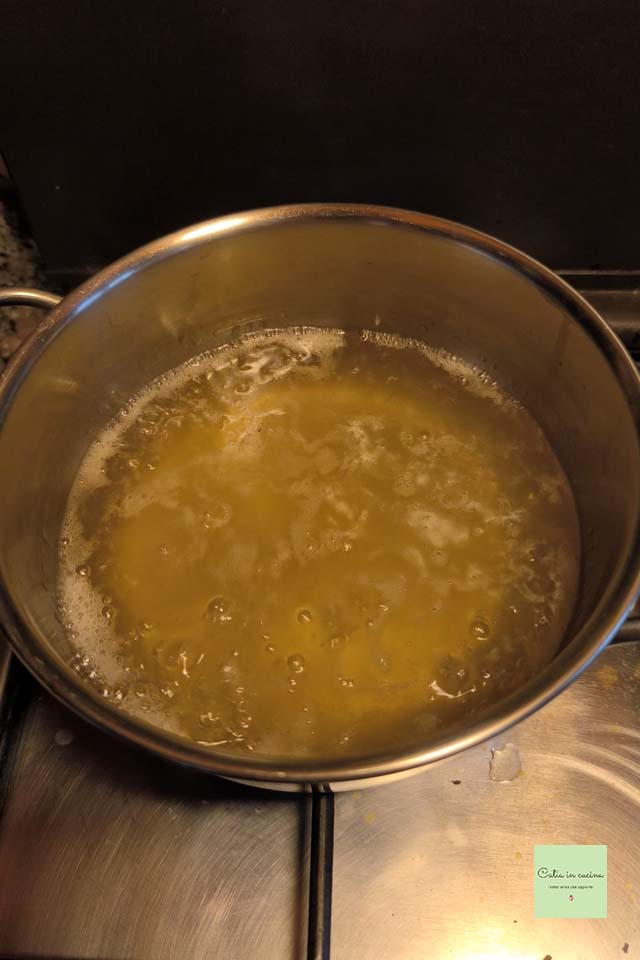
Pour the sugar into the pot containing the elderflower-scented liquid.
Place the pot on the stove and bring to a boil. Boil for a couple of minutes.
After boiling, pour the elderflower syrup into a small glass jar.
☝ Ensure that the glass of the jar is not too thin and delicate, avoiding pouring the syrup when it is still too hot. Ideally, use a jar suitable for canning and jams (we used a former honey jar).
Close the jar with its lid.
Store the elderflower syrup in a cool place (preferably in the fridge) and consume it within 15-20 days.
We used our homemade elderflower syrup to make cocktails. Flavia delighted us with a non-alcoholic cocktail and also with the famous Hugo aperitif (with about 300 g of our syrup, we obtained a total of 10 glasses).
Regarding the Hugo… we promised ourselves to make it again and add it to this blog’s beverage section (sometime or another! 😃) !
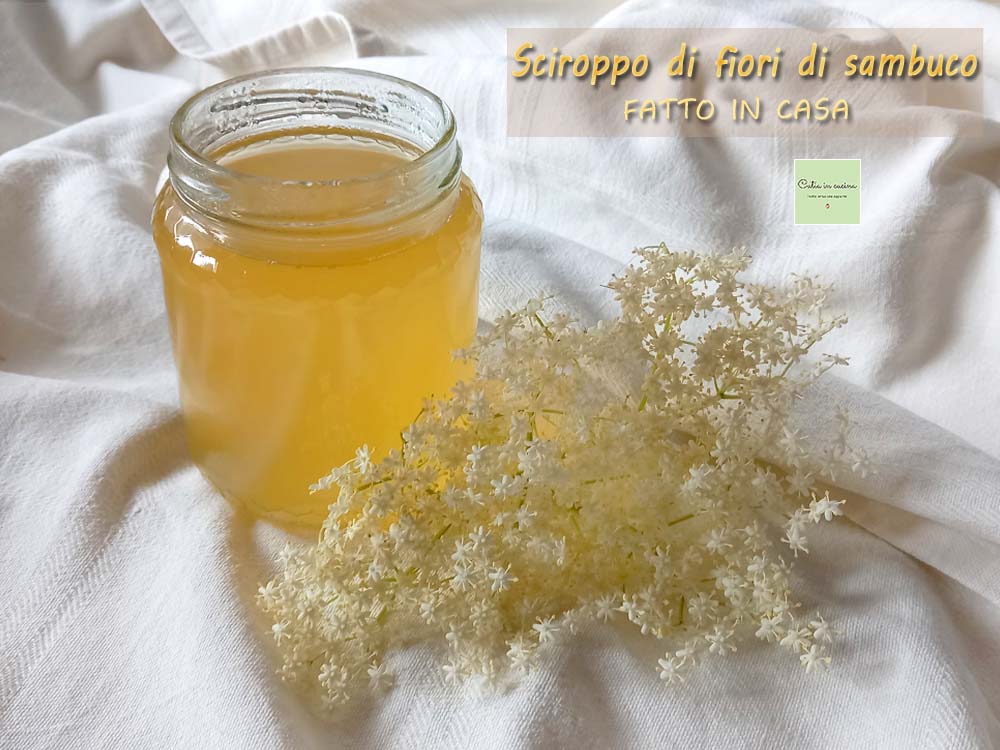
Elderflower syrup is commonly used in cocktails, and that’s all I knew it for until now.
But thanks to this recipe, I’ve now discovered that it can also be used as a flavoring for desserts, as a soak for sponge cakes and biscuits (diluting it in water), as a sweetener for teas and herbal teas, or for yogurt and ice creams, or simply added to water, fresh or cold, to make it more refreshing (in this case, dilute in a 1:20 ratio).
Follow me!
In the WhatsApp channel and on Instagram, on the Facebook page, on Pinterest, in my two groups: Catia’s group, in the kitchen and beyond and Just what I was looking for! and if you like… subscribe to my Newsletter
In the WhatsApp channel and on Instagram, on the Facebook page, on Pinterest, in my two groups: Catia’s group, in the kitchen and beyond and Just what I was looking for! and if you like… subscribe to my Newsletter
Other proposals from the Light and Tasty Team:
Carla Emilia: Yellow pepper boats with breadcrumbs and olives
Claudia: Shrimp with lemon and limoncello
Daniela: Melon with yogurt, crunchy muesli, and mixed seeds
Elena: Roasted peppers with feta and almonds
Milena: Salad with peaches, apricots, arugula, and feta
Carla Emilia: Yellow pepper boats with breadcrumbs and olives
Claudia: Shrimp with lemon and limoncello
Daniela: Melon with yogurt, crunchy muesli, and mixed seeds
Elena: Roasted peppers with feta and almonds
Milena: Salad with peaches, apricots, arugula, and feta
FAQ (Questions and Answers)
How is elderflower syrup used?
Elderflower syrup is commonly used:
1) in cocktails and aperitifs
2) as a flavoring for desserts
3) as a soak for sponge cakes and biscuits (diluted in water)
4) as a sweetener for teas and herbal teas
5) as a sweetener for yogurt and ice creams
6) added to water, fresh or cold, to make it more refreshing (in this case, dilute in a 1:20 ratio).
