
Finally! For a long time I wanted to write the recipe for homemade pizzoccheri, and it was about time I made up my mind! 😃
Very few words to introduce this recipe, necessarily all of thanks. 😊
A heartfelt thanks to Francesca Olly who passed on her recipe to me (which is in the collection Your recipes complete with Francesca’s photos).
A recipe that is fabulous for me, I haven’t bought packaged pizzoccheri, and I will never buy them again since I started making them at home following this recipe (the only difference: I don’t use 00 flour but 0 or 1).
I have nothing more to add, except… urge you to buy buckwheat flour and prepare your very own homemade pizzoccheri as soon as possible! 🤩
Are you ready?
👇 For the category Homemade also try:
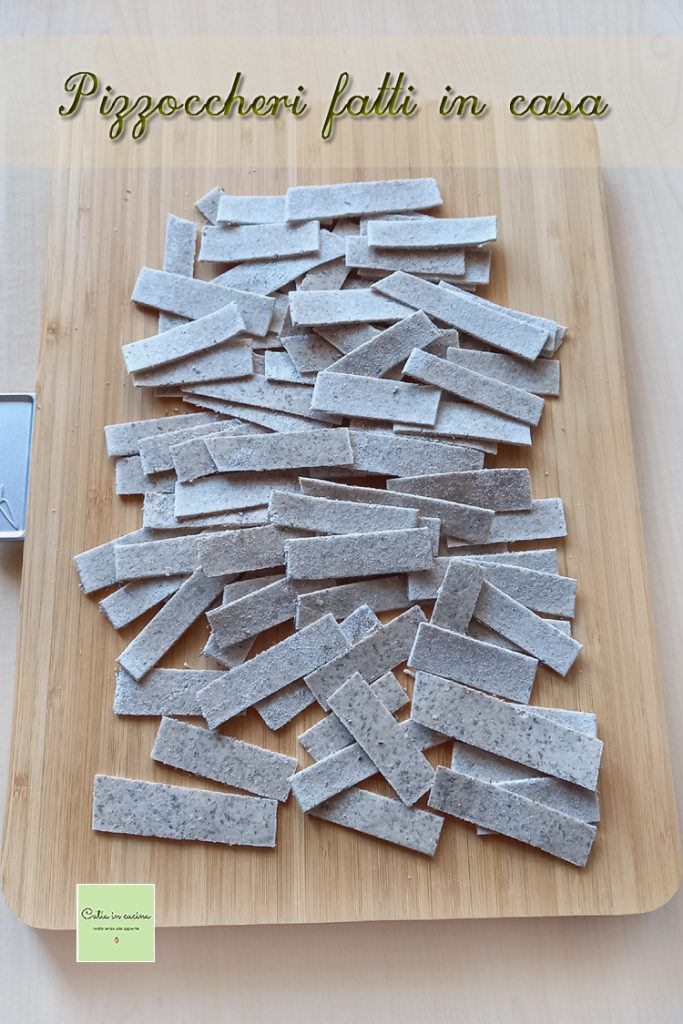
- Difficulty: Easy
- Cost: Cheap
- Preparation time: 20 Minutes
- Portions: 3
- Cooking methods: Stovetop
- Cuisine: Italian
- Seasonality: All seasons
Ingredients
- 7 oz buckwheat flour
- 3.5 oz type 0 flour (+ 1 oz for rolling out the dough to prevent it from sticking to the board)
- 3/4 cup water (hot)
Tools
- Chopping board / Kneading board
- Rolling pin wooden
- Knife kitchen
Procedure
Combine the two flours and place them in a mound on the board.
Pour the hot water into the mound, little by little.
Knead the dough.
If necessary, adjust the water: the 3/4 cup is exactly what I used, but as always, some small variation may occur due to the flours.
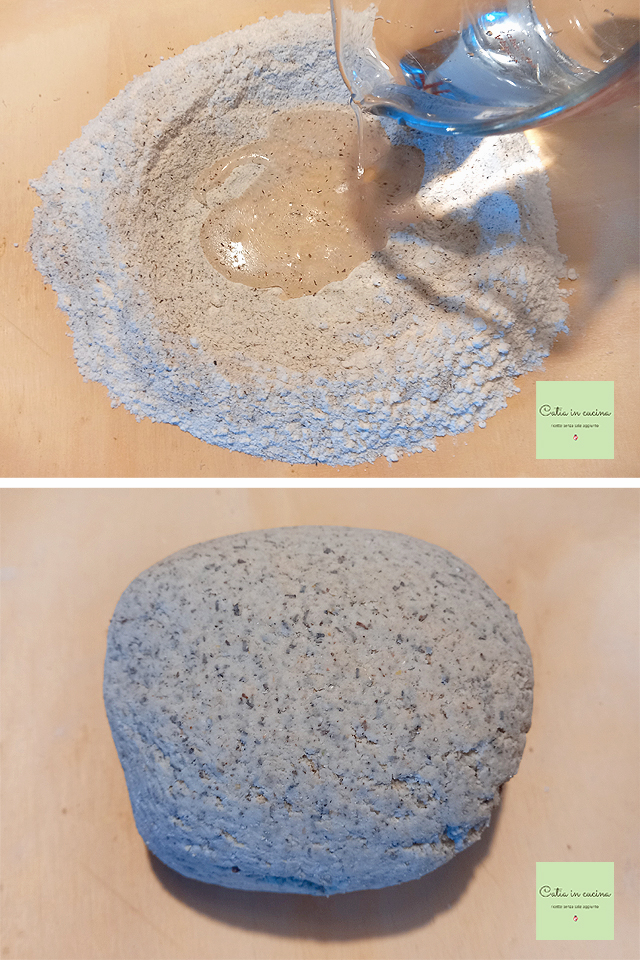
Flour the board and the dough.
Roll out the dough with the rolling pin.
For convenience, I divided the dough into two parts, covering the second with a plate while working on the first piece.
👉 The dough is soft, and it needs to be floured to prevent sticking to the board and rolling pin.
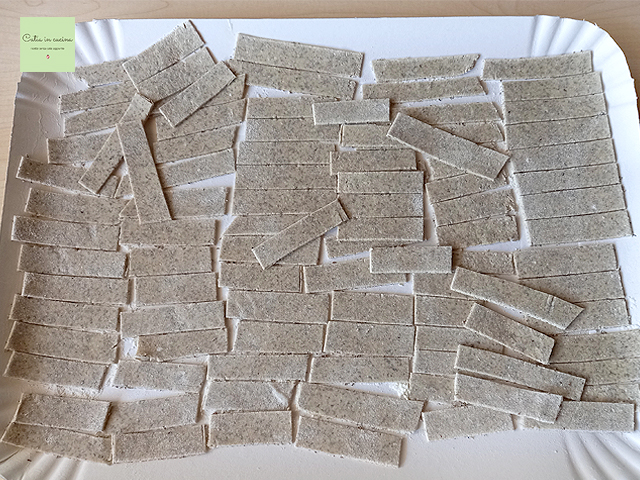
Cut the dough into strips about 1/2 inch wide.
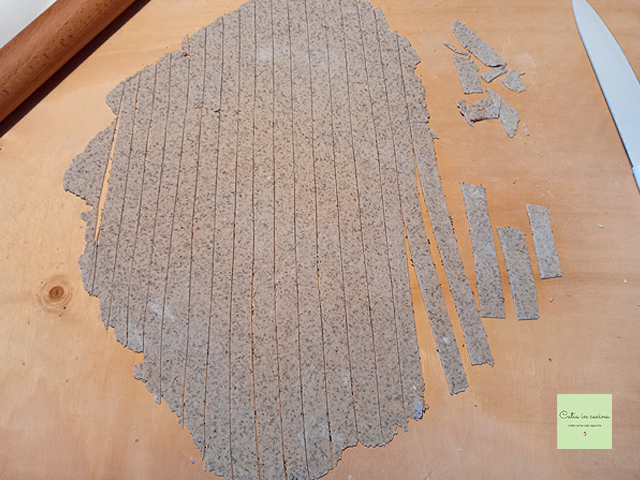
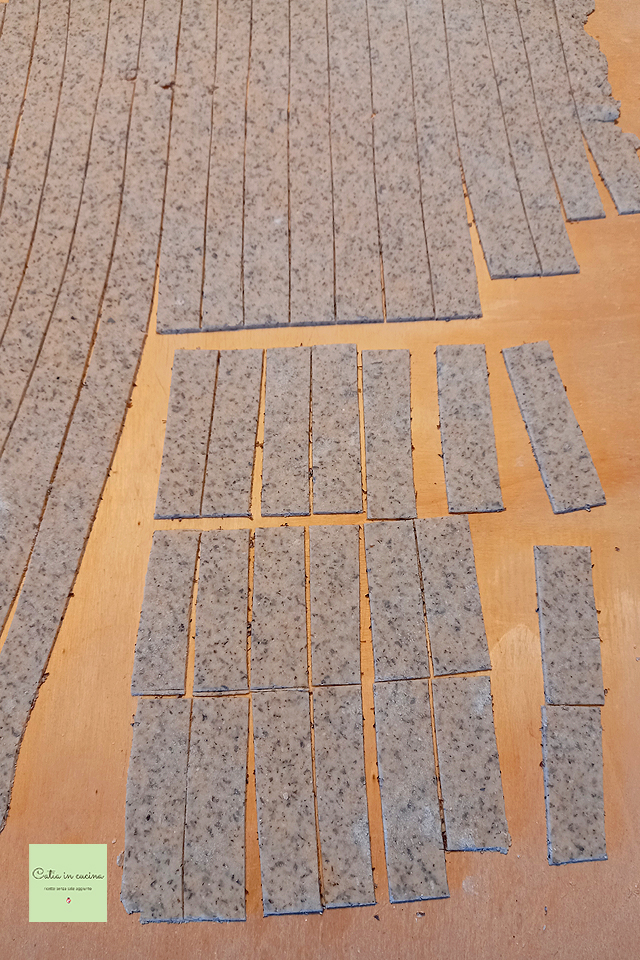
Then cut the strips into pieces 3 inches long.
As can be seen from the photos, I didn’t follow the traditional Valtellina method of cutting overlapped strips. No offense to the Valtellina people, I just find it easier to cut the pasta this way. 😇
Here you go, the pizzoccheri are ready to be plunged into boiling water.
Alternatively, they can be laid out on a couple of trays or a board, well floured. Left in the air, they dry out in about a day.
They can also be frozen, like all fresh pasta, but this is an option I have not personally tried yet, which I will update you on, if I do.
Now all that remains is to season the pizzoccheri following the traditional recipe with cabbage and potatoes, for which I refer you to Francesca’s recipe (in this section), or to the original recipe of Teglio’s pizzocchero,
or you can try my recipe here on the blog for Pizzoccheri with turnip tops and pecorino,
or… the new recipe I just finished writing! –> Pizzoccheri with spicy kale
🤗
Follow me!
On the WhatsApp channel and on Instagram, on the Facebook page and Pinterest boards, in my two groups: Catia’s group, in the kitchen and beyond and Just what I was looking for! and if you like… subscribe to my Newsletter.
