
I’m going through a “baking phase.” After baking (and eating) so much for days without taking photos… Ooohhh, today I finally decided to photograph this kefir bread!
With the baking experiments these days, I’ve made bread, buns, and focaccias of all kinds. And always using kefir.
It all started with the herb dough. That’s where I first tried adding some kefir to the dough, and since it worked, I continued experimenting. I made focaccias, also using them as a base for pizza, smaller focaccias cooked both in the oven and in the pan (I try again from time to time to cook in a pan!), small, medium, and mini buns, because buns always work great at home, and then a couple of loaves like this one. Perhaps I should have called it sandwich bread, or loaf… but… but yes… it’s a bread, that’s what I’ve called it. 😀
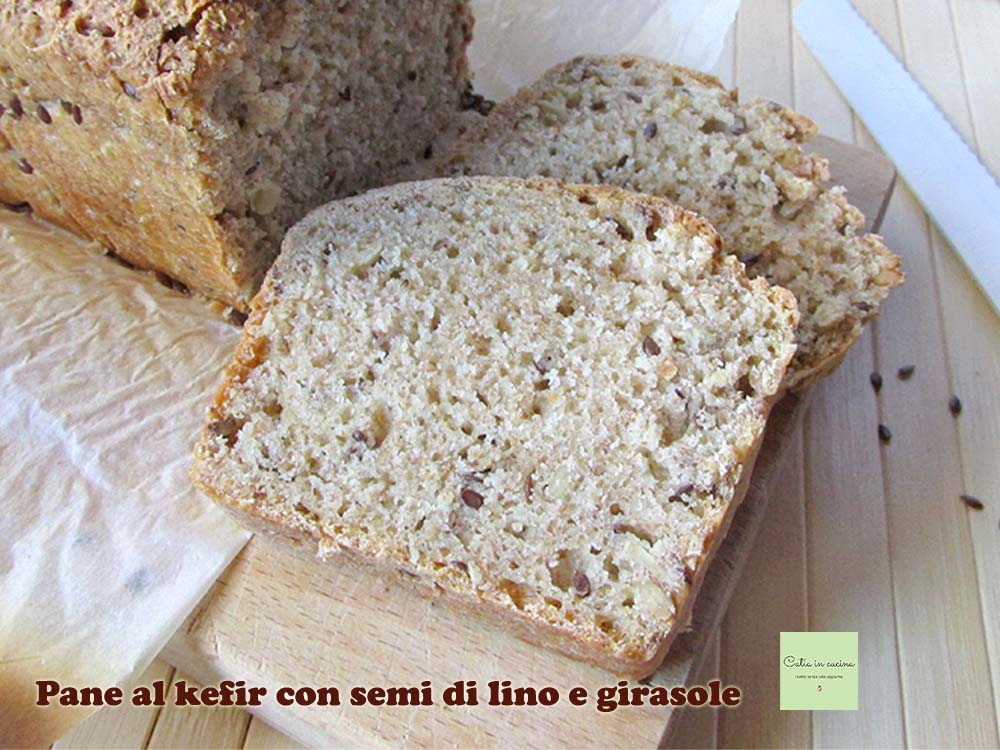
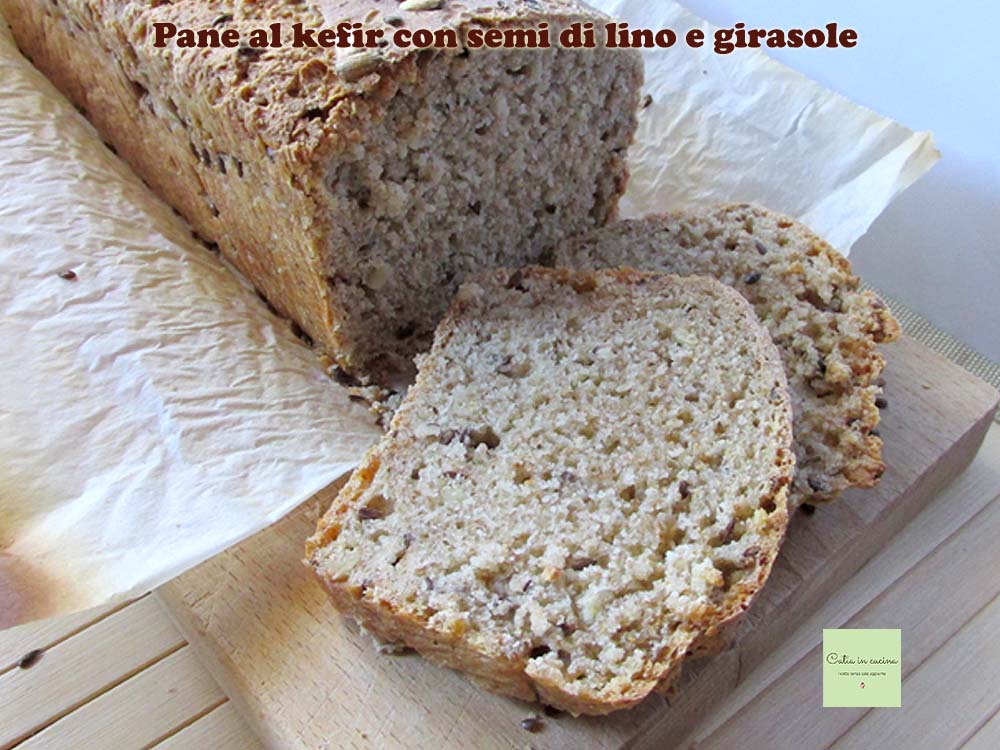
It’s a soft bread, with a crispy crust, and it’s really good, it was gone in ten minutes here! So let’s stick with the simple name of kefir bread, since (surprise!) there’s milk kefir inside the dough.
And it rose in the traditional way, which is the way I’ve always known: using simple yeast.
Eh, perhaps you’re wondering why I made this clarification about the yeast. 😊
It’s a little teaser. It concerns the experiments I’m doing these days that I can’t wait to share with you. 😉😀 Stay tuned! We’ll have a lot to bake!!! (Update: the experiments were about THIS recipe 😉).
In the meantime… try this kefir bread! It’s enriched with oat bran and flax and sunflower seeds.
It’s excellent as a meal bread or for children’s snacks, but we love it for breakfast with apricot jam. Try it!
Other breads and doughs with kefir, which has become indispensable for me, can be found here at these links: 👇
- Difficulty: Easy
- Cost: Cheap
- Rest time: 3 Hours
- Preparation time: 15 Minutes
- Portions: 20 Pieces
- Cooking methods: Oven
- Cuisine: Italian
- Seasonality: All Seasons
Ingredients
- 12.3 oz re-milled durum wheat semolina
- 5.3 oz spelt flour (semi-wholemeal)
- 1.1 oz oat bran
- 1.1 cups milk kefir (or alternatively yogurt)
- 1 tbsp extra virgin olive oil
- 1.8 oz mixed seeds (I used flax and sunflower seeds but you can get creative)
- 2.1 oz water (warm)
- Half cube fresh yeast
Tools
- Loaf pan
- Parchment paper
Steps
As with all yeast doughs made with fresh yeast, first dissolve the yeast in the water.
In a bowl, add the flours, oat bran, oil, kefir, and the water with the dissolved yeast.
(*) Clarification: for the kefir, I’ve indicated 250 grams, but this amount may vary (even up to 280 grams). It might, because I’ve made this bread twice and haven’t used the exact same amount in both cases, probably due to the kefir density. If it’s a bit liquid, a lower weight might be necessary. Those who produce their own kefir know from experience that sometimes it turns out softer and sometimes thicker. So my advice is to start with 250 grams and then add little by little based on the dough’s consistency.
Mix with a spoon and when the dough is still soft, add the seeds.
Knead with your hands until you obtain a well-blended dough.
If it’s too soft, add flour, but little by little. Even if it’s soft (to the point of being sticky), it will rise well just the same.
Let rise in a sheltered place until doubled (about 3 hours).
After rising, transfer the dough to a loaf pan lined with parchment paper and let it rise again for about an hour. Alternatively, you can let it rise once directly in the pan (the second time I made this bread, I was short on time and did it this way).
Decorate the dough’s surface with seeds, press them lightly so they adhere well to the dough, otherwise, they tend to detach after baking.
Bake in the oven at 356°F (180°C) for 25-30 minutes.
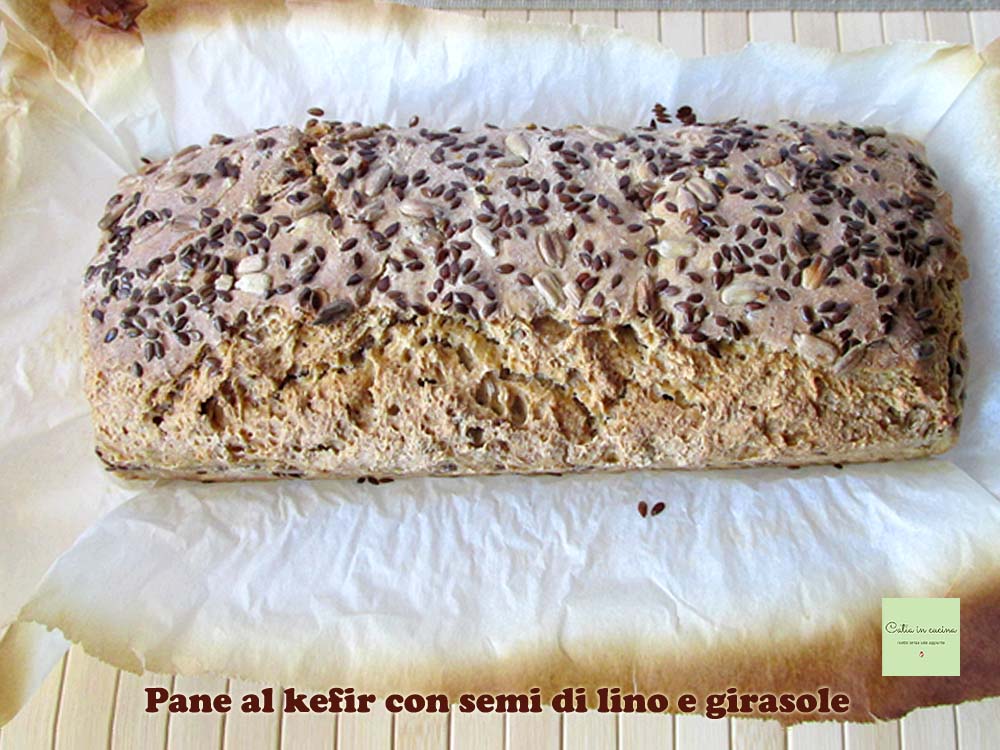
I recommend not slicing the bread when it’s still hot, but waiting for it to cool down.
Salt-Free Tips
 This kefir bread, like all my leavened products and all my recipes, is without added salt. Bread is one of the foods that best suits the absence of salt, as it’s almost always eaten with something else. If you came to this blog searching for recipes or tips for cooking without salt, my advice today is this: start buying unsalted bread (or bland as it’s called in certain regions) or even better, make the bread at home so you can gradually reduce the salt and thus train your palate. 😉 In any case, if you’re interested in eating or cooking without salt, you can try to take advantage of the salt-free tips listed below:
If you are interested in reducing or eliminating salt, always remember to:
■ Decrease salt gradually, the palate needs to get used to it slowly and shouldn’t notice the progressive reduction.
■ Use spices. Chili, pepper, curry, nutmeg, cinnamon, cloves, cumin…
■ Use aromatic herbs. Basil, parsley, oregano, thyme, sage, marjoram, rosemary, mint…
■ Use seeds. Sesame, pine nuts, almonds, walnuts…
■ Use spicy vegetables or fruit. Garlic, onion, lemon, orange…
■ Use my vegetable granules without salt and gomasio.
■ Prefer fresh foods.
■ Avoid cooking in water, prefer cooking methods that don’t disperse flavors (griddle, papillote, steam, microwave)
■ Avoid bringing the salt shaker to the table!
■ Occasionally indulge in breaking the rules. It’s good for the mood and helps perseverance.
If you don’t want or can’t give up salt:
■ You can still try my recipes by salting according to your habits.
Follow me!
In my WhatsApp channel and on Instagram, on the Facebook page, in Pinterest and in my two groups: Catia’s group, in the kitchen and beyond and Just what I was looking for! and if you feel like it… subscribe to my Newsletter.
