
Yesterday I set a dough to rise, with which today I made two fragrant, crunchy bread sticks.
A simple bread, a recipe that wasn’t supposed to be a recipe but just an ingredient. This bread was supposed to be an ingredient in tomorrow’s recipe.
But when I brought them to the table today, the two men in my house gave me so many compliments for how good this bread was, they kept saying how good this bread is… and how well baked this bread is… and make this bread again… that in the end, I decided to change the recipe I was writing on the fly and split it into two recipes. 😃
I’ve definitely made similar doughs before, maybe this bread resembles other breads or rolls already present here on the blog, but the proportions between the ingredients and the loaf shape made the difference this time because the result was really optimal, and so here I am, ready to write the recipe right away! 😃
And are you ready?
〰️〰️〰️
Sooner or later I will have to decide to create a collection of the various types of bread I have tried so far! In the meantime, I will add some here: 😉👇
- Difficulty: Easy
- Cost: Very economical
- Rest time: 19 Hours
- Preparation time: 10 Minutes
- Portions: loaves: 2
- Cooking methods: Oven
- Cuisine: Italian
- Seasonality: All seasons
Ingredients for 2 bread sticks
- 3 1/4 cups all-purpose flour
- 1/2 cup liquid sourdough starter (licoli)
- 7 tbsps water
- 1/2 cup beer
- 1 1/2 tbsp corn oil
Tools
- Bowl
- Cutting Board
- Knife
- Parchment Paper
- Oven
Steps
In a bowl, pour in the flour, licoli, water, beer, and oil.
Knead briefly by hand, for about 10 minutes no more.
Place the bowl in the microwave (obviously turned off, with the door closed).
During the first 3 hours of fermentation, do the S&F folds 3 times.
👉 If you don’t know the Stretch and Fold folds, I refer you to the brief instructions and photos present in the recipe for bread with autolysis.
Let the dough rise until it doubles.
👉 My dough took 9 hours in total (sometimes it takes 8 but sometimes only 6, it depends on the licoli and room temperature), adjust according to environmental conditions and the activity of your licoli.
When the dough has doubled, cover the bowl with plastic wrap (or simply with a plate) and refrigerate it for a few hours.
👉 I left it for about 10 hours. It wasn’t a precise calculation, it was night, and I went to sleep (😃), then in the morning after breakfast, I did other chores and late in the morning I decided to take the bowl out of the fridge (I am not a baker who strictly adheres to precise times, please forgive me! 😃).
Divide the dough in two (I weighed the two parts, they were about 12 oz each).
👉 I recommend handling the dough while it’s cold from the fridge because it’s easier to handle.
On a floured cutting board, stretch out the two halves of the dough with your fingertips (no need to be precise in size or thickness).
Roll out the dough to obtain two loaves, then score the surface with a knife.
Bake at 430°F and cook for 25 minutes. In the last 10 minutes, I lowered the temperature to 350°F (but I recommend adjusting according to your own oven).
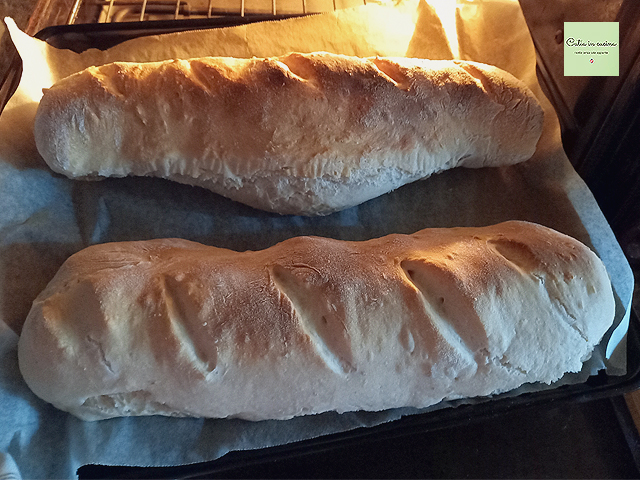
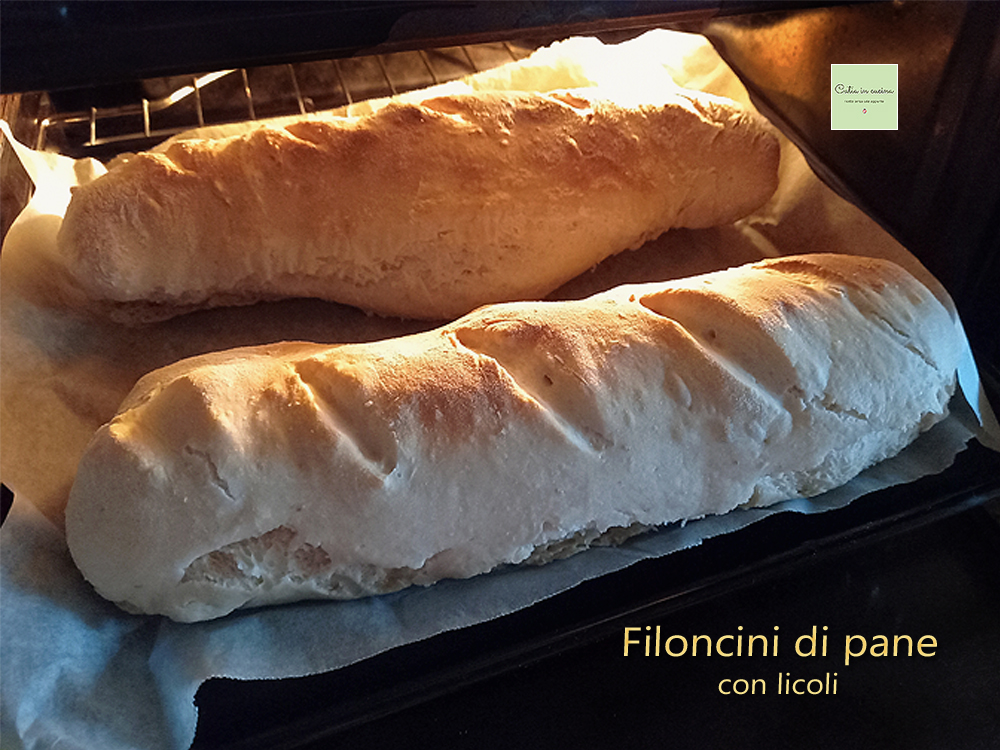
Here are the two bread sticks just taken out of the oven.
Soft inside with a super crunchy crust. 😋
Salt-Free Tips
 As you know, I cook without salt, so my homemade bread is always salt-free. 😉
If you are interested in reducing or eliminating salt, always remember to:
■ Gradually decrease the salt, your palate must get used to it slowly and should not notice the progressive reduction.
■ Use spices. Chili, pepper, curry, nutmeg, cinnamon, cloves, cumin…
■ Use aromatic herbs. Basil, parsley, oregano, thyme, sage, marjoram, rosemary, mint…
■ Use seeds. Sesame, pine nuts, almonds, walnuts…
■ Use spicy vegetables or fruit. Garlic, onion, lemon, orange…
■ Use my salt-free vegetable granules and gomasio.
■ Prefer fresh foods.
■ Avoid cooking in water, prefer cooking methods that don’t dilute flavors (grill, foil, steam, microwave)
■ Avoid bringing the salt shaker to the table!
■ Occasionally break the rule. It’s good for your mood and helps you stick with it.
If you don’t want or can’t give up salt:
■ You can still try my recipes by salting according to your habits.
Follow Me!
In my new WhatsApp channel and on Instagram, on the Facebook page, in Pinterest and in my two groups: Catia’s group, in the kitchen and beyond and Just what I was looking for! and if you like… subscribe to my Newsletter.
