
The vegetable broth is an essential basic recipe, and preparing it is very simple.
So simple that for years I thought it was unnecessary to write my own recipe, to add it to the countless ones already existing on the web. Today, however, after more than ten years of this blog’s existence, I’ve decided to make room among the basic recipes for it as well, the vegetable broth, which in practice is the only broth I regularly prepare (while the meat one I make once every two years).
And also because, another fundamental reason, I plan to publish a recipe tomorrow, for which, I’ll spoil it for you now, a good saucepan of vegetable broth will be necessary.
So… let’s prepare it today in advance, so tomorrow the recipe will be ready in less time! 😉 Ahhhh I’m a programming wizard, aren’t I! 😃
Are you ready? Do you already have a carrot, an onion, and a celery stalk in hand? 😃
〰〰〰
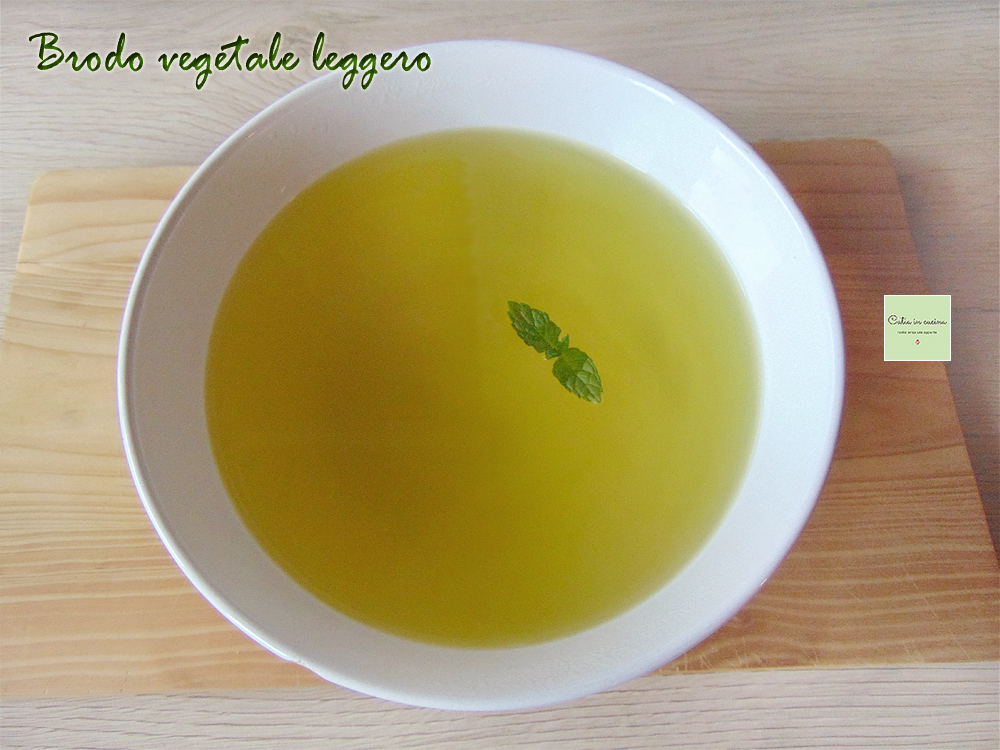
- Difficulty: Very easy
- Cost: Affordable
- Preparation time: 5 Minutes
- Cooking methods: Boiling, Stovetop
- Cuisine: Italian
- Seasonality: All seasons
Ingredients
- 1 carrot
- 1 onion
- 1 stalk celery (including leaves)
- 1 potato
- 6 cups water
- herbs (parsley, mint, basil)
Tools
- Pot
- Strainer
Steps
Peel the carrot, potato, and onion, and wash the celery.
Chop everything into pieces.
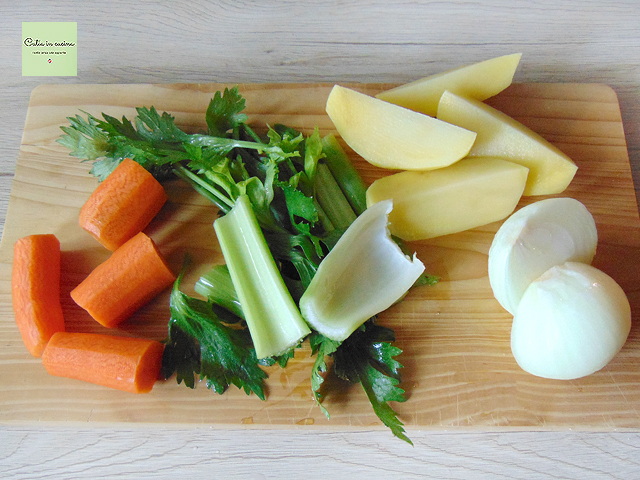
Place the vegetables in a large pot. Add 6 cups of water.
Bring to a boil and let simmer with the lid partially closed for about half an hour, or until all the vegetables are cooked.
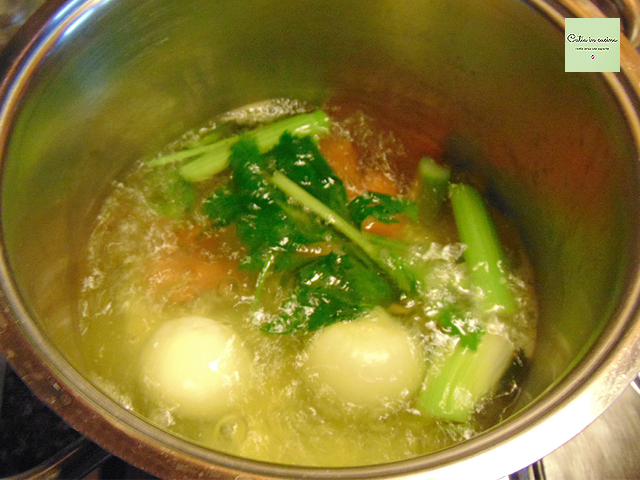
Halfway through cooking, add an herb (or more, to your taste) like basil, parsley, or mint.
Strain using a colander to separate the vegetables from the broth.
☝ Don’t throw away the vegetables. 😊 They can be reused in other preparations, like meatballs and fillings. Try these ricotta meatballs!
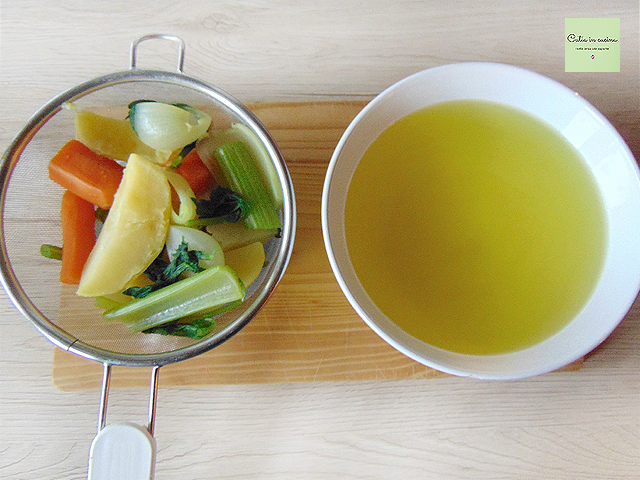
The vegetable broth is ready.
It keeps in the fridge for a few days, stored in a container with a lid or in a bottle.
And of course, it can be frozen.
🔸 The vegetable broth described in this recipe is a light version, made with basic vegetables only, but it can be enriched with the addition of other mild vegetables like zucchini or fennel. Optionally, even two or three cherry tomatoes, which will give the broth a pinker hue.
🔹 For a more intense-flavored broth, depending on the seasonal vegetables available, you can add a couple of cauliflower florets, a piece of cabbage, two chard leaves, or a tuft of spinach, and a piece of pumpkin.
🔸 In spring, you can add pea pods, as I did in this recipe, or some asparagus, like for this risotto.
🔹 You can optionally omit the potato – some believe it makes the broth cloudy, but for my taste, with just one potato, it doesn’t – or, why not, replace it with a sweet potato.
🧂 Remember that vegetable broth does not need salt, since any (optional) salt additions should be assessed in the recipe where the broth will be used.
Salt-Free Tips
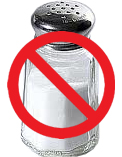 It is indeed so, vegetable broth does not need salt. Both because at the end of cooking there might be a risk of excessive salinity due to evaporation of some of the water, and because it is necessary to consider the recipe in which the broth will be used.
Adding herbs and possibly spices, like cloves or a small piece of cinnamon, will make the vegetable broth more fragrant.
Also, the choice of herbs and spices can be assessed considering the recipe using the broth:
-mint, parsley, and basil for recipes with a fresh and delicate taste
-cloves and cinnamon, or even some juniper berries, for winter recipes.
If you are interested in reducing or eliminating salt, always remember to:
▫ Gradually reduce the salt, the palate needs to get used to it gradually and should not notice the progressive reduction.
▫ Use spices. Chili pepper, pepper, curry, nutmeg, cinnamon, cloves, cumin…
▫ Use herbs. Basil, parsley, oregano, thyme, sage, marjoram, rosemary, mint…
▫ Use seeds. Sesame, pine nuts, almonds, nuts…
▫ Use spicy vegetables or fruit. Garlic, onion, lemon, orange…
▫ Use my salt-free vegetable granular and gomasio.
▫ Prefer fresh foods.
▫ Avoid cooking in water, prefer cooking methods that do not dissipate flavors (grill, foil, steam, microwave)
▫ Avoid bringing the salt cellar to the table!
▫ Occasionally allow yourself an exception to the rule. It’s good for your mood and helps with perseverance.
If you don’t want, or can’t, give up salt:
▫ You can try my recipes anyway, salting according to your habits.
Follow Me!
In my new WhatsApp channel and on Instagram, on the Facebook page and Pinterest, in my two groups: Catia’s Group, in the kitchen and beyond and Just what I was looking for! and if you feel like it… subscribe to my Newsletter.
In my new WhatsApp channel and on Instagram, on the Facebook page and Pinterest, in my two groups: Catia’s Group, in the kitchen and beyond and Just what I was looking for! and if you feel like it… subscribe to my Newsletter.
