
My shortcrust pastry recipe is still written by hand on a note that’s at least twenty-five years old.
I still remember Sandra (the article is a must because the Sandra is the one and only!) while, all floured up, she prepared the shortcrust pastry for the tart. Sandra, do you remember? You explained to me that the shortcrust pastry must stay in the oven for a short time; otherwise, it dries out, and you need to take it out when you see it just slightly colored. I still prepare it in the exact same way. And you?
Over the years, I’ve made good use of this recipe, so much so that the tart made with this my shortcrust pastry is quite “famous” among friends and family and is highly appreciated at my children’s birthday parties.
And, of course, it’s also excellent for making cookies.
Starting from this base recipe, I’ve created many variations, all present on this blog. For example:
- Difficulty: Easy
- Cost: Economical
- Rest time: 30 Minutes
- Preparation time: 10 Minutes
- Cooking methods: Oven
- Cuisine: Italian
- Seasonality: All seasons
Ingredients
- 2 cups all-purpose flour
- 5.6 oz butter
- 5.6 oz sugar
- 1 egg (whole)
- Half packet baking powder
- lemon zest (or vanilla)
- as needed milk (if needed)
- Bowl
Steps
Pour the flour into a large bowl and create a central well.
☝ I often increase the amount of flour from 2 cups to 2.4 cups. This does not affect the goodness of the pastry; it just becomes a bit more crumbly and, therefore, more suitable for making cookies or tarts with less traditional decorations than classic stripes (like crumbles, flowers, hearts, and similar).
Add the sugar, egg, soft butter in pieces, and grated lemon zest.
Work with your fingertips until the sugar granules are no longer felt, being careful not to heat the butter, and gradually incorporate the flour.
At first, the dough is crumbly, but as you work it, it blends without problems. If necessary, if the dough is too dry (usually depends on the flour), you can moisten it with a little milk.
Once a ball is obtained, store it in the fridge for at least half an hour before using it for a tart or cookies.
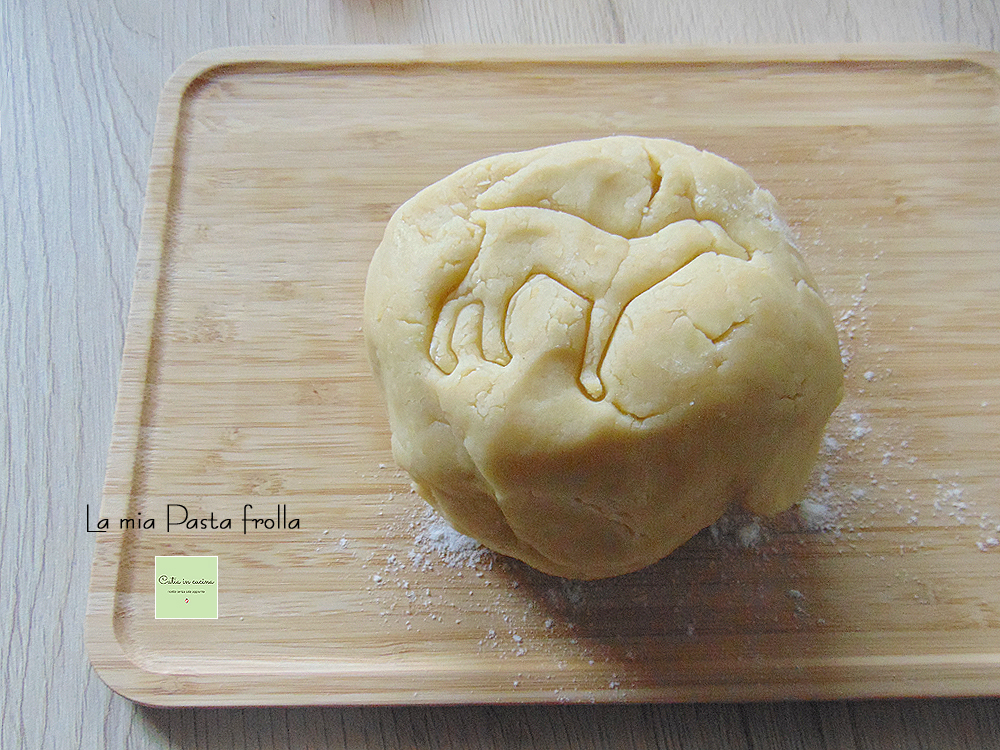
If desired, you can enrich this basic dough with other ingredients to obtain delicious variations, for example, you can add cocoa, hazelnut flour, or coconut. 🙂
A recipe where I achieved 4 different variations is this four-taste cookies recipe ☺
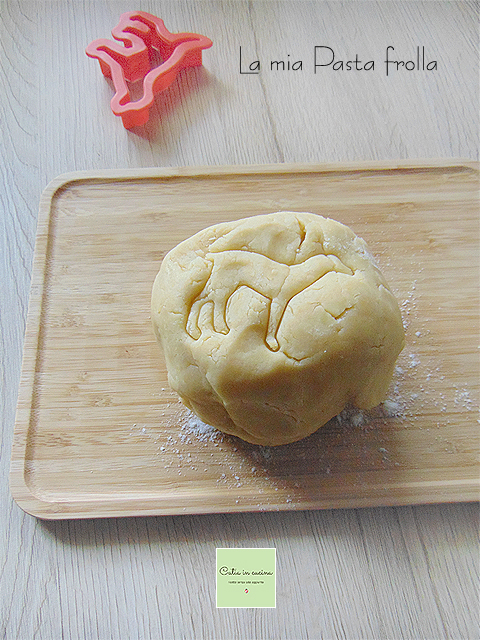
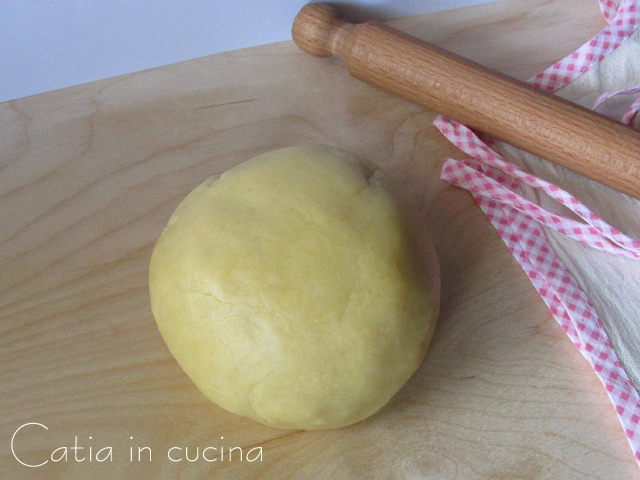
Update from 11/27/18: I updated the photos, they won’t be final, but at least now the lighting is better, one step at a time, trying to do one’s best, and I’m trying to improve as a photographer. But what matters most is that in all these photos, old and new, there is my daughter’s presence: in the old photo there was her apron, in the two new photos there’s the dog-shaped cookie cutter, her favorite animal. 😊🐕
I’ll be waiting for you:
In my new WhatsApp channel and on Instagram, on Facebook page and Pinterest boards, in my two groups: Catia’s group, in the kitchen and beyond and Just what I was looking for! and if you want… subscribe to my Newsletter.
In my new WhatsApp channel and on Instagram, on Facebook page and Pinterest boards, in my two groups: Catia’s group, in the kitchen and beyond and Just what I was looking for! and if you want… subscribe to my Newsletter.
