
Be honest, you were waiting for the parmesan sauce recipe, right? 😃
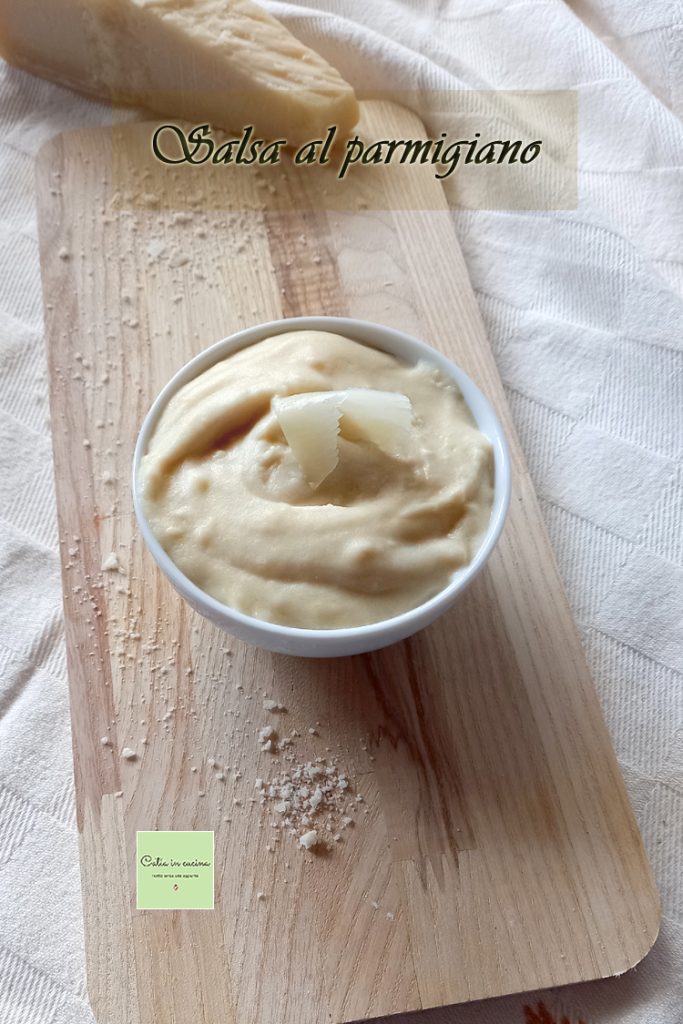
Ah yes, you are right, this parmesan sauce you already know because it is the same one already present here on the blog as a side sauce for crispy cappelletti.
Today I’m talking about it again because it’s a recipe that deserves a place as a standalone recipe, being a sauce suitable for various uses, and therefore I cannot relegate it to just being a side sauce for a single recipe.
Furthermore, I can now include it alongside the other sauces in the Sauces, Gravies, and Dressings section of my basic recipes collection, because it’s really a sauce that can accompany many recipes, from appetizers to…
…and no, no sweets! ahhahh! 😄 Just kidding! 😃
For appetizers, main courses, sides… definitely yes, this parmesan sauce is delicious! 😉
〰️〰️〰️
If you’re looking for ideas for other sauces, I have several to suggest, starting with those I use for fondue. Take a look at all these recipes! 😉👉
- Difficulty: Easy
- Cost: Inexpensive
- Preparation time: 5 Minutes
- Portions: 1
- Cooking methods: Stovetop
- Cuisine: Italian
- Seasonality: All Seasons
Ingredients
For a minimum portion (a small bowl).
- 3/8 cup milk
- 0.35 oz butter (or oil)
- 1 tbsp flour
- 1 oz grated parmesan (or other hard grating cheese)
Tools
- Saucepan stainless steel
- Spoon
Procedure
The procedure is very simple: just prepare a classic béchamel sauce to which grated parmesan (or preferred grating cheese) is added.
The quantities I have indicated in the ingredient list are for one bowl, or a couple of small appetizer bowls.
First, prepare the béchamel:
Melt the butter in a saucepan (or use oil) and add the flour.
Cook over low heat, stirring with the spoon.
When the roux turns amber, start adding the milk (already warm or at room temperature, not cold).
Add the milk little by little, stirring well before adding more milk.
Cook, stirring continuously, until the béchamel thickens.
When the béchamel is ready, add the grated parmesan, stir, and the parmesan sauce is ready.
It can be flavored with a grating of nutmeg or seasoned with a pinch of pepper, or it can simply be served plain.
Very simple, right?
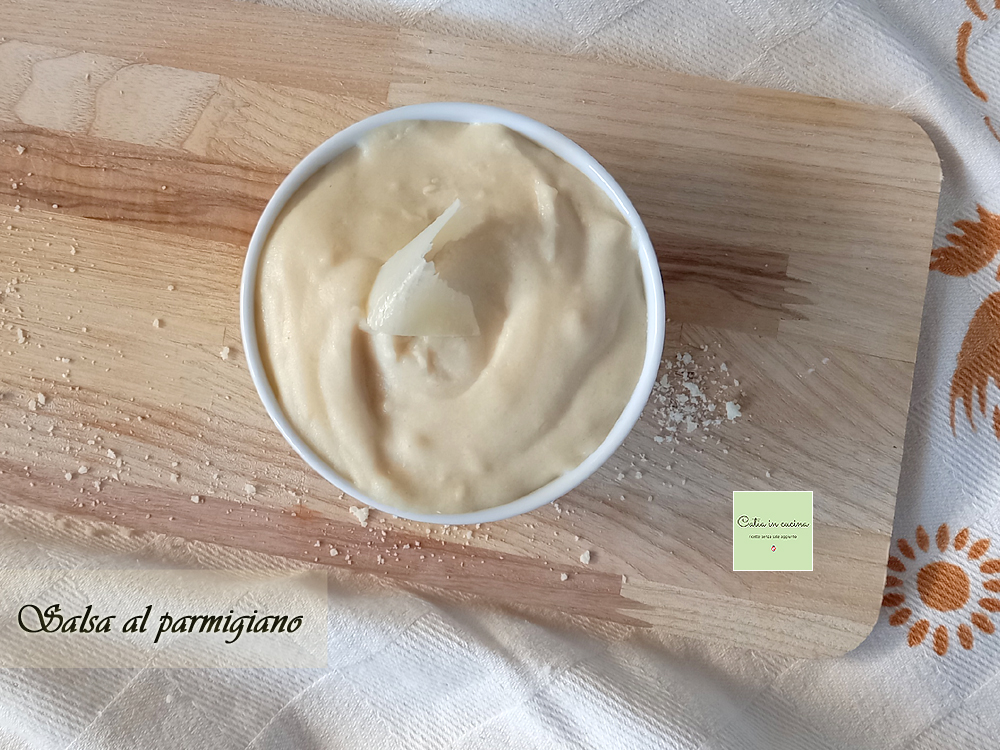
How to use the parmesan sauce:
As mentioned before, I used this parmesan sauce as an accompaniment for crispy cappelletti, but it’s great for accompanying many different appetizers, such as polenta balls, or vegetable balls. It can also be used as a pasta condiment or to enrich a meat main dish, such as stuffed turkey roast. 😊
Salt-Free Tips
 As you know, this blog of mine is dedicated to low-sodium cooking. Usually, I add in this note at the end of the recipes a salt-free tip to season without salt.
Since we are in the week of Less Salt More Health, which is the World Salt Awareness Week, and since this recipe does not require added salt – that is, salt is not provided in this recipe – I want to take this opportunity to delve a bit deeper into the topic.
The reason why this is a recipe that does not require added salt is that it is flavorful in itself due to the presence of parmesan (which, usually, in the various recipes I consulted, is half the weight of the milk). Since all cheeses, especially aged cheeses, contain salt, I tried to minimize the amount of parmesan to reduce the salt intake compared to more commonly spread parmesan sauces while still seeking a good taste compromise.
Checking the labels, I found that the amount of salt contained varies among different types of parmesan, grana, or other hard grating cheeses.
(Clarification: as you know, there are consortia for the protection of Parmigiano Reggiano and Grana Padano that protect the trademarks and the PDO designation, but there are also hard cheeses – obviously excluding any fraudulent imitation – that do not fall under the protected category but are still excellent Italian products.)
I checked the nutritional values of some cheese chunks I bought, and the salt content per 100 g of product varies as follows:
– Parmesan aged 24, 30, and 40 months shows the same salt amount on all three labels: 1.6 g
– Grana (over 16 months): salt 1.5 g
– Hard cheese from another brand (aged 9 months or 10 months, or aging not indicated on the label): salt 1.5 – 1.4 g.
To complete this note regarding salt in cheeses, I would like to specify that parmesan, Grana Padano, and other hard cheeses contain less salt than other cheeses. Moreover, for the same type of cheese but from a different brand, I found different values (so: always check labels).
For example (salt per 100 g of cheese):
– Fontal: 1.4 g (or another brand: 2.1 g)
– Gouda: 1.7 g (or another brand: 2.0 g)
– Gorgonzola (both sweet and spicy): 1.8 g
– Spicy Provolone: 2.2 g
– I add to this list also Pecorino Romano, which contains the highest salt content among all those I consulted, a whopping 5.5 g (and indeed it is considered unsuitable for hypertensive diets).
This is a very small list for now, but I hope with this information I have been of help.
Enjoy!
Follow Me!
In my new WhatsApp channel and on Instagram, on the Facebook page and Pinterest boards, in my two groups: Catia’s Group, in the kitchen and beyond and Exactly what I was looking for! and if you like… subscribe to my Newsletter
