
After years of admiring every possible photo and recipe of every possible pasqualina pie and similar spinach pies, I finally decided to try it. Exactly on Easter morning.
I browsed online and looked at three recipes. The first two used puff pastry, while the third said the real Pasqualina pie should not be made with puff pastry but with ‘pasta matta’, which I had never tried.
And so I immediately tried.
For the ‘pasta matta,’ I decided to write a separate recipe because there were many explanations to give both for the dough and the Pasqualina pie, and also because ‘pasta matta’ is important as a base recipe for other dishes.
Regarding the pie filling, I stuck to the classic ingredients – spinach, ricotta, and eggs – making only a few small personalizations (personal touches are always essential, otherwise cooking isn’t fun, right? 😀).
Since I made this pie twice, I will talk about both versions.
As you surely know, the Pasqualina pie includes eggs in the filling, which add their special something in taste and beauty.
I’ll tell you about my egg misadventures, because… it seemed easy… make the indent, crack the egg… but no! 😃
Shall we start? Ready!
〰 〰 〰
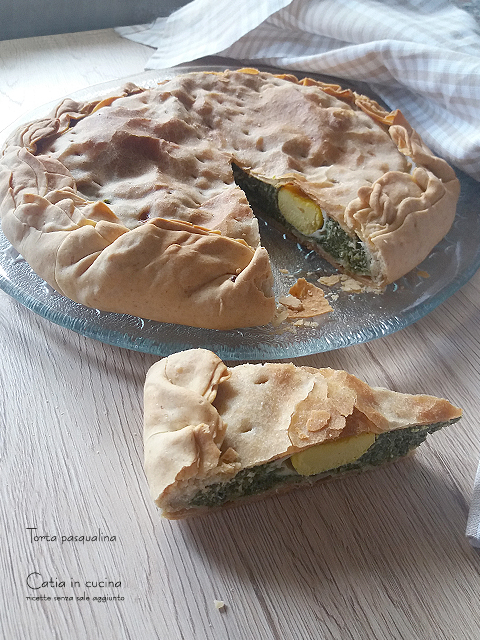
- Difficulty: Easy
- Cost: Cheap
- Preparation time: 1 Hour
- Portions: 8
- Cooking methods: Oven
- Cuisine: Italian Regional
- Seasonality: Easter
Ingredients
- 1 block pasta brisée (with oil)
- 2.2 lbs spinach
- 1 cup ricotta
- 4 eggs
- 1.5 oz grated Parmesan cheese
- lemon zest (from half a lemon)
- nutmeg (to taste)
- pepper
- 1.1 lbs spinach
- 2/3 cup ricotta
- 3.5 oz quark (or other low-fat fresh cheese)
- 0.7 oz Parmesan cheese
- 0.7 oz latteria cheese (aged)
Tools
- Pan
- Baking Pan
Steps
Wash the spinach and cook them.
I cook them for 10 minutes with the lid on, using only the residual water from rinsing.Sauté the spinach in a pan with chopped onion and a drizzle of oil until they have lost excess moisture. Optionally, pepper at this stage.
Let the spinach cool slightly, chop them with a knife, then mix them with ricotta and Parmesan.
Spinach: The larger amount of spinach in the first version gave the filling a more intense green color; no significant taste differences were noted, nor did it overly affect the filling quantity (perhaps I made the pie a little wider).
Ricotta: Despite the variation with added quark, the taste and texture difference between the two fillings was minimal.
Parmesan: I combined it with another type of grated cheese, aged Livigno’s Latteria cheese, the very last piece I had left from my mountain vacation, and in the future, I’d try other grating cheeses, all worthy substitutes for Parmesan in this type of filling, in my opinion.Add a whole egg and season the filling with a pinch of pepper, a generous grating of nutmeg, and the grated zest of half a lemon (large, or a whole lemon if small). The lemon zest’s aftertaste “works well”.
Prepare the ‘pasta matta’ following the recipe and roll it out into 6 thin sheets: 4 for the base and 2 for the cover. The dough is elastic, so after rolling it with a rolling pin, it can be thinned by gently pulling it by hand.
Layer the 4 sheets that will serve as the base, brushing each sheet with oil.
Place the layered sheets in a baking pan lined with parchment paper and pour in the filling.
Spread the filling and create 3 empty spaces using a spoon: these will house the eggs.
😉👉 Useful tips for egg placement:
– Be careful with the size of the spaces, the first time I made them too small and with the first egg I made a half mess (egg white spilled out, I had to scoop it up with a teaspoon, and moreover two of the three yolks broke!),
– For the second pie, I broke the eggs into a small bowl instead of directly onto the filling and made larger holes.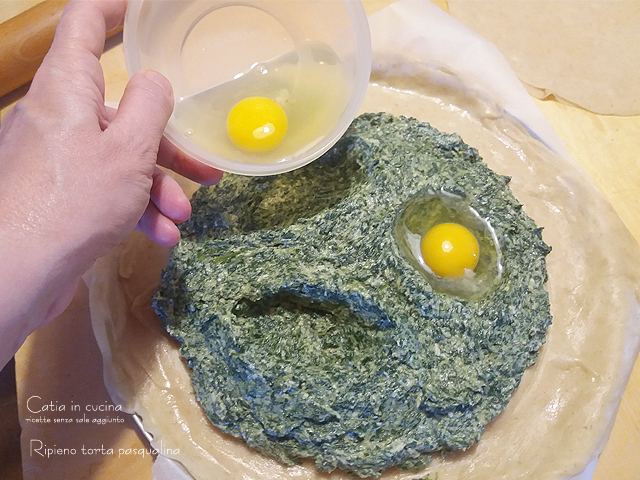
Cover everything with the two layers of ‘pasta matta’ already rolled out thin, brushed with oil and layered.
Prick the dough to let out moisture during baking.
☝ Be careful not to pierce the eggs! If needed, prick it beforehand.Fold the edge, folding both the base and the lid edges together to ensure the filling stays nicely sealed during baking.
Brush the entire surface with oil.
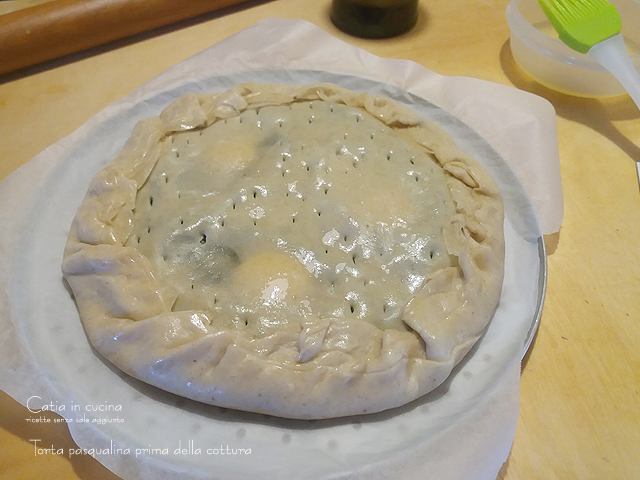
Bake for about 40 minutes. Set the oven to 392°F (200°C) for the first 10 minutes, then lower to 356°F (180°C).
The surface of the dough will be crumbly.
Serve warm.
It is very good cold and even better the next day, either cold or reheated.
The next day, the dough will be softer due to the filling’s moisture.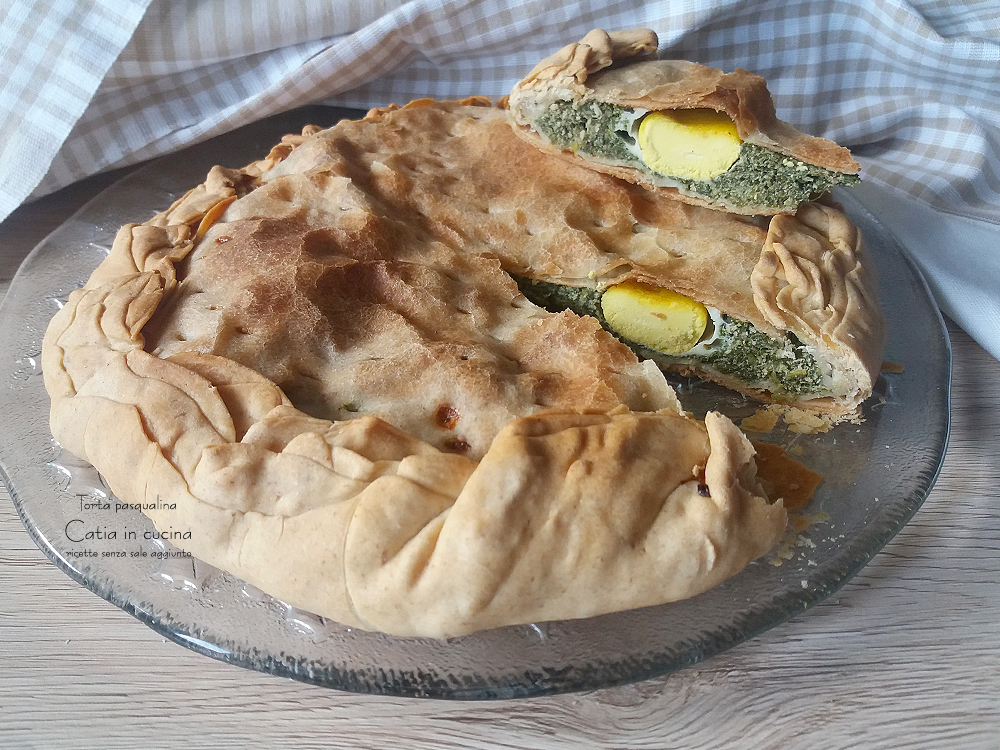
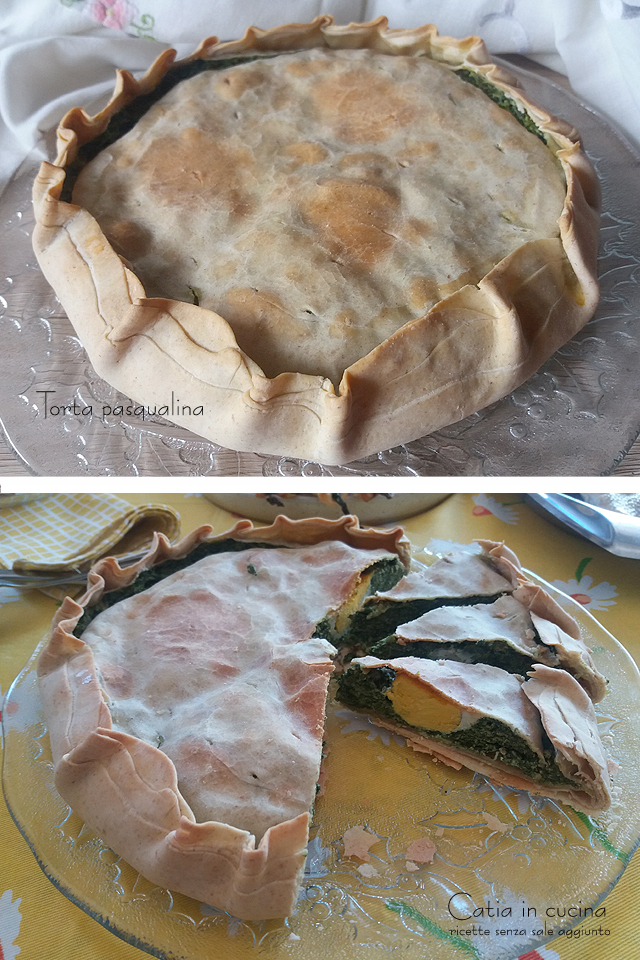
All previous photos are from my second Pasqualina, the one with less spinach in the filling and a more crumbly ‘pasta matta’, and overall better than the first one I made, which I want to show you anyway, as it turned out well and we liked it. 🙂
As you can see (following photo), the dough has a drier appearance, despite having brushed it with oil.
The filling (darker because it contains more spinach) is visible at the edges because I made the cover sheet too small (in a single layer) and did not fold the dough edge well, which lifted during baking.I’m sure that when I make my third Pasqualina pie, I’ll know how to fold the edge more gracefully. For now, it seems to be the least successful aesthetic aspect of both versions, but for now, I’m extremely satisfied with the taste, so the appearance… I’ll think about another day!! 🙂
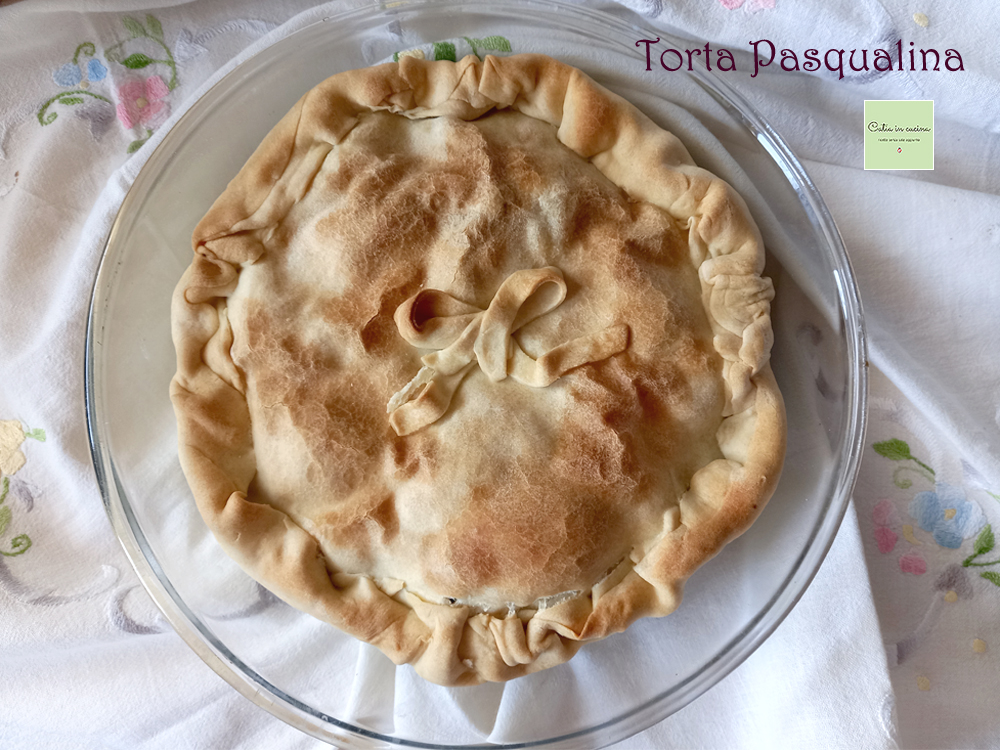
Update from March 30, 2024:
And here is the new Pasqualina pie. With a little more skill and repeating the recipe for some years, I’m now adding some aesthetic improvements (although there’s still room for improvement there 😃).
👇
Salt-Free Tips
 If you feel the need to salt the filling… well, taste it first, you might find that with the lemon zest and nutmeg, salt can be avoided! 😉💪
If you’re interested in reducing or eliminating salt, always remember to:
▫ Decrease salt gradually, as the palate needs time to adjust and shouldn’t notice the progressive reduction.
▫ Use spices. Chili pepper, black pepper, curry, nutmeg, cinnamon, cloves, cumin…
▫ Use aromatic herbs. Basil, parsley, oregano, thyme, sage, marjoram, rosemary, mint…
▫ Use seeds. Sesame, pine nuts, almonds, walnuts…
▫ Use spicy vegetables or fruits. Garlic, onion, lemon, orange…
▫ Use my salt-free vegetable granules and gomasio.
▫ Prefer fresh foods.
▫ Avoid boiling in water, prefer cooking methods that don’t dilute flavors (grill, foil, steam, microwave).
▫ Avoid bringing the salt shaker to the table!
▫ Treat yourself to a cheat day sometimes. It’s good for the mood and helps to persevere.
If you do not want, or cannot, give up salt:
▫ Feel free to try my recipes while salting according to your habits.
Follow Me!
Join my new WhatsApp channel and follow on Instagram, on the Facebook page and Pinterest boards, in my two groups: Catia’s group, in the kitchen and beyond and Just what I was looking for!, and if you want… subscribe to my Newsletter.
FAQ (Frequently Asked Questions)
What are the origins of the Pasqualina pie?
Pasqualina pie is a traditional dish from Ligurian cuisine, typically prepared during Easter celebrations, with origins dating back to the Middle Ages. It was already made for Easter in the Middle Ages, with a thin layered pastry (legend says 33 layers, representing the years of Christ). The filling was made of fresh spring vegetables (wild herbs and chard) and fresh curd (or the typical prescinseua), while now ricotta is more commonly used. The original recipe features vegetables and curd in two separate layers, and eggs are always included as they symbolize rebirth and fertility.
