
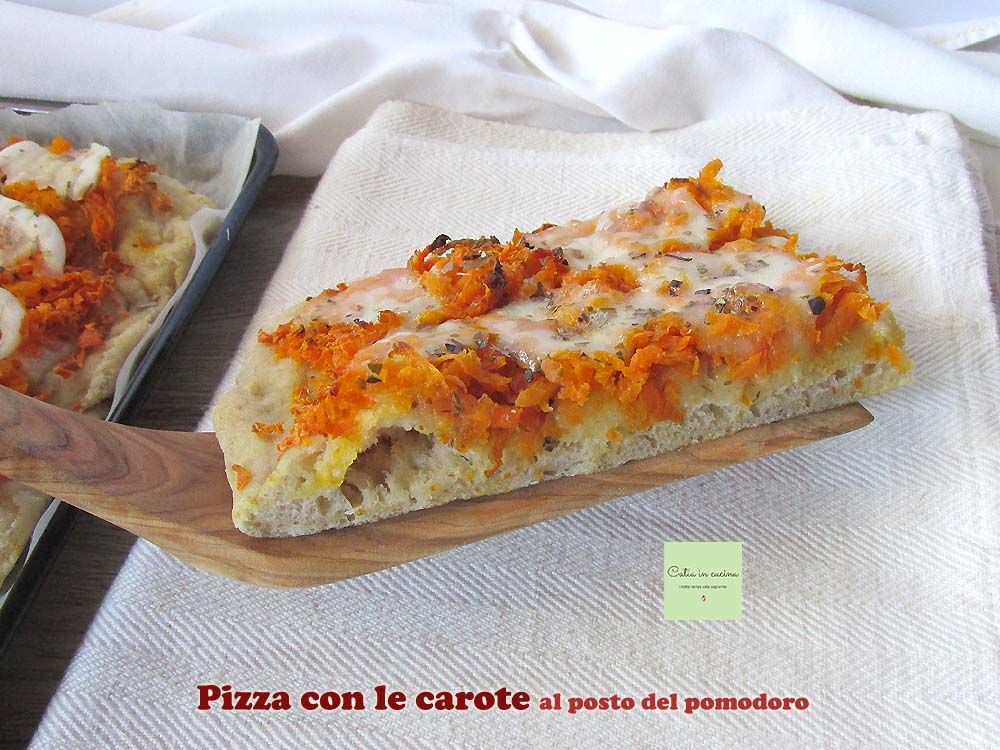
I’ve been wanting to tell you about this pizza with carrots for a long time, years. Since I first ate it at my friend Sarah’s house. Sarah! How much time has passed?? 😄
Over time, I’ve made it several times, initially exactly like Sarah’s, with raw, chopped carrots. It’s great and I love it, but the carrot crumbs remain a bit… crumby, and the final result is more like a stuffed focaccia than a pizza.
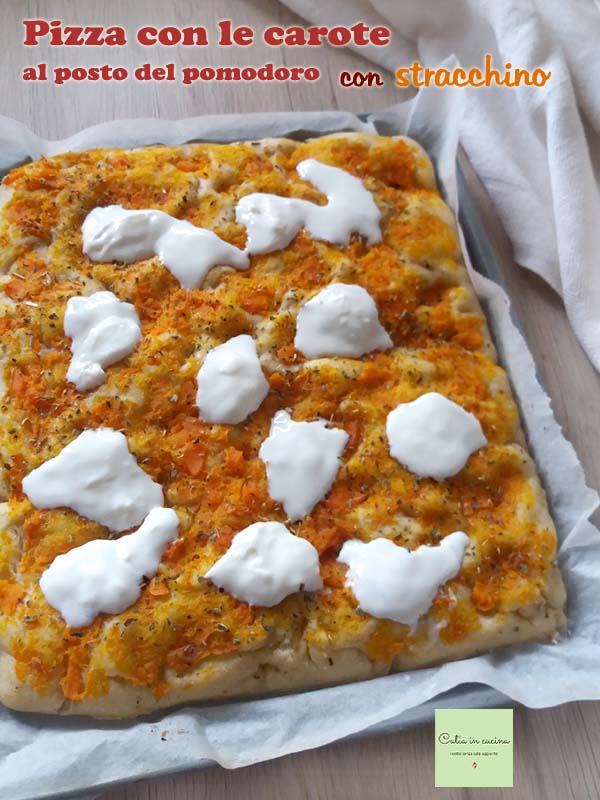
So, I decided to try cooking the carrots and turning them into a puree that could mimic tomato sauce. Well… it works great!
If you’re intolerant to tomatoes, don’t like tomatoes, are interested in macrobiotic cooking, or if you’re simply curious to try, because you always want to taste everything, just like I do… well, then you should try making the pizza with carrots instead of tomato, I’m sure you’ll like it!
〰 〰 〰
- Difficulty: Easy
- Cost: Economical
- Preparation time: 10 Minutes
- Portions: 8
- Cooking methods: Oven, Microwave
- Cuisine: Macrobiotic
- Seasonality: All Seasons
Ingredients
- 1 Leavened Dough (see details in the instructions)
- 5 Carrots
- 1 Mozzarella (or other cheese to taste)
- 1 tablespoon Extra virgin olive oil
- to taste Oregano
Tools
- Chopper
- Oven
- Microwave Oven
Preparation
👉 In this recipe, carrots replace tomatoes, so I won’t give you the ingredients for the dough. I’ve generally indicated a ‘leavened dough’ because you can use whichever you prefer or are accustomed to. If you need some ideas, you can choose from the doughs I link below. They’re all suitable for both focaccias and pan pizzas and you can use any of them for your carrot pizza (or focaccia with carrots, your choice).
Basic dough with yeast: if you’re used to using yeast, you can opt for this simple bread dough, which was the first leavened dough I learned to make many years ago: classic bread dough with yeast.
‘No-Knead’ Dough: alternatively, you can use this quick-yeast dough (still with yeast) no-knead.
Leavened dough with licoli: if you’re used to using sourdough (as you know, I use licoli), I recommend this focaccia recipe as a guide.
Dough with kefir starter: finally, if you produce milk kefir, you can create a great leavened dough by making a kefir starter as described in this recipe.
Well, having decided on the dough, let’s proceed with the topping: Roll out the dough on a baking sheet lined with parchment paper, then decide whether to use raw or cooked carrots.
WITH RAW CARROTS:
In this case, simply chop the carrots with a food processor or grate them. Season the chopped or grated carrots with a little oil and spread them over the dough. In the ingredient list, I’ve generally indicated 5 carrots, but the quantity can vary depending on the size of the carrots and the thickness of the layer you want to spread over the dough, and this can only be decided by your taste.
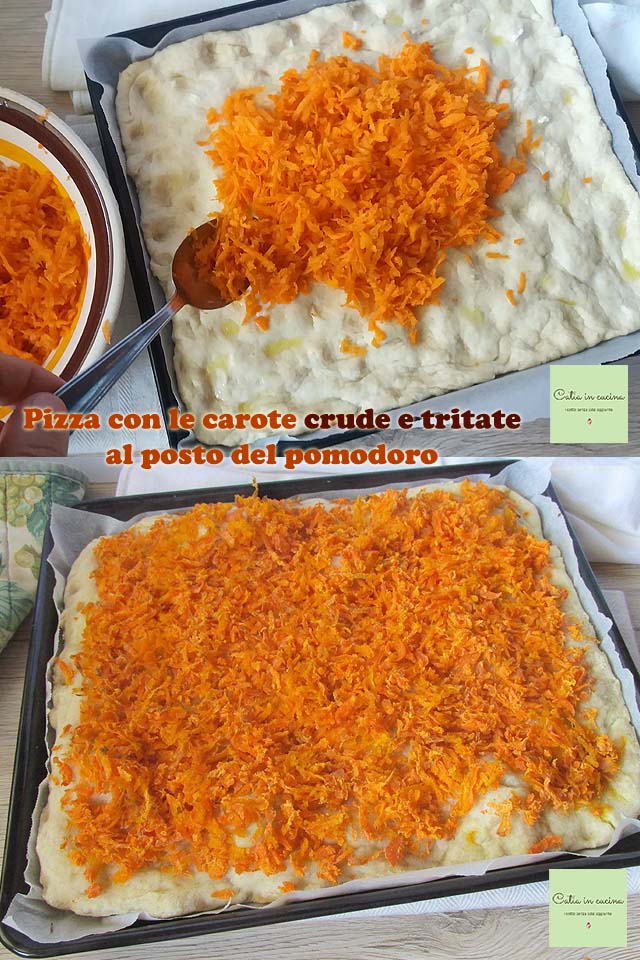
Bake at 428°F for 15-20 minutes, then remove the pan to add the mozzarella (or other cheese to taste), then bake again to complete the cooking and melt the mozzarella (another 10 minutes approximately).
☝ Remember that cooking time can vary based on the thickness of the carrot layer and their moisture, as well as the thickness of the dough.
WITH COOKED CARROTS:
If you prefer your carrot pizza to look more like classic tomato pizza, you need to cook the carrots and make a puree that can replace tomato sauce.
You can cook the carrots however you prefer: boiling them as usual, cooking them in a pan, steaming, or in the microwave.
In this case, I prefer microwave cooking because it’s the fastest and preserves the carrot flavor (considering, as you know, that I don’t use salt).
Steaming is also very good for ‘flavor preservation’ but requires a longer cooking time.
However, you decide to cook them, once the carrots are tender, they should be blended, passed through a food mill, or simply mashed with a fork, then spread the puree over the rolled-out dough.
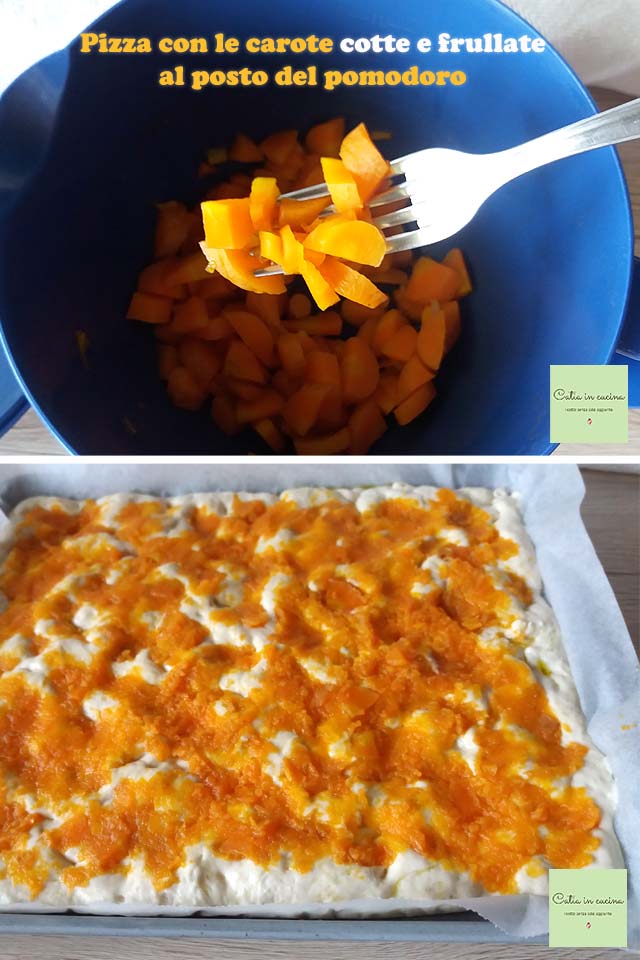
Drizzle with oil and sprinkle with oregano and bake. It’s great even without cheese, like red pizza… sorry, orange.
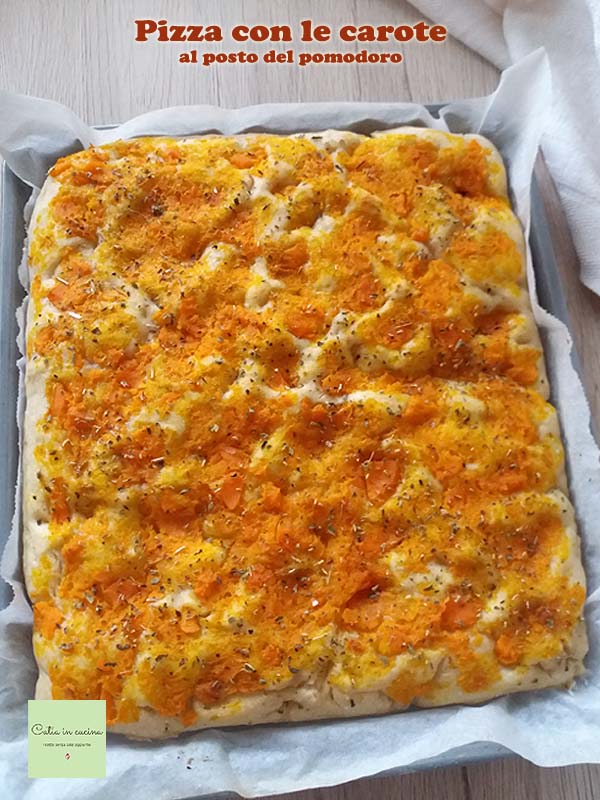
If you decide to add mozzarella (or other cheese), I always recommend adding it after at least half the cooking time. For fresh cheeses like stracchino, it’s better to wait until the end of cooking, then put the pan back in the oven for just a few minutes, just enough to soften the stracchino.
As always, let me know your thoughts on the recipe! If you decide to try it, then send me a photo!, and I’ll publish it in the section My recipes made by you.
Salt-Free Tips
 If you’re interested in reducing or eliminating salt, always remember to:
Reduce salt gradually; the palate must slowly get used to it and should not notice the progressive reduction. Use spices. Chili, pepper, curry, nutmeg, cinnamon, cloves, cumin… Use herbs. Basil, parsley, oregano, thyme, sage, marjoram, rosemary, mint… Use seeds. Sesame, pine nuts, almonds, walnuts… Use spicy vegetables or fruits. Garlic, onion, lemon, orange… Use my salt-free vegetable granular Prefer fresh foods. Avoid boiling, prefer cooking methods that do not disperse flavors (griddle, foil, steam, microwave) Avoid bringing the salt shaker to the table! Occasionally allow yourself a breach of the rule. It’s good for the mood and helps to persevere. If you can’t, or don’t want to, give up salt: You can still try my recipes by salting according to your habits.
How is your journey towards salt reduction going? 😉
If you’re interested in reducing or eliminating salt, always remember to:
▫ Reduce salt gradually; the palate must slowly get used to it and should not notice the progressive reduction.
▫ Use spices. Chili, pepper, curry, nutmeg, cinnamon, cloves, cumin…
▫ Use herbs. Basil, parsley, oregano, thyme, sage, marjoram, rosemary, mint…
▫ Use seeds. Sesame, pine nuts, almonds, walnuts…
▫ Use spicy vegetables or fruits. Garlic, onion, lemon, orange…
▫ Use my salt-free vegetable granular and gomasio.
▫ Prefer fresh foods.
▫ Avoid boiling, prefer cooking methods that do not disperse flavors (griddle, foil, steam, microwave)
▫ Avoid bringing the salt shaker to the table!
▫ Occasionally allow yourself a breach of the rule. It’s good for the mood and helps to persevere.
If you can’t, or don’t want to, give up salt:
▫ You can still try my recipes by salting according to your habits.
Follow Me!
In my new WhatsApp channel and on Instagram, on my Facebook page, on my Pinterest boards, in my two groups: Catia’s group, in the kitchen and beyond and Exactly what I was looking for! and if you like… subscribe to my Newsletter
