
For a long time, I had planned to write the recipe for tahini.
Tahini is a delicious sesame sauce, which I had always read about in cookbooks and knew was available pre-packaged, but toward which, honestly, I was a bit skeptical. Until finally, I had the chance to get to know it, thanks to the cooking course I attended.
Every now and then I return to tell you about this wonderful cooking course that taught me many new recipes, now indispensable to me.
Tahini is one of these recipes and was truly a discovery.
Looking for some more information about tahini, I learned that it is also called tahin or tahini.
I also learned that it is very nutritious, rich in vitamin E and B and minerals, contains all the beneficial properties of sesame (which I talked about in this article about oilseeds), protects the liver, and lowers cholesterol. But it is a rather caloric sauce, so it is good not to overuse it. 😉
Tahini is known for being used in the making of hummus and baba ghanoush or as a dipping sauce for meats, vegetables, or the well-known falafel.
But one thing I learned from the cooking course is that this sauce can be made in different ways and, if desired, also enriched.
First of all, it can be prepared in the way I propose today, which is the recipe given to me with the course handout, which I cherish after the course conclusion. It is the method with unroasted sesame seeds soaked in water. This is not a very common method as far as I know. In fact, the most common version is made with roasted sesame.
For me and my family, tahini made with roasted seeds is a bit “strong,” meaning it has a somewhat intense flavor for us. And yes, we are used to the taste of roasted sesame, given how much we like gomasio, but for tahini, we prefer a more delicate taste. It should also be said that the version with roasted seeds is much quicker to make, since roasting takes only a couple of minutes, and this is a detail that sometimes can be important.
Update: I also tried making a sunflower seed version, very quick to prepare and very good, a valid alternative if you don’t have sesame seeds. Try it yourself! 😉
Maybe over time, I will try and write the recipe for the version with roasted seeds as well, but today I want to start with this tahini with unroasted and soaked seeds. It’s delicate and very versatile to use in the kitchen.
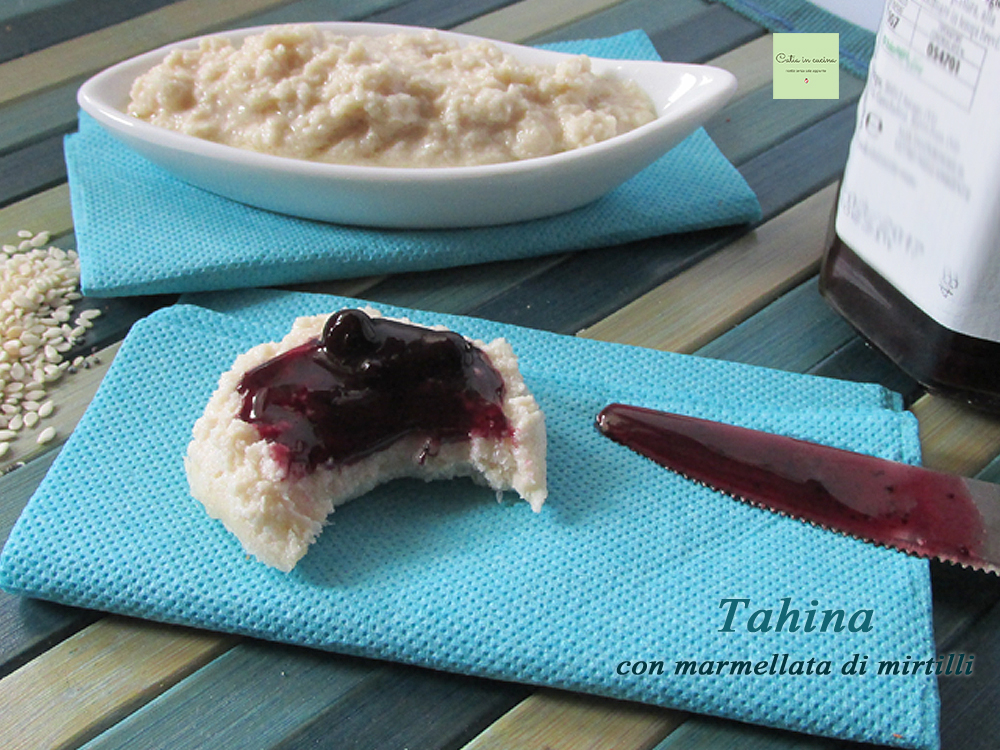
And I love it even in the sweet version, with jam. Especially blueberry jam. Try it because it really deserves a try!
〰 〰 〰
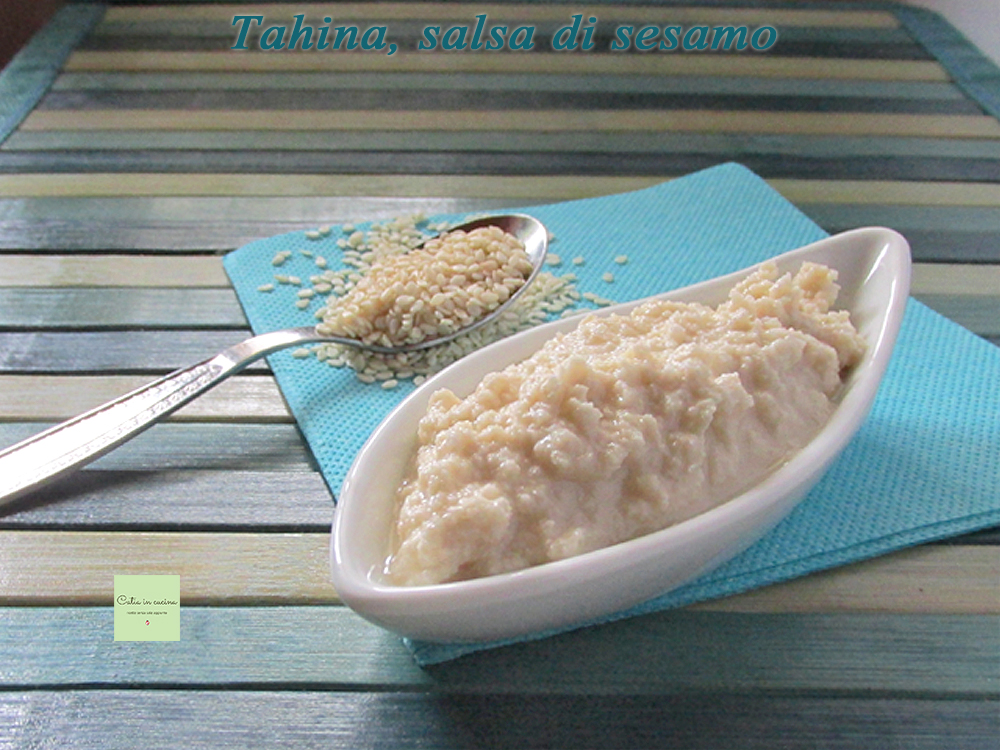
- Difficulty: Easy
- Cost: Inexpensive
- Rest time: 2 Hours
- Preparation time: 5 Minutes
- Portions: 1 small jar
- Cooking methods: No cooking
- Cuisine: Middle-Eastern
- Seasonality: All seasons
Ingredients
- 5.3 oz sesame seeds
- 1.8 oz corn oil (ideally sesame oil)
- water (as needed for soaking)
Tools
- Bowl
- Chopper
Steps
Soak the sesame seeds in water for a few hours.
👉 The purpose of soaking is to remove the bitter aftertaste of sesame seeds. In my opinion, a bit of bitter aftertaste remains, but I don’t mind it at all, in fact, I like it a lot.
Drain the seeds and dry them with kitchen paper or a cloth.
Put the seeds in a blender and blend them while gradually adding the oil.
👉 Some people crush the seeds in a mortar, but I haven’t tried that yet. I’m too comfortable with the blender. The important thing is to blend in intervals to avoid heating the blades and the sauce.
👉 The amount of oil can be varied depending on the desired consistency. The optimal consistency is thick (in vegan cooking, tahini is used as a butter substitute), so my advice is to add oil gradually until the desired thickness is reached.
Store the tahini in the fridge in a closed jar.
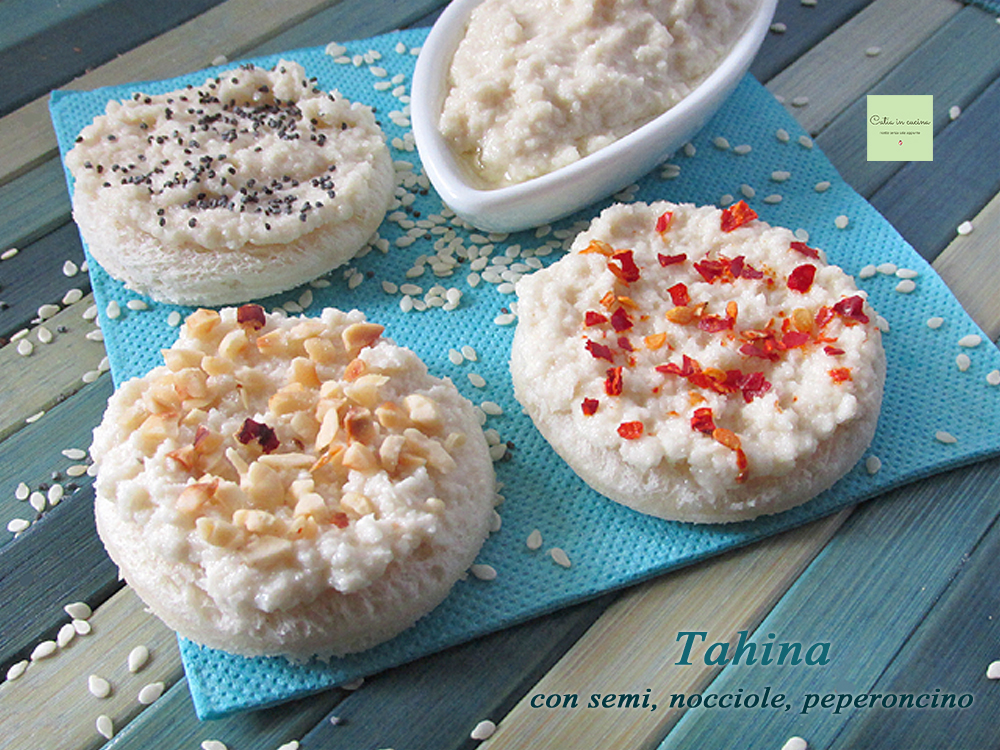
For me, it’s definitely great eaten like this, spread on tartines or crostini, but I especially like it paired with other flavors.
For example, in a spicy version, with chili pepper, or with added chopped hazelnuts, or decorated with poppy seeds. Really delicious.
And here is the version with blueberry jam, delicious!
And then, tahini really shines as a base for other sauces. For example, I used it to make a bean hummus that was out of this world (this cannellini hummus)!!
Salt-free Tips
 The original recipe includes adding a pinch of salt, but I don’t even think about adding it, for me, it’s already so flavorful as it is! 😃
If you’re interested in reducing or eliminating salt, always remember to:
■ Reduce salt gradually, the palate needs to get used to it slowly and shouldn’t notice the progressive reduction.
■ Use spices. Chili, pepper, curry, nutmeg, cinnamon, cloves, cumin…
■ Use aromatic herbs. Basil, parsley, oregano, thyme, sage, marjoram, rosemary, mint…
■ Use seeds. Sesame, pine nuts, almonds, walnuts…
■ Use spicy vegetables or fruits. Garlic, onion, lemon, orange…
■ Use my salt-free vegetable granules
■ Prefer fresh foods.
■ Avoid cooking in water, prefer methods that don’t dilute the flavors (grill, foil, steam, microwave)
■ Avoid bringing the salt shaker to the table!
■ Occasionally allow a break from the rule. It’s good for the mood and helps to persevere.
If you don’t want or can’t give up salt:
■ You can still try my recipes by salting according to your habits. 😊
Follow me!
In my new WhatsApp channel and on Instagram, on the Facebook page, on Pinterest and in my two groups: Catia’s group, in the kitchen and beyond and Just what I was looking for! and if you’d like… subscribe to my Newsletter.
