
Preparing the Monday recipe for Light and Tasty, I found myself making whole spelt flour gnocchi. In addition to being transformed into the Monday recipe (it’s coming soon!), they are a perfect basic recipe, which I will promptly add to my collection of basic recipes alongside the other gnocchi, all homemade.
I must admit that after a lifetime of considering potato gnocchi the only possible gnocchi (as tradition in my area dictates), since I discovered water and flour gnocchi, a whole new world opened up to me, and now I’m curious about all kinds of gnocchi, from every flour and in every color, and little by little I really want to try them all.
Today it’s the turn of whole spelt flour, a high-fiber flour that is slightly more protein-rich than wheat flour but with reduced gluten content. It has fewer calories compared to other grains and a high satiating power (which is why it’s suitable for us during this dietary period! 😀 ).
Have I convinced you to try kneading?
👇 Other gnocchi:
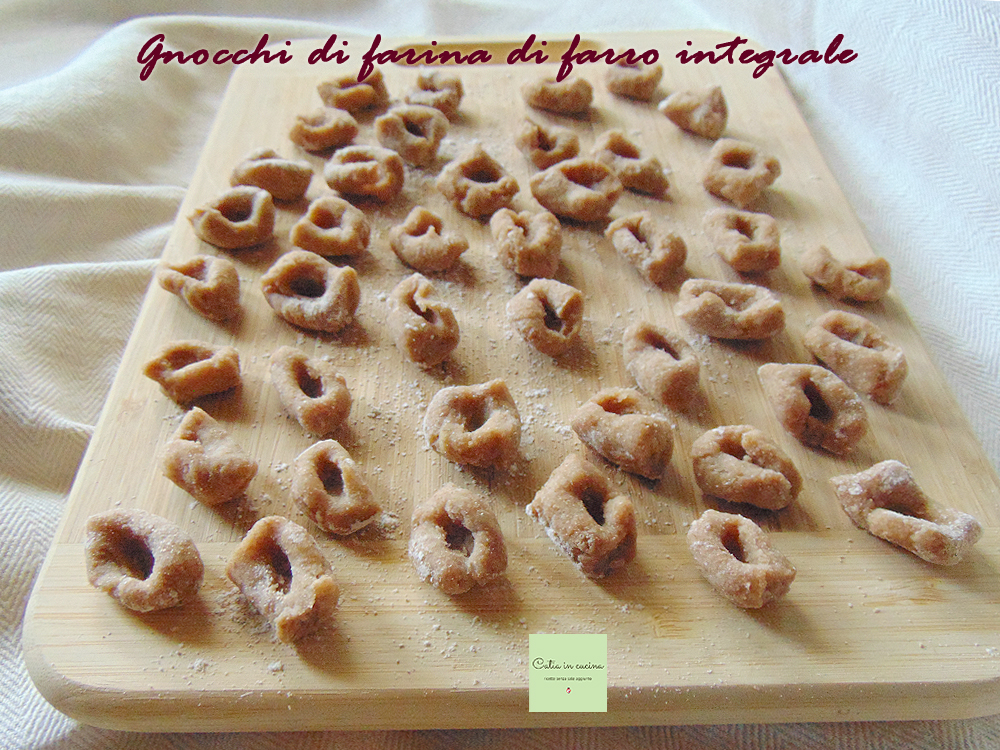
- Difficulty: Easy
- Cost: Economical
- Preparation time: 15 Minutes
- Portions: 4
- Cooking methods: Stovetop
- Cuisine: Italian
- Seasonality: All seasons
Ingredients
- 3 1/4 cups whole spelt flour
- 2 1/3 cups water
Tools
- Pot with high sides
- Spoon with long handle
Preparation
The process is essentially the same as water and flour gnocchi, with the only difference being that spelt flour requires a different amount of water.
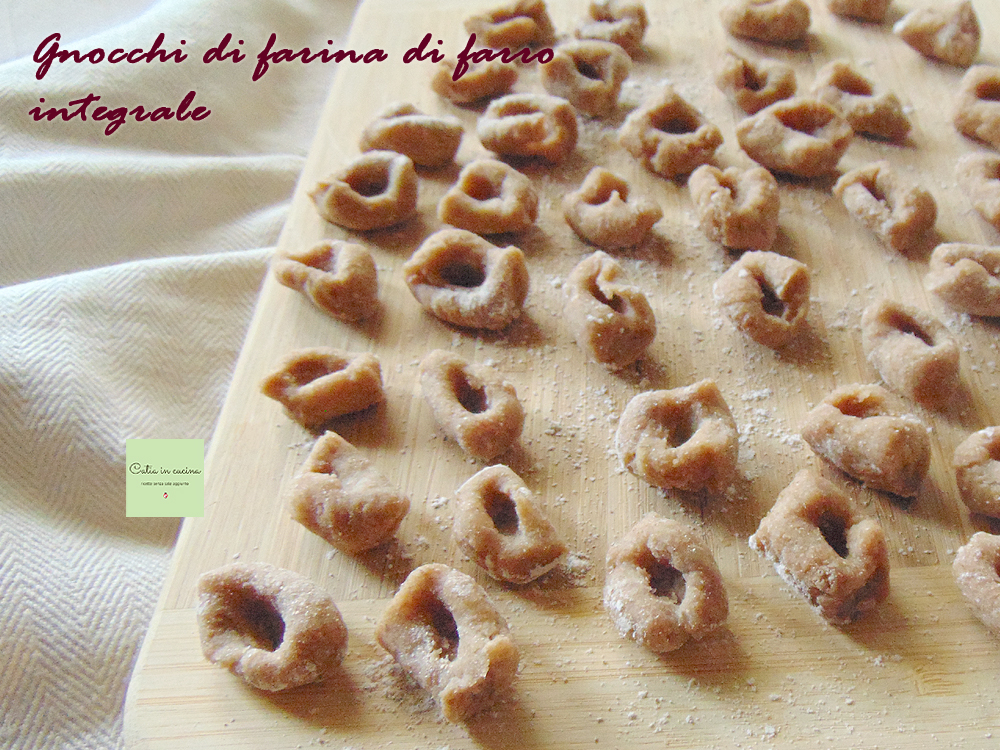
Boil the water in a tall pot, when it boils, lower the heat and pour all the flour into the pot.
Stir quickly with a long-handled spoon until the flour merges into a single rough mixture.
Transfer the mixture to the work surface, let it cool enough to handle it with your hands, and knead it.
You can cover it with a bowl and let it rest for a while, but it’s optional. This time I proceeded immediately to shaping.
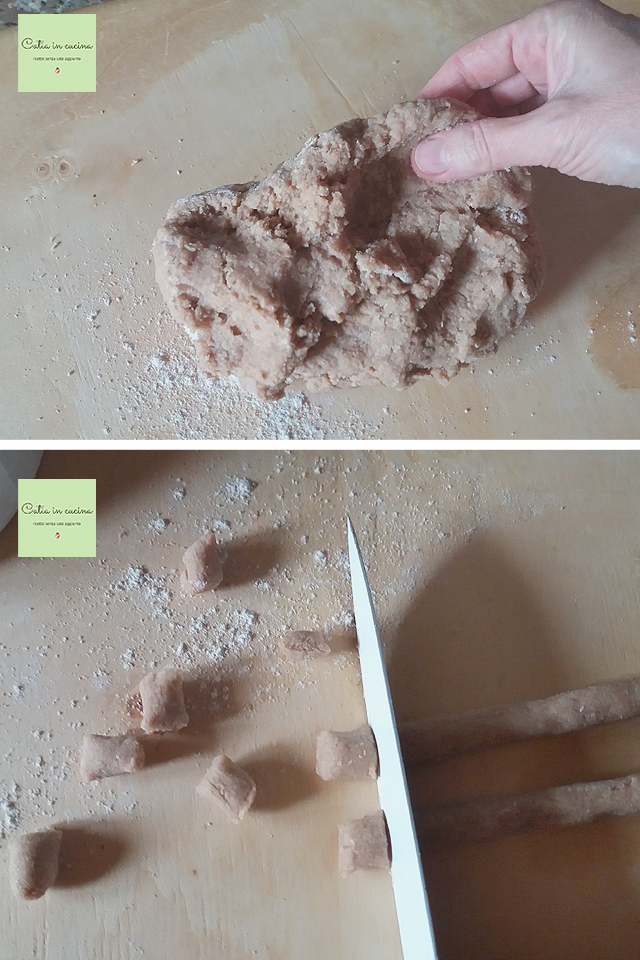
After forming the pasta breadsticks, cut the gnocchi with a knife. The gnocchi can be left like this, in chunks, or they can be rolled on a gnocchi board and the tines of a fork. But as you already know, the classic shape of homemade gnocchi in my home is this with the indent made with the index finger.
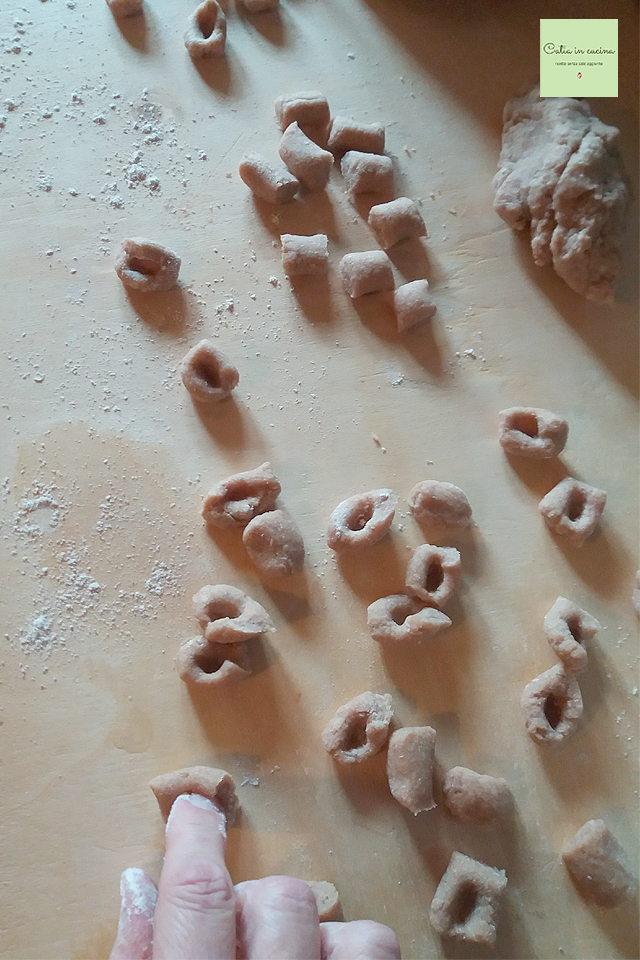
👉 When I was a child, occasionally my mom would roll them on the back of a grater. I want to remember to try that next time! 🙂 (Update: here they are! –> Semolina Gnocchi)
For cooking the gnocchi, I refer you to the water and flour gnocchi recipe, where you can see photos of all the steps, including cooking. Cooking is the same for all types of homemade gnocchi and always very quick.
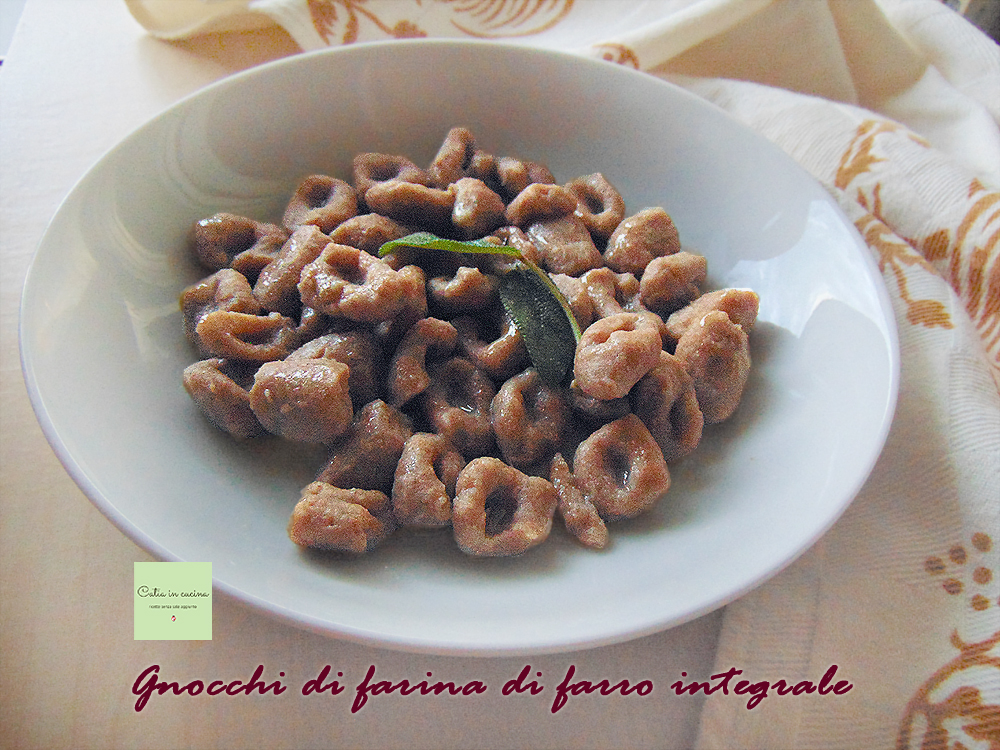
Here’s how these whole spelt flour gnocchi look after cooking (here simply dressed with butter and sage):
Spelt gnocchi, like all kinds of gnocchi, if it’s not possible to cook them immediately after making, can be stored at room temperature as long as they are well floured and the environment is quite cool.
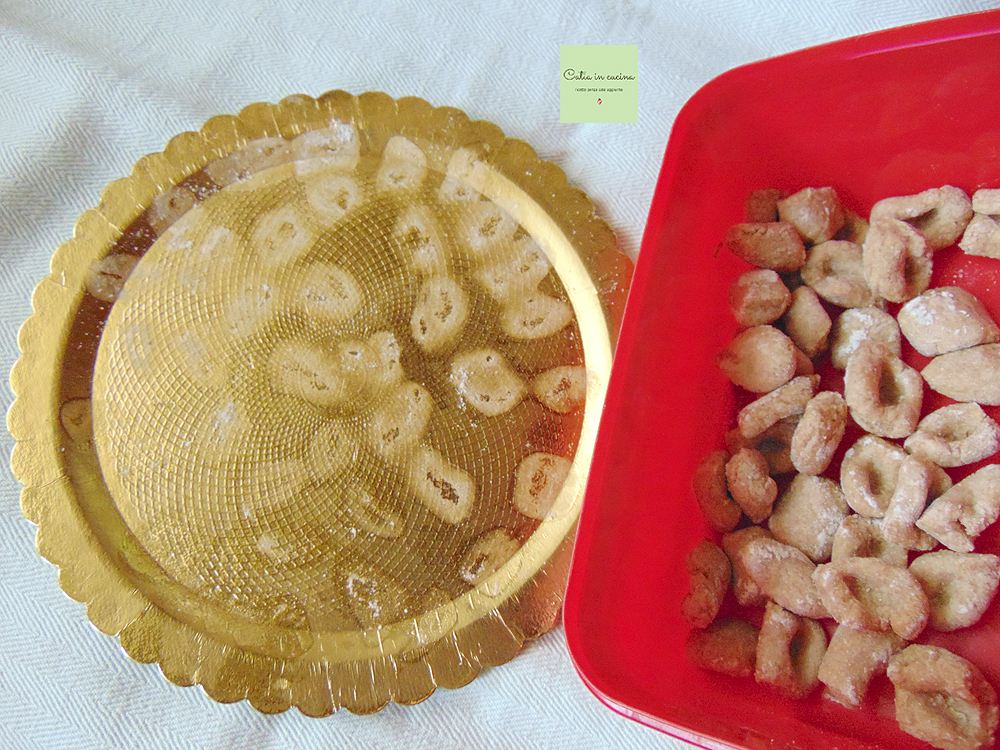
Personally, when I can’t cook them right away, I prefer to freeze them; in my opinion, it’s advisable even if cooking is planned for a few hours later or the next day, so much so that I usually put them in the freezer directly as I make them, one tray at a time. Freezing keeps the gnocchi unchanged, and at the time of cooking, they take only one more minute to float to the surface, just the time to thaw directly in water.
To freeze them, you just need to follow a small trick: arrange them spaced out on trays, preferably floured, and put the trays in the freezer for half an hour or an hour, then transfer the gnocchi to a container or a bag. They will remain separate from each other and can be taken out as desired in the quantity needed.
Salt-Free Tips
 Don’t be surprised if salt is not listed among the ingredients, I cook without added salt. But how, don’t you know yet? Then… read this article of mine! And try to put into practice some of my following tips 😉 🙂
If you are interested in reducing or eliminating salt, always remember to:
– Gradually decrease the salt, the palate needs to get used to it slowly and should not notice the gradual reduction.
– Use spices. Chili, pepper, curry, nutmeg, cinnamon, cloves, cumin…
– Use aromatic herbs. Basil, parsley, oregano, thyme, sage, marjoram, rosemary, mint…
– Use seeds. Sesame, pine nuts, almonds, walnuts…
– Use spicy vegetables or fruits. Garlic, onion, lemon, orange…
– Use my salt-free vegetable granules and gomasio.
– Prefer fresh foods.
– Avoid cooking in water, prefer cooking methods that do not disperse flavors (griddle, foil, steam, microwave)
– Avoid bringing the salt shaker to the table!
– Occasionally break the rule. It’s good for the mood and helps to persevere.
If you don’t want to, or can’t, give up salt:
You can still try my recipes by salting them according to your habits.
Follow Me!
On my WhatsApp Channel and on Instagram, on the Facebook page, on the Pinterest boards, in my two groups: Catia’s Group, in the kitchen and beyond and Exactly what I was looking for! And if you like… subscribe to the Newsletter
