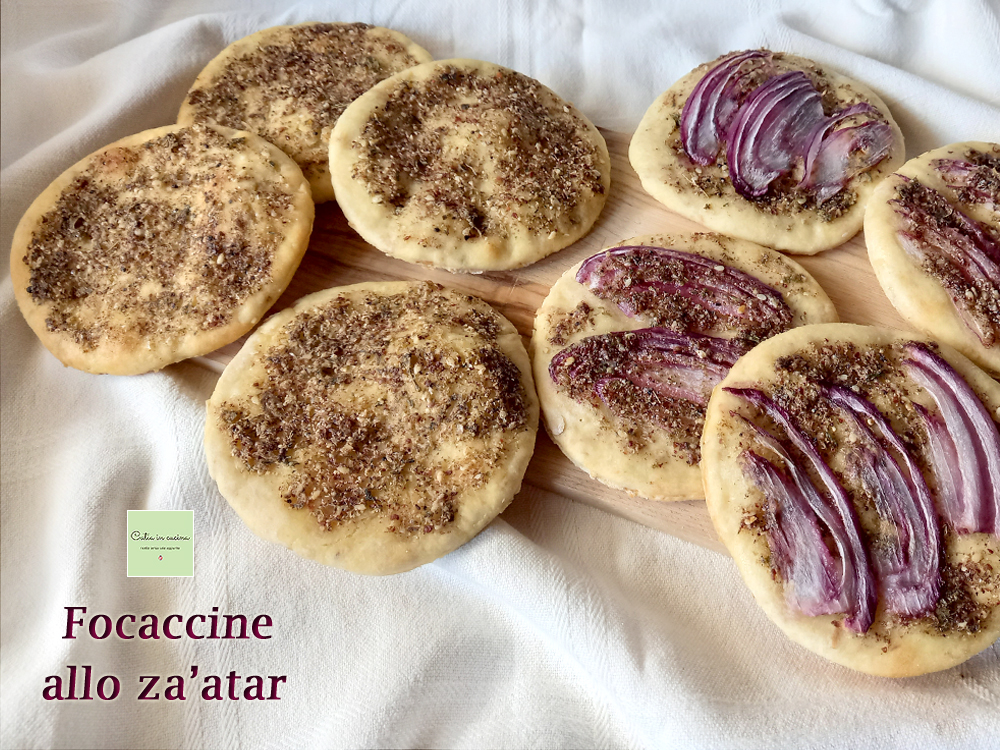
Right after making my homemade zaatar, I couldn’t resist trying to make zaatar flatbreads as the very first test.
Making zaatar at home is extremely simple, and to think that at first, I thought it was a complicated recipe! It’s true that sometimes we are intimidated by things we don’t know, only to find out that the difficulties are just in our minds and our indecisions. And so, now zaatar holds no secrets for me 😃 and I’ve started using it everywhere.
The first, essential test had to be this. Making flatbreads with zaatar is a common tradition in all Middle Eastern countries: where there is zaatar, there are always flatbreads, little flatbreads, focaccias, crispy or soft, small or large, with just zaatar (and oil) or with additions like tomatoes, olives, onions, and various Mediterranean vegetables.
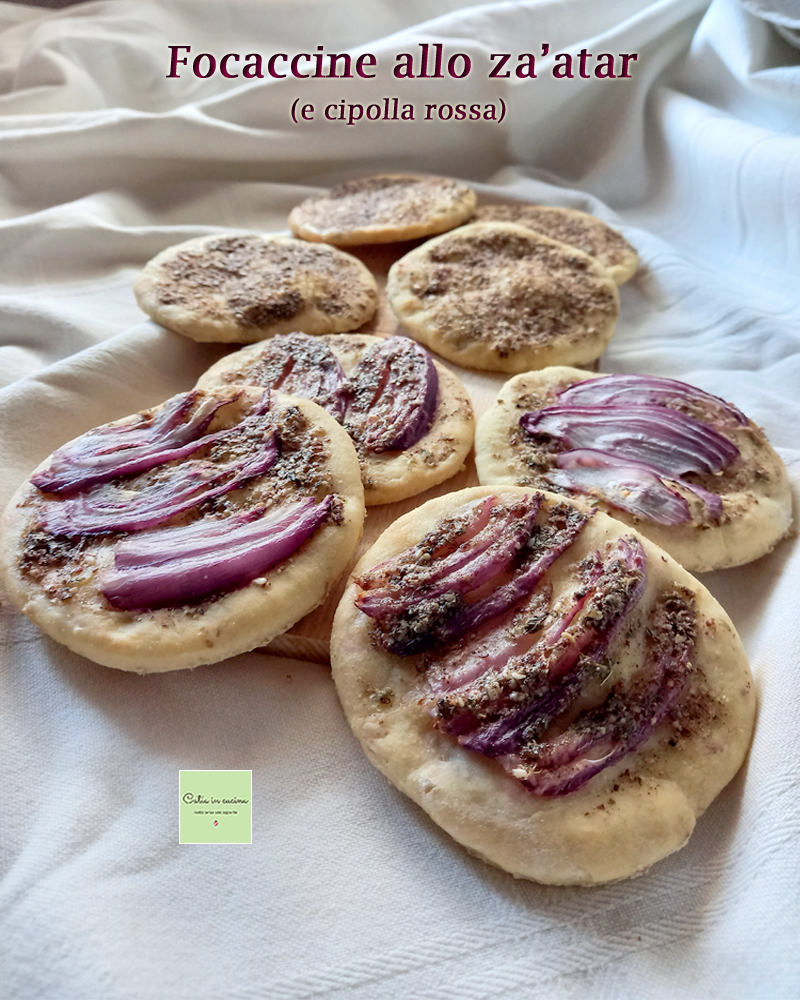
And so I did. I let a dough rise to make simple zaatar flatbreads, which we ate with cheese and bean hummus. And on some of the flatbreads, I added onion (red) following the advice of my friend Pinuccia, who knows a lot about Middle Eastern recipes, certainly much more than me. 😀
They are delicious!
For the leavened dough, I didn’t follow any particular recipes, I made one of those improvised doughs, based on feeling, when I have bags of different flours to finish, or open beer to use up, or whey or kefir left over after making ricotta or spreadable cheese. This time, I even noticed the bag of rolled oats, and I added a handful of those too.
If you don’t have all the ingredients I used, I will still leave you some other doughs below that you can easily use to make these zaatar flatbreads: 👇😉
- Difficulty: Easy
- Cost: Economical
- Rest time: 8 Hours
- Preparation time: 10 Minutes
- Portions: total flatbreads: about 15
- Cooking methods: Oven
- Cuisine: Middle Eastern
- Seasonality: All seasons
Ingredients
- 1 1/4 cups all-purpose flour
- 1 3/4 cups durum wheat semolina
- 1/2 cup rolled oats
- 2/3 cup licoli (active)
- 1/2 cup water
- 1/4 cup beer
- 1/4 cup whey
- 3 tablespoons zaatar
- 2 tablespoons extra virgin olive oil
- red onion (to taste)
Tools
- Bowl Proofing
- Cutting Board
- Rolling Pin
- Oven Sfornatutto
- Pastry Cutter
Steps
First, prepare the dough:
Pour the flour, semolina, and rolled oats into a large bowl. Then pour in the liquid ingredients: the licoli, water, whey, and beer.
👉 As I mentioned in the introduction, I used beer and whey because I had some leftovers to use up, alternatively, they can be replaced with more water or milk.
Initially mix with a spoon, then knead briefly by hand until a not too smooth dough is obtained (the roughness of the dough is due to the rolled oats).
👉 If during kneading it is too sticky, add a little flour as needed.
Place the dough to rise in the microwave, or in a sheltered place.
Let it rise until doubled in size. My dough rose in 6 hours. Then I put it in the fridge (covered with cling film) until the next day, for 14 hours.
👉 Resting in the fridge is useful but optional. It helps to mature the dough and is the thing to do when you need to postpone baking to the next day when proper rising does not occur in the expected times (one of the risks of relying on sourdough and room temperature 😀).
In the meantime, prepare the za’atar (following this recipe of mine).
🧂 👉 Zaatar is also available pre-packaged ready to use. Remember to always check the ingredient label, as the packaged one almost always contains salt. For those interested, I found one without salt (with cumin and coriander) –> this is it .
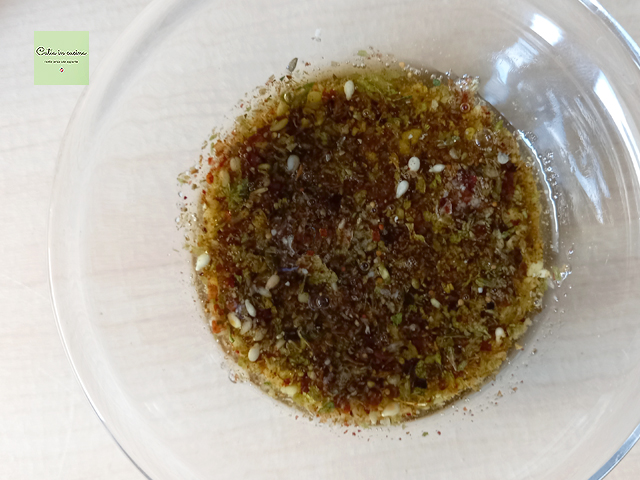
Pour the zaatar into a small bowl and add the extra virgin olive oil.
Mix with a teaspoon to obtain a fairly thick sauce.
Prepare the flatbreads:
Take a small portion of risen dough and roll it out.
👉 If it has been in the fridge, it can be used immediately after taking it out of the fridge, while cold, so it rolls out better without sticking to the cutting board. In any case, it’s good to flour the cutting board.
To get thicker flatbreads, you can roll them out with your fingertips; I preferred to roll them with a rolling pin to make them thin.
Then I cut them with a pastry cutter (4 inches) to have them all the same size. But of course, they can be made in any shape and size you prefer.
Distribute a teaspoon (or just half a teaspoon) of zaatar sauce on each dough disk.
For the onion version:
slice a red onion, place the slices on the dough disk and then cover with zaatar, or vice versa, put the zaatar first and then the onion, there is no difference in the final result.
Preheat the oven to 392°F (200°C) and bake the zaatar flatbreads or with onion and zaatar for 15 minutes.
They are excellent both hot and cold. Perfect to eat on their own as a bread substitute, but also filled with fresh cheese, ideally homemade spreadable.
😉