
Zaatar (also: za’atar, zatar, zahtar, zaktar, zatr, satar) is a spice and herb blend originating from the Middle East, primarily composed of thyme and sesame (and salt, though not necessarily), usually enriched with other spices and herbs, varying depending on the locality, traditions, or family preferences. It usually includes oregano and marjoram, but also sumac, cumin, savory, fennel seeds, coriander, and hyssop.
Some of these spices and herbs are traditionally little used here in Italy, particularly sumac and hyssop, which are known regionally: sumac, a spice with a tangy flavor, is mainly known in Sicily, while hyssop is an aromatic and medicinal plant, from the same family as thyme and oregano, with an intense bitter mint flavor, that grows wild in the mountainous areas of northern Italy.
The presence or absence of certain spices or herbs usually determines the origin of the zaatar. Lebanese zaatar (indeed called Lebanese thyme) does not include sumac, which is added instead to Syrian zaatar and Sicilian zaatar.
Zaatar can be prepared with dried or fresh herbs, in the latter case, it is preserved in oil.
It can be used to season everything from meat to fish to cheese, or spread on bread, while in Lebanese flatbreads it is spread on the dough before baking.
I was introduced to this blend not during a vacation in the Middle East, as happened to those who have traveled a bit more than I have (😃), but it was one of the discoveries in my continuous search for alternative ways to flavor foods without adding salt. This search initially led me to know sumac, a spice that has recently been rediscovered and used by renowned chefs as a salt substitute in some dishes. And as a direct consequence, I then discovered zaatar.
Sumac has a very characteristic flavor, naturally flavorful, slightly tangy with hints of lemon and vinegar. It also has a beautiful red color, making it suitable as a decorative spice. For these reasons, I decided to prepare my homemade zaatar in the version with added sumac.
Ready for the recipe? It’s very simple!
〰〰〰
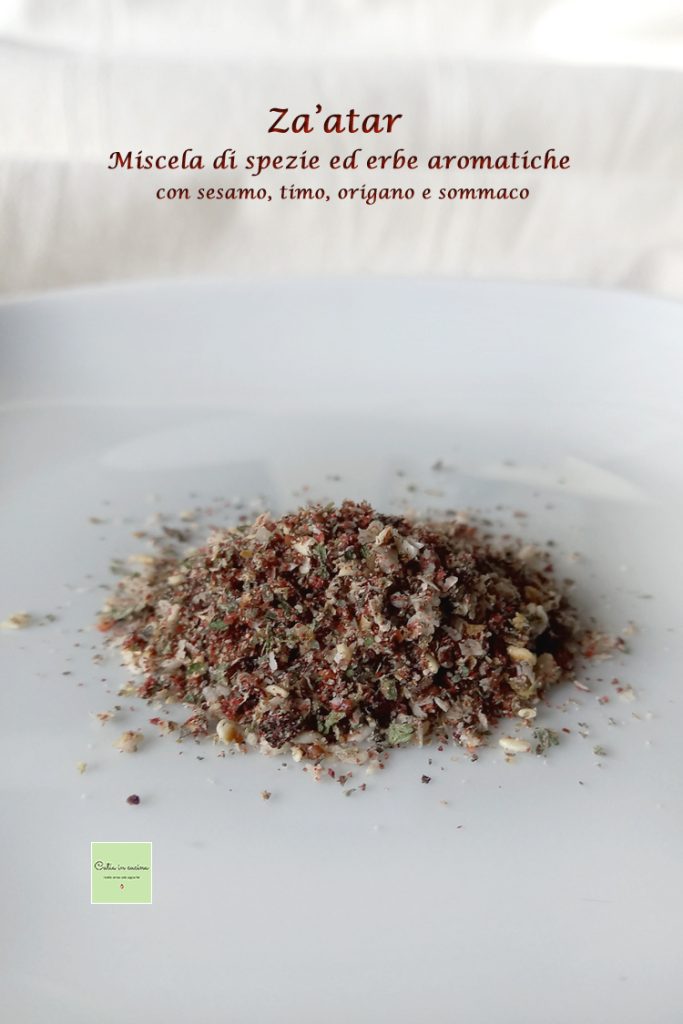
- Difficulty: Very easy
- Cost: Economical
- Preparation time: 15 Minutes
- Portions: bowl: 1
- Cooking methods: No cooking
- Cuisine: Middle Eastern
- Seasonality: All seasons
Ingredients
- 1 tablespoon thyme
- 1 tablespoon oregano
- 1 tablespoon sumac
- 1 tablespoon sesame seeds
Tools
- Mortar
Steps
Only two operations are necessary to prepare zaatar: toast the sesame seeds if you don’t have them already toasted, and grind the blend using a mortar or a food processor.
Toasting the sesame seeds is a simple and quick operation, just heat a pan and pour the sesame seeds, not too many, just enough to cover the bottom of the pan. After a very few minutes, they are ready (when you hear them popping, turn off the heat immediately). Transfer them to a plate right away, not leaving them in the hot pan where they would continue to toast (if toasted too much, they become bitter).
Once the sesame seeds have cooled, simply combine all the ingredients in a mortar or the bowl of a food processor and grind them briefly to obtain a grainy mixture, not too fine.
My food processor lately is not very effective with sesame seeds, so I prefer using the mortar (which I also use for gomasio), it takes a few more minutes, but the result is excellent.
Zaatar is simply stored in a jar closed with a lid. Since it consists of dried herbs and spices, no special storage precautions are needed.
However, if using fresh thyme and oregano, you need to cover the mixture with extra virgin olive oil.
The combination of zaatar with oil is quite common in recipes.
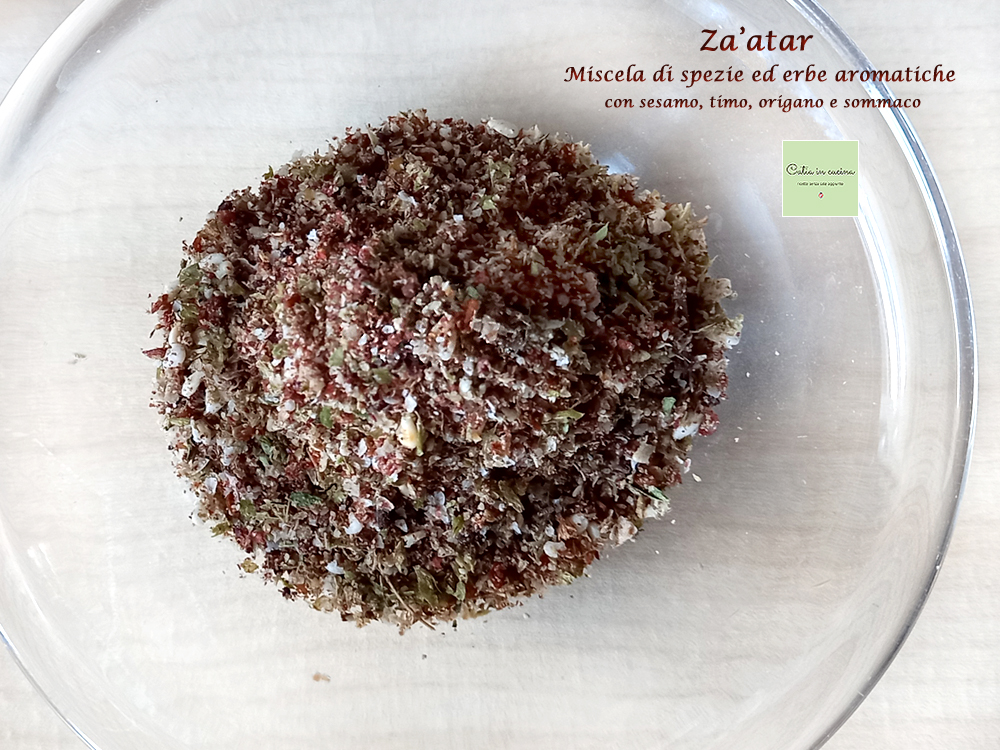
As mentioned in the introduction, the spice and herb blend can be quite varied. You can also add marjoram (or use it instead of oregano or thyme) or mint, and you can add fennel seeds, cumin, or coriander, but in smaller quantities than the main ingredients, usually used in equal amounts.
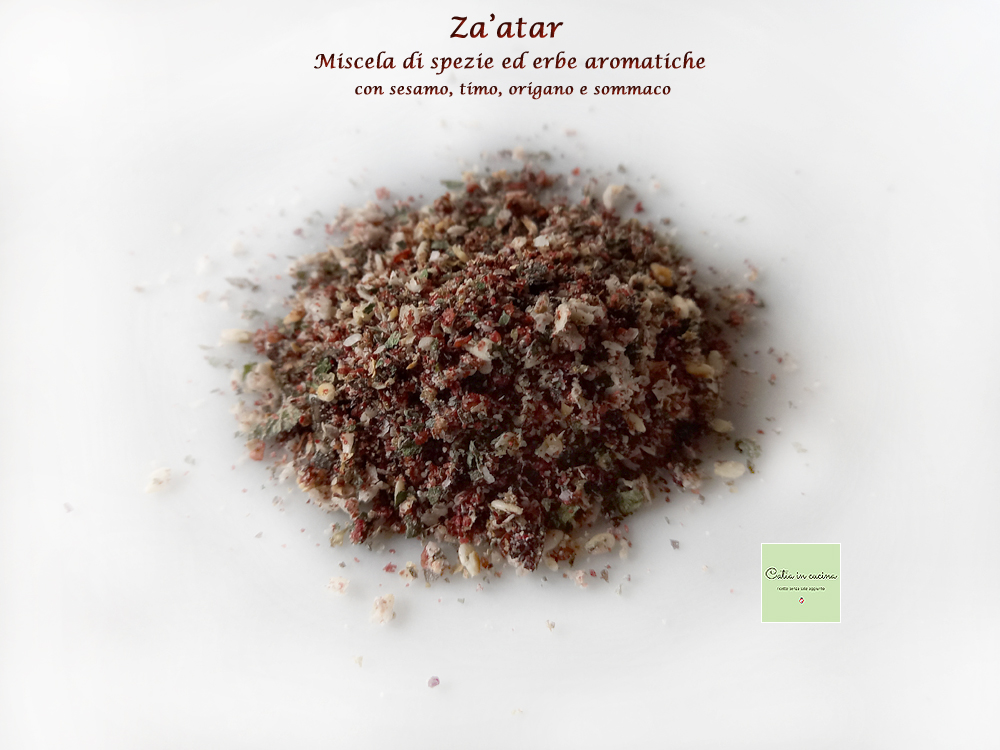
Salt-Free Tips
 Packaged zaatar often contains salt, but it’s so easy to make this blend at home that it’s really not worth spending time looking for a packaged zaatar that is salt-free.
So pay attention to the labels. Even sumac can be found with or without salt, so again, always pay attention to the labels.
Sumac is the only ingredient not widely available in supermarkets, it is mostly found in natural food stores (or online). All other herbs and sesame are definitely present in our kitchens (if you don’t have them or find it hard to source them, I’ve added all the links in the ingredient list for convenience).
If you’re interested in reducing or eliminating salt, always remember to:
▫ Reduce salt gradually, allowing the palate to get accustomed slowly and not notice the progressive reduction.
▫ Use spices. Chili, pepper, curry, nutmeg, cinnamon, cloves, cumin…
▫ Use herbs. Basil, parsley, oregano, thyme, sage, marjoram, rosemary, mint…
▫ Use seeds. Sesame, pine nuts, almonds, walnuts…
▫ Use spicy vegetables or fruits. Garlic, onion, lemon, orange…
▫ Use my salt-free vegetable granules and gomasio.
▫ Prefer fresh foods.
▫ Avoid cooking in water, prefer cooking methods that don’t dilute flavors (grilling, baking in foil, steaming, microwaving)
▫ Avoid putting the salt shaker on the table!
▫ Occasionally allow yourself a break from the rules. It lifts the mood and helps persist.
If you don’t want, or can’t, give up salt:
▫ You can still try my recipes, seasoning according to your taste.
Follow Me!
On my new WhatsApp channel and on Instagram, on my Facebook page and Pinterest, in my two groups: Catia’s Group, in the Kitchen and Beyond and Just What I Was Looking For! and if you like… subscribe to my Newsletter.
On my new WhatsApp channel and on Instagram, on my Facebook page and Pinterest, in my two groups: Catia’s Group, in the Kitchen and Beyond and Just What I Was Looking For! and if you like… subscribe to my Newsletter.
