Today I would like to talk to you about a typical product of Basilicata, and in this article What it is and how to make it: The Crunchy Pepper, I will tell you how this truly special vegetable is born and produced.
Make sure you don’t miss the FACEBOOK page, my INSTAGRAM account, and the YOUTUBE CHANNEL.
Here you can find the links to other recipes with the crunchy pepper:
- Difficulty: Easy
- Cost: Medium
- Preparation time: 30 Days
- Portions: various
- Cooking methods: No cooking
- Cuisine: Regional Italian
- Region: Basilicata
- Seasonality: All seasons
Ingredients
- as needed crunchy peppers
Preparation
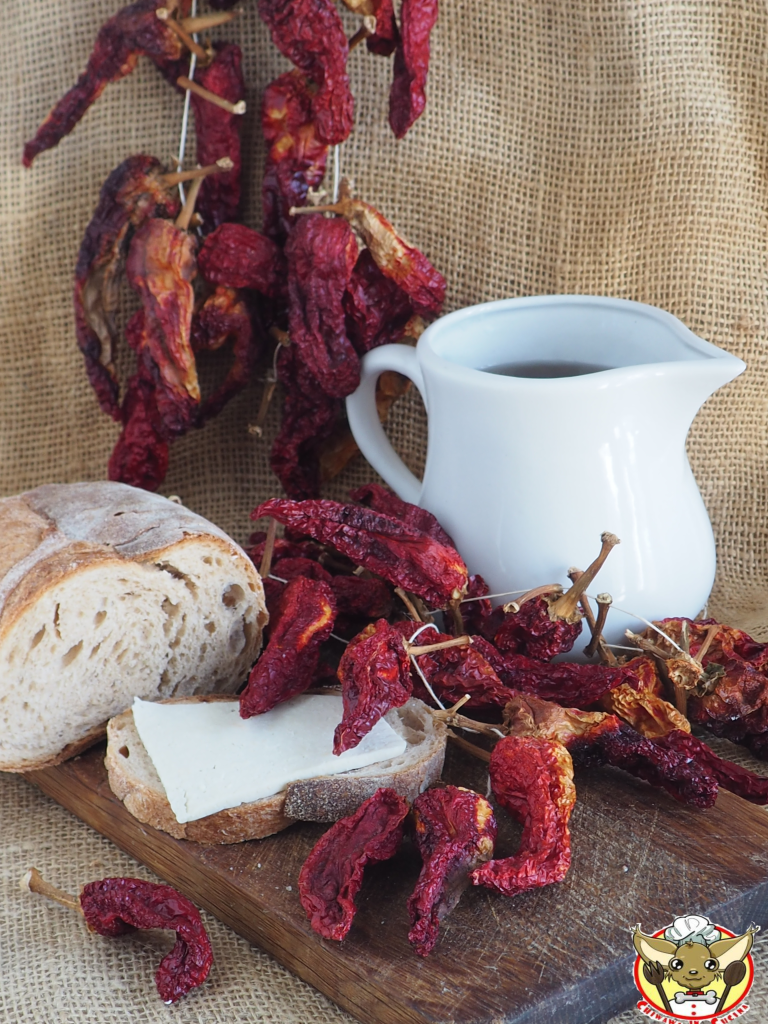
The crunchy pepper is obtained from the cultivation of a particular pepper typical of Basilicata, specifically from the small town of Senise with just 7,000 inhabitants, located in the province of Potenza.
The main features of this vegetable are its low water content, sweet taste, very thin skin, little pulp, conical shape, and high vitamin C content. Locally, it is called Zafaran.
It is believed to have very distant origins, arriving in Europe at the end of the 1500s thanks to Christopher Columbus’s caravels from the Antilles.
In 1996, the Consorzio di Tutela del Peperone di Senise was born. In 2016, the Consortium obtained the I.G.P. (Protected Geographical Indication) recognition.
It is planted in February/March and harvested in August.
After harvesting, it rests for a few days in cool, dry, and well-ventilated places to start proper preservation. Then it is strung into long strings, called serte. These strings are kept away from direct light to prevent yellowing. Proper drying in low humidity locations will prevent mold or insects.
Once well dried, it is detached from the long strings, cleaned with a cloth to remove any dust, and then the stem and internal seeds are removed.
At this point, it can be used mainly in two ways: it can be ground into a powder and added to pizza and focaccia dough, or it can be fried to make it Crunchy. It is fried in a pan with seed oil at 320°F or with olive oil at about 340-355°F for just a few seconds on each side, ensuring it does not burn. The oil should be hot but not smoking.
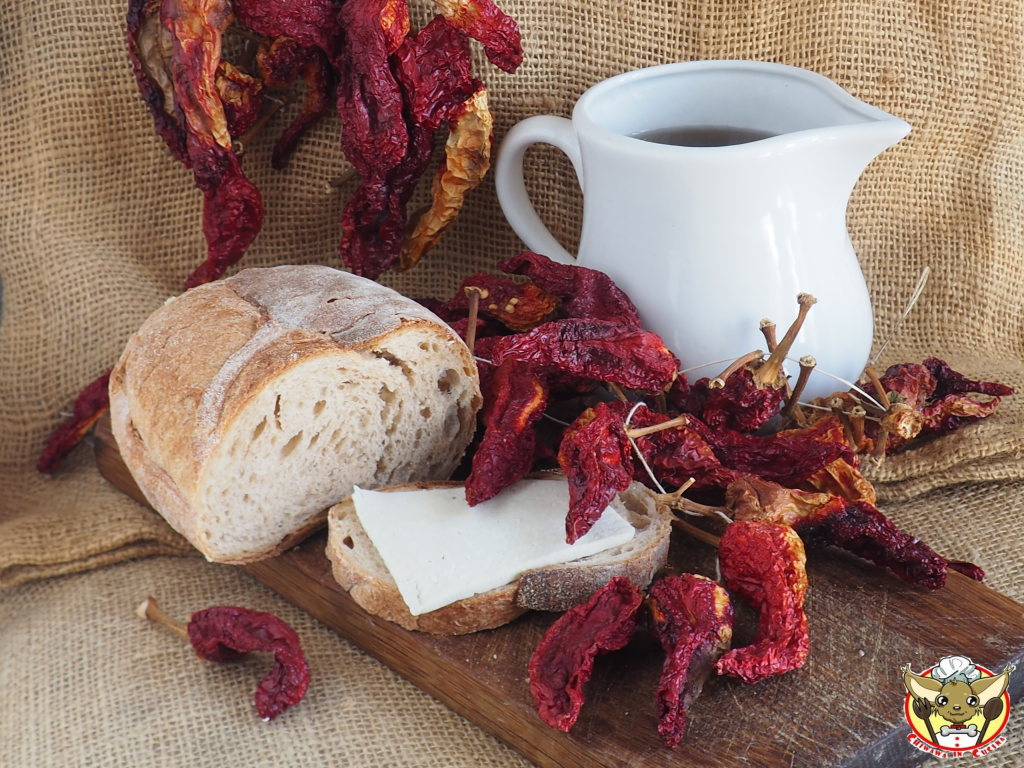
It is excellent to enjoy with cod, boiled potatoes, eggs, savory pies, pasta or even on their own as a substitute for chips. Try it as an appetizer, paired with Lucanian cheeses and cold cuts.
Suggestions/Tips
If you enjoyed What it is and how to make it: The Crunchy Pepper, below are the recipes that use this ingredient:
Focaccia with Crunchy Peppers and Aged Sausage
Eggplant Funghi Style with Crunchy Peppers
My Social Channels
To not miss any recipes, you can also follow me on:
Instagram; Pinterest and the YOUTUBE CHANNEL.
If you want to stay updated on news and the latest recipes, follow my Facebook page