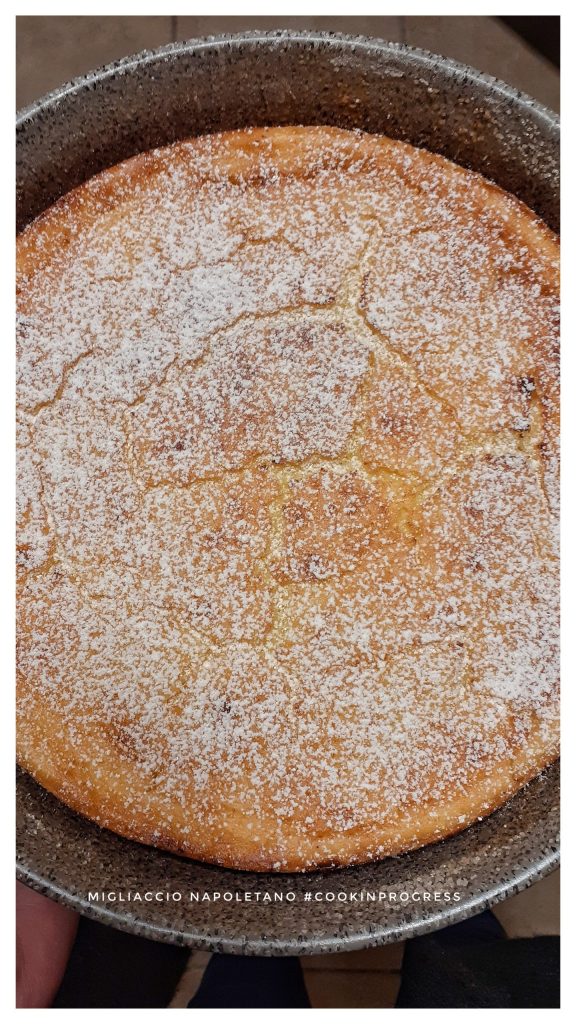
Not just for Carnival, even though Migliaccio is the typical dessert of Neapolitan Carnival, along with chiacchiere and sanguinaccio. Historically, sweet migliaccio (there is also a savory version) was made with millet bread and pig’s blood. Today, the old ingredients have been replaced by semolina, milk, and butter. Its taste is reminiscent of the Neapolitan pastiera due to the orange blossom fragrance it releases when hot and its very light color. It’s considered quite a calorific dessert, especially if the classic version is enriched with ricotta, in which case its filling closely resembles another Neapolitan dessert: the sfogliatella. Like almost all traditional Neapolitan desserts, Migliaccio has ancient origins. The first recipe dates back to the medieval period (around the year 1000) and was probably invented by some peasant woman. It was only toward the end of the eighteenth century that the traditional recipe was modified: blood was replaced with sugar, flour, and eggs, and semolina replaced millet flour, thus transforming it into the dessert we all know today.
http://www.facebook.com/NapoliToday
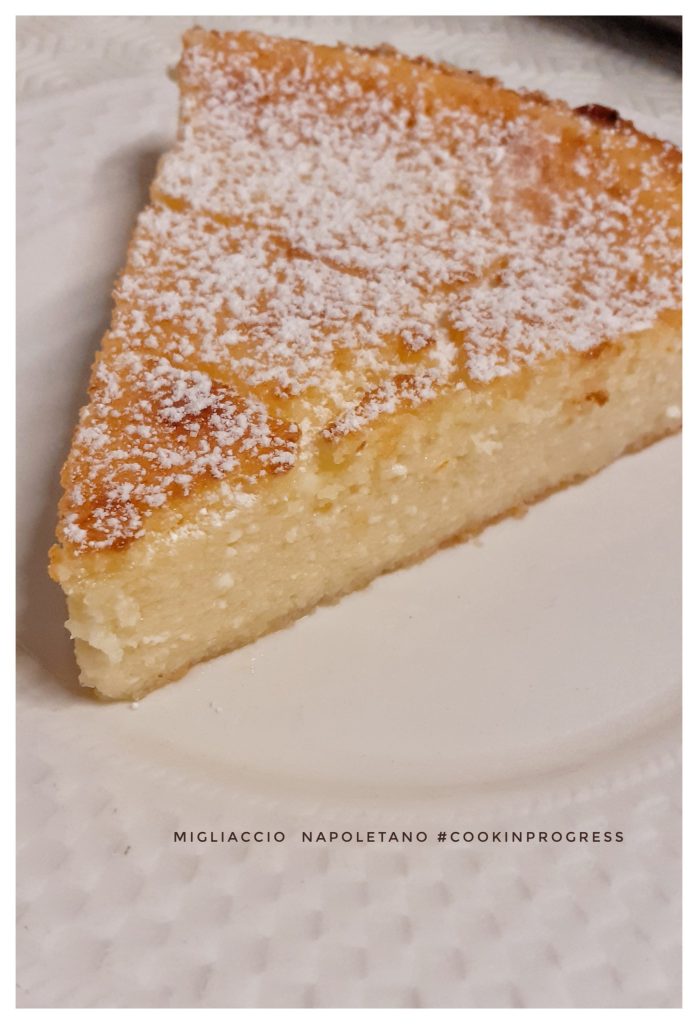
- Cuisine: Italian
Ingredients
- 1 1/3 cups Semolina
- 2 cups Whole milk
- 1 1/4 cups Water
- 1 1/4 cups Sugar
- 9 oz Sheep ricotta
- 3 Eggs
- 3 1/2 tbsp Butter
- 2 Oranges (organic)
- 2 Lemons (organic)
- 2 packets Vanillin (or vanilla essence)
- 1 tbsp Orange blossom water (optional)
- to taste Powdered sugar
Preparation
In a large pot, pour the milk, water, 50 grams (1/4 cup) of sugar, butter, vanilla, and the whole peels of 1 orange and 1 lemon. The whole peels will be kept throughout the preparation of the semolina cream and serve to make the mix very fragrant! Heat the mix on medium heat, stirring with a wooden spoon, until the butter and sugar have completely dissolved.
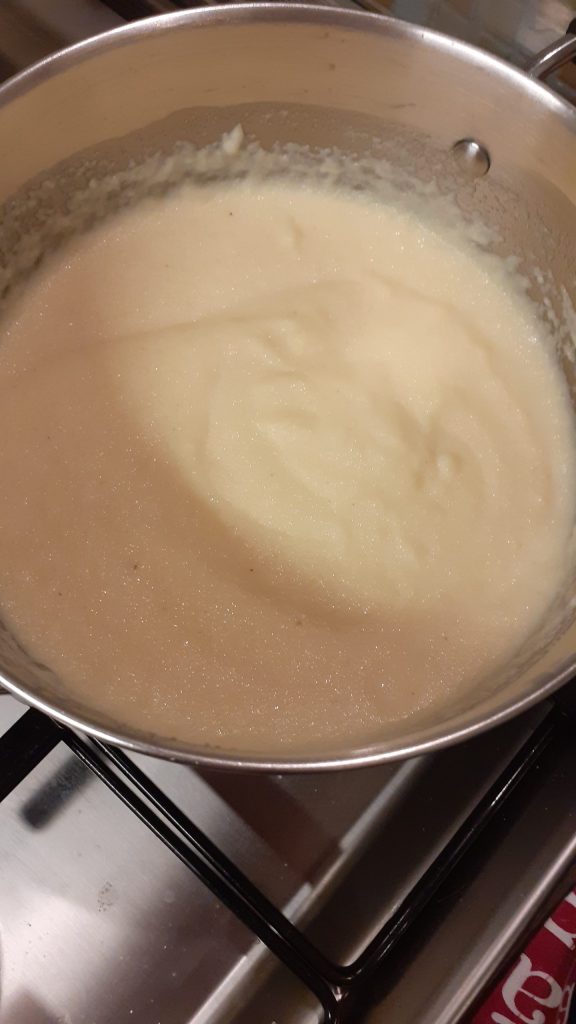
Add the semolina: slightly lower the heat and stir with a hand whisk, in a few seconds you will see the mix thicken into a compact cream like polenta. Remove the citrus peels, taking care to clean them well from the attached cream to avoid waste. Cover with plastic wrap and let cool.
This operation serves to lower the temperature of the cream.
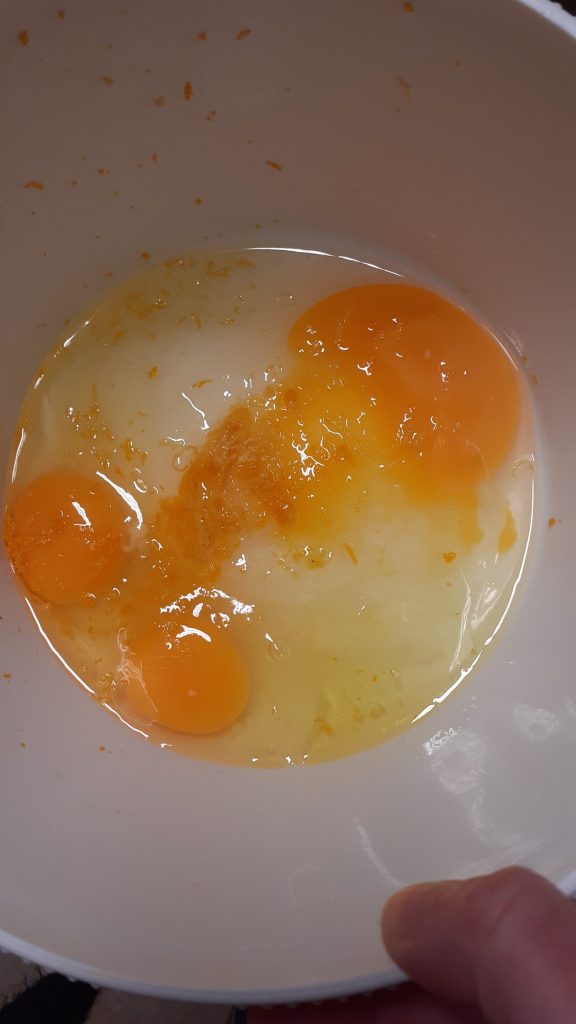
Meanwhile, whisk the eggs with the remaining sugar, another packet of vanilla, and finely grated orange and lemon zest using an electric mixer. Whisk until you obtain a frothy and voluminous mixture. Add the ricotta, which has been sieved with a fine-mesh sieve. Whisk again for a few seconds to blend everything.
Pour the now cold semolina cream into the egg mixture.
Please do not add the hot semolina cream, otherwise, you risk the migliaccio tasting like eggs! Use the electric mixer again at medium-high speed to blend the semolina cream into the egg and ricotta mixture until you obtain a smooth, lump-free batter! At this point, you can add the orange blossom essence. Pour into a buttered and floured baking pan.
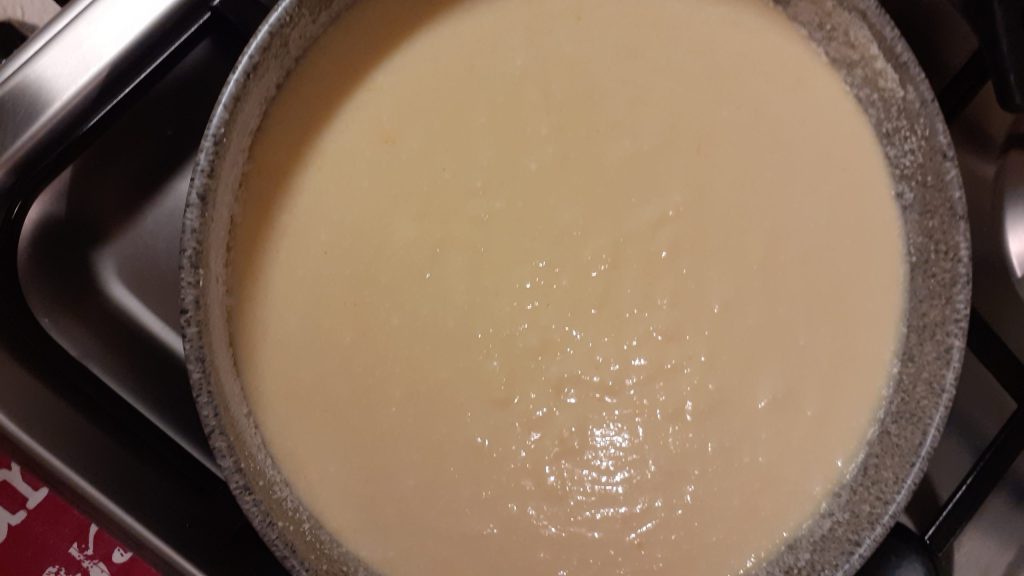
For optimal results and thus a Migliaccio with a Craquelé surface, cracked and light, it is necessary to bake at a temperature not exceeding 356°F in a static oven.
Bake in the middle part of the oven for about 50 minutes if you’re using an 8-inch pan, otherwise 40 minutes will suffice if you have a wider pan of 9 or 10 inches.
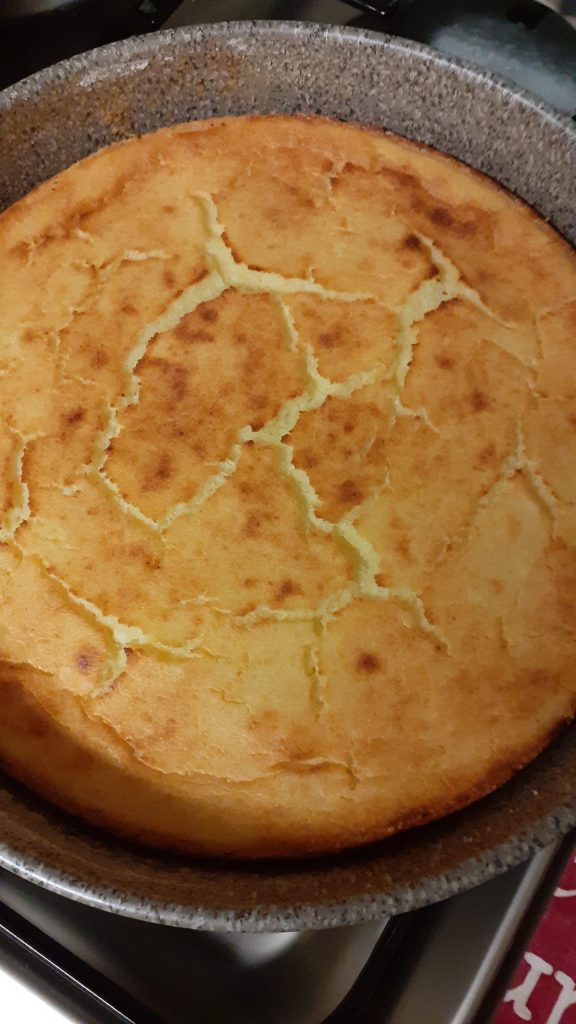
Keep in mind that to have a high-thickness migliaccio, you should not use a pan that is too large and wide. If the cracked surface does not form, you can create it by pulling the surface. Take the migliaccio out of the oven and let it cool in the pan for about 1 hour. Dust with powdered sugar! Here is your Neapolitan Migliaccio ready to be enjoyed