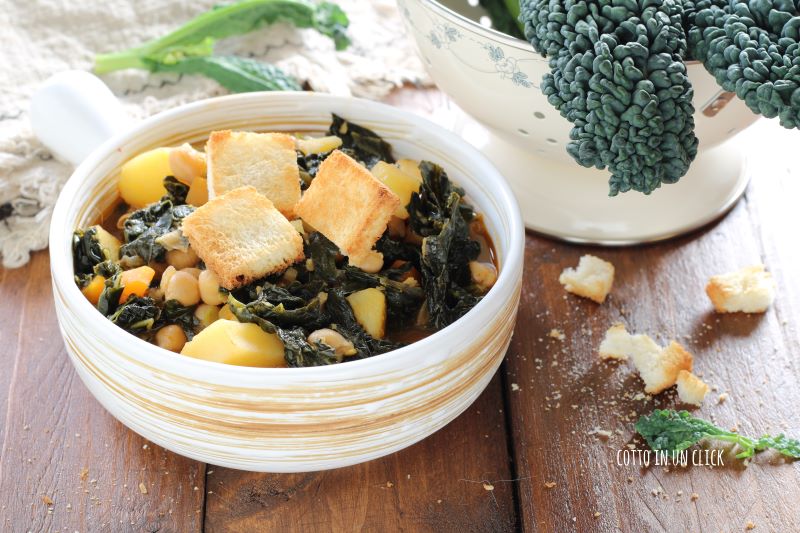
Black cabbage and chickpea soup, a nutritious, healthy, and quick comfort food, perfect for an everyday dinner. The recipe for cabbage soup can be prepared in various ways, and today I share my version. Those who know me know that I often use, especially for this type of preparation, the pressure cooker. An alternative cooking method to traditional pot cooking, much more practical and faster. Moreover, it allows keeping the nutritional properties of the food intact. The preparation is very simple and does not differ much from pan cooking.
The only difference is the cooking times, which in the pressure cooker occur at a higher temperature. I’m not going to explain it to you in detail; otherwise, I would go on too long. And now let’s get right to the stove, because the black cabbage and chickpea soup in pressure cooker will be ready in a click!
If you are interested in other pressure cooker recipes, also read:
- Difficulty: Very easy
- Cost: Very cheap
- Preparation time: 15 Minutes
- Portions: 4People
- Cooking methods: Pressure cooker
- Cuisine: Italian
- Seasonality: Autumn, Winter, and Spring
- Energy 218.79 (Kcal)
- Carbohydrates 29.66 (g) of which sugars 5.85 (g)
- Proteins 7.98 (g)
- Fat 7.87 (g) of which saturated 0.93 (g)of which unsaturated 0.11 (g)
- Fibers 7.85 (g)
- Sodium 1,552.31 (mg)
Indicative values for a portion of 311 g processed in an automated way starting from the nutritional information available on the CREA* and FoodData Central** databases. It is not food and / or nutritional advice.
* CREATES Food and Nutrition Research Center: https://www.crea.gov.it/alimenti-e-nutrizione https://www.alimentinutrizione.it ** U.S. Department of Agriculture, Agricultural Research Service. FoodData Central, 2019. https://fdc.nal.usda.gov
Ingredients
- 14 oz black cabbage (weight of uncleaned vegetable)
- 8.6 oz potatoes (weight of cleaned vegetable)
- 10.5 oz canned chickpeas
- 1 white onion (small)
- 1 carrot
- 1 bunch sage (to taste)
- 2 tbsps extra virgin olive oil
- 1 tbsp tomato paste
- 3 cups vegetable broth
- salt (to taste)
- pepper (to taste)
Tools
- Pressure Cooker
- Cutting Board
- Knife
- Peeler
Steps
First, prepare a vegetable broth and set it aside. Then take care of cleaning the vegetables. Start with the black cabbage, which is characterized by its long dark green leaves. When purchasing, they should be firm and without yellow spots. Take each leaf with one hand from the central rib and with the other hand pull firmly upwards. This way, you will have separated the leaves from the hard central part. Do not throw it away, as it is perfect for making a great vegetable broth.
Then wash the leaves under water to remove soil residues and drain them. Then cut them into strips. Also, clean the carrot and onion and chop them coarsely. Then peel the potatoes, wash them, and cut them into cubes.
Put the oil in the pot and sauté the coarsely chopped vegetables together with the bunch of sage. Then add the tomato paste and continue to sauté, stirring with a spoon, for a few minutes.
Now add the sliced black cabbage, the diced potatoes, and the chickpeas drained from their preserving liquid. Then add the broth and season with salt and pepper. Close the pot and bring it to maximum heat. From the start of the whistle, cook for 8 minutes. Obviously, cooking times are relative, and you should refer to the type of pressure cooker you have.
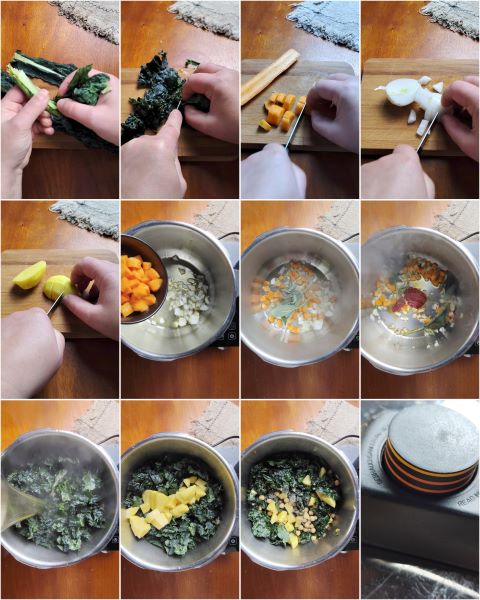
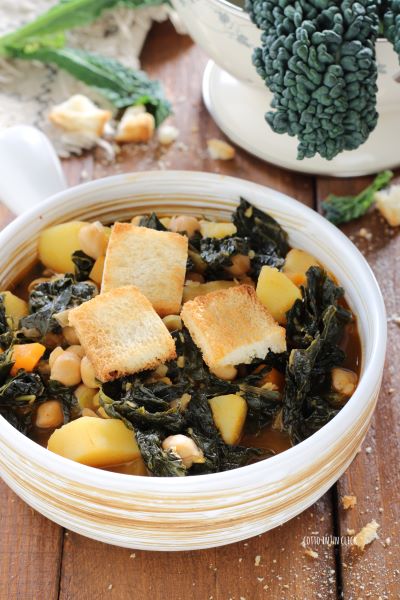
After the cooking time has elapsed, gradually release the steam and open the pot. The black cabbage and chickpea soup in the pressure cooker is ready to be served with toasted bread croutons.
Storage and Tips for Black Cabbage and Chickpea Soup
The soup can be stored in the refrigerator for 1 or 2 days in a container with a lid.
This page contains affiliate links that provide this site with a small share of revenue, without changing the price for the buyer.
FAQ Questions and Answers for Black Cabbage and Chickpea Soup
Can I replace chickpeas with beans?
Yes, of course, you can use cannellini beans or borlotti beans instead of chickpeas.
Can I use dry chickpeas?
Yes, you can also use dry legumes. Soak them for a few hours and cook them in a pressure cooker for 20 minutes. Then add them to the soup as indicated in the recipe.