Salmon Poke, a rich and colorful dish with exotic flavors of Hawaiian origin, made with boiled rice, raw fish, vegetables, and topped with a sauce of choice: usually soy sauce. It is essentially a variation of the vegetarian sushi recipe, just as fresh and simple to prepare.
Born in Hawaii, with Korean and Japanese influences, it is now popular worldwide, and even in Italy, there are poke shops where you can enjoy it. Have you ever tried making it at home? It’s very simple! A tasty, light, and nutritionally complete dish. It includes a base of grains, usually sushi rice, a portion of protein, typically raw fish or meat, and then various types of vegetables or fruit.
The only precaution needed to prepare it at home is to ensure the fish is flash-frozen, as it is used raw. To avoid bacteria, it is better to buy it already flash-frozen or freeze it fresh for at least 72 hours. Make sure the fish is properly flash-frozen or perfectly fresh if you choose to freeze it yourself at home.
The name poke, pronounced “po-kei”, in Hawaiian means diced and refers to the way the ingredients are cut and presented in the bowl. Before becoming a trendy dish worldwide, the poke bowl was a snack for Hawaiian fishermen. At the end of the day, they would marinate leftover fish with salt and wakame seaweed, serving it with plain rice.
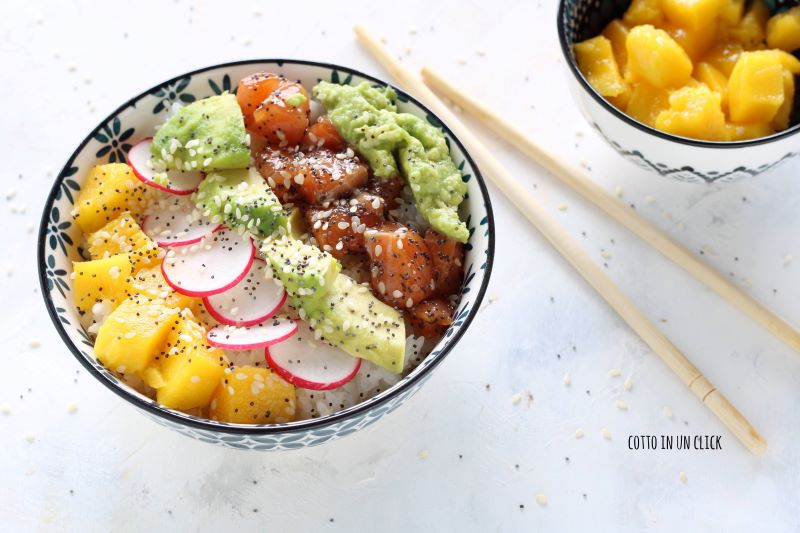
The possible combinations are truly endless. Today, I chose the most classic recipe, using sushi rice, marinated raw salmon, radishes, avocado, and mango. Of course, you can substitute the ingredients with ones you like, letting your imagination run wild. Curious to find out how to prepare it? Then let’s get into the kitchen, because the salmon and mango poke will be ready in a click!
If you’re interested in other cold, unique rice-based dishes, also check out:
- Difficulty: Very Easy
- Cost: Inexpensive
- Rest time: 30 Minutes
- Preparation time: 45 Minutes
- Portions: 4 People
- Cooking methods: Stovetop
- Cuisine: Japanese
- Seasonality: Summer
- Energy 308.27 (Kcal)
- Carbohydrates 29.49 (g) of which sugars 12.85 (g)
- Proteins 16.01 (g)
- Fat 14.90 (g) of which saturated 3.34 (g)of which unsaturated 11.20 (g)
- Fibers 4.08 (g)
- Sodium 1,347.77 (mg)
Indicative values for a portion of 288 g processed in an automated way starting from the nutritional information available on the CREA* and FoodData Central** databases. It is not food and / or nutritional advice.
* CREATES Food and Nutrition Research Center: https://www.crea.gov.it/alimenti-e-nutrizione https://www.alimentinutrizione.it ** U.S. Department of Agriculture, Agricultural Research Service. FoodData Central, 2019. https://fdc.nal.usda.gov
Ingredients
- 1 mango
- 1.06 oz radishes
- 1 avocado
- 0.35 oz lime juice
- tabasco (to taste)
- salt (to taste)
- sesame seeds (to taste)
- poppy seeds (to taste)
- teriyaki sauce (to taste for seasoning)
- 1 cup sushi rice
- 1⅓ cups water
- 2 tbsp rice vinegar
- 1.41 tbsp sugar
- salt (to taste)
- 10.58 oz salmon
- 1 tbsp soy sauce
- 1 tsp honey
- sesame seeds (to taste)
- poppy seeds (to taste)
Tools
- High-sided Saucepan
- Cutting Board
- Knife
- 4 Bowls
- 2 Basins
- Small Pot
Steps
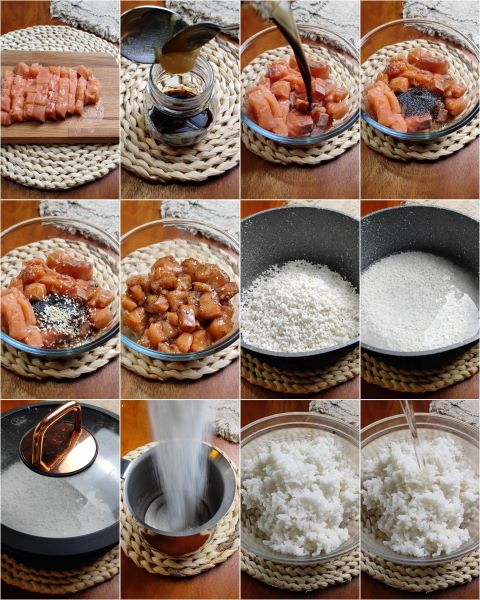
First, cut the flash-frozen salmon into cubes about 0.79 inches and transfer it to a basin. In a jar, put the soy sauce and honey. Close it with the lid and shake well. Then pour the marinade into the basin with the salmon. Add the sesame and poppy seeds and mix well so that all the ingredients are perfectly combined. Cover with plastic wrap and refrigerate for at least 30 minutes.
Rinse the rice very well under water to remove starch residues. Do this at least 5 or 6 times until the water becomes clear and transparent. Then soak it in a basin for 15 minutes and rinse it again one last time.
Drain it well and weigh it. The weight you obtain will be the amount of water to use for cooking. Transfer the rice to a thick-bottomed saucepan and add the water. Cover with the lid and cook on high heat for 2 minutes without stirring. Then lower the heat and cook for another 10 minutes, without ever removing the lid and without stirring. Refer to the minutes indicated on the package. The rice should be slightly al dente at the end of cooking, and the rice will have absorbed all the water.
While the rice is cooking, put the rice vinegar with the sugar and salt in another small pot and bring to a boil. Then transfer the rice to a basin, pour the vinegar over the rice, and fluff it with a fork.
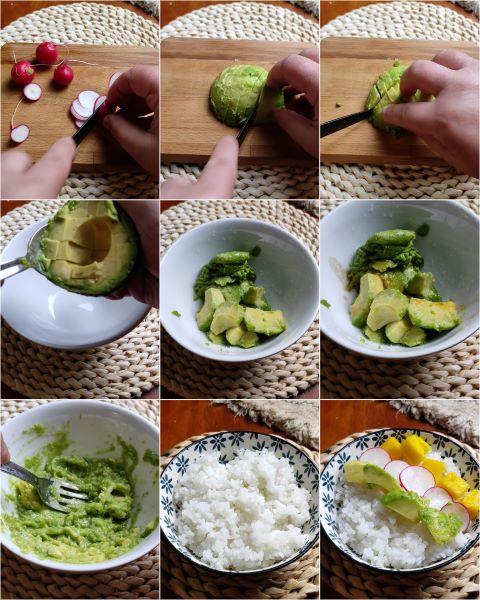
Now prepare the ingredients to assemble the poke. Clean the radishes and slice them thinly. Dice the mango and cut the avocado in half. Remove the pit and cut one half into chunks and set aside. Cut the other half of the avocado into chunks and transfer it to a bowl. Add the lime juice, salt, and tabasco, and mash well with a fork to obtain a creamy consistency. Put some rice in each bowl, then add a few mango cubes, some radish slices, and avocado.
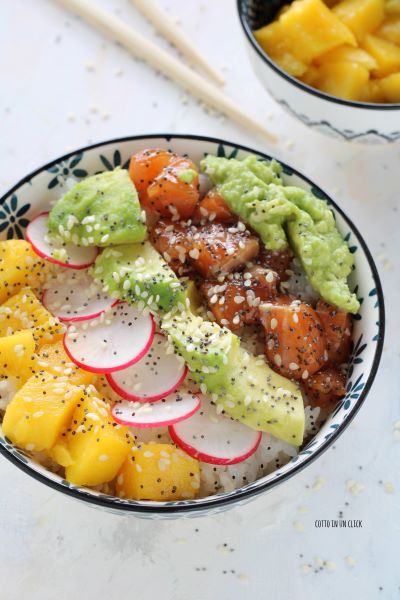
Then add the marinated salmon and afterward the avocado cream. Add more sesame and poppy seeds and season with the teriyaki sauce. If you prefer, you can also use glaze.
Storage and Tips for Salmon Poke
Salmon and mango poke can be stored in the refrigerator for up to one day.
FAQs for Salmon Poke
What can I substitute for mango?
You can use other exotic fruits of your choice, or alternatively, you can use edamame.
Can I use soy sauce to dress the poke?
Yes, you can use soy sauce for dressing, or to make the bowl more flavorful, even spicy mayonnaise.