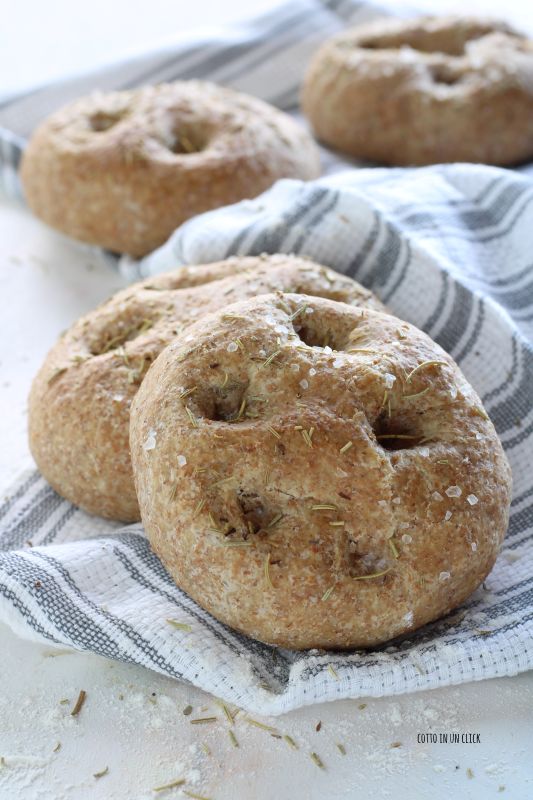
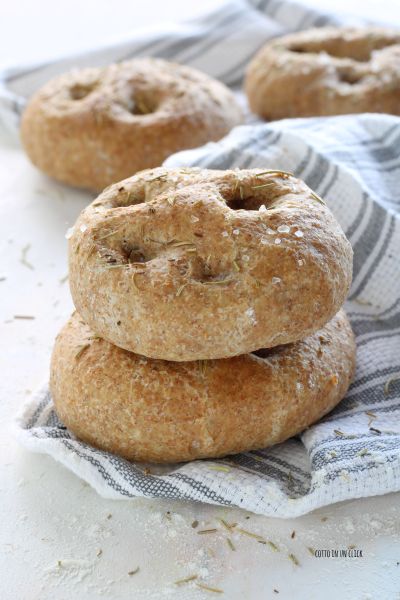
Soft Whole Wheat Buns, a variation of the classic buns, simple and tasty, perfect to enjoy on their own or with cold cuts and cheeses. The recipe is really simple and you can knead either with a stand mixer or by hand. I love kneading, it’s very relaxing for me and so, having a bit more time than usual, I preferred to use my hands. I don’t know about you, but touching the flour with my fingers, feeling its texture and smell, is something I really love. Moreover, let’s face it, kneading by hand also allows you to relieve all the tension. Now, let’s talk about the recipe. For this version, I used whole wheat flour, a basic food ingredient obtained by grinding or crushing the whole wheat kernel. A complete flour that, in addition to starch, provides greater amounts of fiber, protein, and vitamins compared to white flour. These buns are super soft and also perfect for children’s snacks or to offer at a birthday buffet. And now, let’s go to the kitchen together, because the soft whole wheat buns will be ready in a click!
If you’re interested in other bread recipes, also read:
- Difficulty: Very easy
- Cost: Very economical
- Rest time: 3 Hours
- Preparation time: 30 Minutes
- Portions: 4Pieces
- Cooking methods: Oven
- Cuisine: Italian
- Seasonality: All seasons
- Energy 292.94 (Kcal)
- Carbohydrates 39.12 (g) of which sugars 1.89 (g)
- Proteins 7.91 (g)
- Fat 12.09 (g) of which saturated 1.77 (g)of which unsaturated 0.16 (g)
- Fibers 5.25 (g)
- Sodium 870.83 (mg)
Indicative values for a portion of 99 g processed in an automated way starting from the nutritional information available on the CREA* and FoodData Central** databases. It is not food and / or nutritional advice.
* CREATES Food and Nutrition Research Center: https://www.crea.gov.it/alimenti-e-nutrizione https://www.alimentinutrizione.it ** U.S. Department of Agriculture, Agricultural Research Service. FoodData Central, 2019. https://fdc.nal.usda.gov
Ingredients
- 2 cups whole wheat flour
- 3/8 cup water (at room temperature)
- 1/4 cup milk (at room temperature)
- 1 tsp dry yeast
- 2 tbsp extra virgin olive oil
- salt (to taste)
- 1 1/2 tbsp extra virgin olive oil
- 2 tsp water
- coarse salt (to taste)
- rosemary (to taste)
Tools
- Bowl
- Cutting Board
- Baking Tray
- Spoon
Steps
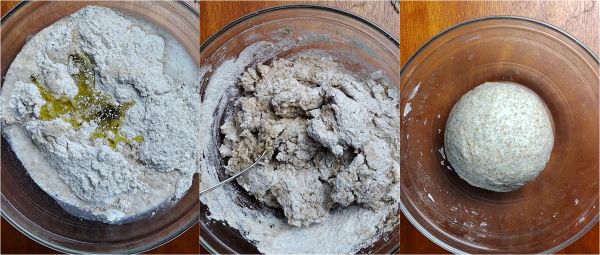
First, put the flour with the yeast, oil, water, and milk in a bowl and start mixing the ingredients with a spoon. Once the flour has absorbed the liquid, also add the salt and mix again until combined. Then continue kneading with your hands until you get a smooth and homogeneous dough.
Form a ball and place it inside the bowl. Cover with plastic wrap and let it rest for 30 minutes. Then, take the dough again and knead it, bringing the edges towards the inside. Form a ball again, put it back in the bowl, cover with plastic wrap, and let it rest for 15 minutes. Repeat this operation 2 more times and then let it rise until doubled, for at least a couple of hours. I put the bowl with the dough in the switched-off oven with the light on.
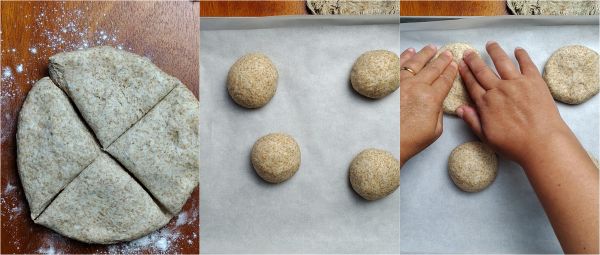
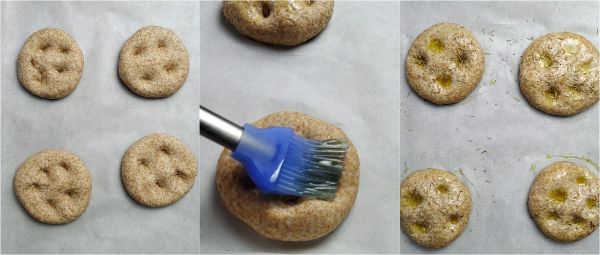
After the rising time, take the dough and turn it onto a lightly floured surface. Divide it into 4 equal pieces. Flatten them with your fingers and bring the edges towards the center. Then roll them with the palm of your hand to form balls. Place them on a baking tray of 12×16 inches lined with parchment paper, spacing them apart. Flatten them again, creating the classic focaccia dimples. Cover the tray with more plastic wrap or a towel and let the buns rise for 30 minutes.
After the rising time, brush the surface with an emulsion of oil and water. Add some salt and rosemary and bake in a preheated static oven at 392°F for 10 minutes on the lower rack of the oven. Then, move the tray to the middle rack and continue baking for another 10 minutes, or until golden on top.
The soft whole wheat buns are ready! Remove them from the oven and let them cool before enjoying.
Storage and Tips for Whole Wheat Buns
The whole wheat buns stay soft even the next day if covered with a glass dome. You can also freeze them in the freezer, placing them in suitable freezing bags.
FAQ Questions and Answers for Whole Wheat Buns
Why is my focaccia coming out hard?
If your focaccia is hard, it might be because the dough wasn’t hydrated enough, resulting in a dry, hard, and rigid product. Not all flours have the same moisture content, so water should be added little by little. Sometimes, in fact, it might be necessary to add a bit more than stated in the recipe. Water is essential to hydrate the flour and allow the gluten to form. Without sufficient hydration, the dough cannot become soft and elastic, making it more difficult to work with.
How can I soften a hard dough?
If a dough is too hard, gradually add liquids like water, milk, or oil, working it until you achieve the right consistency. Sometimes, even a thin layer of moisture on your hands can be enough to soften the dough.