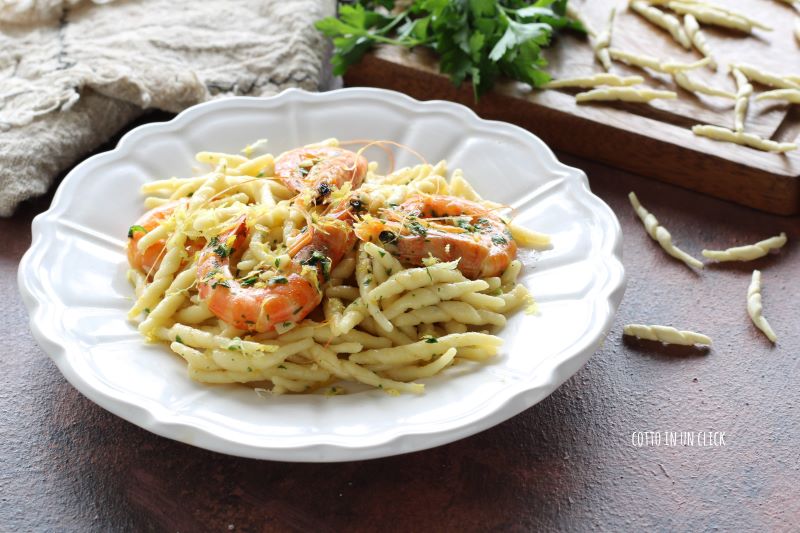
The trofie with shrimp and lemon is a simple first course with a sea scent, perfect to serve during a dinner or lunch with friends and family. It is nothing more than a variant of spaghetti with shrimp and turmeric, very easy and with a distinctive taste.
In this version, I replaced the turmeric with gremolada: a mixture of garlic, parsley, and lemon zest. The same used in the preparation of Milanese-style ossobuco. I must confess that I like it so much that I also used it to flavor the veal knots.
A very simple and distinctive first course also suitable for special occasions. The only thing I found bothersome was cleaning the fish. Those who know me know I love eating it, but I don’t like cleaning it at all. However, I admit it was worth it, and shrimp are definitely quicker to clean compared to others. Now, follow me in the kitchen, because the trofie with shrimp and lemon will be ready in a click!
If you are interested in other seafood first courses, also read:
- Difficulty: Very easy
- Cost: Medium
- Preparation time: 30 Minutes
- Portions: 3 people
- Cooking methods: Stovetop
- Cuisine: Italian
- Seasonality: All seasons
- Energy 272.53 (Kcal)
- Carbohydrates 23.31 (g) of which sugars 2.99 (g)
- Proteins 18.16 (g)
- Fat 9.85 (g) of which saturated 1.45 (g)of which unsaturated 0.87 (g)
- Fibers 0.26 (g)
- Sodium 1,250.10 (mg)
Indicative values for a portion of 239 g processed in an automated way starting from the nutritional information available on the CREA* and FoodData Central** databases. It is not food and / or nutritional advice.
* CREATES Food and Nutrition Research Center: https://www.crea.gov.it/alimenti-e-nutrizione https://www.alimentinutrizione.it ** U.S. Department of Agriculture, Agricultural Research Service. FoodData Central, 2019. https://fdc.nal.usda.gov
Ingredients
- 9 oz trofie
- 11 oz shrimp (fresh, to be cleaned)
- 2 cloves garlic
- 1/4 cup white wine
- 2 tbsp extra virgin olive oil
- chopped parsley (to taste)
- lemon zest (to taste)
- salt (to taste)
Tools
- High-edged saucepan
- Frying Pan
- Cutting Board
- Grater
- Knife
- Scissors
- Toothpick
Steps
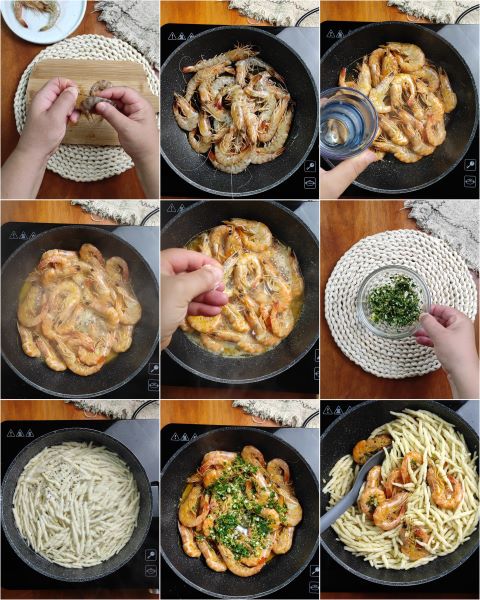
To prepare the trofie with shrimp and lemon, first attend to cleaning the fish. Those who know me know I don’t particularly enjoy this kind of task, but shrimp are cleaned very quickly. For this recipe, I left them whole, with head and shell, but you can remove both if you prefer. Then cut the back of the shrimp with a pair of scissors and remove the black vein: the crustacean’s intestine, using a toothpick.
Then rinse them thoroughly under running water and drain them. Heat some oil in a non-stick pan and, when it’s hot, add the shrimp. Sauté them for a couple of minutes over high heat and then deglaze with the quarter cup of white wine. Let the alcohol evaporate and season with salt. Then cook the crustaceans over low heat with a lid for about ten minutes.
Meanwhile, cook the trofie in plenty of salted water following the time indicated on the package and prepare the gremolada. Clean the parsley, drain it well, and finely chop it with a knife. Also, chop the garlic cloves after cleaning them and removing the less digestible internal part. Then grate the lemon zest, put everything in a bowl, and mix.
Add the gremolada to the shrimp and continue cooking for a couple of minutes over medium heat, stirring. Then drain the trofie, transfer them into the shrimp sauce, and let them flavor for a few minutes over medium heat.
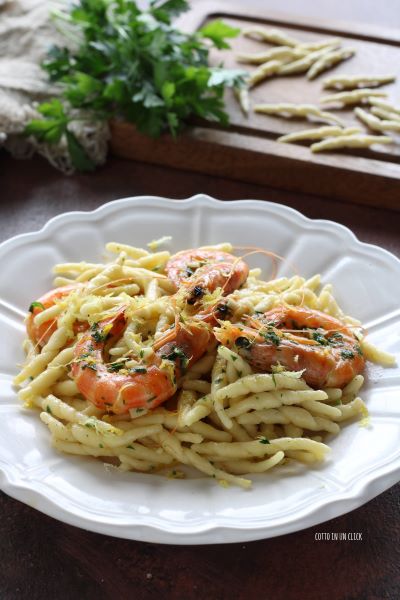
The trofie with shrimp and lemon are ready! Serve them hot, adding more grated lemon zest if you prefer.
Variations and Tips for Trofie with Shrimp and Lemon
Trofie with shrimp and lemon can be stored in the refrigerator in a container with a lid for a maximum of one day. However, it is advisable to consume them immediately after cooking.
FAQ Questions and Answers for Trofie with Shrimp and Lemon
Can I freeze the trofie with shrimp?
No, it is better not to freeze pasta with shrimp and lemon, but to consume it immediately after cooking.
Is it possible to freeze cleaned shrimp?
No, it is better to freeze them as soon as purchased and, when needed, they can be removed from the freezer and allowed to thaw in the refrigerator for the necessary time