
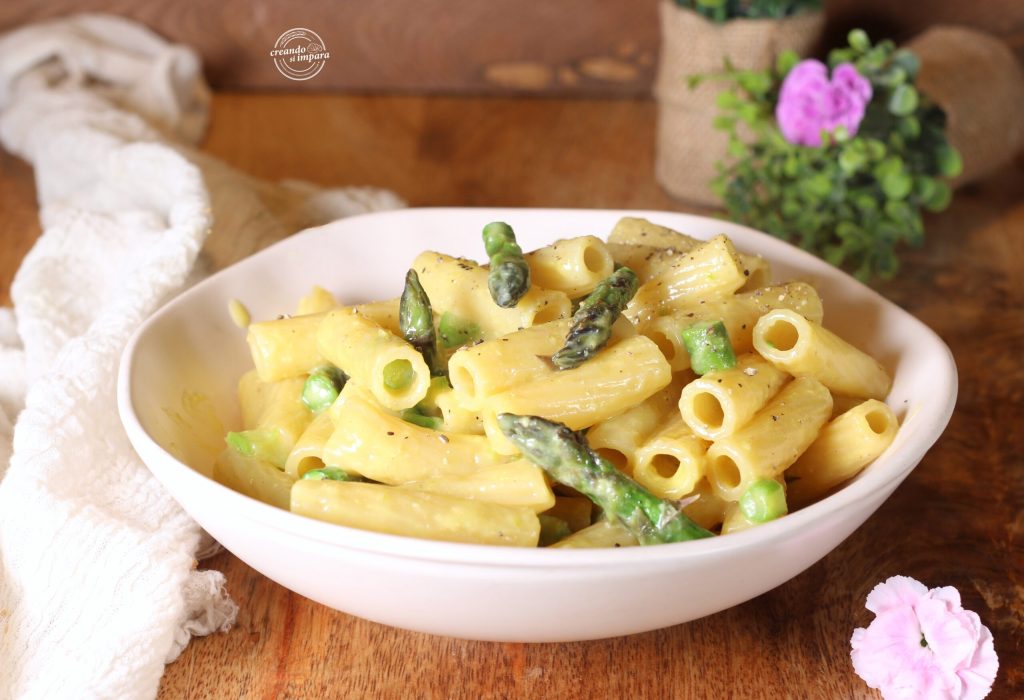
If you’re looking for a refined alternative to ordinary pasta, asparagus carbonara will win you over with its velvety texture and bold flavor. The secret of this preparation lies in the balance between pecorino, parmesan and the sweetness of green asparagus, which replace guanciale without making you miss it. Making this creamy asparagus pasta is a wonderful way to celebrate seasonal ingredients, bringing to the table a dish that tastes of both novelty and tradition — perhaps while your cat watches curiously at the steam rising from the pot. Follow my steps to obtain a perfect egg cream, without the “omelette” effect!
If you’re looking for other vegetarian dishes try pasta with ricotta and walnuts, spaghetti with zucchini and walnut cream, ricotta and spinach pockets or creamy risotto-style pasta.
Let’s get to work and prepare the asparagus carbonara together.
OTHER VEGETARIAN FIRST COURSES
- Difficulty: Easy
- Cost: Medium
- Preparation time: 20 Minutes
- Cooking time: 10 Minutes
- Portions: 4Servings
- Cooking methods: Stovetop
- Cuisine: Italian
- Seasonality: Spring
Ingredients for preparing asparagus carbonara
- 14 oz green asparagus
- 11 oz rigatoni
- 5 egg yolks
- 2 oz parmesan
- 2 oz pecorino
- to taste salt and pepper
- 3 tbsp extra virgin olive oil
Steps to prepare asparagus carbonara
Begin by cleaning the vegetables. Remove the woody part by snapping off the base of each asparagus; wash these tough ends well and don’t throw them away. Put them in a pot with plenty of water, bring to a boil and boil for 5 minutes: this trick will create a flavorful cooking water full of asparagus essence. After the required minutes, discard the tough stems and add the pasta (rigatoni are perfect for catching the sauce) directly into that aromatic water, seasoning with salt.
While the pasta cooks, take the tender part of the asparagus. Remove the outer skin with a potato peeler and slice them into thin rounds, taking care to keep the tips whole, which are the most prized part. In a large skillet, heat the extra virgin olive oil and sauté the asparagus with a pinch of salt and a ladle of the pasta cooking water. Let them cook over high heat until they are tender but still crisp, keeping a bright green color.
In a large bowl, take only the 5 egg yolks. Add the grated parmesan and pecorino, add a generous pinch of freshly ground black pepper and a ladle of the pasta cooking water, which should be warm. Whisk vigorously until you obtain a smooth, velvety cream. The use of starchy water will help create a perfect emulsion that will become the creamy heart of your vegetarian carbonara, preventing the yolks from cooking too quickly.
Drain the rigatoni al dente, reserving a little of the cooking liquid. Transfer the pasta to the skillet with the asparagus and, a key step, remove the skillet from the heat. Pour the egg-and-cheese mixture over the rigatoni and start tossing the pasta quickly, adding another splash of cooking water if necessary to adjust the consistency. The residual heat of the pasta will gently cook the egg without coagulating it. Serve your asparagus carbonara immediately, finishing each plate with a final shower of black pepper.
Tips for a perfect result
Toss off the heat: This is the golden rule. If the skillet is too hot or still on the stove you’ll end up turning the egg into an omelette. The yolk cream must remain fluid and enveloping.
“Boosted” cooking water: Boiling the asparagus trimmings in the pasta water is a secret that makes a difference. This step infuses a much more intense flavor into the rigatoni, making the final result harmonious.
Black pepper: In a true carbonara, pepper is a starring ingredient. Use it generously and preferably freshly ground to release all its intense aromas.
Delicious variations you can try
Addition of saffron: If you want a spicy note, dissolve a pinch of saffron in the ladle of cooking water you use for the yolk cream. It pairs wonderfully with the flavor of asparagus.
Crispy touch: If you want a different texture, try toasting some pine nuts or sliced almonds to sprinkle over the pasta before serving your vegetarian carbonara.
Wild asparagus: If you find them, use wild asparagus. They have a more bitter and pronounced taste that contrasts magnificently with the sweetness of parmesan and the yolks.
Storage and suggestions
Eat immediately: Carbonara doesn’t wait! This dish should be eaten right away as soon as it’s ready to enjoy its maximum creaminess.
Reheating leftovers: If any remains, avoid the microwave. It’s better to sauté the pasta in a pan for a minute with a splash of water, although the original velvety consistency will be hard to recover.
Quality eggs: Since this is a recipe with partially cooked eggs, always use very fresh eggs or pasteurized yolks in a bottle for complete safety.
Now it’s your turn!
Asparagus carbonara is the dish that transforms a seasonal lunch into a festive moment. It’s colorful, fragrant and has that touch of originality that always surprises everyone at the table. Preparing it requires only a bit of attention in the final tossing, but the result will repay you for every effort!
And you, how do you prefer your carbonara? Are you faithful to tradition or do you like to experiment with vegetables from the garden? Tell me in the comments; I can’t wait to read your versions and your little kitchen secrets!
FAQ (Questions & Answers)
Can I use frozen asparagus?
Yes, but sauté them in the pan straight from frozen to avoid them becoming too soft. Remember you won’t have the trimmings to “flavor” the cooking water.
Why did the cream turn lumpy?
Most likely the skillet was too hot when you added the yolks. Always remember to remove from the heat before adding the egg.
Which pasta shape should I choose?
Rigatoni are ideal, but you can also use mezze maniche or spaghetti, provided they are of good quality to hold the cream.
