
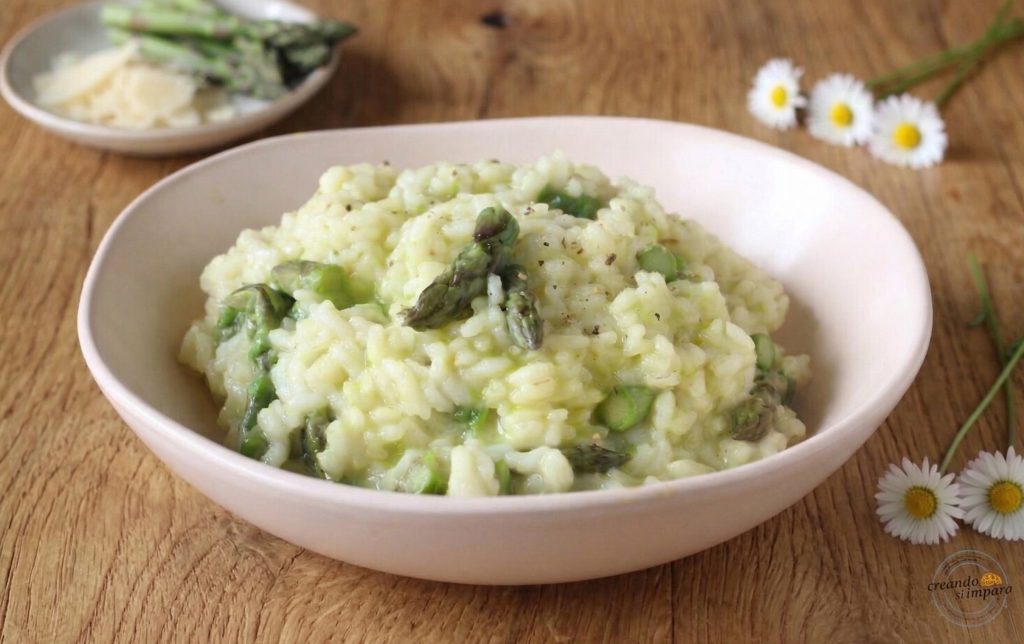
The green asparagus risotto is an elegant first course that celebrates the sweet, vegetal flavors of the season’s first shoots. This preparation is based on a fundamental technique: using the entire asparagus to create both a silky asparagus cream, which will give the risotto its color and creaminess, and some crunchy pieces for a contrast of textures. Toasting the rice in the vegetable fond allows the grains to absorb every aromatic nuance, while the final finishing with butter and Parmesan seals the flavors in a warm embrace. It is a homemade risotto that requires patience and attention, but rewards with an elegant taste and a presentation for a special occasion. Follow my technical tips to achieve consistently al dente grains and a perfect wave!
If you like risottos try the mozzarella zucchini risotto, the tomato risotto, the basil risotto or the lemon risotto.
Browse all my FIRST COURSES, you’ll find the right one for you.
Follow me on Facebook for many ideas to bring to the table every day!
Let’s get to work and try together this asparagus risotto.
OTHER RICE RECIPES
- Difficulty: Easy
- Cost: Medium
- Preparation time: 20 Minutes
- Cooking time: 20 Minutes
- Portions: 4 Servings
- Cooking methods: Stovetop
- Cuisine: Italian
- Seasonality: Spring
Ingredients for preparing the asparagus risotto
- 1 2/3 cups rice
- 1.1 lb asparagus
- 1 onion
- 1 carrot
- 6 1/3 cups water
- to taste salt and pepper
- 1 clove garlic
- 3 tablespoons extra virgin olive oil
- 2 tablespoons butter
- 4 tablespoons Parmesan cheese
Tools for preparing the asparagus risotto
This post contains affiliate links
- Casseruola
- Pentola
- Frullatori a immersione
Steps for preparing the asparagus risotto
Start by preparing a light vegetable broth by bringing the water to a boil with the carrot and half of the onion. Meanwhile, clean the green asparagus by removing the tough, woody end and trimming the stalks. Separate the tips from the stems: blanch the tips for a few minutes in the broth, drain them and set aside. Cut the stems into slices and sauté them in a pan with a clove of garlic and a drizzle of oil until tender. Take half of the cooked stems and blend them with a ladle of broth until you obtain a smooth, dense asparagus cream. This technical base will ensure a bright green color and deep savory flavor in every grain of your risotto.
In the same pan used for the asparagus, to take advantage of all the flavors left on the bottom, heat the remaining oil and add the finely chopped onion. When it becomes translucent, add the rice and let it toast for a couple of minutes over high heat until the grains become translucent. Then begin cooking by adding the hot broth little by little, being careful to add the next ladle only when the previous one has been completely absorbed. Stir often: the friction between the grains releases the starch, guaranteeing a flavorful risotto that binds naturally without becoming watery.
Towards the end of cooking (about 5 minutes before the time indicated on the package), add the prepared asparagus cream and stir well to even out the color. Once the rice is al dente and the liquid has reduced to create a velvety cream, remove the pan from the heat. This is the time for finishing: add the cold butter straight from the fridge and the grated Parmesan. Stir vigorously with a circular motion (the “wave”) to incorporate air and fats, creating a perfect emulsion that will make your homemade risotto glossy and creamy like that of the best restaurants.
Now add the remaining asparagus pieces and the reserved tips, seasoning with salt and pepper to taste. Cover the pan with a clean cloth or a lid and let the risotto rest for a couple of minutes before serving. This rest is a fundamental technical step: it allows the temperature to drop slightly, stabilizing the texture and allowing the grains to reabsorb the moisture necessary for absolute tenderness. Serve the asparagus risotto hot, finishing each plate with a grind of fresh pepper and, if desired, a few extra shavings of Parmesan.
Tips for a perfect result
Very cold butter: Use butter taken just out of the freezer or fridge for the finishing. The thermal shock between the hot rice and the cold fat promotes the formation of the velvety cream typical of a flavorful risotto.
Always boiling broth: Add only broth that is simmering. If you add lukewarm broth, you will stop the rice’s cooking, compromising the grain texture which would become rubbery outside and hard inside.
Dry toasting: If you want an even more technical risotto, toast the rice without fat for one minute before adding the oil and onion; this seals the grain better and keeps it compact.
Tasty variations
Crispy note: Add some toasted hazelnut crumbs on top of each plate for a textural contrast that enhances the asparagus’ sweetness.
Saffron scent: Dissolve a sachet of saffron in the last ladle of broth for a dramatic yellow-and-green risotto with a more complex flavor.
Fresh touch: Grate some organic lemon zest at the end of cooking to cleanse the palate and add a citrus note that pairs wonderfully with asparagus.
Storage
In the refrigerator: Risotto keeps for 1 day in an airtight container. Losing its initial creaminess, it is perfect to be reused in other preparations.
Reheating: If you have leftovers, don’t just reheat them as-is: add a splash of water or milk and sauté in a pan until it becomes soft again.
Creative recovery: Leftover rice is the ideal base to make small vegetarian supplì (rice croquettes) with a mozzarella core, to fry or bake.
Storage
In the refrigerator: Risotto keeps for 1 day in an airtight container. Losing its initial creaminess, it is perfect to be reused in other preparations.
Reheating: If you have leftovers, don’t just reheat them as-is: add a splash of water or milk and sauté in a pan until it becomes soft again.
Creative recovery: Leftover rice is the ideal base to make small vegetarian supplì (rice croquettes) with a mozzarella core, to fry or bake.
Now it’s your turn!
The green asparagus risotto is the celebration of spring on the plate. Its simplicity hides a technique that, once mastered, will allow you to amaze your guests with a first course for true gourmets.
How do you prefer your rice cooked? Do you like it very al dente or do you prefer it well cooked and creamy? Let me know in the comments if the asparagus cream gave your risotto that extra touch and if you managed to get the perfect wave!
FAQ (Questions and Answers)
Can I use frozen asparagus?
Yes, but keep in mind that fresh asparagus have a much more intense texture and aroma. If you use frozen ones, reduce the initial blanching time to avoid them becoming too soft.
Which rice is best?
Carnaroli is the king of risottos for its ability to hold cooking and release the right amount of starch, guaranteeing an excellent homemade risotto.
Can I omit the butter for a lighter version?
You can replace it with a tablespoon of extra virgin olive oil or some creamy cheese, but the classic finishing with butter is what ensures the shine and creaminess typical of the dish.
