
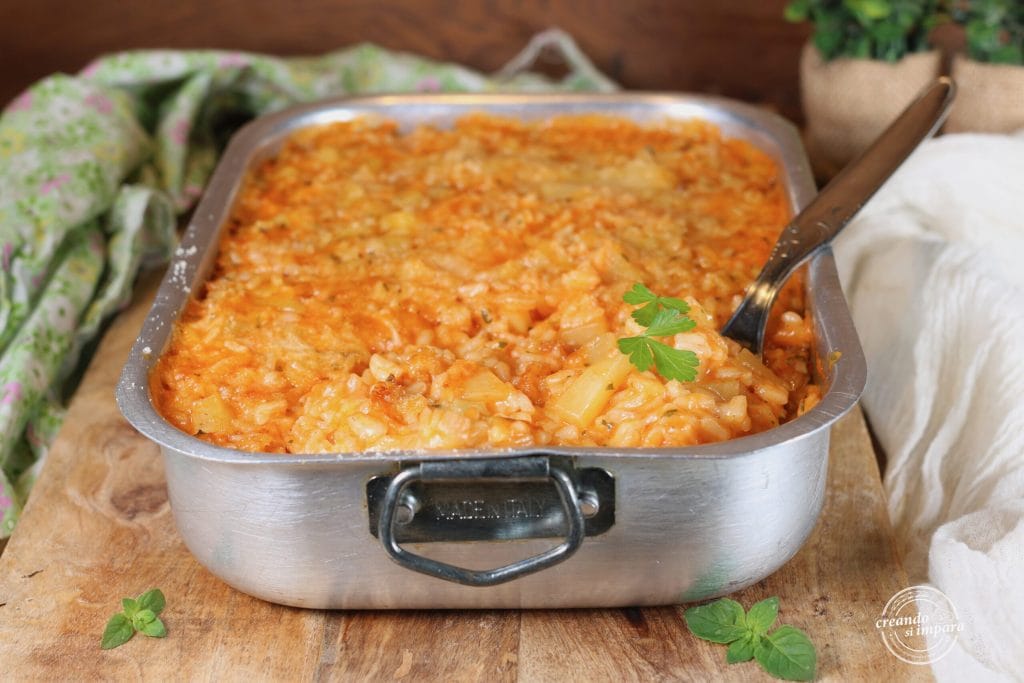
If you’re looking for an idea that combines the convenience of a baked pasta with the delicacy of a risotto, baked rice with potatoes and Asiago is the perfect answer. This dish stands out for its enveloping texture: the potatoes, cooking together with the rice, release their starch creating a natural cream that is enhanced by the savory notes of Asiago and Parmigiano Reggiano. Making baked rice is a genuine way to pamper your loved ones, bringing a homey, traditional aroma to the table that wins you over at first bite. Follow my steps to achieve a perfect gratin and an interior that stretches with every forkful!
If you love baked rice try the melty baked rice, the parmigiana-style baked rice, the baked rice with zucchini and Taleggio and the baked rice with pumpkin.
HERE you’ll find all my first-course recipes.
Follow me on FACEBOOK to discover many great recipes every day.
OTHER RICE RECIPES
- Difficulty: Very easy
- Cost: Economical
- Preparation time: 20 Minutes
- Cooking time: 40 Minutes
- Portions: 4
- Cooking methods: Oven, Stovetop
- Cuisine: Italian
- Seasonality: All seasons
Ingredients for preparing Baked Rice with Potatoes and Asiago
- 11 oz potatoes
- 1.5 cups Carnaroli rice
- 1 onion
- 4.25 cups vegetable broth
- 3 tablespoons extra virgin olive oil
- 1 tablespoon tomato paste (triple concentrate)
- 1 tablespoon chopped parsley
- to taste salt and pepper
- 7 oz Asiago
- 30 tablespoons Parmigiano Reggiano
Steps for preparing baked rice with potatoes and Asiago
Start by peeling the potatoes; after washing them thoroughly, cut them into fairly small, even cubes so they cook uniformly with the grains. Coarsely chop half an onion and sweat it in a large skillet or saucepan with a drizzle of extra virgin olive oil and a splash of water to keep it sweet and prevent burning. When the onion becomes translucent, add the potatoes and the Carnaroli rice. Let everything flavor for a couple of minutes, stirring often so the rice toasts slightly and the potatoes begin to warm, then start deglazing with hot vegetable broth.
Add the tomato paste (triple concentrate) and stir well until it has completely dissolved, giving the rice a nice amber color and a deep flavor note. Continue cooking, adding the hot broth gradually, just as you would for a normal risotto. It’s essential, however, to keep the cooking a bit “behind”: the rice should still be rather al dente (about 5–7 minutes before the time indicated on the package), because it will finish softening and absorb liquids during the final oven step. Adjust salt and pepper to taste.
Remove the saucepan from the heat when the rice is still very moist and creamy. Add the Parmigiano Reggiano, the chopped parsley and the fresh rosemary, which will give the dish an unmistakable, rustic aroma. Stir vigorously to cream everything together. Take the Asiago, cut it into small cubes and add it to the rice and potato mixture. If you prefer a richer version, at this stage you can also add a knob of butter to make the texture even silkier and more melt-in-the-mouth before transferring to the baking dish.
Grease a lasagna pan or ovenproof dish well with a drizzle of oil. Pour the rice mixture inside, leveling it with the back of a spoon without pressing it down too much so it doesn’t compact excessively. Sprinkle the surface with more Parmigiano and add a final drizzle of extra virgin olive oil to encourage the formation of a crust. Bake in a preheated conventional oven at 356°F for about 20–30 minutes. When you see a nicely golden surface and slightly crisp edges, take your baked rice with potatoes out of the oven and let it rest for a couple of minutes before serving hot and melty.
Tips for a perfect result
Cut of the potatoes: Try to make the potato cubes the same size as the rice grains (or just slightly larger). This trick not only ensures even cooking but makes the texture of the dish more elegant and pleasant to the palate, avoiding large, hard pieces.
Broth always boiling: Never add cold or room-temperature broth while cooking in the pan. The temperature shock would stop the cooking of the rice and potatoes, preventing the release of the starches needed to create the creaminess typical of this recipe.
Texture before the oven: The secret to avoiding dry rice is to leave it quite “wet” (that is, with a good amount of residual liquid) before putting it in the dish. The rice will continue to absorb moisture in the oven; if you place it in already dry, it will become a single, unappealing block.
Delicious variations you can try
Smoked scamorza version: If you love bold flavors, replace the Asiago with smoked scamorza. The smoky aroma pairs divinely with the sweetness of the potatoes and the scent of rosemary, turning the dish into a rustic, intense experience.
Adding mushrooms: For an autumnal touch, you can sauté champignon or porcini mushrooms together with the onion and potatoes. The mushrooms will add an earthy note that perfectly completes the aromatic profile of the rice and Parmigiano.
Breadcrumb crust: If you want an even crunchier surface, mix the Parmigiano used for the topping with a tablespoon of breadcrumbs and a few finely chopped rosemary needles. It will create a thick, flavorful crust that’s irresistible when cut.
Storage and suggestions
In the fridge: Baked rice keeps very well in the refrigerator for 2 days. I recommend reheating it in the oven or in a nonstick pan with a splash of water or milk to restore the creaminess of the cheese and potatoes.
Individual portions: You can prepare this recipe in individual ceramic cocottes. They are beautiful to bring to the table during a dinner with friends and guarantee each guest their own portion of crispy crust.
Using leftover rice: If you have leftover plain risotto or saffron risotto from the day before, you can recycle it following this technique: add separately boiled potatoes, Asiago and bake. It’s an excellent anti-waste recipe!
Now it’s your turn!
Baked rice with potatoes and Asiago is that classic “comfort food” dish that solves any meal deliciously. The beauty of this recipe lies in its simplicity: a few ingredients that, if treated with love, create a masterpiece of melty sweetness. I love to serve it when it’s cold outside and you need something truly nourishing.
Which cheese do you prefer to use for the melty effect? Are you faithful to Asiago or do you like to experiment with whatever you find in the fridge? Tell me in the comments—I’m curious to read about your kitchen experiments!
FAQ (Questions and Answers)
Which variety of rice is most suitable?
Carnaroli is ideal because it holds its texture well and has an excellent ability to release starch. Alternatively, you can use Arborio or Roma rice, which also perform well in oven dishes.
Can I prepare it in advance?
Certainly! You can cook the rice and assemble the dish in the morning for the evening. I recommend, however, baking it only at the last moment to keep the Asiago wonderfully melty and the crust crisp.
What can I use instead of tomato paste?
If you prefer a “white” version, you can omit it entirely or replace it with some saffron dissolved in a bit of broth. You’ll get a fragrant baked rice with a beautiful golden color.
