
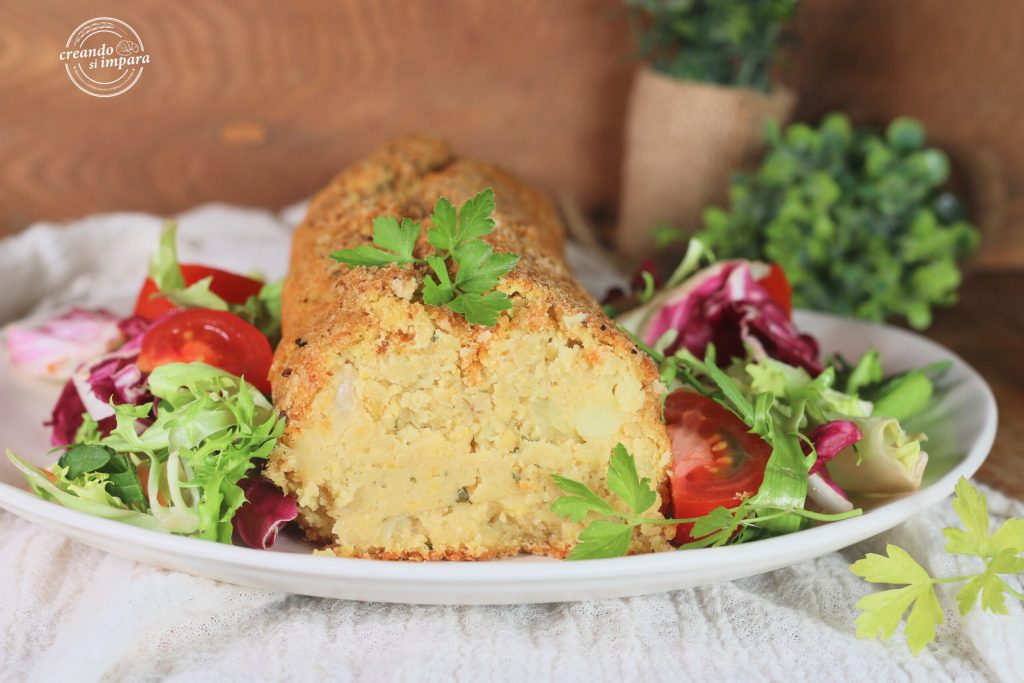
If you’re looking for an alternative to the usual mains, the chickpea and potato loaf will amaze you with its simplicity and the richness of its aromas. This recipe combines the creaminess of chickpeas with the structure of boiled potatoes, creating a soft mixture that holds up perfectly during oven baking. Preparing the vegetarian loaf is an excellent way to add legumes to your everyday diet with creativity, bringing to the table a dish that smells of home and authenticity, perhaps with your cat snoozing peacefully while the kitchen fills with a delightful lemon and parsley scent. Follow my steps to achieve a golden crust and a tasty interior!
If you love vegetable loaves try the lentil loaf, the vegetable loaf, the vegan potato loaf or the cannellini bean loaf.
OTHER LEGUME RECIPES
- Difficulty: Easy
- Cost: Inexpensive
- Rest time: 12 Hours
- Preparation time: 30 Minutes
- Cooking time: 1 Hour
- Portions: 8 People
- Cooking methods: Stovetop, Oven, Boiling
- Cuisine: Italian
- Seasonality: All seasons
Ingredients for preparing the chickpea and potato loaf
- 3 2/3 cups cooked chickpeas (about 21 oz)
- 2 cups boiled potatoes (about 14 oz)
- 1 onion
- 1 tablespoon chopped parsley
- to taste salt and pepper
- 3 tablespoons soy sauce (soy sauce)
- 3 tablespoons breadcrumbs
- 2 tablespoons extra virgin olive oil
- to taste lemon zest
Steps to prepare the chickpea and potato loaf
To begin, give proper attention to cooking the base ingredients. If you use dried chickpeas, soak them overnight and cook them in a pressure cooker with unsalted water for about 45 minutes after the whistle. At the same time, peel the potatoes, cut them into even chunks and steam them using a steamer basket; in a pressure cooker they will take about 15 minutes. Once cooked, drain the chickpeas well and let the potatoes cool slightly. It is essential that both ingredients are well dried to ensure the right consistency for the final loaf mixture.
In a large blender or food processor, add the diced onion, the well-drained chickpeas, the soy sauce and a grating of lemon zest. Start pulsing, adding if necessary one tablespoon of the chickpea cooking water to help the blades move without making the mixture too runny. The soy sauce not only gives a deep savory note but also helps to give the mixture an inviting amber color, while the lemon balances the sweetness of the legumes.
Once you have a thick chickpea cream, add the boiled potatoes to the blender, the chopped parsley, pepper and a pinch of salt (be careful not to overdo it, as the soy sauce is already salty). Blend a few more seconds until you obtain a homogeneous and compact foam. Brush a sheet of baking paper with olive oil and sprinkle it with some breadcrumbs. Put the mixture in the center and, helping yourself with the paper, shape it into the classic loaf, compacting it with your hands to avoid air pockets inside.
Season the surface with a final drizzle of oil and roll the baking paper around the mixture, closing it like a candy to retain moisture during the first phase of cooking. Bake in a preheated convection oven at 356°F for about 30 minutes. If you want a crispier surface, in the last 5 minutes you can slightly open the paper. Once out of the oven, let the chickpea loaf cool for at least 15 minutes before slicing: resting is essential so that the fibers of the potatoes and chickpeas stabilize, allowing you to obtain perfect, intact slices.
Tips for a perfect result
Dry the potatoes well: If the potatoes absorb too much water during cooking, the mixture will be too soft. Steaming is the best method, but if you boiled them in water, be sure to mash them while they’re still hot to let excess moisture evaporate.
The importance of lemon zest: Don’t skip this ingredient! The citrus note of lemon helps “clean” the palate from the heaviness typical of chickpeas and potatoes, making the loaf much fresher and more pleasant, especially when served warm.
The right texture: If you prefer a more rustic texture, don’t blend everything finely. You can mash part of the chickpeas with a fork and blend the rest; this will give the loaf a more interesting bite.
Delicious variations you can try
Spinach center: You can enrich the loaf by inserting a layer of pan-sautéed spinach with garlic and oil in the center. When sliced, the color contrast between the yellow chickpea mixture and the deep green spinach is beautiful and the flavor even more complete.
Ginger touch: For a more “fusion” and spicy version, add one teaspoon of freshly grated ginger together with the lemon zest. It pairs wonderfully with the soy sauce and gives the dish a burst of energy.
Seed coating: Mix the surface breadcrumbs with poppy seeds or black sesame seeds. Besides adding a delicious crunchy note, it will make your chickpea loaf look very elegant for a formal dinner.
Storage and suggestions
In the refrigerator: The loaf keeps perfectly for 2-3 days in an airtight container. In fact, the day after the texture will be even firmer and the flavors more balanced.
Great served cold too: In summer or for a packed lunch, this loaf is delicious at room temperature, perhaps accompanied by a yogurt and mint sauce or a simple tomato salad.
Freezing: You can freeze the loaf already sliced. Just pop it in a hot oven for a few minutes or a skillet to restore crispness to the exterior.
Now it’s your turn!
The chickpea and potato loaf proves that with a few humble ingredients you can create a dish worthy of special occasions. It’s a versatile, healthy recipe that tastes like home. I love making it over the weekend so it’s ready for quick lunches during the week: it’s a reliable dish that never disappoints!
And you, how do you prefer to serve it? With a classic vegan mayonnaise or a bolder mustard sauce? Tell me in the comments—I’m curious to read your preferences!
FAQ (Questions and Answers)
Can I use canned chickpeas?
Absolutely! If you’re short on time, precooked chickpeas work fine. Just remember to rinse them very well under running water to remove excess salt and the preserving liquid.
The mixture is too sticky, what should I do?
If the mixture sticks too much to your hands, add another tablespoon of breadcrumbs or some chickpea flour. The consistency should be similar to a very thick purée that can still be shaped easily.
Can I omit the soy sauce?
Yes, you can replace it with salt and, if you want to keep that special savory touch, a teaspoon of nutritional yeast flakes or a chopped, desalinated caper mixture.
