
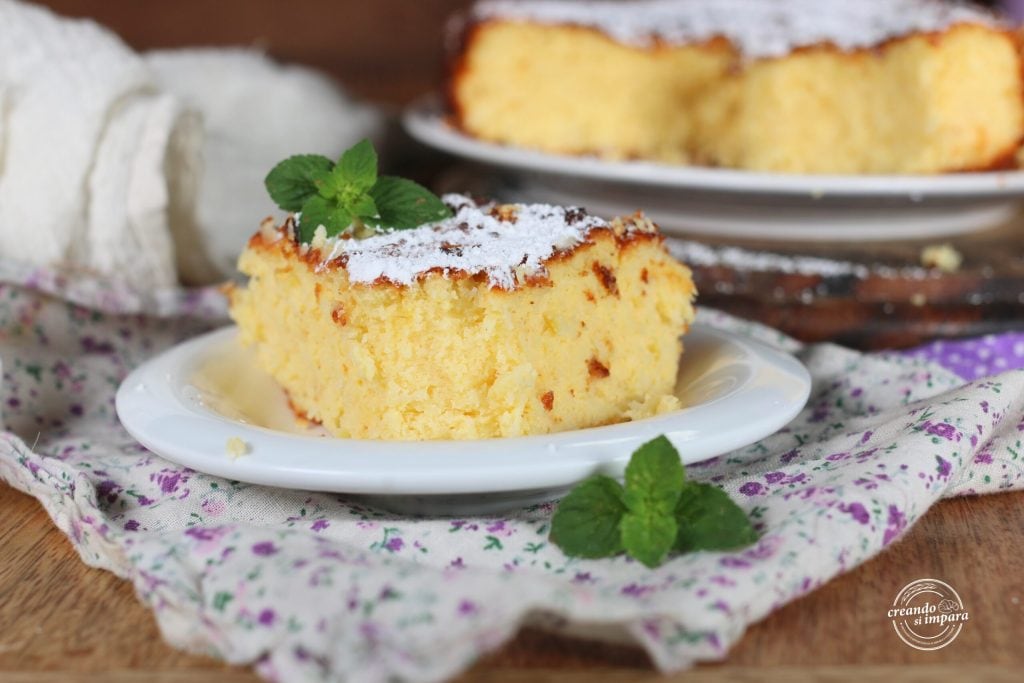
If you’re looking for a dessert that’s creamy yet light, the coconut and ricotta cake is exactly what you need. It’s quick to make and has an almost velvety texture that wins you over from the first bite. It’s the perfect dessert to serve at the end of a meal or for a wholesome afternoon snack, especially if you enjoy fresh pairings. In this version, the delicacy of fresh ricotta blends with the exotic aroma of grated coconut, creating an irresistible mix. Without butter and without flour, this coconut cake is also perfect for anyone looking for a lighter treat that’s still full of flavor. Follow me in the kitchen and discover how to make it!
If you’re looking for other flourless recipes try the flourless almond cake, the lemon ricotta cake without flour, the ricotta cake without flour or the flourless chocolate and hazelnut cake.
Find among all my DESSERTS the one that’s right for you!
Follow my FACEBOOK PAGE HERE for lots of daily kitchen ideas!
OTHER RICOTTA DESSERTS
- Difficulty: Easy
- Cost: Budget-friendly
- Preparation time: 10 Minutes
- Portions: 6 servings
- Cooking methods: Oven
- Cuisine: Italian
- Seasonality: All seasons
Ingredients for preparing the coconut and ricotta cake
- 3 eggs
- 1/2 cup + 2 tbsp granulated sugar
- 1 3/4 cups grated coconut (coarsely shredded)
- to taste grated lemon zest
- 1 1/4 cups fresh ricotta (cow)
- 1 pinch salt
Steps to prepare the coconut and ricotta cake
In a large bowl, break the 3 eggs (make sure they are at room temperature to improve volume and stability). Start beating with an electric mixer at the highest speed, gradually adding the granulated sugar. Continue whipping patiently for at least 6–7 minutes, until the mixture is pale, voluminous and visibly foamy. This step is the real technical secret of the recipe: the air incorporated during this phase will allow the coconut and ricotta cake to rise and stay soft, compensating for the complete absence of flour and leavening agents in the batter.
At this point, slightly reduce the mixer speed and add the fresh ricotta. It is essential that the ricotta has been well drained of its whey beforehand so as not to add excess liquid that would compromise the bake. Work the mixture with the electric beaters until you obtain a smooth, velvety cream completely free of lumps. Proceed gently so as not to deflate the egg foam you just created, ensuring the dairy is perfectly incorporated while keeping the batter well aerated.
Add the grated zest of one organic lemon (being careful not to include the bitter white pith), a pinch of salt and finally the grated coconut. For this step, I strongly recommend setting the electric beaters aside and using a hand whisk or a silicone spatula. Mix with slow, circular movements, folding from bottom to top, until the batter is perfectly homogeneous. You will obtain a dense, fragrant mixture full of flakes, ready to become your favorite coconut cake.
Wet a sheet of parchment paper under running water, wring it out well to make it pliable and use it to carefully line an 8–9 in (20–22 cm) cake pan. Pour the batter and level it with the back of a spoon to ensure even baking across the surface. Bake in a preheated conventional oven (or 356°F for convection) for about 30 minutes. The cake is ready when the surface is nicely golden and firm to the touch. Let the coconut and ricotta cake cool completely in the pan before unmolding, then bring it to the table decorated with a dusting of powdered sugar or a tempting drizzle of melted dark chocolate.
Tips for perfect results
Choosing the ricotta: For impeccable results, use very fresh cow’s ricotta but make sure to let it drain in a sieve for at least an hour. This prevents excess whey from making the batter too wet or heavy.
Room temperature eggs: Remember to remove the eggs from the fridge at least half an hour before. If they’re at room temperature, they will whip much more easily, incorporating the air needed to give structure to the cake without using flour.
The lemon zest: Grate the zest only at the last moment and directly over the batter. This way the essential oils won’t evaporate and the citrus aroma will be incredibly intense and long-lasting.
Delicious variations you can try
Chocolate chips: If you love contrast, add 60 g (about 2 oz) of dark chocolate chips chilled in the freezer. Lightly toss them in flour (or a pinch of cornstarch) before folding them in to prevent sinking to the bottom of the pan.
Orange version: If you prefer a more autumnal flavor, replace the lemon zest with the zest of a organic orange. Orange pairs divinely with the sweetness of grated coconut, creating a warm and enveloping aroma.
Extra topping: Once cooled, you can cover the cake with a quick glaze made from melted dark chocolate and a splash of milk, or serve it with a raspberry coulis for an elegant tart note.
Storage and suggestions
In the refrigerator: Due to the ricotta, the cake must be stored strictly in the refrigerator. Use an airtight container to prevent the surface from drying out or the dessert from absorbing other food odors.
Serving temperature: Although it’s excellent cold, I recommend letting it sit at room temperature for about 15 minutes before serving. This will allow the texture to return to a velvety consistency and not be overly firm.
Shelf life: The cake stays perfect for about 2–3 days. I do not recommend freezing, as the structure of the ricotta could change once thawed, losing its characteristic softness.
Now it’s your turn!
The coconut and ricotta cake is the perfect treat for anyone looking for a soft, naturally gluten-free and incredibly fragrant dessert. It’s so simple and quick that it will soon become one of your go-to recipes for any occasion, from snack time to the end of a meal!
Do you prefer to serve it simply with a dusting of powdered sugar or can you not resist a drizzle of dark chocolate to make it even more indulgent? Tell me in the comments!
FAQ (Questions and Answers)
Can I use coconut flour instead of grated coconut?
No, it’s preferable to use coarsely grated coconut. Coconut flour is much finer and tends to absorb an excessive amount of liquid, risking a cake that’s too dry and crumbly, losing the creaminess typical of ricotta.
Is it possible to replace granulated sugar with brown sugar?
Certainly. Keep in mind, however, that brown sugar will give the cake a more amber color and a caramel-like aroma, which pairs very well with the flavors of ricotta and coconut.
How can I tell if the cake is properly baked without flour?
Since this is a flourless dessert, the skewer test can be misleading because the interior will always remain slightly moist. Watch the edges: when they begin to pull away slightly from the sides of the pan and the surface is nicely golden and firm to the touch, then the cake is done.
