
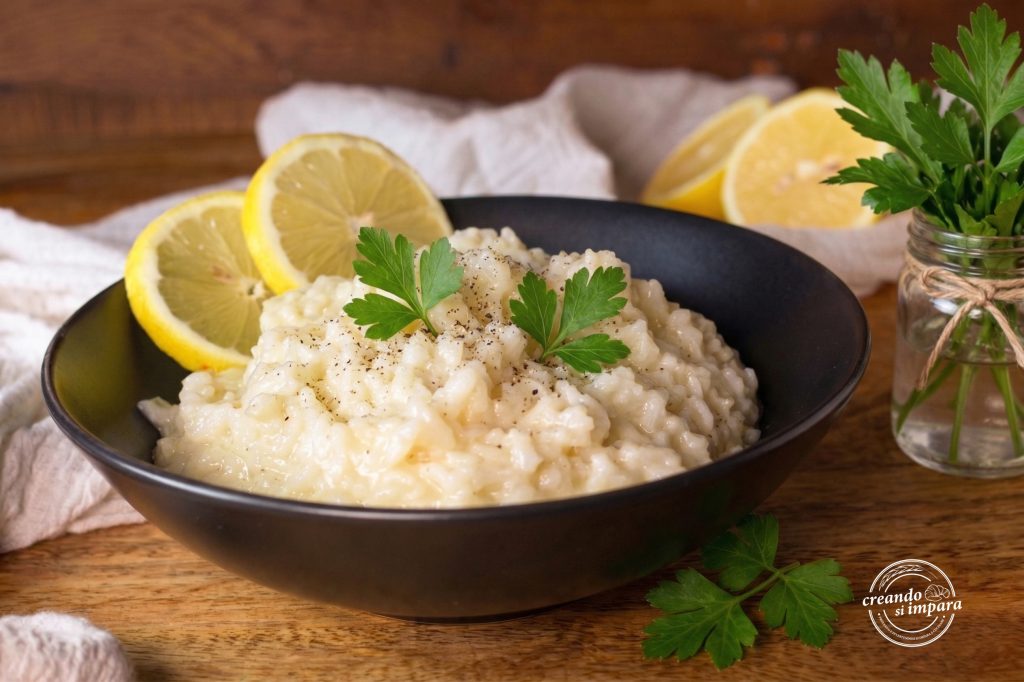
If you’re looking for a first course that makes an impression with its elegance while remaining incredibly easy to prepare, Creamy Lemon Risotto is the perfect choice. It’s not the typical risotto: here the acidic kick of lemon juice is balanced by the sweetness of butter and Parmesan, creating a fresh and enveloping flavor harmony. Making this vegetarian risotto is a foolproof way to bring a breath of freshness to the table, ideal for a light lunch or a refined dinner with friends, as you move around the stove surrounded by an uplifting citrus aroma. Follow my tips for perfect toasting and chef-level creaming!
If you like risottos, try the green asparagus risotto, the tomato risotto, the basil risotto or the lemon risotto.
Browse all my FIRST COURSES to find the one for you.
Follow me on Facebook for many everyday ideas to bring to the table!
OTHER RISOTTOS
- Difficulty: Easy
- Cost: Budget-friendly
- Rest time: 5 Minutes
- Preparation time: 10 Minutes
- Cooking time: 15 Minutes
- Portions: 4
- Cooking methods: Stovetop
- Cuisine: Italian
- Seasonality: All seasons
Ingredients for preparing lemon risotto
- 1 3/4 cups Carnaroli rice
- 4 1/4 cups vegetable broth (hot)
- 1 organic lemon with edible peel
- 3 tbsp butter
- 1 oz grated Parmesan
- 1 tbsp chopped parsley
Tools for preparing lemon risotto
This post contains affiliate links
- Saucepan
Steps to prepare lemon risotto
The secret for a grain that keeps its texture is to toast it. In a wide saucepan, toast the Carnaroli rice dry, without adding fats (oil or butter), until the grains are warm to the touch and almost translucent. At this point, deglaze with the strained lemon juice (filtered beforehand to remove any seeds). Let the most aggressive part evaporate until the rice has absorbed all the liquid, releasing an intense citrus aroma that will form the base of the dish.
Start adding the hot vegetable broth one ladle at a time. It’s essential not to add the next portion until the previous one has been fully absorbed by the rice. Stir frequently: this action helps the rice release its starch, guaranteeing the typical creaminess of lemon risotto. Continue like this for about 15-18 minutes, bringing the rice almost to full doneness while keeping it slightly al dente to preserve its structure.
When the rice is ready, remove the saucepan from the heat: this step is crucial to avoid “breaking” the fats. Add the very cold butter straight from the refrigerator and the grated Parmesan. Now add the grated lemon zest (being careful not to include the white pith, which is bitter). Stir vigorously with a wooden spoon to obtain the “wave” effect. The temperature difference between the hot rice and the cold butter will create a perfect, glossy emulsion.
Cover the saucepan with a clean kitchen towel and let the risotto rest for a couple of minutes; this allows the flavors to settle and the creaminess to become even more enveloping. Finish by adding the finely chopped parsley and, after a final good stir, serve immediately. The heat of the plate will further release the essential oils of the lemon peel, making every bite of my lemon pasta (or rather, my risotto!) a unique sensory experience.
Tips for a perfect result
Quality lemons: Because you’ll use both the juice and the zest, it’s vital that the lemon is organic and untreated. Sorrento or Sicilian lemons are ideal for their intense aroma and less sharp acidity.
Ice-cold butter: Use butter just taken from the freezer or fridge. The thermal shock is the trick top chefs use for a creamy, glossy finishing without adding cream.
Neutral broth: Make sure the vegetable broth is light and not too salty so it doesn’t overpower the delicacy and fragrance of the lemon.
Delicious variations you can try
Crispy note: Add toasted pine nuts or chopped toasted almonds at the end to provide a “crunchy” contrast to the softness of the lemon risotto.
Thyme aroma: Replace the parsley with lemon thyme leaves for an even more sophisticated and persistent aromatic note.
A touch of pink peppercorn: A sprinkle of freshly ground pink peppercorns will give a beautiful color and a slightly spicy note that pairs wonderfully with citrus.
Storage and suggestions
Immediate consumption: Risotto should be eaten as soon as it’s ready to enjoy its perfect texture. If it remains, it will no longer be as creamy, but you can reuse it.
Creative leftovers: If you have leftover risotto, you can form small croquettes, bread them and fry them: you’ll get delicious lemon arancini.
Preparing the broth: If you have time, prepare the vegetable broth with celery, carrot, onion and a strip of lemon peel to echo the theme of the dish right from the base.
Now it’s your turn!
Creamy Lemon Risotto demonstrates how a few very high-quality ingredients can create a restaurant-worthy dish. It’s sunny, light and incredibly fragrant. Make it for a special Sunday and let yourself be won over by its freshness! Do you prefer your risotto well-creamed and on the “wave” or drier? Tell me in the comments, I’m curious to know how you’ll prepare it!
FAQ (Questions and Answers)
Why do I toast the rice dry?
Dry toasting without fats allows the grain to warm evenly and seal better, maintaining its shape and texture without “frying” prematurely in oil or butter.
Can I use parboiled rice?
For a true creamy risotto, parboiled rice is not recommended because it releases very little starch. It’s better to stick with Carnaroli or, alternatively, Arborio.
Does the lemon juice make the rice sour?
By deglazing at the beginning, the most aggressive part of the acidity evaporates, leaving only the aroma and a pleasant freshness that cleans the palate from the fattiness of the creaming.
