
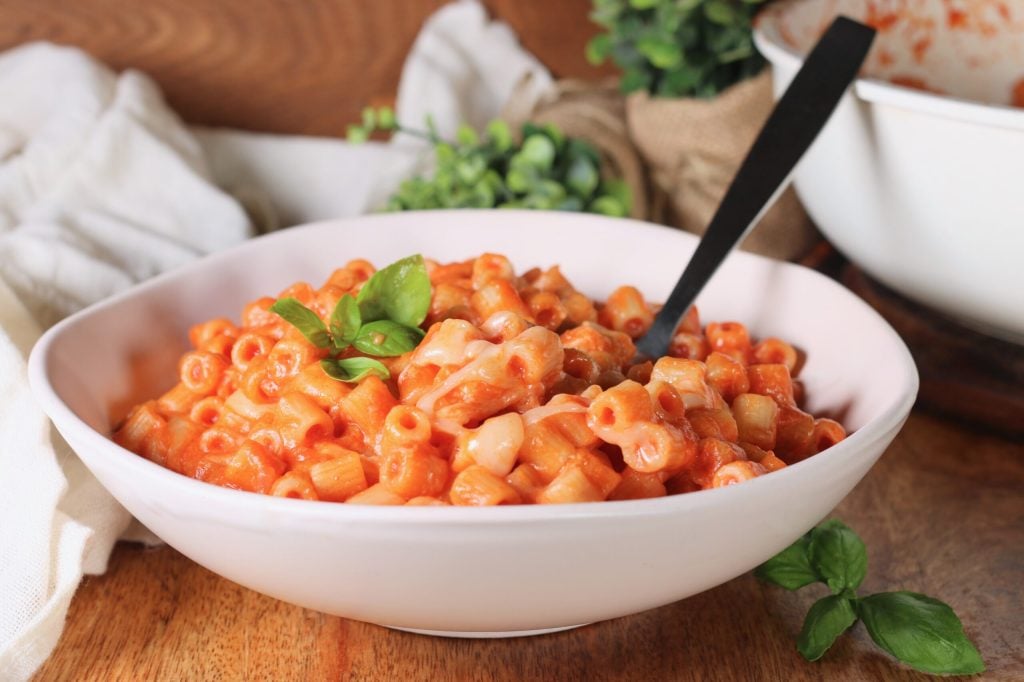
Welcome to my kitchen! Today I want to reveal how to prepare Tomato Creamy Pasta, a main course that will win you over at the first taste. The secret of this preparation lies entirely in the cooking method: the pasta cooks directly in the sauce, just like a risotto, releasing its starch and creating a velvety and irresistible consistency without adding cream.
It is a recipe that speaks of cooking with love and how, with a few genuine ingredients, you can bring a little magic to the table. In this version, the addition of Asiago at the end of cooking creates a dreamy gooey effect. Perfect for those who want to live well without giving up the good flavors of the past, this pasta will surely become one of your favorite “dinner savers.”
If you love creamy first courses, try risoni with peas, stars with pumpkin, risoni with zucchini, or the creamy and gooey pasta with pumpkin!
HERE you can find all my first courses.
Follow me on FACEBOOK to find many great recipes every day.
OTHER GOOEY FIRST COURSES
- Difficulty: Easy
- Cost: Economical
- Preparation time: 10 Minutes
- Portions: 4People
- Cooking methods: Stove
- Cuisine: Italian
- Seasonality: All seasons
Ingredients for the preparation of tomato creamy pasta
- 11 oz small pasta
- 1 onion
- 14 oz tomato sauce
- to taste salt and chili
- A few leaves basil
- 4 tablespoons extra virgin olive oil
- 3.5 oz Asiago cheese
Steps for the preparation of gooey creamy pasta
Start by sautéing the finely chopped onion in a casserole with a drizzle of extra virgin olive oil. When it becomes golden and fragrant, add the tomato sauce, adjust the salt, and add a pinch of chili if you like the spicy touch. Let it flavor for a few minutes: this will be the perfect base for a gooey creamy pasta rich in flavor.
Pour the small pasta directly into the casserole with the sauce and mix well to flavor it. Start adding hot water little by little, just like you would for a risotto, stirring often. This method allows you to obtain a creamy pasta without added fats, thanks to the starch released naturally during cooking.
When the pasta is cooked and still well wrapped in its dressing, turn off the heat. Add fresh basil, adjust the salt, and add the Asiago in cubes (or the cheese of your choice). Stir vigorously and let it rest for a couple of minutes: the result will be a gooey creamy pasta to lick your lips.
Tips for a perfect result
Always boiling water: For a perfect risotto-style cooking, the water must be boiling; if you add it cold, you would block the cooking of the pasta and not achieve the desired creaminess.
Stir often: Just like a risotto, the movement helps the pasta release the starch that will become your natural “binder” for the sauce.
The choice of pasta: Use shapes that have similar cooking times and are of good quality to prevent them from overcooking during the process.
Variants
Cheese change: If you don’t have Asiago, you can use smoked scamorza for a sharp touch, or stracchino if you want a pasta that is more “cream and less stringy.”
Mediterranean flavor: Add a tablespoon of capers or Taggiasche olives in the initial sauté to give an extra flavor boost.
Crispy touches: Before serving, you can sprinkle with toasted breadcrumbs in a pan with a drizzle of oil to create a contrast with the softness of the pasta.
Storage
In the fridge: If there are leftovers, you can store it in an airtight container in the fridge for one day.
How to reheat it: When consuming it, add a splash of water or milk and heat it in a pan over low heat to make the cheese gooey again.
Freezing not recommended: Being a pasta very rich in starch and cheese, freezing would alter its texture too much.
Now it’s your turn!
I hope you like this Tomato Creamy Pasta as much as I do! It’s incredible how a small change in the cooking method can make such a big difference. What’s your favorite pasta shape for these creamy recipes?
If you prepare this recipe, take a photo and share it on social media by tagging me: I love seeing your gooey creations and reposting them! Leave me a comment below to let me know if you liked it.
FAQ (Questions and Answers)
What type of pasta is best to use?
Short shapes like ditalini, shells, or mezze maniche are ideal because they perfectly capture the creamy dressing.
Can I use vegetable broth instead of water?
Yes, the broth will give even more flavor to the pasta, but make sure it’s not too salty to not cover the tomato taste.
How do I know how much water to add?
Add one ladle at a time: the pasta must always be covered at the surface, but not “drowned” in liquid.
