Cacio e Pepe: The Trick for a Dreamy Cream. The Creaminess Showdown: Pecorino or a Mix with Grana?
Cacio e Pepe is the testing ground for every lover of Roman cuisine. The traditional recipe strictly requires Pecorino Romano PDO aged cheese and black peppercorns crushed at the moment. However, many chefs and enthusiasts nowadays choose the mixed version with Grana Padano. Why? Pecorino Romano has a pungent saltiness and an explosive personality that, if not managed with technical mastery, can be excessive or cause the cheese to “string” too quickly.
Adding a portion of Grana Padano (or Parmigiano) helps round off the dish’s edges, giving a sweet note and a more balanced umami. This “gentle” version facilitates emulsification, making the texture silky and less prone to lumps—ideal for those who want a gourmet yet balanced plate. Whether you are a pecorino purist or a mixer innovator, the secret remains the starch of the pasta.
The Secret of Tradition: Only Pecorino and Pepper
Despite modern variants, the original recipe (kindly shared with me by Prof. Cuda, Head of ENT at the Piacenza Hospital) remains a sacred ritual made of only three ingredients: pasta (tonnarelli or spaghetti), pepper and pecorino. For purists, Grana is a heresy because it tones down the wild character of the Lazio transhumance. In the authentic version, the cheese must be grated very finely, almost like a veil, so it melts instantly on contact with the starchy cooking water (the so-called “white gold”). Toasting the pepper in a pan is crucial: the heat releases essential oils, turning a simple seasoning into an aromatic essence that envelops every single strand of spaghetti.
Remember: the heat must be off before adding the cheese cream. It is this controlled thermal shock that creates the magic, transforming humble ingredients into a high-cuisine masterpiece envied around the world.
Below are other delicious pasta sauces:
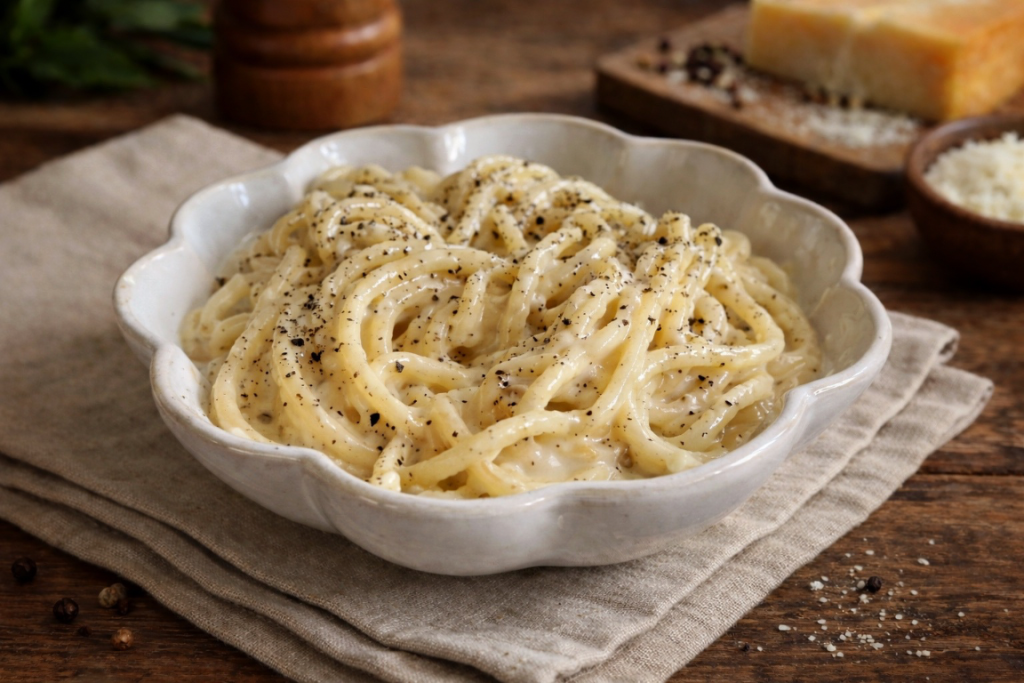
- Difficulty: Medium
- Cost: Very inexpensive
- Preparation time: 10 Minutes
- Portions: 4 Servings
- Cooking methods: Stovetop
- Cuisine: Italian
- Seasonality: Autumn, Winter and Spring
- Energy 355.48 (Kcal)
- Carbohydrates 32.28 (g) of which sugars 0.58 (g)
- Proteins 18.38 (g)
- Fat 16.71 (g) of which saturated 9.40 (g)of which unsaturated 2.02 (g)
- Fibers 2.43 (g)
- Sodium 2,406.29 (mg)
Indicative values for a portion of 555 g processed in an automated way starting from the nutritional information available on the CREA* and FoodData Central** databases. It is not food and / or nutritional advice.
* CREATES Food and Nutrition Research Center: https://www.crea.gov.it/alimenti-e-nutrizione https://www.alimentinutrizione.it ** U.S. Department of Agriculture, Agricultural Research Service. FoodData Central, 2019. https://fdc.nal.usda.gov
Ingredients
- 14 oz spaghetti (or tonnarelli)
- 5 oz Pecorino Romano (aged, grated)
- 2 oz Parmigiano Reggiano PDO (grated, 24/30 months)
- to taste salt
- 0.4 oz black peppercorns
Tools
- Pan Lagostina Edera, set of 2 nonstick pans 9.5/11 in with titanium coating for fat-free cooking, compatible with gas stovetops, Thermo-signal technology
- Electric grater Moulinex DJ755G10 Fresh Express Plus slicer and electric grater, 5 cutting functions, 150 W, 1 L, 1 dB, plastic, red
Steps cacio e pepe the trick for a dreamy cream
While the pasta cooks in lightly salted water (pecorino is already very salty), crush the peppercorns in a mortar or roughly grind them. Toast them in a wide pan over low heat until they release their aroma. Then, “deglaze” the pepper with a ladle of the cooking water: the starch will start to create an aromatic base.
2. The Pecorino Paste
In a bowl, grate the Pecorino Romano very finely. Add the cooking water little by little, one tablespoon at a time, whisking with a whisk or fork.
The secret: You must obtain a thick, grainy paste, not a liquid. The heat of the pasta will turn it into a smooth cream afterward.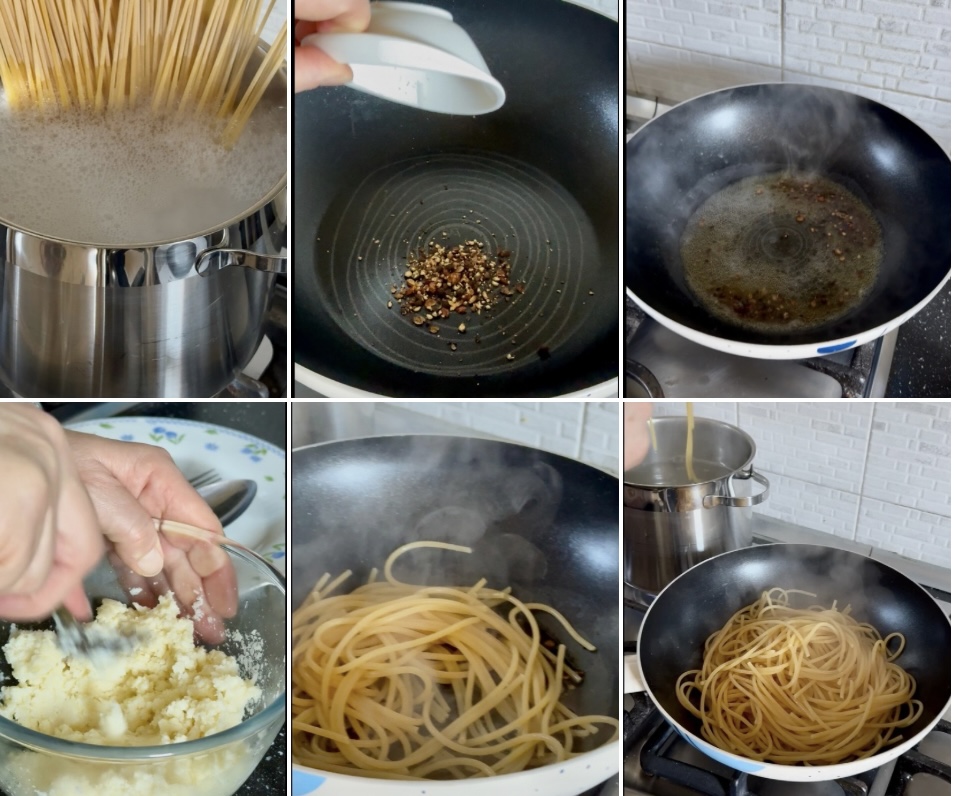
Drain the pasta very al dente (about 3–4 minutes before the package time) and toss it directly into the pan with the pepper. Finish cooking by adding cooking water as needed, tossing continuously to release the starches. When the water has become a veiled emulsion and the pasta is cooked, turn off the heat.
4. Finishing and Rest
This is the critical moment: remove the pan from the hot burner and let it rest for about a minute. The temperature must fall below 149°F to avoid the cheese becoming stringy. Add the pecorino paste and mix vigorously (or toss decisively). If necessary, add a final splash of water to adjust fluidity.
5. Plating
Serve immediately, finishing with a final sprinkle of freshly ground pepper for the last touch of freshness.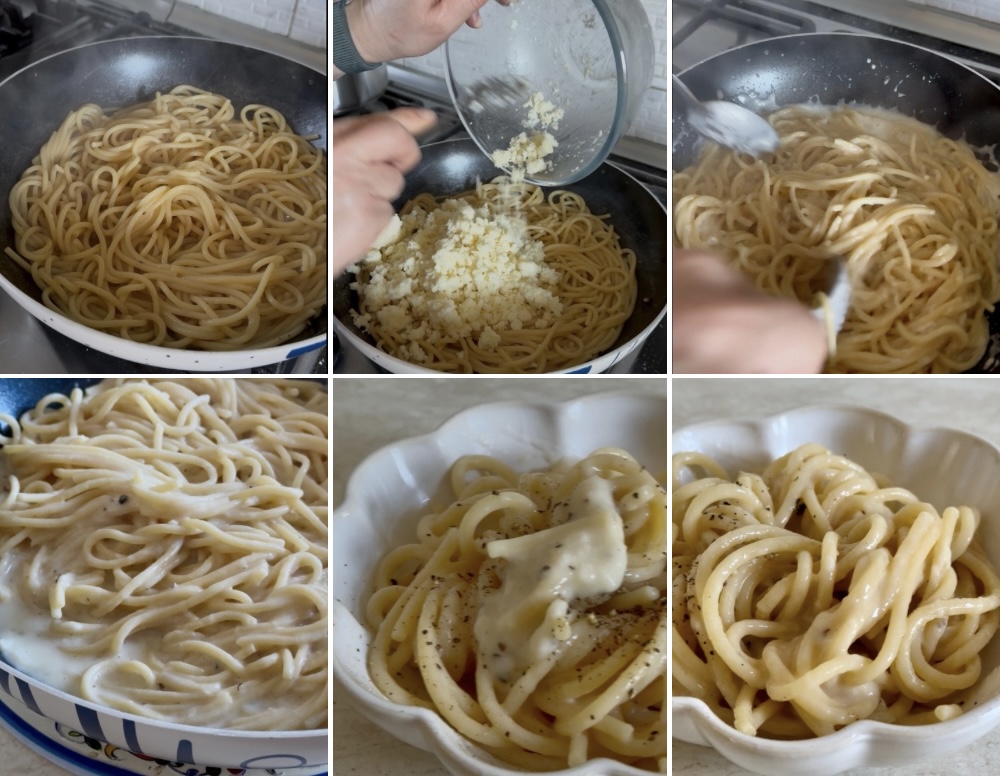
Tips, notes, variations for cacio e pepe the trick for a dreamy cream
1. The “Three-Pepper” Variation
Instead of using only classic black pepper, create a blend to add aromatic complexity:
Black Pepper (60%): for the pungent base and heat.
Sichuan Pepper (20%): adds a citrusy note and a slight fresh “tingle”.
Long Pepper or Pink Peppercorn (20%): for floral and woody notes.
Tip: Toast the whole peppers before roughly crushing them for an explosion of fragrance.
2. The “On Ice” Variation (Modern Method)
Used by some top chefs to guarantee extreme creaminess without the risk of lumps:
The trick: Blend the pecorino with ice and a little cold water instead of hot water.
Result: You obtain a stabilized cold cream that, once it meets the hot pasta (with the heat off), melts instantly without ever separating or becoming stringy.
3. Fragrant Variation (Lemon and Mint)
A touch of freshness perfect for summer:
Addition: Grate the zest of organic lemon directly over the finished plate and add a small leaf of finely chopped mint.
Effect: The fat of the pecorino is “cut” by the aromatic acidity of the lemon, making the dish feel lighter.
FAQ (Questions and Answers)
Why does my Cacio e Pepe form lumps?
Lumps form when the cheese temperature exceeds 149°F, causing the proteins to separate. To avoid this, always finish off heat and away from the burner, adding cooking water little by little.
Which pasta to choose for perfect creaminess?
Choose starch-rich pastas like fresh tonnarelli or Gragnano-spun bronze-drawn spaghetti. The rough surface holds the pecorino cream better and releases more starch in the pan during the “risottatura”.