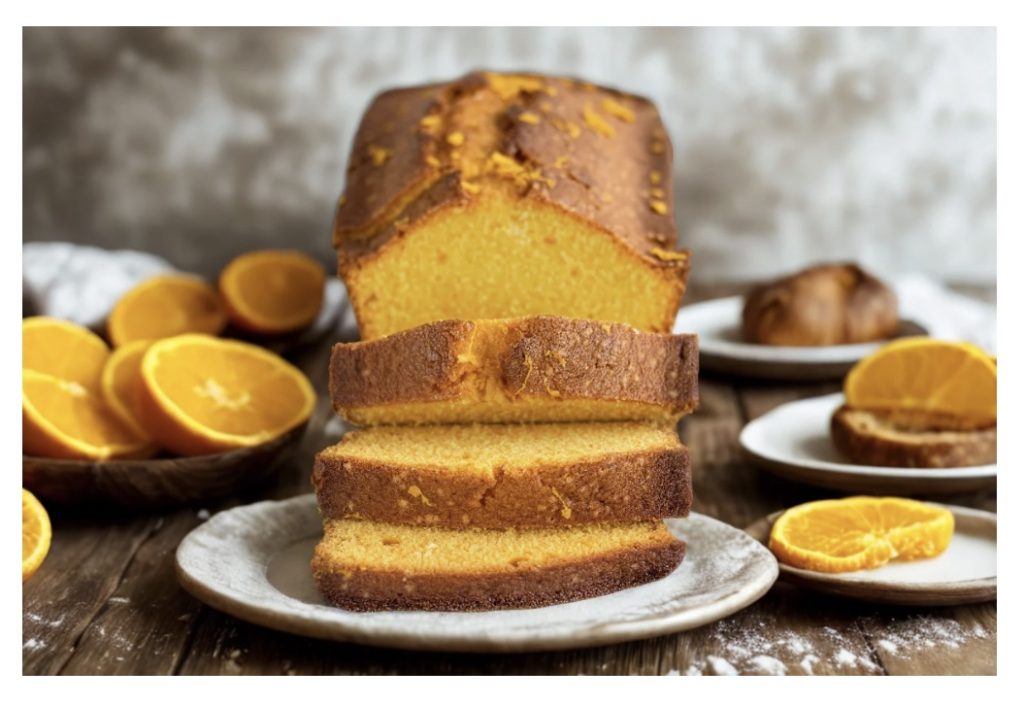
Orange Loaf: The Soft Cake That Will Change Your Breakfast!
If you’re looking for an easy, quick and incredibly fragrant dessert, the Orange Loaf is a recipe that can’t be missing from your cookbook. This cake, with a soft and moist texture, has a secret: it’s made using the whole orange, peel included! The result is an intense, authentic aroma that fills the whole house while baking, turning the environment into an explosion of citrus scents.
Perfect to start the day with energy or for a tasty snack, the Orange Loaf is also extremely practical: all the ingredients are blended together, minimizing preparation time and the number of dishes to wash. Goodbye to large amounts of butter and oil; the vegetable oil used in this recipe, together with the orange pulp and peel, guarantees unmatched softness and a cake that stays fresh for several days. Make it once and it will become your go-to in the kitchen!
The secrets for a perfect Orange Loaf
The success of your Orange Loaf largely depends on the quality of the orange. Always choose an organic, untreated citrus fruit, since you’ll be using the peel too. Wash it thoroughly and cut it into pieces, removing only the seeds. This practice not only intensifies the flavor but also helps keep the batter exceptionally moist. When you blend the orange with the oil, make sure to obtain as homogeneous a cream as possible: any coarse pieces could alter the final texture of the cake.
Another essential tip is to whip the eggs with the sugar well: this step is crucial to incorporate air and ensure the cake’s lightness. Finally, when you add the flour and baking powder, fold gently, preferably by hand with a spatula, so as not to deflate the mixture and to keep all the incorporated air. The magic of this dessert lies precisely in its simplicity, which hides surprising goodness and a versatility that will allow you to experiment with new variations.
Here are other orange desserts:
- Difficulty: Very easy
- Cost: Very inexpensive
- Preparation time: 5 Minutes
- Portions: 6Servings
- Cooking methods: Oven
- Cuisine: Italian
- Seasonality: Fall, Winter and Spring
- Energy 452.77 (Kcal)
- Carbohydrates 60.04 (g) of which sugars 36.00 (g)
- Proteins 5.42 (g)
- Fat 23.07 (g) of which saturated 3.49 (g)of which unsaturated 18.64 (g)
- Fibers 0.98 (g)
- Sodium 19.65 (mg)
Indicative values for a portion of 260 g processed in an automated way starting from the nutritional information available on the CREA* and FoodData Central** databases. It is not food and / or nutritional advice.
* CREATES Food and Nutrition Research Center: https://www.crea.gov.it/alimenti-e-nutrizione https://www.alimentinutrizione.it ** U.S. Department of Agriculture, Agricultural Research Service. FoodData Central, 2019. https://fdc.nal.usda.gov
Ingredients
- 3 tbsp powdered sugar
- 1/2 orange (juice)
- 1 orange (whole with peel)
- 6 oz granulated sugar (about 3/4 cup)
- 1/2 cup vegetable oil (about 4.4 fl oz)
- 2 eggs
- 2 1/2 tsp baking powder
- 1 2/3 cup all-purpose flour
Tools
- Chopper Moulinex DJ5201 Moulinette Essential, 4 sharp blades, chops, mixes and minces, chopper, bowl capacity 400 ml, 300 W, White
- Loaf pans GOURMEO loaf pan – rectangular silicone loaf mold – pan for bread and sweet loaves – batter capacity 300 g – oven safe up to 446°F – 8.7 in
Orange Loaf Steps
Wash the orange: Choose an organic orange with untreated peel. Wash it well, dry it and cut it into pieces removing only any internal seeds. Do not peel it.
Preheat and prepare: Preheat the oven to 356°F and grease/flour a loaf pan or a 8-8.7 in cake pan (approximately 20-22 cm).
Blend the orange: Put the pieces of whole orange into the jug of a blender (or food processor) together with the vegetable oil. Blend until you get a smooth cream without coarse pieces.
Create the base: In a separate bowl (or directly in the mixer if large enough), whip the eggs with the sugar until pale and frothy.
Combine: Add the orange-and-oil cream to the whipped eggs, mixing gently.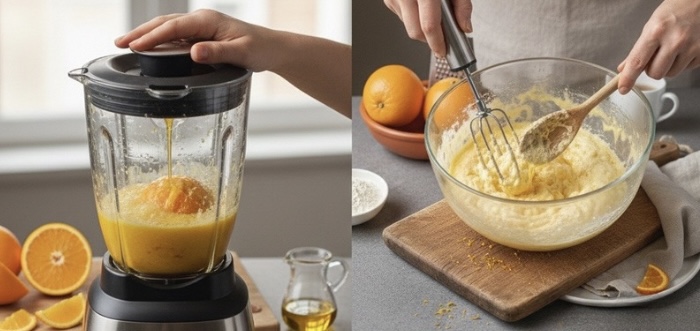
Add the dry ingredients: Sift the flour together with the baking powder and fold them into the batter little by little, mixing with a spatula to avoid lumps.
Baking: Pour the batter into the pan and bake for about 35-40 minutes. Do the toothpick test before removing from the oven.
Orange glaze
While the cake cools, prepare the glaze to make it shiny and even more fragrant:
In a small bowl, put 3 tbsp of powdered sugar.
Add the juice of half an orange one teaspoon at a time.
Stir vigorously until you obtain a thick but pourable consistency (it should “write” when dropped from the spoon).
Pour the glaze over the cake when it is still warm or cooled.
Extra tip: If you want a more intense flavor, you can prick the surface of the hot cake with a skewer before pouring the glaze; the juice will penetrate inside, making it irresistible.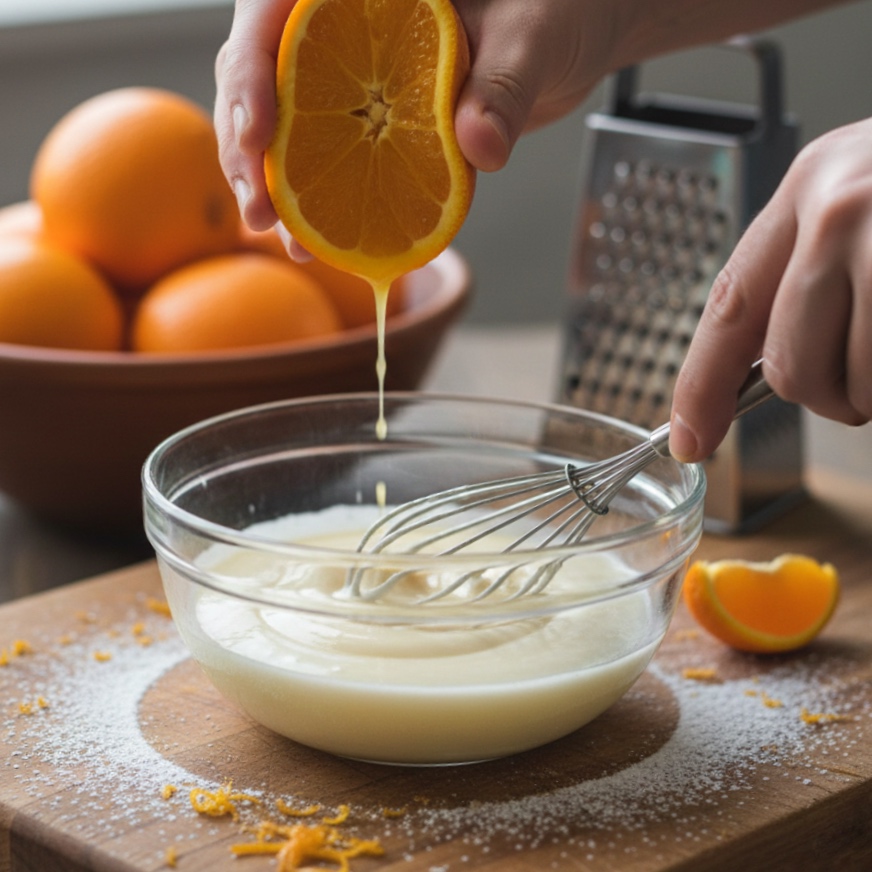
Storage, notes, variations for the orange loaf
For an even more intoxicating aroma, add a teaspoon of vanilla extract or a pinch of cinnamon to the batter.
Baking notes: If the surface browns too much during baking, cover the cake with aluminum foil.
Storage: The Orange Loaf stays soft for 3-4 days at room temperature, well wrapped in cling film or under a cake dome.
Delicious variations:
With chocolate: Add about 1.8–2.8 oz (50–80 g, roughly 1/3–1/2 cup) dark chocolate chips to the batter before baking.
With dried fruit: Stir in a handful of golden raisins or chopped almonds for a crunchy note.
Gluten-Free: You can try substituting the all-purpose flour with a gluten-free flour blend, adding a teaspoon of xanthan gum for better structure.
FAQ (Questions and Answers)
Can I use a non-organic orange?
It is strongly discouraged, since the peel of a non-organic orange may contain waxes or chemical treatments that are not edible.
My cake turned out a bit bitter, why?
This could be due to an excessive amount of the white part (albedo) of the orange, which should be removed carefully if it is too thick.