Pork Cheek with Polenta: The Recipe That Melts in Your Mouth!
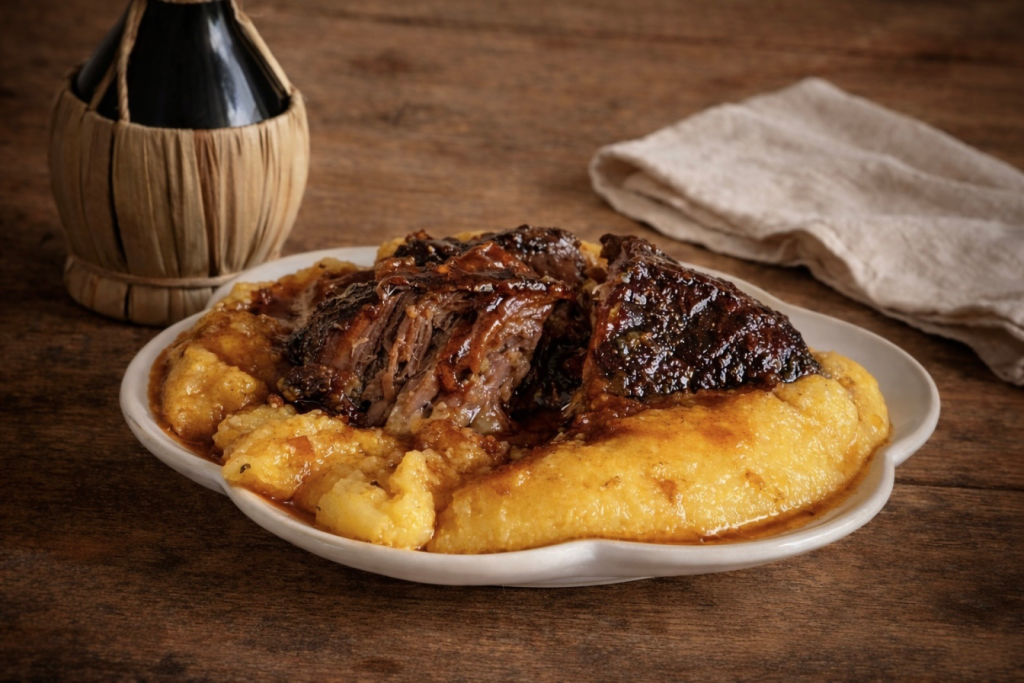
The pork cheek, better known as jowl, represents the essence of Italian slow food cuisine. This cut, once considered less noble, is now the star of gourmet menus thanks to its incredible marbling of fat and connective tissue. During the slow cooking in a mix of red wine and Port, the meat fibers progressively soften, absorbing the aromas of the sauté and the sweet notes of the fortified wine. The result is a dish with a deep, enveloping, and rustic flavor, capable of transforming a winter dinner into an unforgettable sensory experience.
Serving the jowl means celebrating patience in the kitchen, giving diners a texture so tender that it hardly requires the use of a knife, making it the undisputed king of Sunday tables.
The perfect pairing: the creaminess of polenta and the bouquet of Port
There is no jowl worth its salt without a bed of hot polenta. In this version, the use of instant polenta allows for optimized timing without sacrificing taste, creating the perfect contrast with the richness of the Port sauce. The wine reduction is not just a condiment but a true essence that concentrates the flavors of the undergrowth and red fruit, balancing the pork’s savoriness with a touch of acidity and sweetness.
To achieve a true chef’s finish, it is essential to filter or blend the cooking base, ensuring that each bite of meat is nappé (i.e., cloaked) with this glossy and fragrant glaze. The polenta will act as a sponge, collecting every drop of this precious sauce and ensuring a balance of textures between the softness of the meat and the granularity of the cornmeal.
Below are other recipes with pork:
- Difficulty: Easy
- Cost: Economical
- Preparation time: 40 Minutes
- Portions: 4 People
- Cooking methods: Stovetop
- Cuisine: Italian
- Seasonality: Fall, Winter, and Spring
- Energy 445.83 (Kcal)
- Carbohydrates 15.95 (g) of which sugars 2.89 (g)
- Proteins 26.86 (g)
- Fat 15.72 (g) of which saturated 3.63 (g)of which unsaturated 2.16 (g)
- Fibers 2.13 (g)
- Sodium 627.16 (mg)
Indicative values for a portion of 580 g processed in an automated way starting from the nutritional information available on the CREA* and FoodData Central** databases. It is not food and / or nutritional advice.
* CREATES Food and Nutrition Research Center: https://www.crea.gov.it/alimenti-e-nutrizione https://www.alimentinutrizione.it ** U.S. Department of Agriculture, Agricultural Research Service. FoodData Central, 2019. https://fdc.nal.usda.gov
Ingredients
- 1.1 lbs pork cheek
- 2.1 cups red wine
- 0.8 cups Port wine
- 1 carrot
- 1 shallot
- 1.5 cups vegetable broth
- to taste bay leaf
- 1 celery (stalk)
- to taste butter
- to taste extra virgin olive oil
- to taste salt
- to taste pepper
- 1.2 cups instant polenta (or regular)
Tools
- Casserole Enamelled Cast Iron Pot – 26cm Dutch Oven with Lid, Topbooc Round Cocotte Staub Compatible Induction, Gas, Oven, for Bread, Stews, Soups, 5L
- Immersion Blender Moulinex DD4521 Easychef – 2-in-1 Immersion Blender with 800 ml Glass and 500 ml Chopper Accessory, 2 Speeds, Easy to Clean, 450 W Power
- Earthenware Dish Colì, Terracotta Dish with Lid, Artisan Dish, Brown, 24 cm Diameter
Steps Pork Cheek with Polenta
The Searing: In a casserole (preferably cast iron or earthenware), heat a drizzle of oil and a knob of butter. Brown the cheeks well on all sides until they have a golden crust. Remove them and set aside.
The Sauté: In the same pot, add the chopped shallot, carrot, and diced celery. Let them soften gently with the bay leaf.
The Deglazing: Return the meat to the pot, raise the heat, and pour in the red wine and Port. Let the alcohol evaporate for a couple of minutes.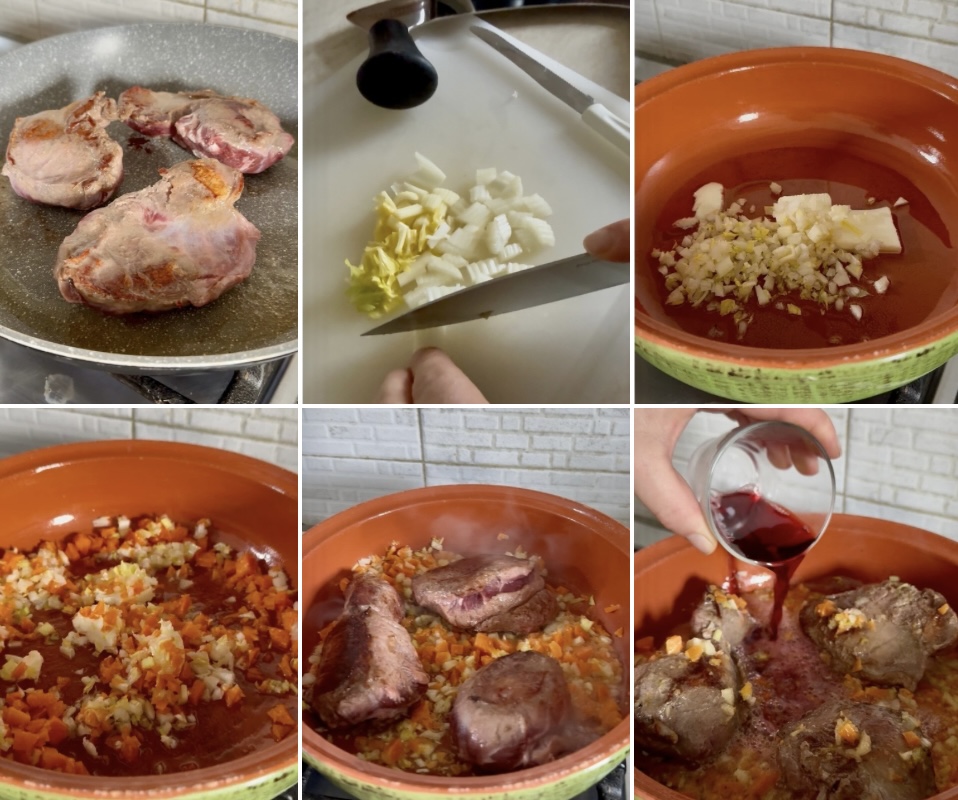
The Slow Cooking: Add the vegetable broth until it almost completely covers the meat. Salt, pepper, cover with the lid, and lower the heat to a minimum. Let it simmer for about 2.5 – 3 hours. The meat is ready when it “slides” off the fork.
The Final Touch: Remove the meat and bay leaf. Blend the cooking base (including the vegetables) to obtain a thick and velvety sauce. If too liquid, reduce it over high heat.
The Polenta: Prepare the instant or regular polenta following the package instructions just before serving, keeping it soft.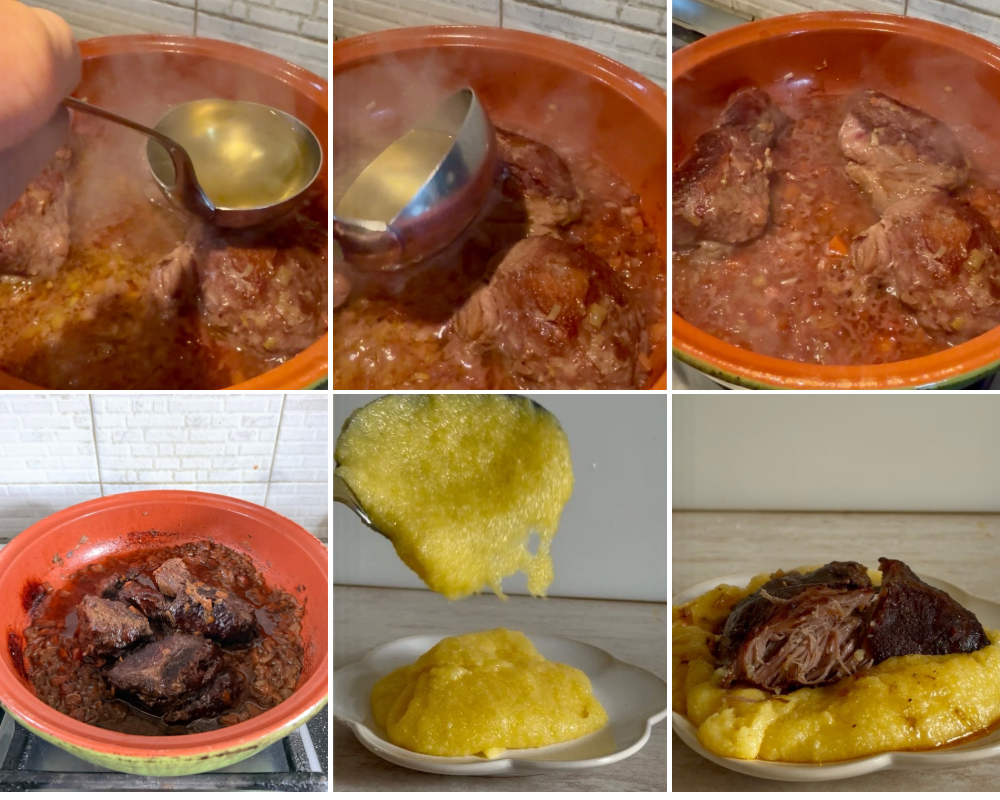
Tips, Notes, Variations for Pork Cheek with Polenta
If you have time, marinate the meat in the wine and vegetables overnight in the refrigerator before cooking it. The depth of flavor will double.
Note: If the sauce is too acidic due to the wine, add a teaspoon of sugar or a knob of cold butter at the end of cooking to gloss and sweeten it.
Here are 3 wines to pair with the dish:
1. The Territory Choice: Valpolicella Ripasso
It is perhaps the most suitable pairing. The Ripasso undergoes a second fermentation on the Amarone pomace, acquiring notes of ripe fruit (plum, black cherry) and a softness that perfectly echoes the sweet note of the Port used in cooking. It has enough structure to stand up to the pork without overpowering it.
2. The Character Choice: Barbera d’Asti Superiore
If you prefer something that better contrasts the fattiness, opt for a Barbera aged in wood. Its natural acidity (freshness) “cuts” literally through the succulence of the cheek, while the toasted and spicy notes pair divinely with the reduced cooking base.
3. The Structure Choice: Aglianico del Vulture
If you want a red wine from the South, Aglianico is perfect. It is a powerful wine, with firm tannins and notes of black pepper and licorice that enhance the rustic flavor of the cheek. It is a pairing for those who love intense and persistent flavors.
FAQ (Questions and Answers)
Can I use only red wine without Port for the Pork Cheek with Polenta?
Certainly. Port adds a sweet and complex note, but you can replace it with another full-bodied red wine (like a Barolo or an Amarone), perhaps adding a pinch of sugar if the wine is very dry.
What can I do if the meat is still tough after two hours?
Don’t despair! Every piece of meat is different. If it’s still tough, it means the collagen hasn’t dissolved yet. Add a ladle of broth and continue cooking for another 30-40 minutes: patience is the main ingredient.