Victoria Sponge Cake: The Queen of English Tea
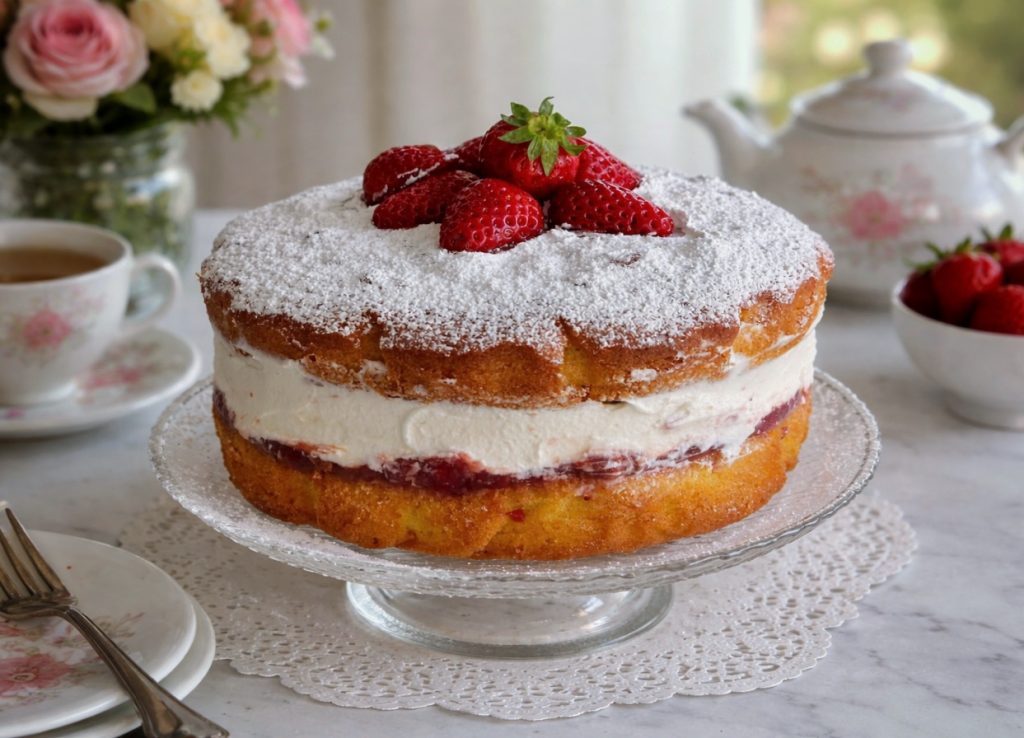
If there is a dessert able to transport you instantly to a blooming English garden, among refined porcelain and the scent of Earl Grey, it is undoubtedly the Victoria Sponge Cake. This cake is not just a simple sponge; it is a British institution named after Queen Victoria, who loved to enjoy a slice during her afternoon ritual. Its beauty lies in its simplicity: two discs of soft sponge, a generous heart of raspberry jam and a veil of whipped cream or buttercream.
Making a perfect Victoria Sponge means mastering the art of balance between lightness and structure. It is the ideal dessert for those seeking an impressive but not overly complicated cake, perfect for celebrating a special occasion or simply making Sunday tea unforgettable with friends or family.
Secrets for a Soft, Tall Victoria Sponge Cake
The Equal-Weight Technique and Ingredient Temperatures
To achieve an impeccable Victoria Sponge Cake, British bakers rely on millimetre precision and choice of ingredients. The traditional method calls for eggs, butter, sugar and flour to have exactly the same weight: this guarantees a stable chemical structure that allows the cake to rise evenly without collapsing.
A common mistake to absolutely avoid is using cold ingredients straight from the refrigerator. The butter must be “creamed” — very soft — to be beaten with the sugar and create the micro-bubbles of air that make the cake cloud-like. Eggs should also be at room temperature to prevent the mixture from “breaking” and separating. Remember to sift the flour at least twice: this extra little step ensures the batter stays airy and lump-free, giving that velvety texture that literally melts in your mouth at the first bite.
More fruit cakes to try below:
- Difficulty: Easy
- Cost: Budget-friendly
- Preparation time: 20 Minutes
- Cooking time: 20 Minutes
- Portions: 10 Pieces
- Cooking methods: Oven
- Cuisine: English
- Seasonality: All seasons
- Energy 457.58 (Kcal)
- Carbohydrates 48.59 (g) of which sugars 32.34 (g)
- Proteins 5.39 (g)
- Fat 27.93 (g) of which saturated 12.58 (g)of which unsaturated 6.00 (g)
- Fibers 0.54 (g)
- Sodium 120.29 (mg)
Indicative values for a portion of 380 g processed in an automated way starting from the nutritional information available on the CREA* and FoodData Central** databases. It is not food and / or nutritional advice.
* CREATES Food and Nutrition Research Center: https://www.crea.gov.it/alimenti-e-nutrizione https://www.alimentinutrizione.it ** U.S. Department of Agriculture, Agricultural Research Service. FoodData Central, 2019. https://fdc.nal.usda.gov
Ingredients
- 4 eggs
- 3/4 cup butter (softened (about 6 oz))
- 3/4 cup + 2 tbsp granulated sugar
- 1 1/3 cups all-purpose flour
- 1 pinch salt
- 1 tsp vanilla extract
- 2 tsp baking powder
- 3/4 cup raspberry jam (or strawberry)
- 3/4 cup + 2 tbsp heavy cream (or buttercream)
- as needed powdered sugar
- 3.5 oz mascarpone
- 2.5 oz sweetened condensed milk
Tools
- Stand Mixer Kitchenaid Artisan Stand Mixer – Tilt-Head with 3 attachments – 4.8 L – Cream Color
- Hand Mixers Moulinex PREP MIX Electric Beater, 450W, 5 Speeds, Turbo, 2 Whisks, 2 Dough Hooks, Stainless Steel, Ergonomic, Dishwasher-Safe Accessories, HM450HF0
- Cake Pans Lagostina Gustosa Springform Pan, Nonstick Oven-Safe Steel, Black, Diameter 8 in
Steps victoria sponge cake
Preparation: Preheat the oven to 356°F. Butter and flour two identical 8-inch pans (or a single tall-sided pan, but the result will be less light).
The batter: In a large bowl, beat the butter with the sugar using electric beaters until you obtain a pale, fluffy, almost white mixture.
The eggs: Add the eggs one at a time, incorporating each well before adding the next. If you see the mixture “break” (separate), add one tablespoon of the measured flour.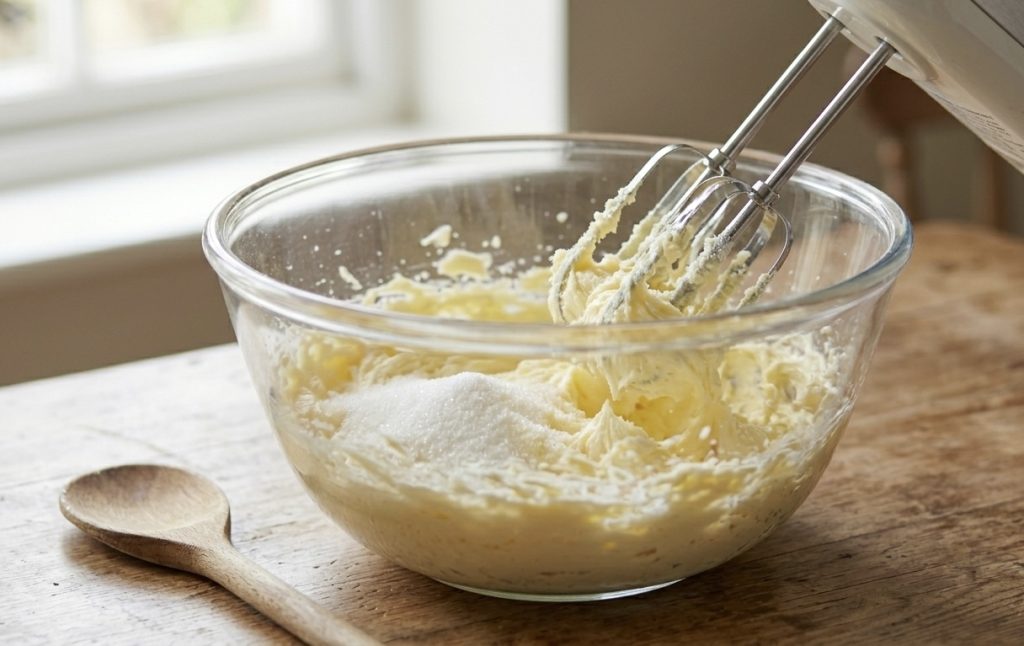
The dry ingredients: Gently fold in the sifted flour with the baking powder and salt using a spatula, using upward motions so as not to deflate the mixture. Add the milk to make the batter fluid (it should fall from the spoon with slight resistance).
Baking: Divide the batter between the two pans and level well. Bake for about 20-25 minutes. The cakes should be golden and spring back when lightly pressed in the center.
Cooling: Let cool in the pans for 5 minutes, then turn out onto a rack. Important: The cake must be completely cold before filling.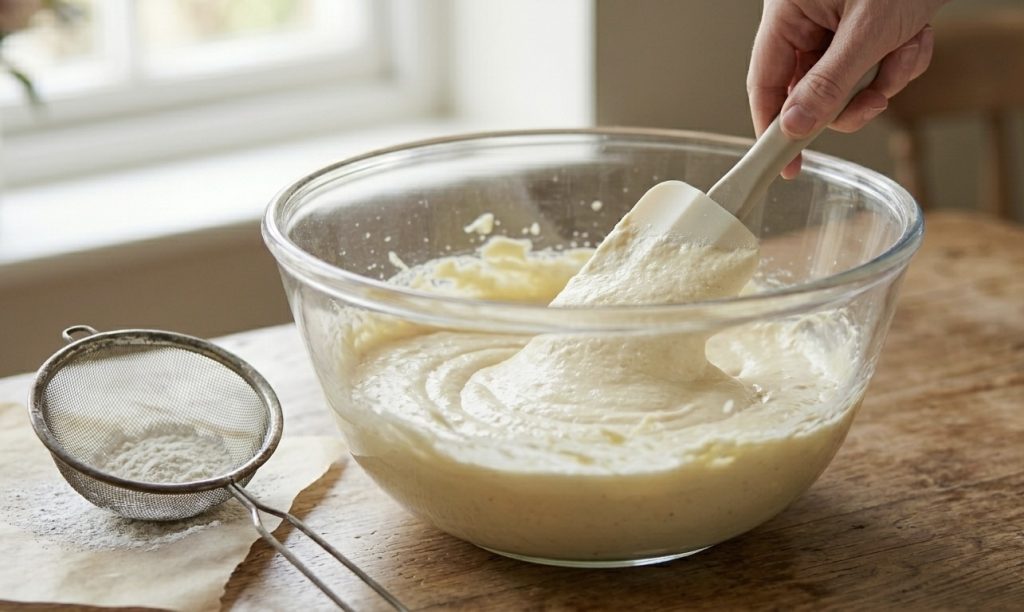
Assembly
Place the first disc on the serving plate.
Spread a generous layer of raspberry jam.
Add the whipped cream on top of the jam (some prefer to keep it simple with only jam, but the cream makes it sublime).
Place the second cake disc on top.
Dust the surface with plenty of powdered sugar.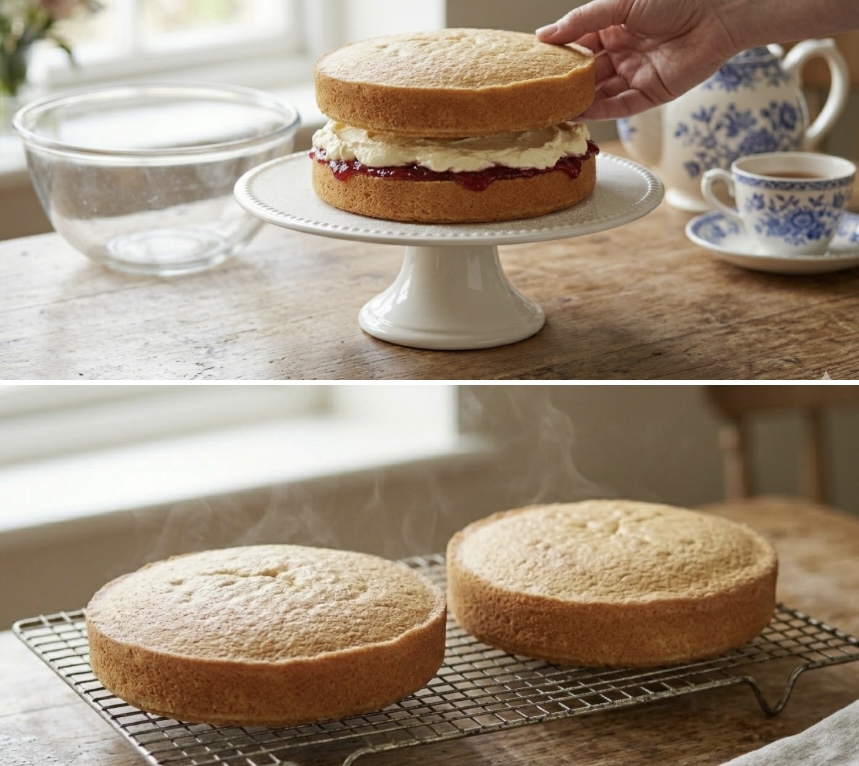
Storage, notes, tips for Victoria Sponge Cake
Once the cake layers are out of the oven, the temptation to fill them immediately is strong, but patience is a virtue of the best bakers. The Victoria Sponge Cake must be completely cold before receiving the jam and cream; otherwise the heat will melt the filling and create an aesthetic mess.
If you want to follow the purest tradition, use a slightly tart raspberry jam to contrast the sweetness of the base. If you prefer a richer version, add a generous layer of very stiffly whipped cream. A final dusting of powdered sugar is the classy finishing touch that cannot be missed.
As for storage: if filled with cream, the cake should be kept in the refrigerator and consumed within two days; if you opt for only jam, it can remain at room temperature under a glass dome, keeping its fragrance and softness like just out of the oven.
FAQ (Questions & Answers)
Can I replace butter with oil?
Technically yes, but you would lose the characteristic flavor and the structural support of a true Victoria Sponge. Creamed butter is essential for its typical texture.
Why did my cake come out flat or tough?
Probably the butter and sugar were not beaten long enough, or you worked the flour too much activating the gluten, which makes the batter chewy instead of tender.