
Soft and Light Margherita Cake without Butter.
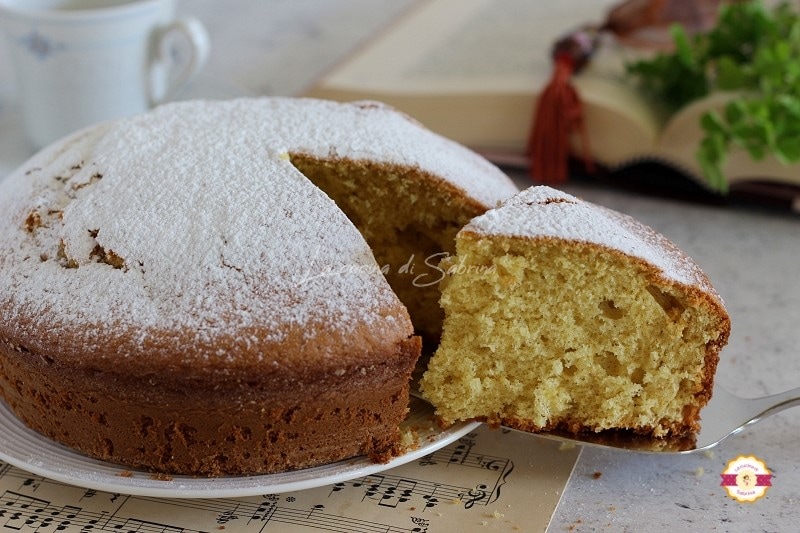
The Margherita cake is a classic of homemade pastries: simple, fragrant, and soft, perfect for breakfast or a genuine snack. In this version, I decided to lighten it by completely eliminating butter, choosing a lighter mix based on oil and also reducing the amount of sugar.
The result? An extraordinarily soft and airy cake, perfect to enjoy sliced even for several days, perhaps accompanied by a cup of tea or milk coffee.
After some experimenting, I found the ideal balance: only 110 g of sugar, which does not compromise the softness, and rice oil as the fat part, with a neutral taste suitable for sweet preparations.
I baked it using the ventilated oven bakery function, which helped it rise well and gave it a light, cloud-like consistency.
To keep it soft longer, I followed a little trick that I will reveal among the tips.
This version is perfect even for the little ones, not too sweet and without heavy fats, and it can be the ideal base for light fillings or enjoyed plain, simply with a dusting of powdered sugar. A dessert that smells of home and simplicity, but with some extra care for those who want to eat well without sacrificing taste.
Before moving on to the soft and light Margherita cake without butter recipe, I recommend taking a look at other interesting recipes and the F.A.Q., tips, and variations at the bottom.
And if you don’t have a Bimby or are without a scale, you will also find adapted versions.
READ THE TIPS, VARIATIONS AND F.A.Q.
OTHER INTERESTING RECIPES NOT TO MISS:
- Difficulty: Very Easy
- Cost: Cheap
- Preparation time: 5 Minutes
- Portions: 8 Pieces
- Cooking methods: Oven
- Cuisine: Italian
- Seasonality: All Seasons
Ingredients
- 3 eggs (medium)
- 110 g granulated sugar
- 90 ml rice oil
- 100 ml oat milk (or other plant-based drink or regular milk)
- 200 g type 1 flour (or 00)
- 1 packet baking powder
- lemon zest (organic)
- vanilla
- powdered sugar
Tools
- 1 Cake Pan 8 inches
- Mixer
- Grater
Steps
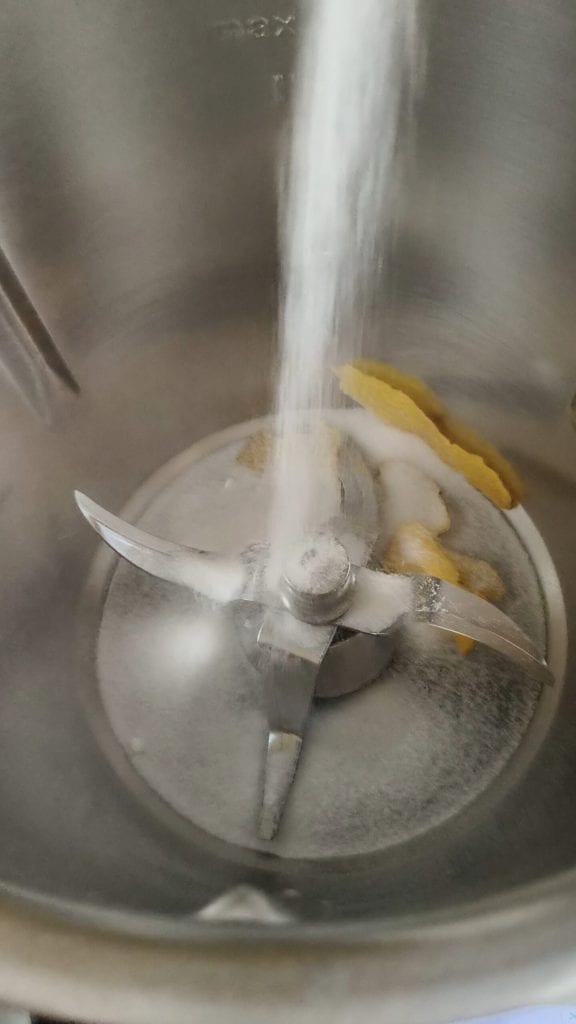
Put sugar and lemon zest in the bowl: 10 sec. speed 10.
Add the eggs:
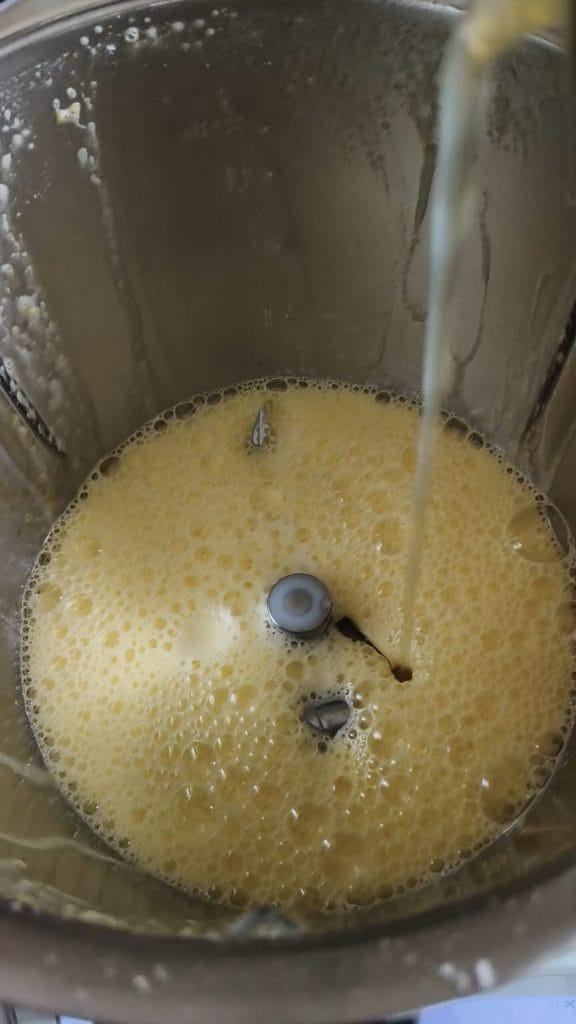
2 min. 98°F (37°C) speed 4 (if the eggs are cold from the fridge) or 1 min. speed 4 (if they are at room temperature).
Pour the rice oil and milk: 30 sec. speed 4.
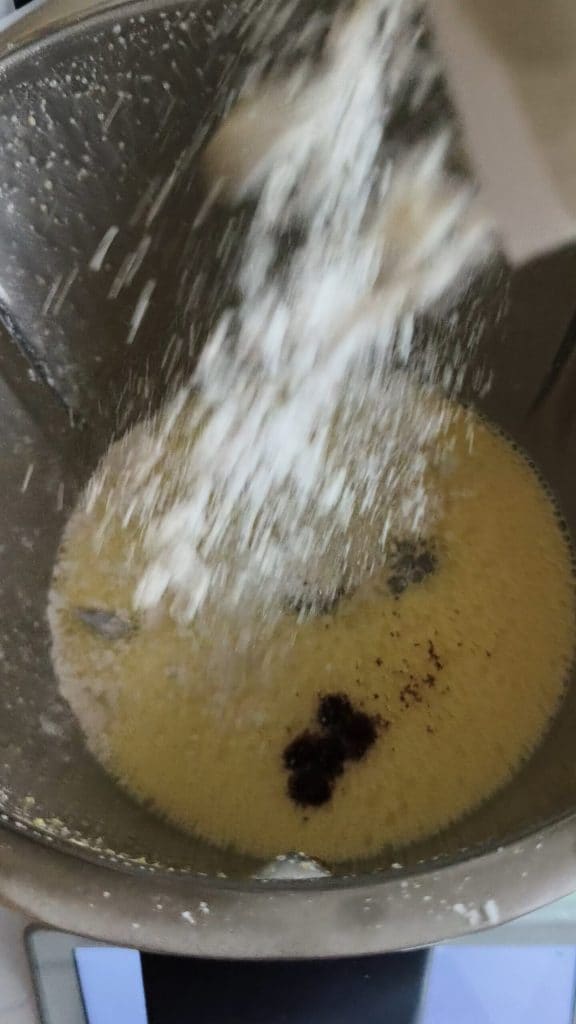
Add the vanilla, flour, and baking powder: 40 sec. speed 5, using a spatula if needed.
Pour the batter into the greased and floured pan and bake in a static oven at 340°F (170°C) for 35–40 min. Or using the bakery function (depending on the oven)
Do the toothpick test. Once out of the oven, let it cool well, then unmold and dust with powdered sugar when completely cool.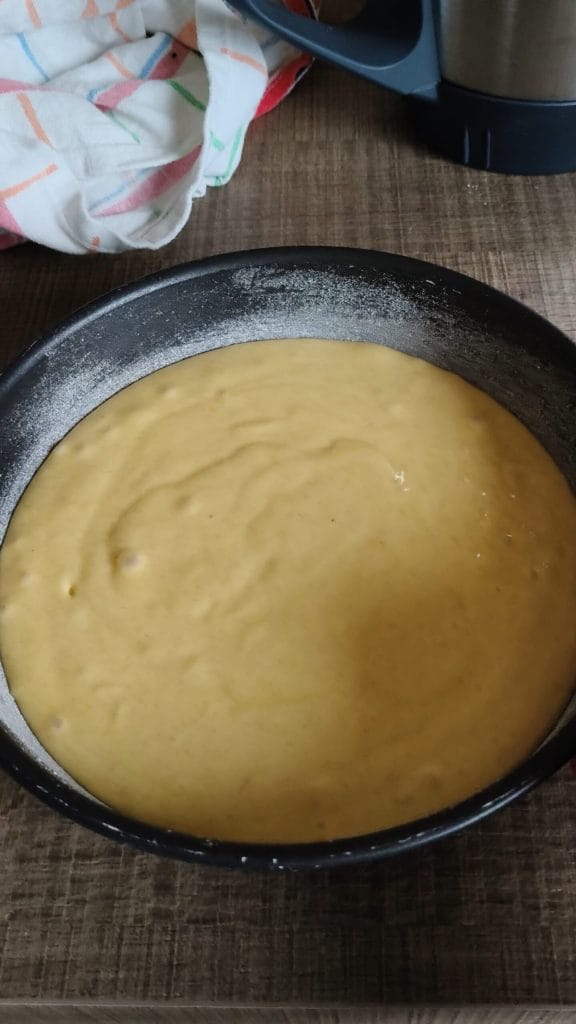
Procedure without Bimby
Whip the eggs with the sugar.
In a large bowl, break the room temperature eggs and add the sugar. Whip with electric beaters for at least 5-6 minutes, until a light, fluffy mixture is obtained.
Add the liquids.
Slowly pour in the oil and room temperature milk while continuing to whip at low speed.
Combine the dry ingredients.
In a separate bowl, sift the flour with the baking powder. Add it gradually to the whipped mixture, gently folding from the bottom up with a spatula, to avoid deflating the batter. Add the flavors (grated lemon zest and vanilla).
Pour into the pan.
Line the bottom of a 8-inch pan with parchment paper and lightly grease the sides. Pour the batter and smooth the surface gently.
Baking.
Bake in a preheated oven at 320°F (160°C) pastry function (or ventilated) for about 45 minutes. Do the toothpick test before removing from the oven.
Let it cool.
Once baked, let it cool in the pan for 10-15 minutes, then unmold and transfer it to a wire rack. Once cool, dust with powdered sugar.
Approximate measurements in tablespoons (if you don’t have a scale)
Whole eggs → 3 medium (not convertible into tablespoons).
Sugar → about 7 heaped tablespoons
(1 heaped tablespoon ≈ 15 g of granulated sugar).
Type 1 flour → about 9 heaped tablespoons
(1 heaped tablespoon ≈ 15 g of flour).
Milk → about 5 tablespoons
(1 tablespoon ≈ 12-15 ml).
Rice oil or other light oil → about 6 and a half tablespoons
(1 tablespoon ≈ 14 ml).
Baking powder → about 2 level teaspoons
(1 packet 16 g = 2 level generous teaspoons).
Tips:
For an even softer cake: as soon as it’s out of the oven, cover it with a clean cloth and let it cool down. This trick, also used for brioches, helps retain internal moisture.
Baking check: every oven is different. If you use the ventilated pastry function, keep an eye on the cake after the first 35-40 minutes and always do the toothpick test.
Ideal pan: an 8-inch pan is perfect for getting a tall and soft cake. If you use a larger pan, it will be lower and bake faster.
Variants and substitutions:
Oil: if you lack rice oil, you can substitute it with corn oil or sunflower oil. Alternatively, a mix of mild olive oil and water can work.
Flour: type 1 flour gives more structure and a rustic flavor, but you can also use flour 0 or half 00 and half whole wheat for a similar effect.
Sugar: the used amount (110 g) is already reduced, but you can partially substitute it with honey or cane sugar, keeping in mind that the texture will change.
FAQ (Questions and Answers)
Can this cake be filled?
Yes, by cutting it into two discs you can fill it with jam, light cream, or sweetened Greek yogurt. It is stable but remains soft.
Can it be frozen?
Yes, it’s best in single sliced portions. Wrap them in plastic wrap and then put them in a freezer bag. When needed, heat slightly in the microwave or let thaw at room temperature.
How is it preserved?
It stays soft for 3 days when well sealed in an airtight container or under a glass dome. If the environment is very dry, it is better to wrap it also in parchment paper. To prevent the powdered sugar from being absorbed and leaving the surface moist, it is advisable to dust with moisture-proof powdered sugar (like the one used for pandoro).
